france

Step Inside Villa Cavrois: Modernist Masterpiece Near Lille – A Photo Tour

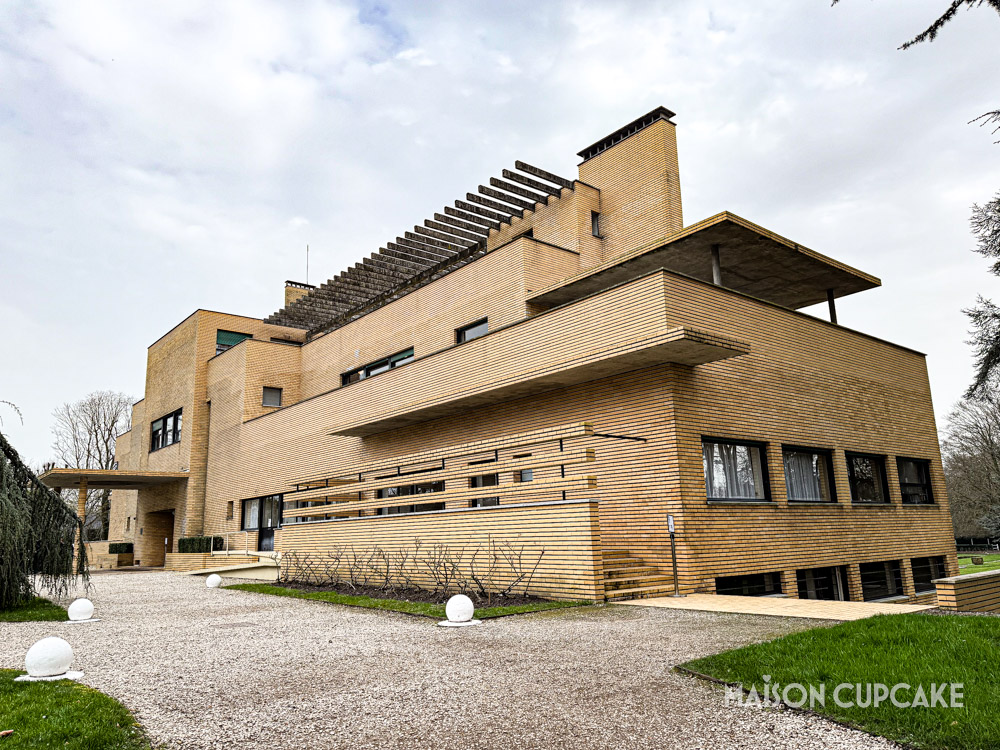
Villa Cavrois is an architecturally designed Modernist home lying just outside Lille, France. Commissioned from Robert Mallet-Stevens by Paul Cavrois, this yellow brick-clad villa exceeding 1,800 square metres’ living space is a prime example of Mallet-Stevens’ design manifesto blending architecture, decoration and landscaping.
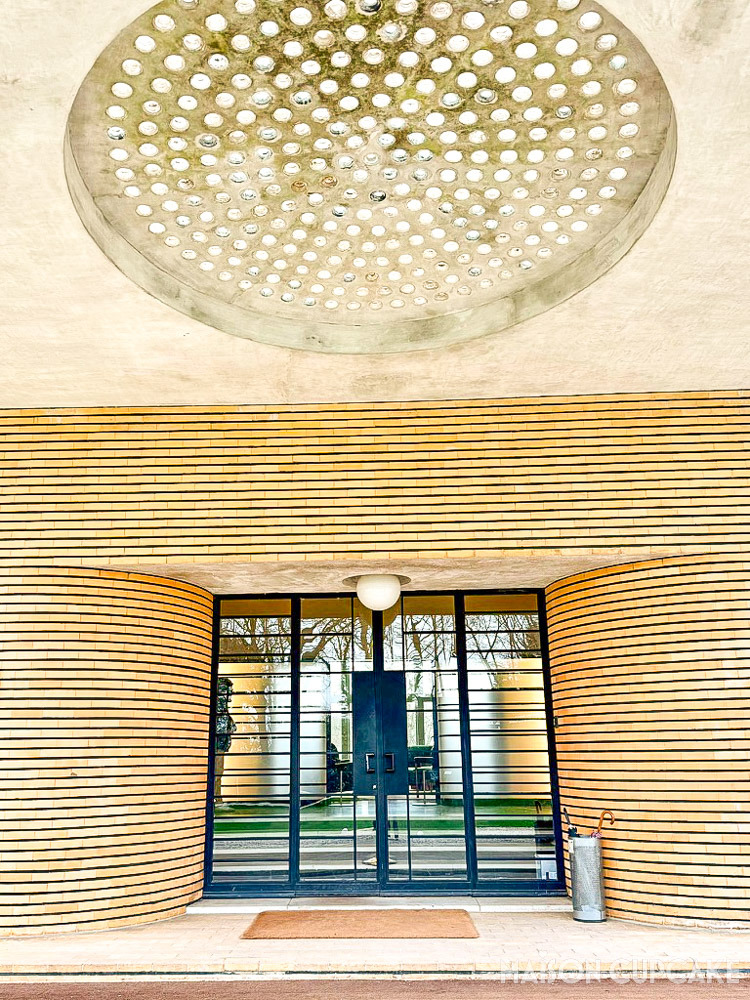
Front entrance at Villa Cavrois showing materials, Art Deco detail and structure
Front entrance at Villa Cavrois showing Art Deco detail and structure

We visited on an overcast Friday in early March. Getting to Villa Cavrois on public transport involves a 20 min walk from the tram so it was several visits to until we fit it into our Lille weekend itinerary – but we were very glad we did! Approaching via the affluent neighbourhood of Croix, there are many mansions set in grounds surrounded by hedges and gates, yet Villa Cavrois strongly stands out as something special.

The restored villa is still a work in progress; it wasn’t until we watched the film in the basement that we appreciated how dilapidated Villa Cavrois became before being rescued for the French nation. Here’s how a visit looks.

The Building and Restoration of Villa Cavrois
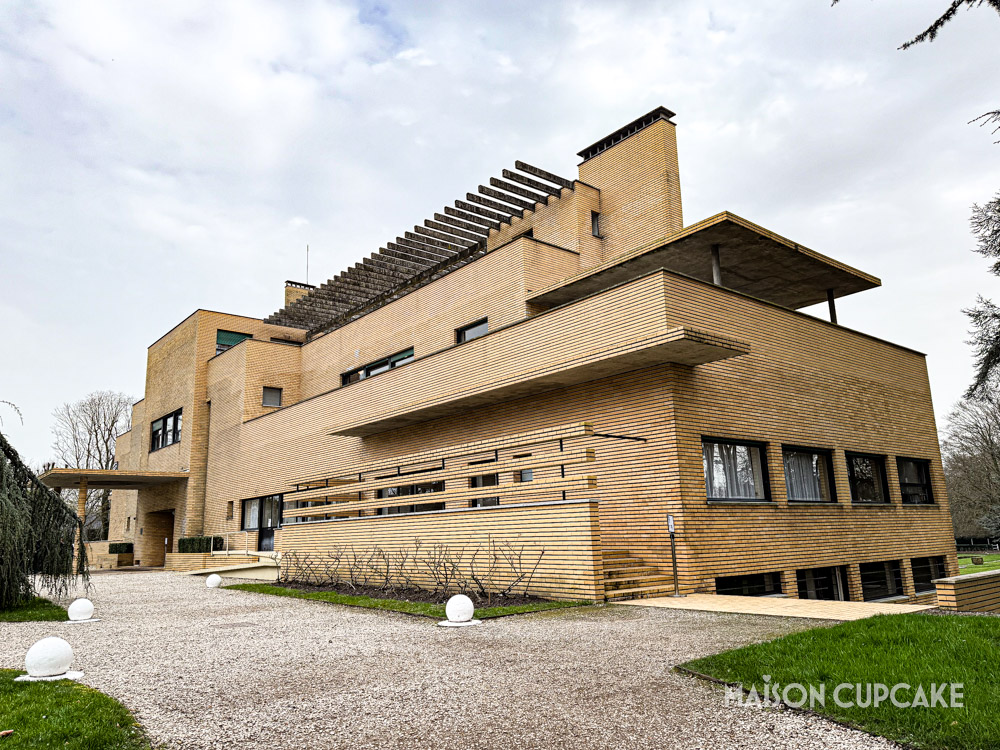
Villa Cavrois modernist house now museum in Lille, France

Built between 1929 and 1932, the Villa was originally home to Paul Cavrois, his wife, seven children and their service staff. After a hiatus being occupied by German troops during World War Two, the layout was reconfigured with self-contained apartments for two of Cavrois’ grown up sons. 

Family members continued to live at Villa Cavrois until 1986 when Paul Cavrois’ wife died; the house was subsequently sold to a property developer. Although automatically classified as a historic monument, the villa was allowed to disrepair by its new owner and was in poor condition by the time the state repurchased it in 2001. 

After twelve years’ restoration work, the restored Villa Cavrois, now managed by Centre des Monuments Nationaux (a French equivalent of English Heritage or the National Trust) was opened to the public in 2015.

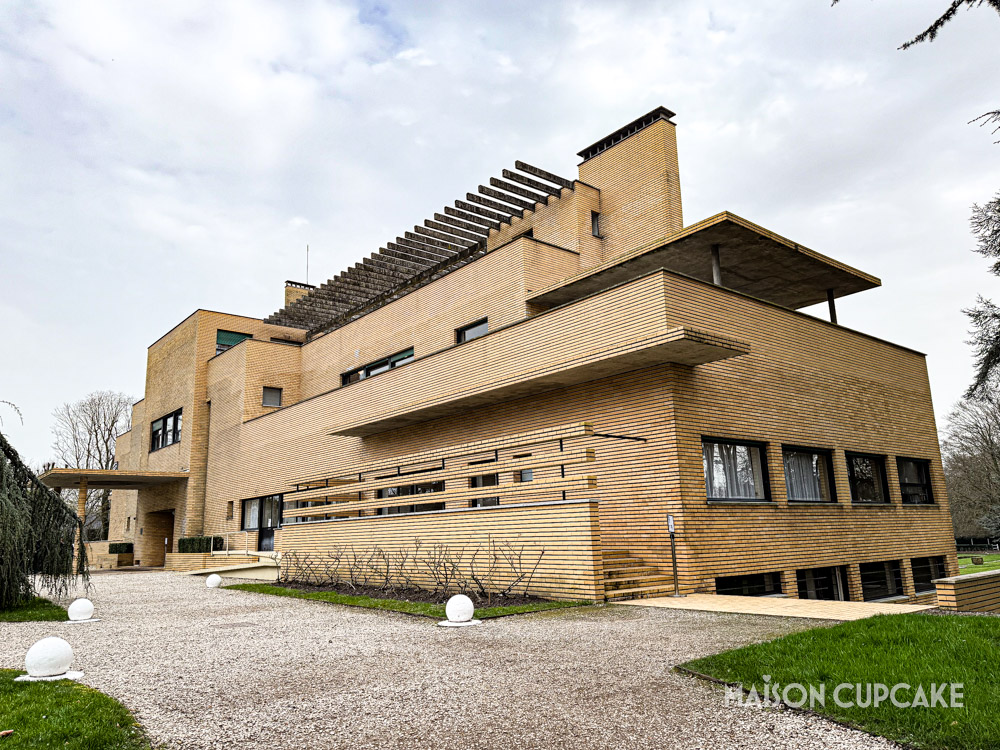
The flat simplicity of Villa Cavrois’ facade is broken up by pale yellow brickwork and Art Deco curves; the house stands with calm poise beyond a wide entrance lawn and sweeping driveway. 

The entrance feels designed for sweeping up in a newly luxurious motorcar at a Great Gatsby-era party. The front entrance, with pale gold pebbles underfoot, is minimalist and the dark concrete foyer almost bank-like and cold as you go inside. However, on climbing a short stairway, your eye is drawn through the sunlit lounge with terracotta tones and its green furniture complementing the flat sectioned-off lawns.

Ground Floor: Living and Social Spaces 

Lounge
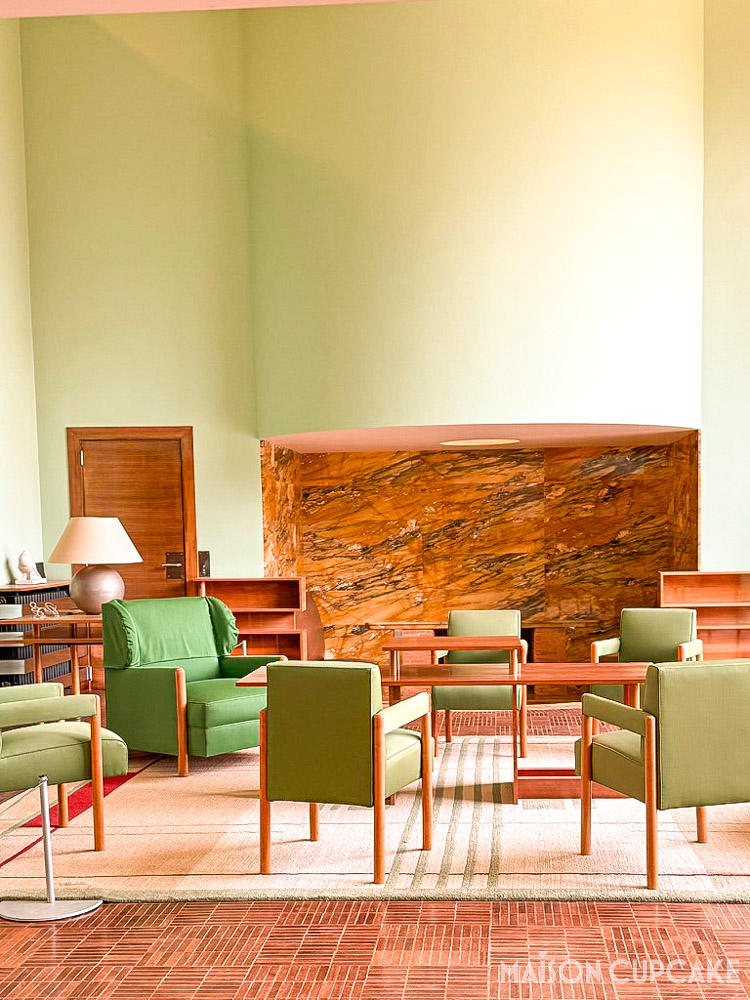
Interior of Villa Cavrois salon with strong geometry and minimalist décor

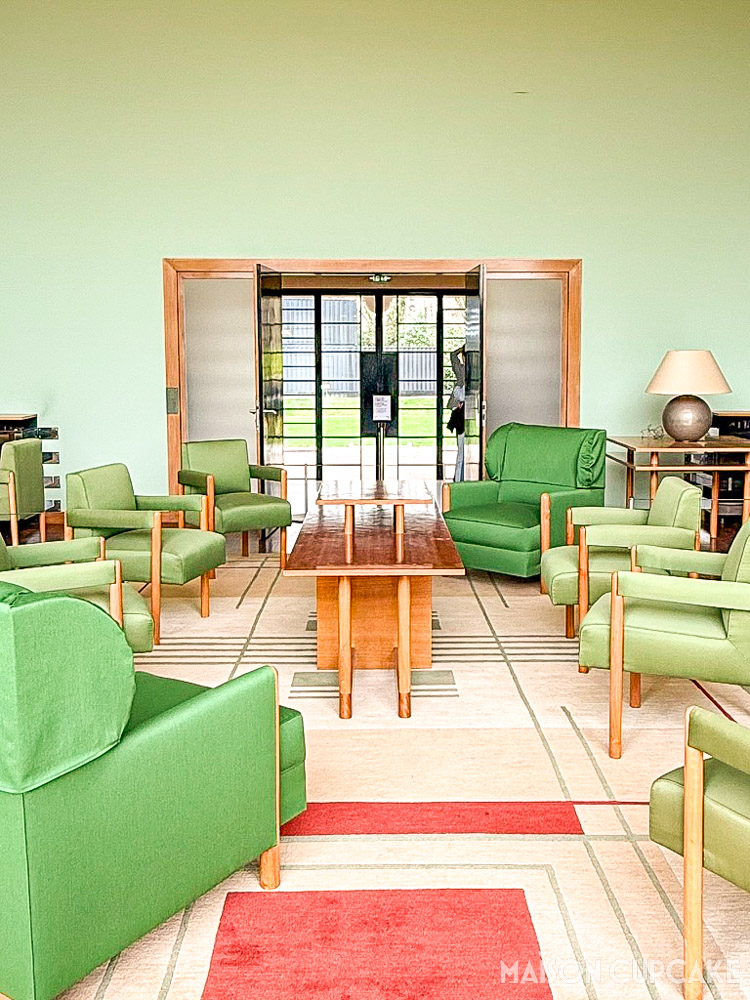
The main lounge is the architectural blueprint of Villa Cavrois; I felt like I was walking into a real-life magazine cover with amber wood-framed chairs and square cushioned seating.
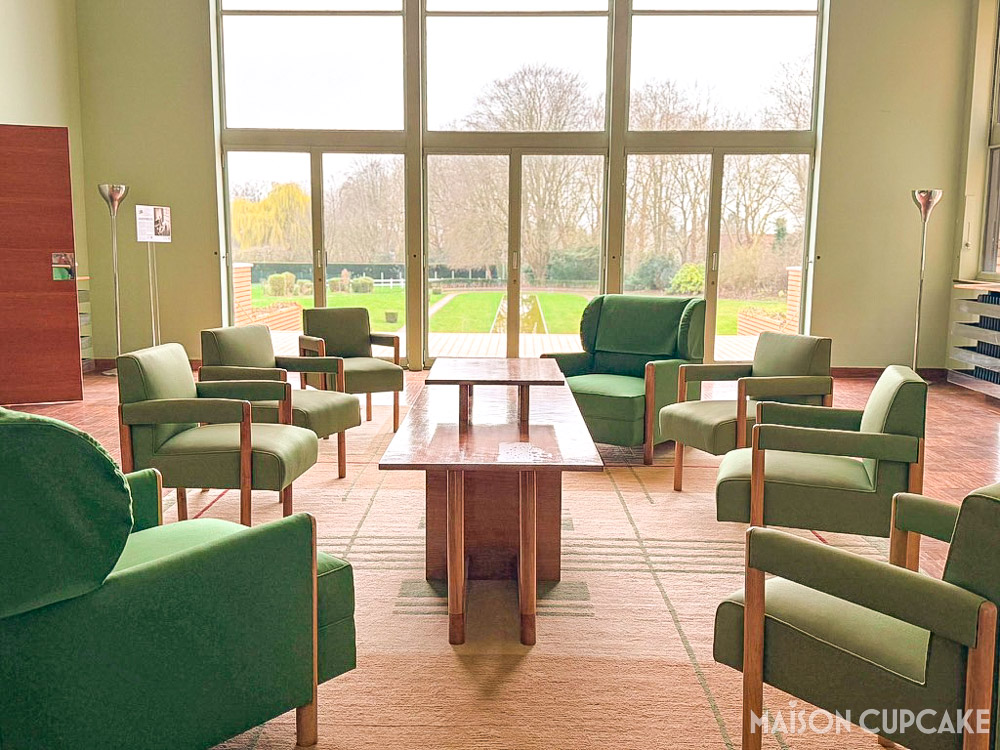
Interior lounge at Villa Cavrois with modernist furniture and natural light
Interior lounge at Villa Cavrois with modernist furniture and windows overlooking garden

The floors are parquet-style wooden tiles, the ceilings are double height with a curved green wall around a marble conversation pit and brick fireplace. 
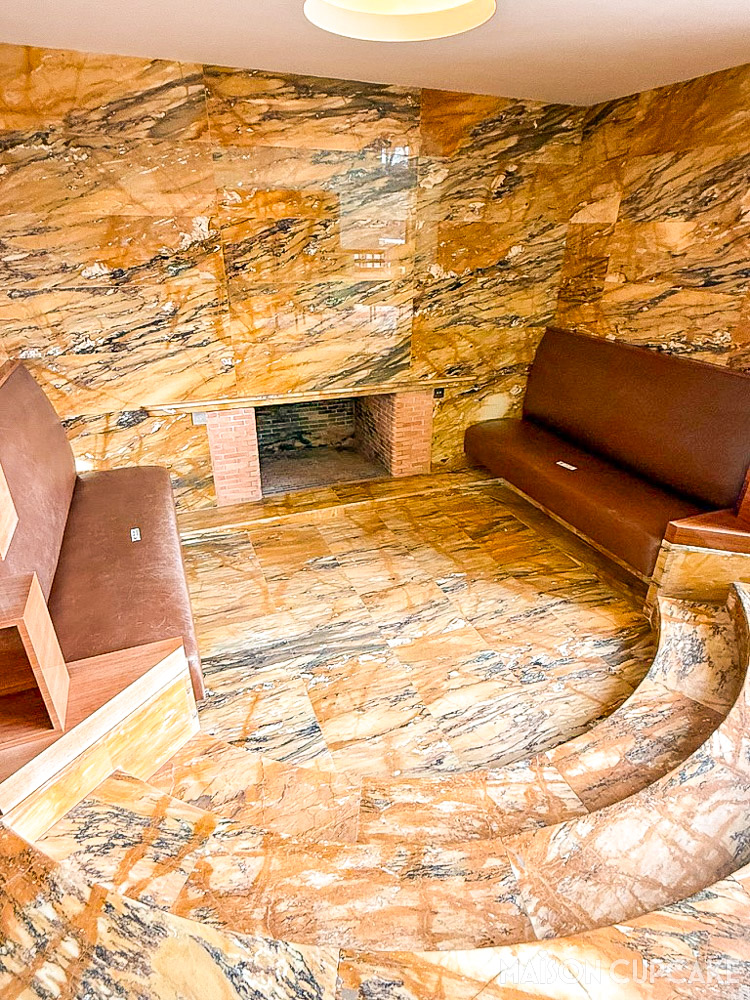
Warm toned marble conversation pit at Villa Cavrois with modernist lines and natural light
Marble conversation pit at Villa Cavrois with modernist lines
Interior of Villa Cavrois salon with strong geometry and green minimalist chairs

After the sombre foyer, natural light flooding in through floor to ceiling windows has great impact. It’s a space that’s both relaxing but would be conducive to entertaining. The central coffee-height table brings structure to an area that likely felt more casual as seating got moved around.
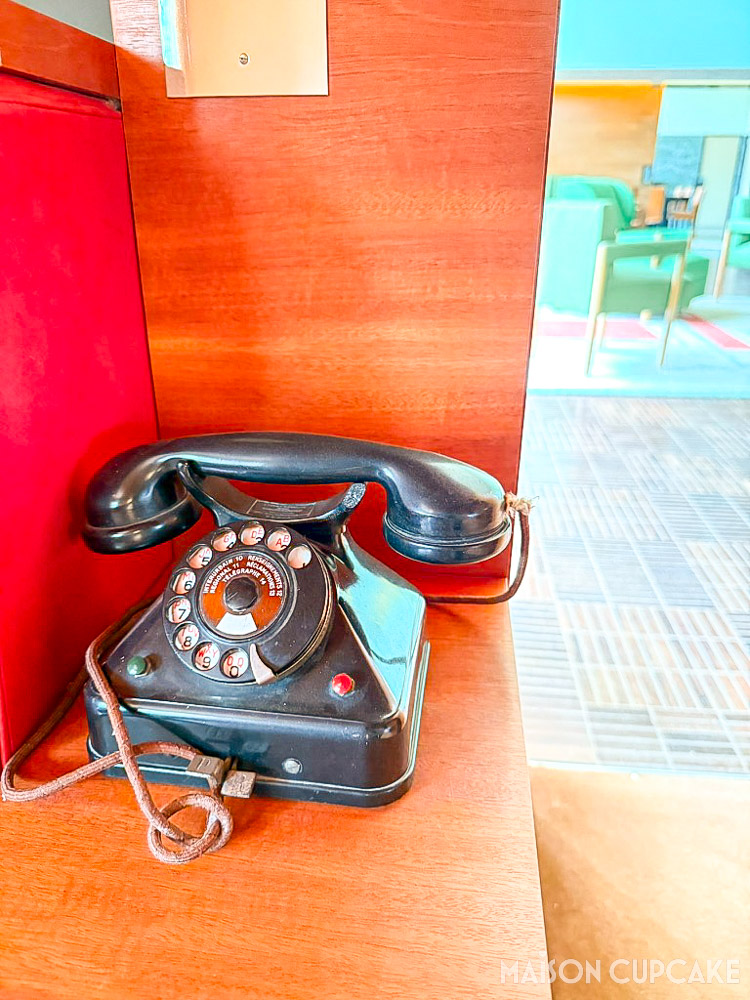
Black 1930s Vintage telephone at Villa Cavrois with modernist interior design
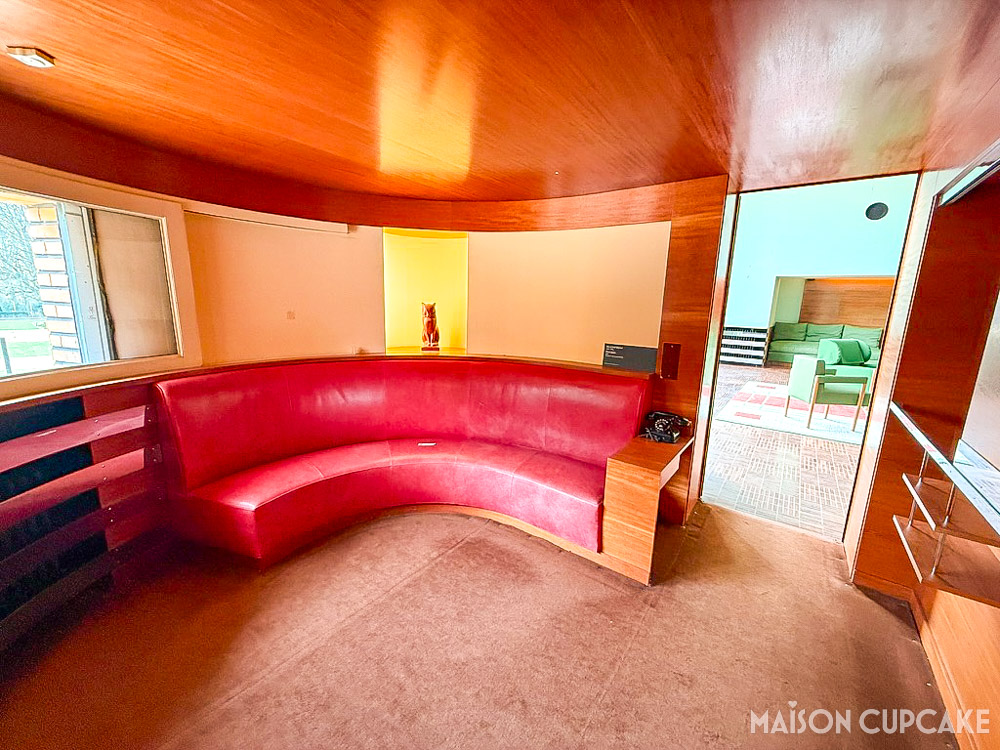
Round Art Deco smoking room with banquette seating, light feature and wooden ceiling at Villa Cavrois near Lille
Round Art Deco smoking room with banquette seating, at Villa Cavrois near Lille, France

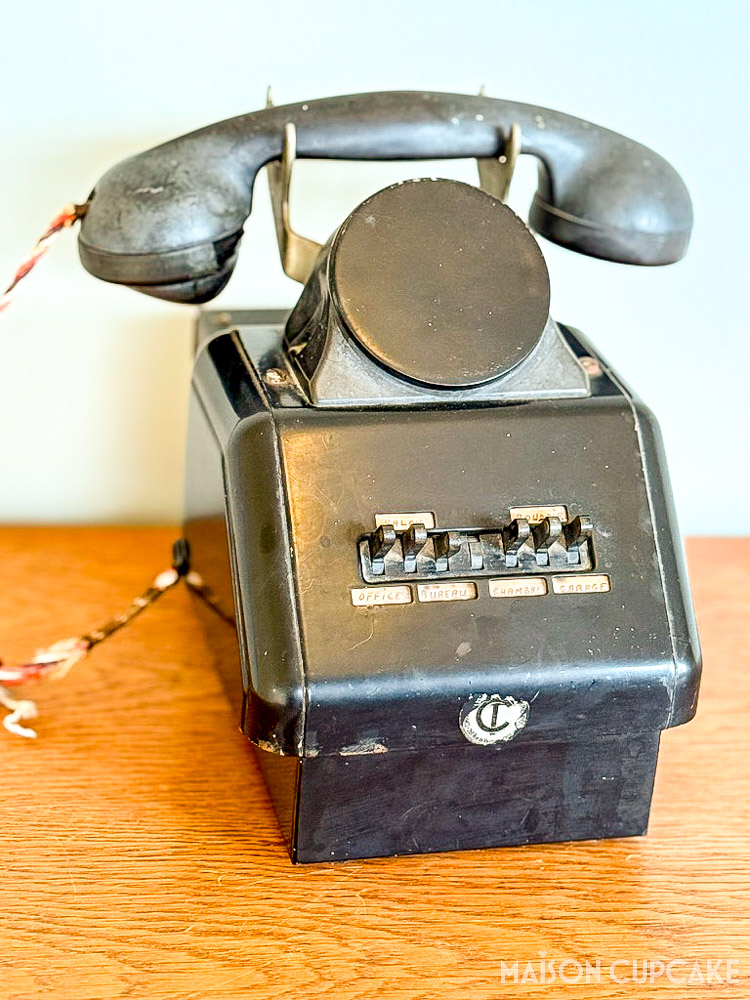
A cosy circular “smoking room” lies adjacent with telephone and more windows onto the garden. I’m sure house guests would sneak off here for a cigarette and a gossip whilst peeping at what people were doing in the garden. The ceiling and windows are much lower there, as if in a bird-hide.

Kitchen

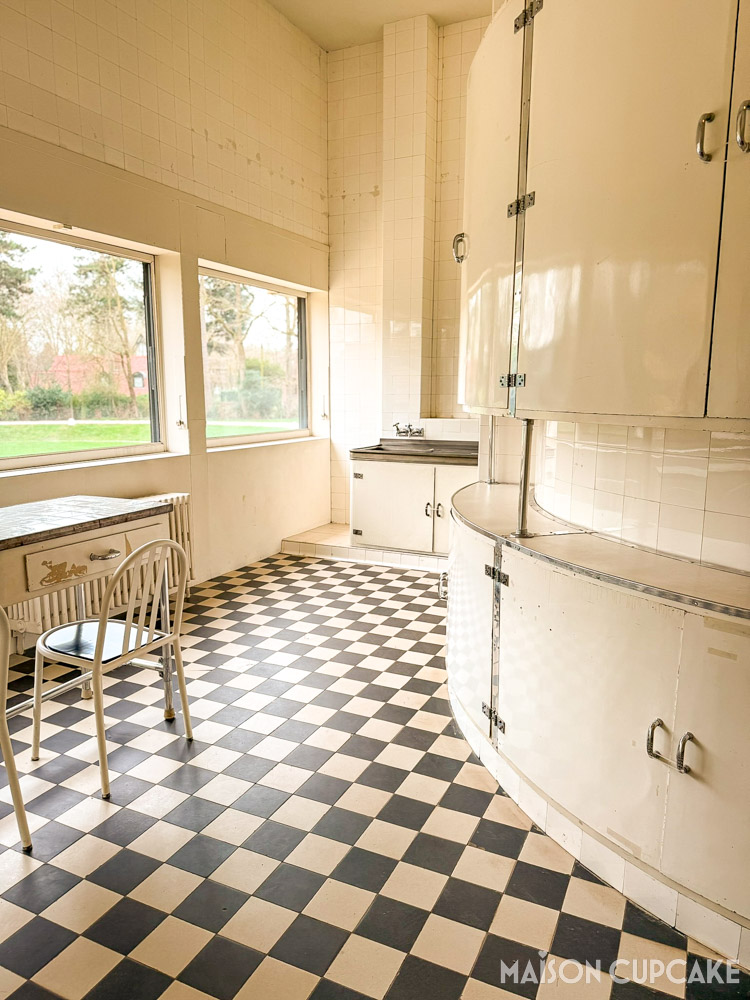
The monochrome tiled kitchen and utility areas are vast; I didn’t get to photograph in as much details as I’d have liked as a school group of children was having a presentation here. But you can see the 1930s style of clean surfaces and chrome that continues throughout the kitchen, bathroom and dressing areas. 
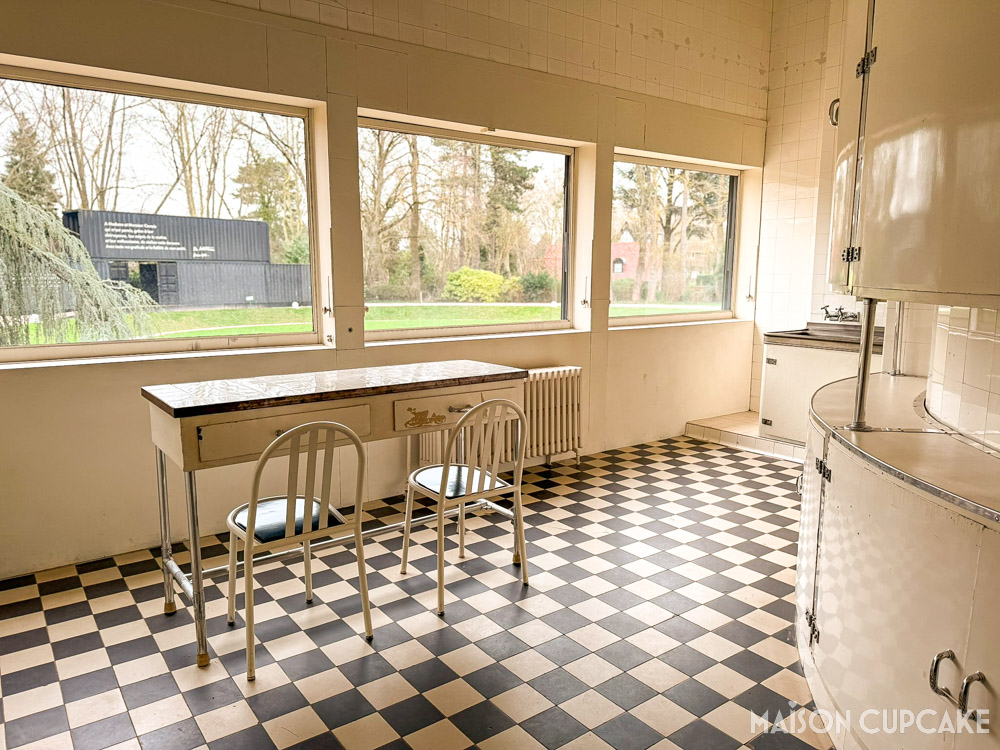
Kitchen interior at Villa Cavrois showing restored modernist design features
Functional service kitchen space in Villa Cavrois near Lille
Functional service kitchen space in Villa Cavrois

The space is quite clinical but curved counters and picture windows overlooking the front gardens soften what might otherwise be a sterile space. It’s also important to consider that much of Villa Cavrois has been emptied of the personal objects that made it a family home.

Dining Rooms

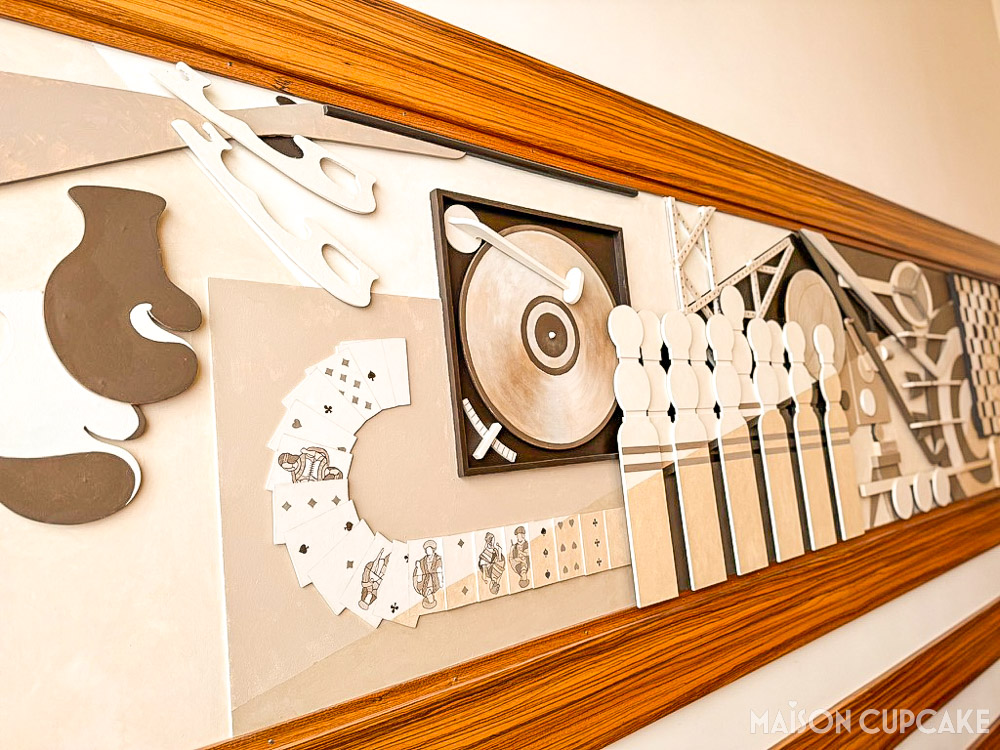
The first dining room is a much warmer space with wood veneer panelled walls and furniture. The amber tone is a bit 1970s flatpack but the fitting are elegant. I especially liked the games themed relief frieze depicting tonic, chess and skittles. 
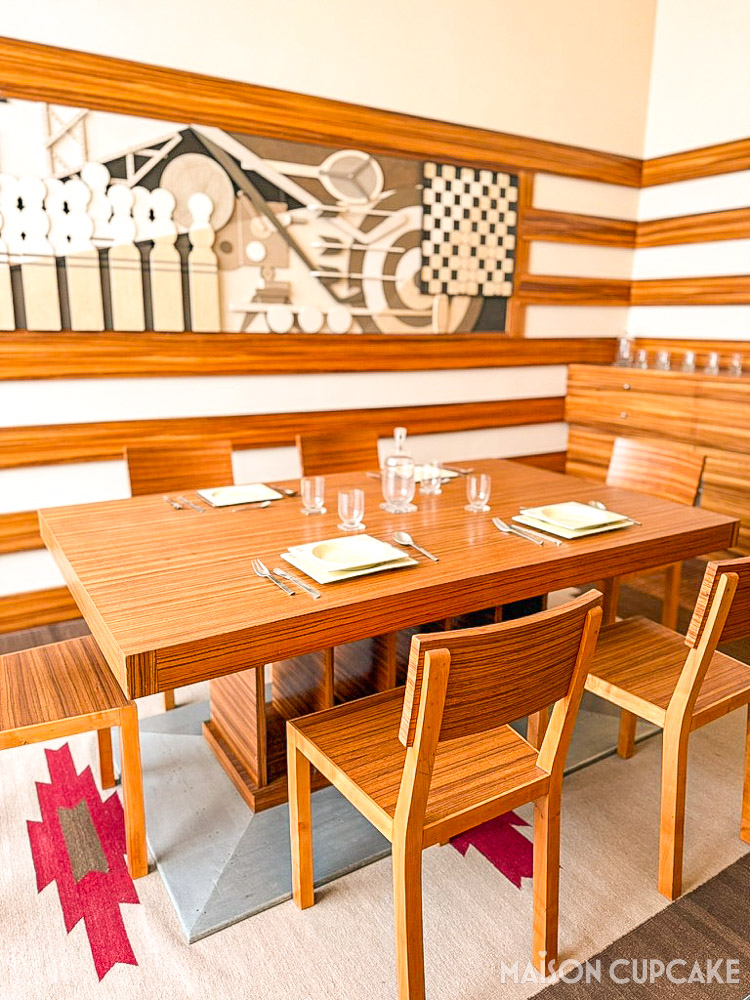
Monochrome Art Deco relief fresco with warm wood in dining room at Villa Cavrois near Lille
Monochrome Art Deco relief fresco with warm wood in dining room
Monochrome 1930s relief fresco at Villa Cavrois dining room
Warm toned wood interior with Art Deco square shaped place settings at Villa Cavrois restored modernist home France
Warm toned wood interior with Art Deco square shaped place settings

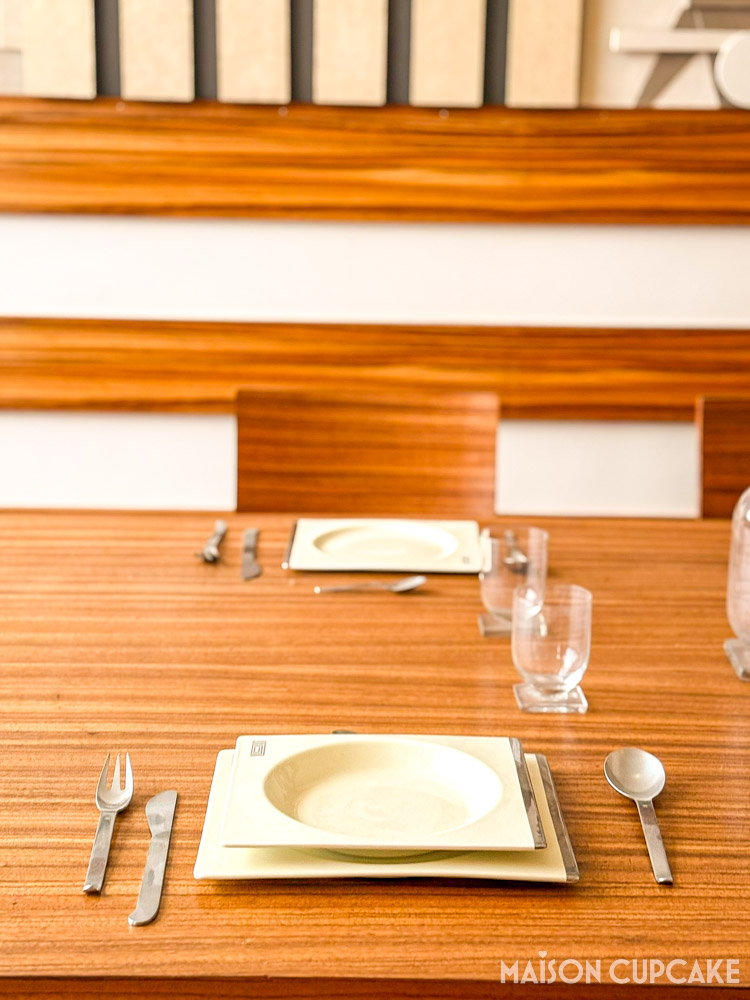
Some places are set for dinner with square tableware. The woven rug is the only textile item yet the room still feels warm and ready for convivial conversation.
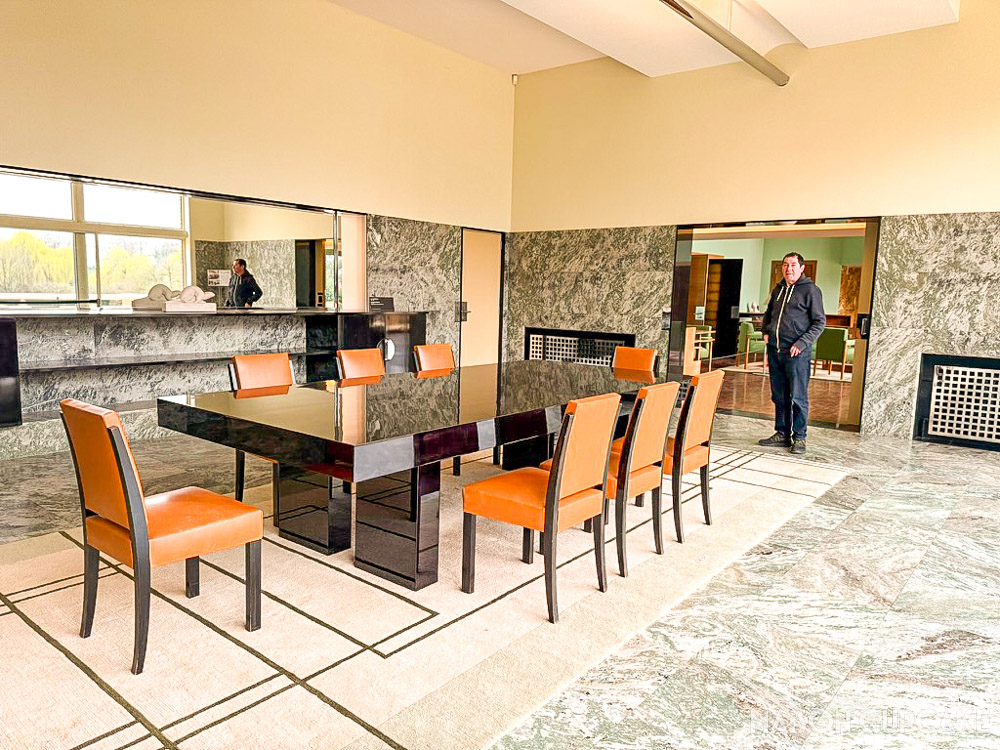
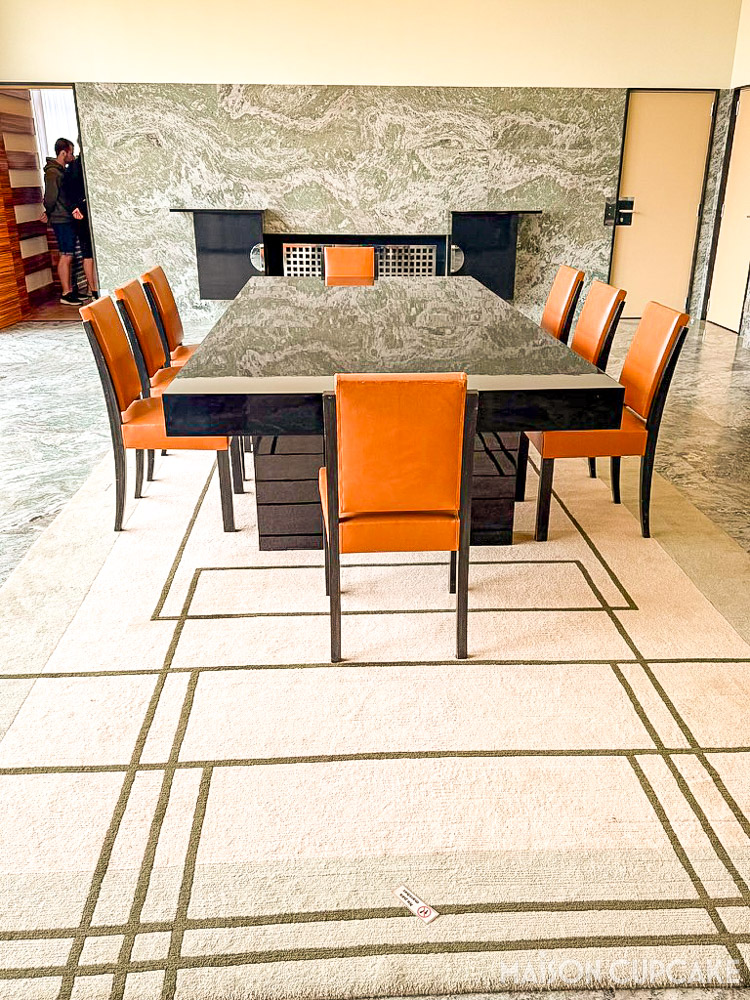
Dining room at Villa Cavrois with long table and modernist interior design
Dining room at Villa Cavrois with long table and minimalist geometric monochrome rug.

The second dining room feels more corporate with marble walls and table top, high-backed leather dining chairs as if ready for a business meeting. The tufted rug adds softness and the chairs feel very contemporary.

This dining room was much brighter and spacious. I wonder if the family ate by themselves in the smaller one and had grander dinners with serving staff in the large one?
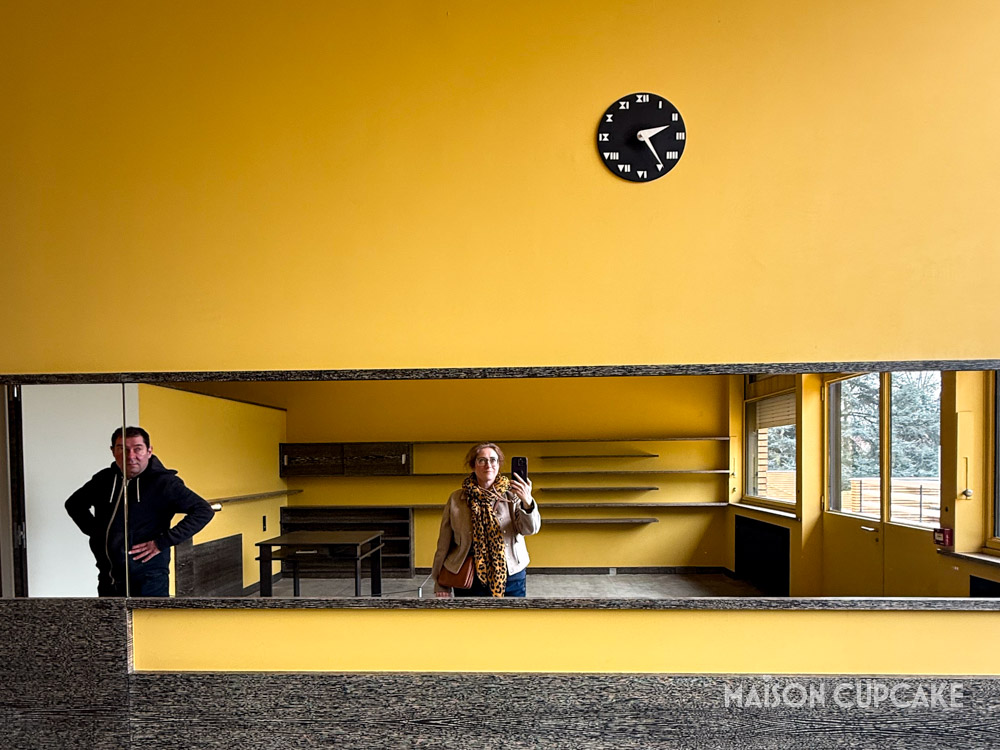
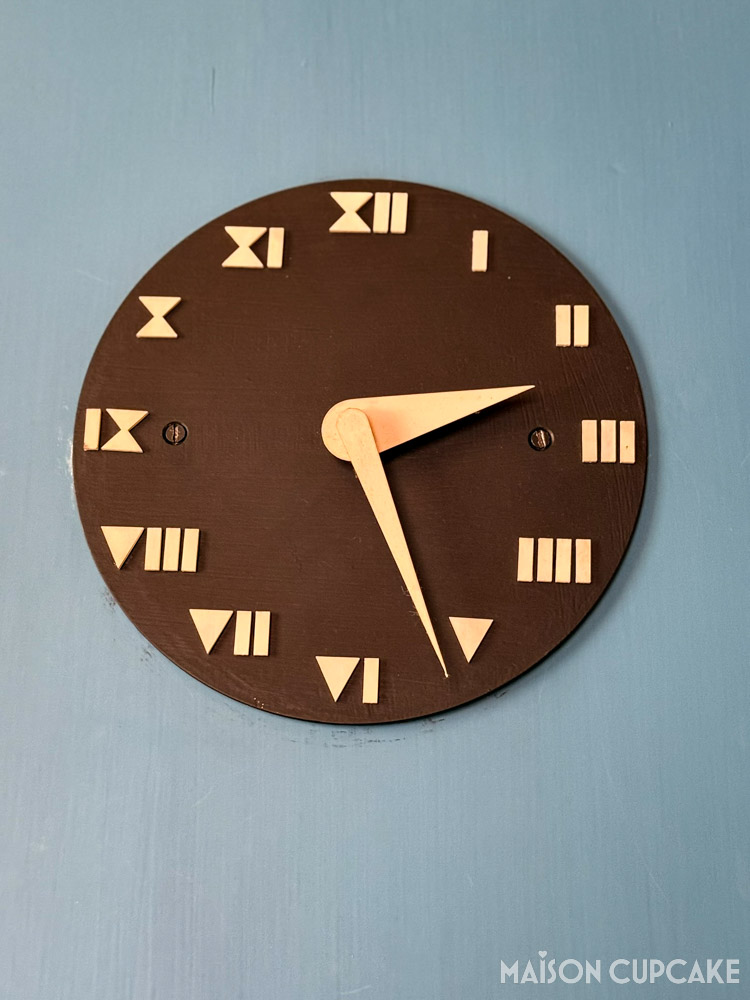
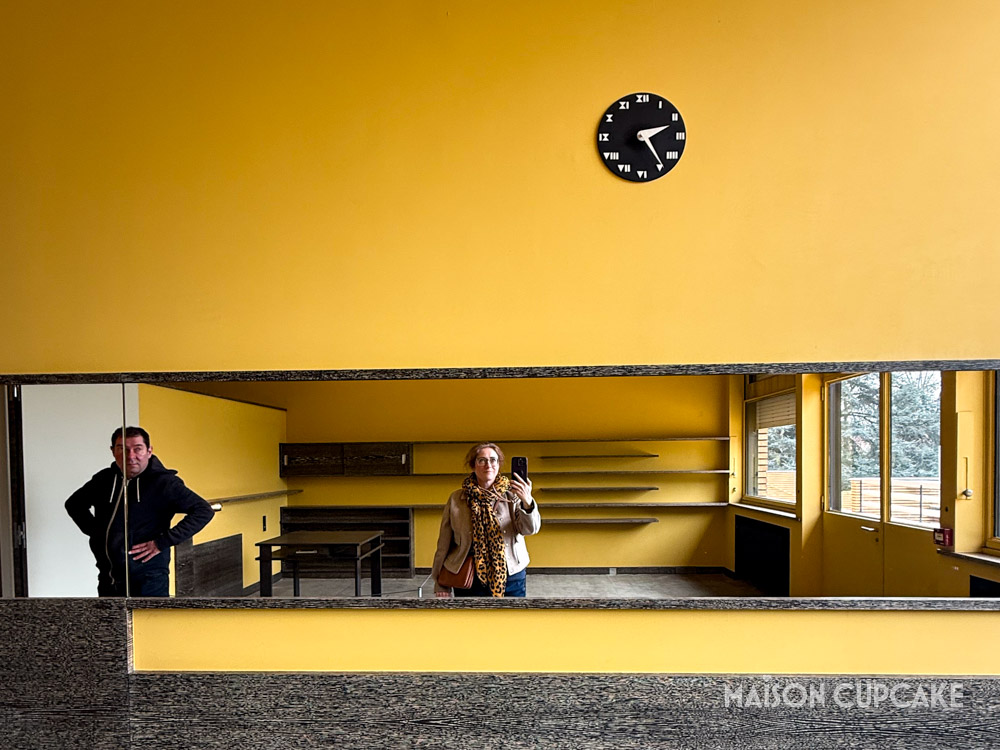
Yellow Art Deco Room with clock at Villa Cavrois, Lille France

Although most shelves are empty, the many magazine spreads featuring Villa Cavrois capture how the house looked with personal effects such as vases and books adding to the interior. It was never a cluttered house but the magazine photography shown on some information panels conveys a more “lived in” atmosphere rather than James Bond villain lair.

Private Family Rooms and Upstairs 

Bedrooms

The master bedroom mixes cream textiles with dark wood. If the room feels empty then bear in mind the dressing area was immediately next door. I liked the lighting feature along the ceiling but this room felt a bit bland to me.
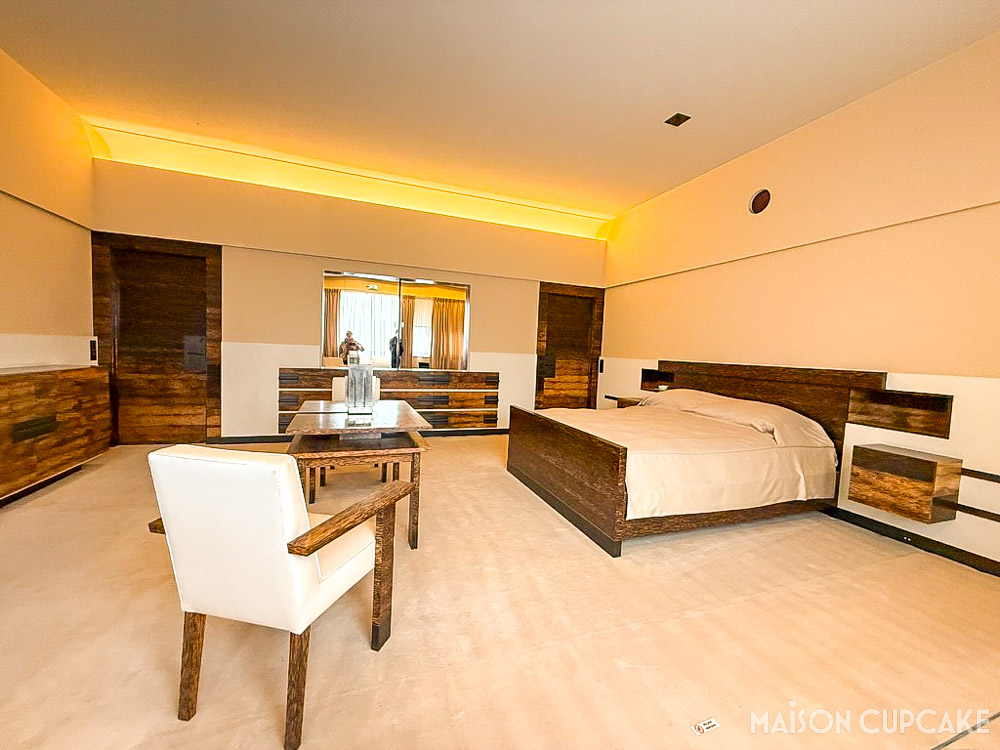
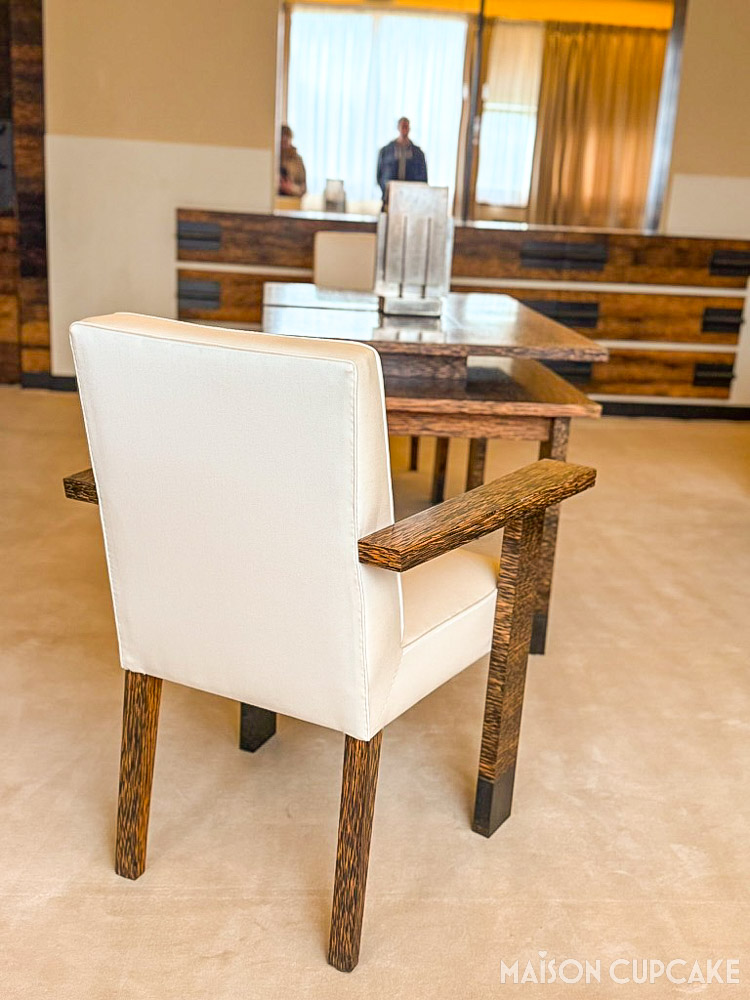
Master bedroom with restored minimalist Art Deco furnishings at Villa Cavrois
Master bedroom furniture detail at Villa Cavrois with minimalist modernist interior design
Master bedroom furniture detail, cream leather modernist chairs with wooden arms and legs

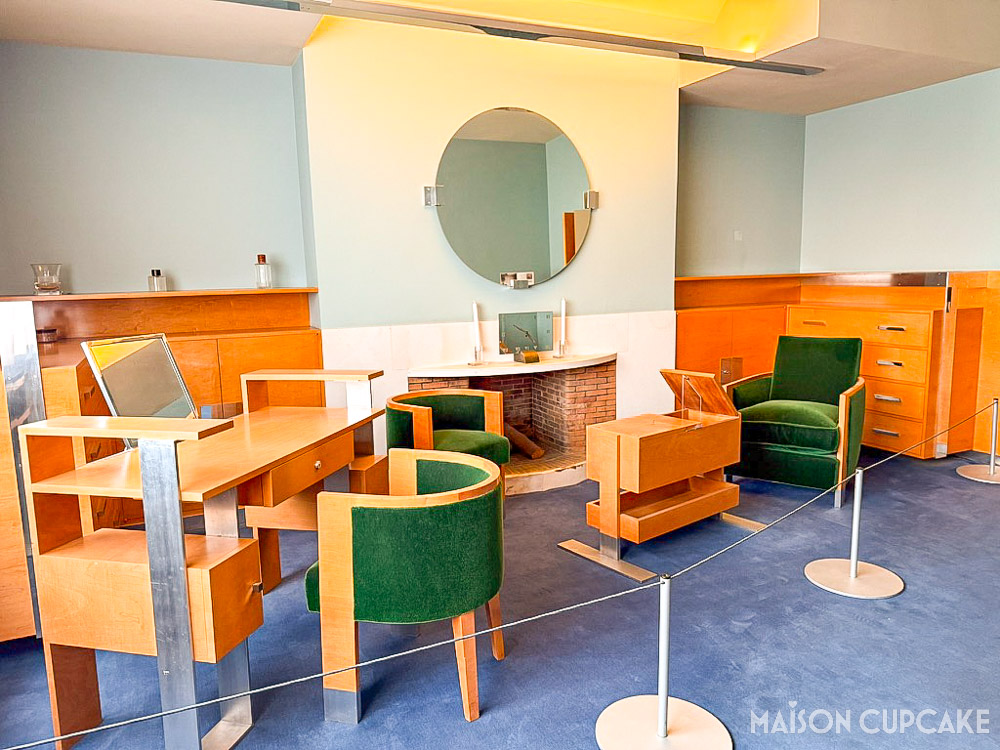
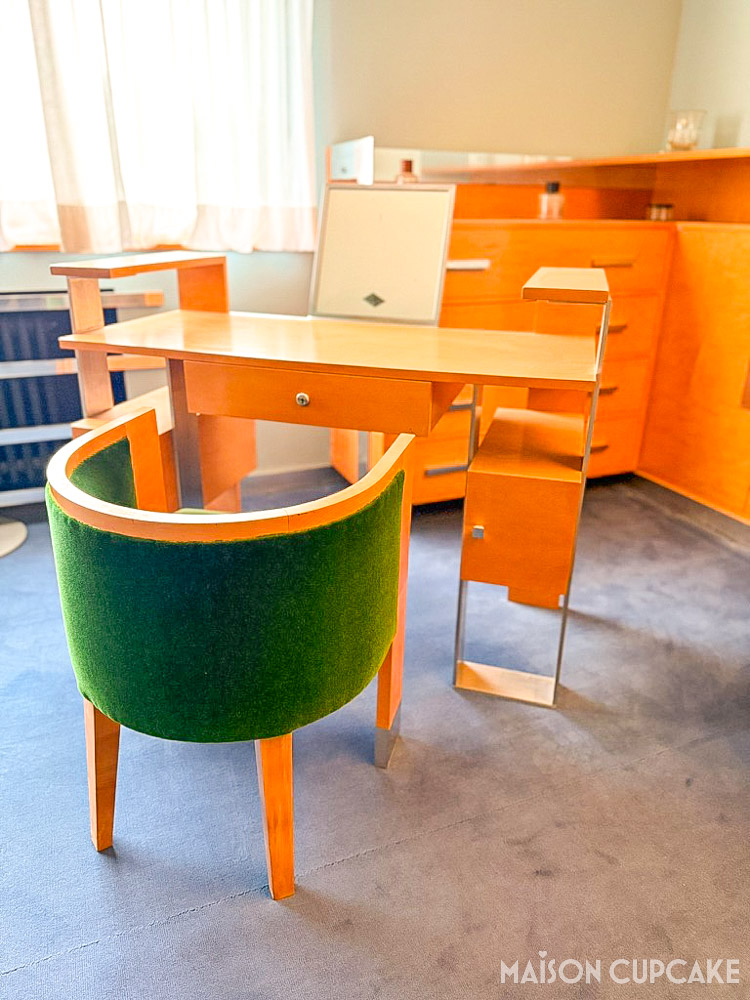
Next door, the smaller bedroom was more interesting with an array of wooden Art Deco furniture. Mrs Cavrois used this as her bedroom after Paul Cavrois died – she outlived him by around twenty years. 
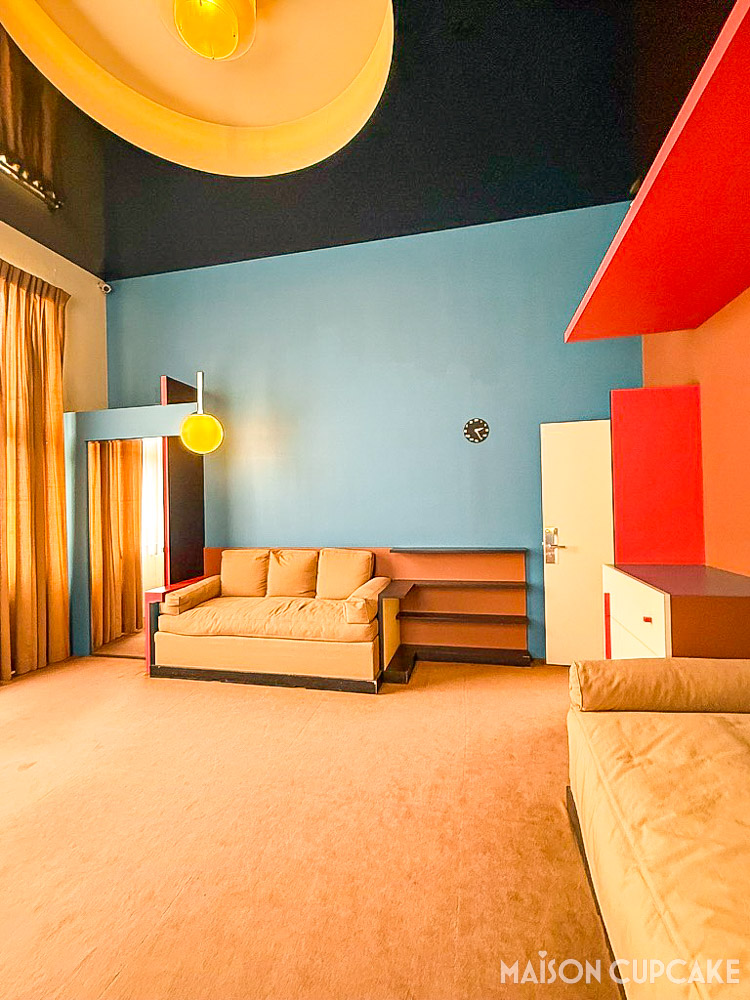
Restored smaller bedroom space with Art Deco furniture at Villa Cavrois
Art Deco bedroom furnishings at Villa Cavrois near Lille
Restored Art Deco chair and dressing table at Villa Cavrois in smaller bedroom

Bathrooms and Dressing Room

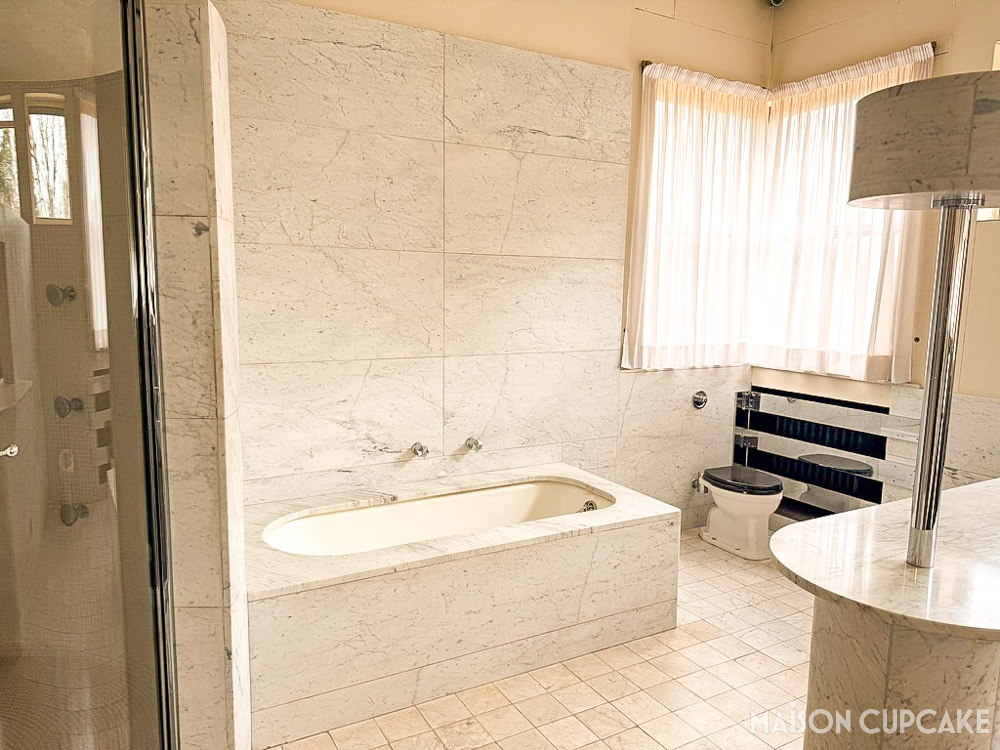
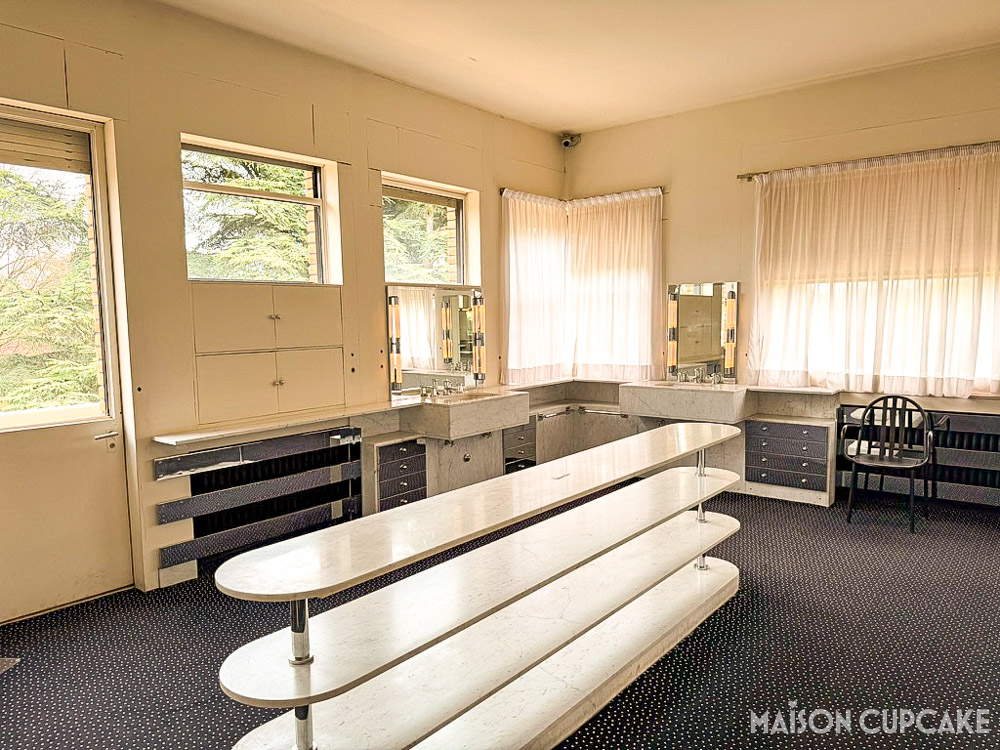
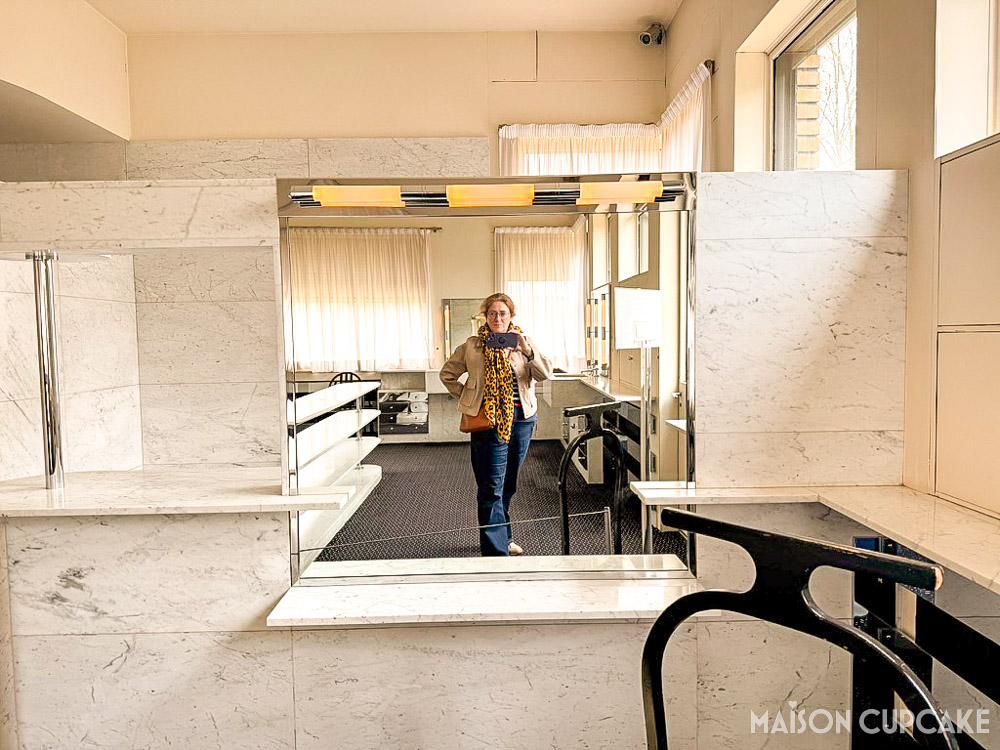
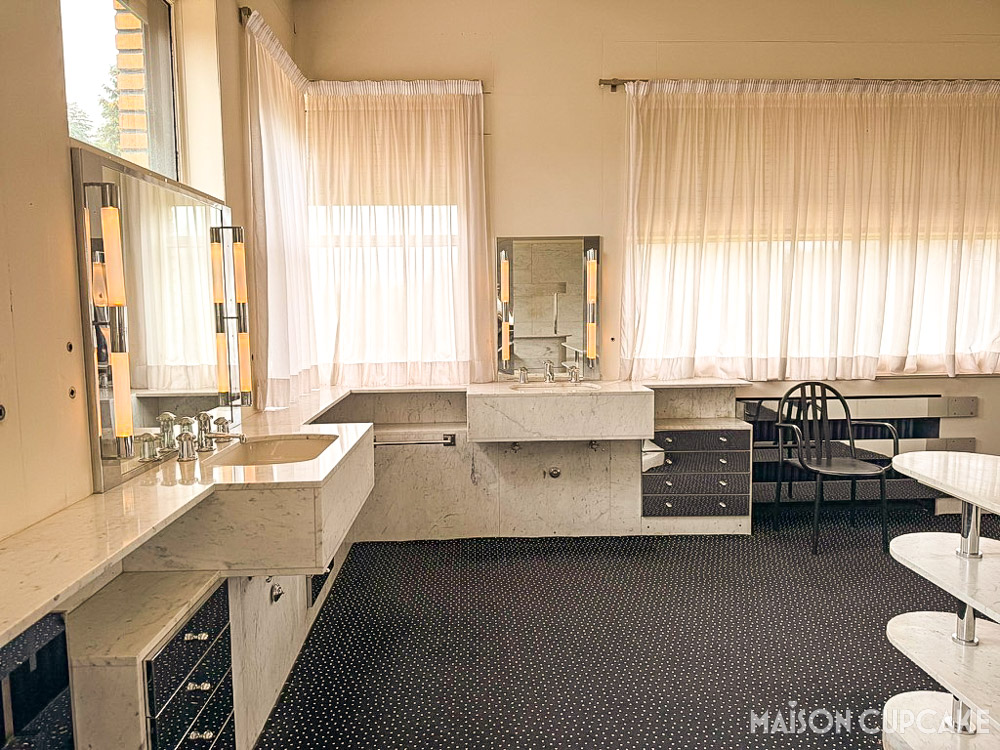
Most impressive upstairs was the vast grey marble-clad bathroom and dressing area. As well as a luxurious bathroom, there are Hollywood style vanity mirrors and generous shelving units for displaying accessories. 
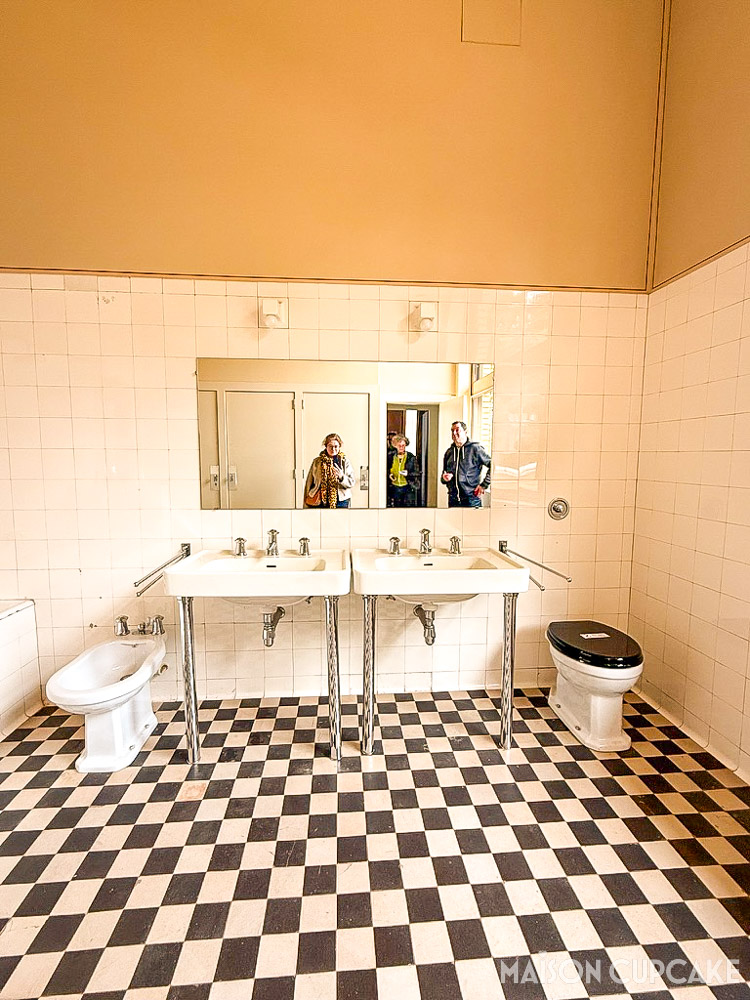
Restored bathroom space at Villa Cavrois showing chequered tiles and material contrast
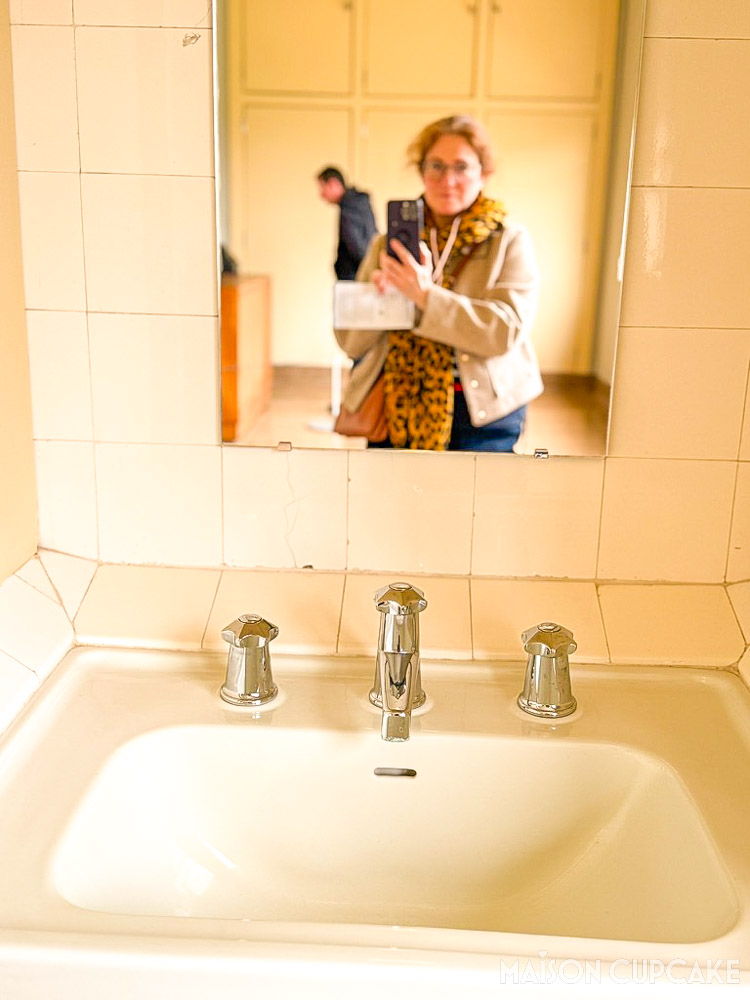
Close-up of Art Deco bathroom sink, taps and tiles detailing in Villa Cavrois modernist house
Bathroom interior at Villa Cavrois featuring bold Art Deco surfaces and fixtures
Interior dressing area in Villa Cavrois with architectural built-in furniture
Minimalist Art Deco dressing area with mirror at Villa Cavrois near Lille
Dressing room at Villa Cavrois with built-in storage and geometric design

Definitely a dressing room fit for a film star. This bathroom and dressing space felt much more luxurious than the bleak tiled bathrooms seen at Eltham Palace in London (a similar status heritage property built in the same era). 

Design Details: Materials, Fixtures and Lighting

Stairwell 

The stairways at Villa Cavrois can look a bit office-blocky in the photo but as you climb the steps and the lawns and rectangular pond come into view, the space feels more like a house than an insurance building. 
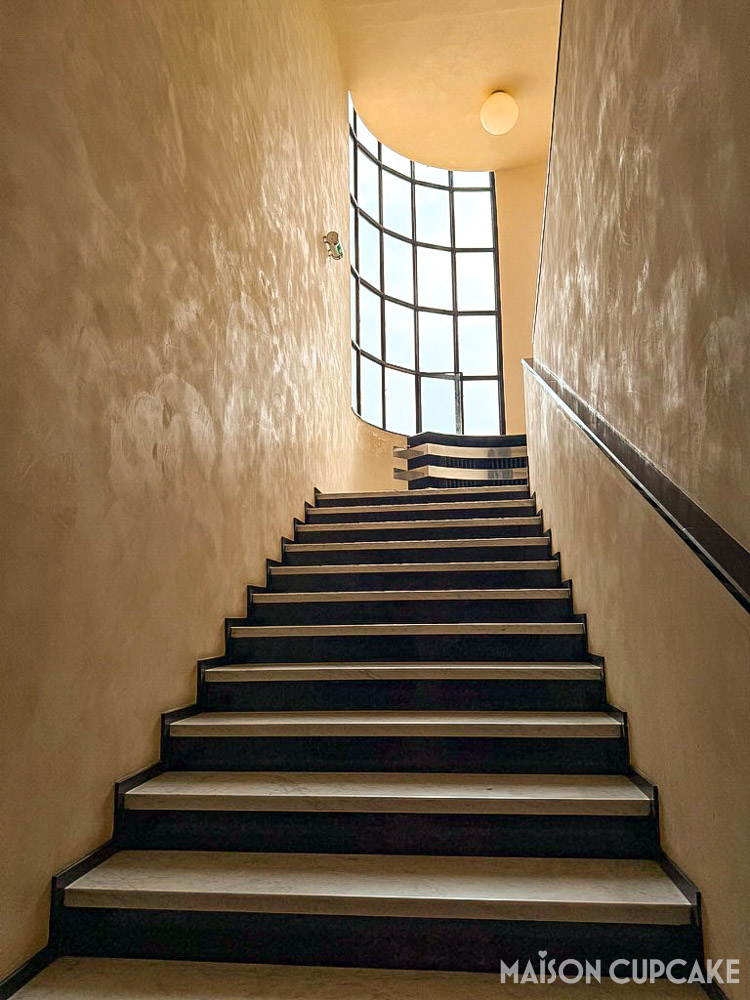
Stairwell at Villa Cavrois with large windows and natural light geometry
Vintage 1930s telephone from Villa Cavrois restored modernist house
Art Deco Wall Clock at Villa Cavrois, Roubaix near Lille France

The black framed panelled windows are perfect inspiration for a contemporary side-return extension. The curve of the building is echoed by a chrome-edged window seat should you wish to pause half way up.  

Lighting
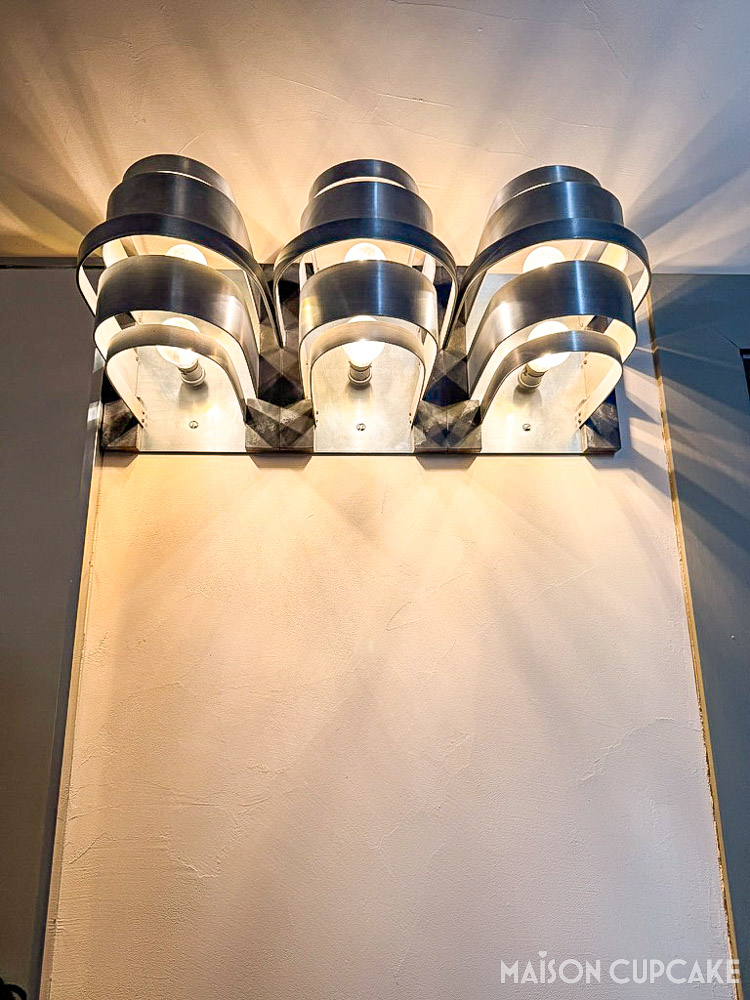
Lobby Art Deco lighting feature at Villa Cavrois near Lille

This light feature is in the entrance hallway, the house holds a mix of original fittings that have been repurchased at auction or recreated. I’m not sure which category this falls into but the layers of curved metal bands mixed with bare lightbulbs peeping through and angular shadows created are unmistakably Art Deco.

Restoration Archive
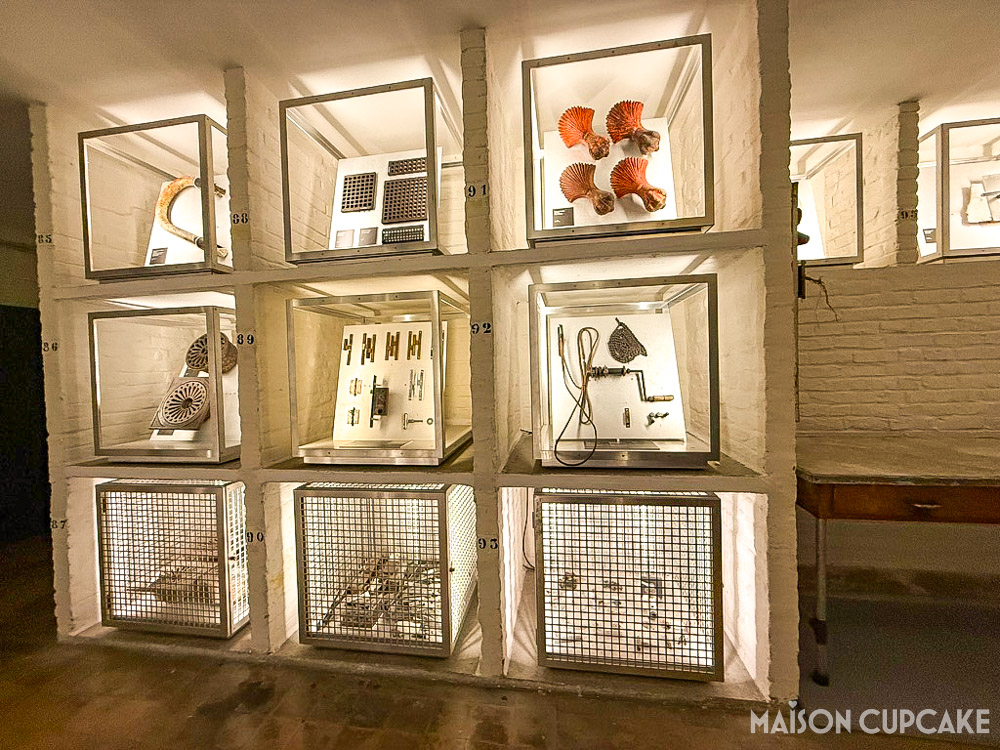
Materials archive gallery at Villa Cavrois, Lille France

The basement of Villa Cavrois holds a museum film show portraying the restoration phases of the house – I was shocked to see a tree growing through a room and the amount of graffiti vandalism afflicted on the property. By watching this looping film you get a feel for just how extensive a project the restoration was. 
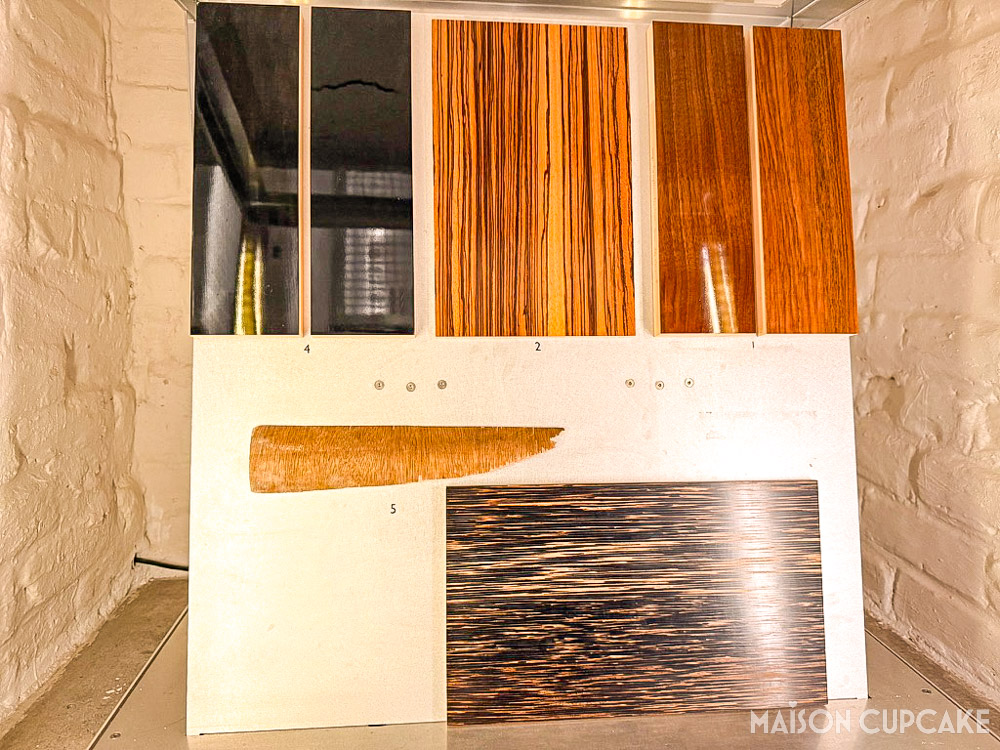
Restoration archive veneers at Villa Cavrois near Lille

Also downstairs you can view the materials gallery, dozens of cases displaying original materials and fittings that were left behind after the 1986 sale.
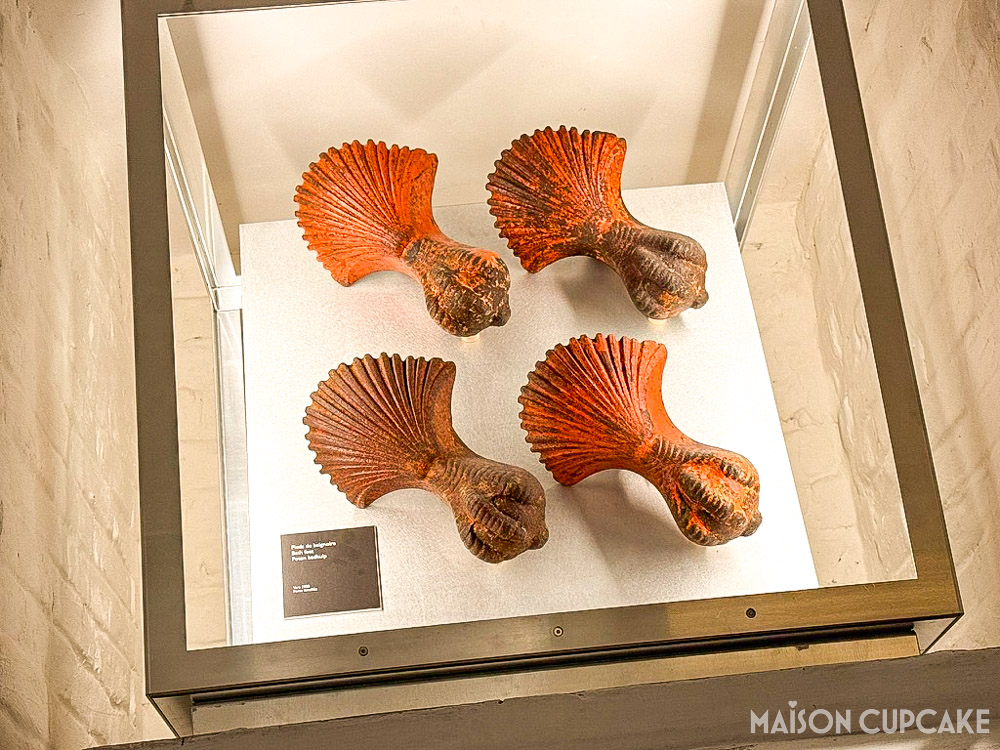
Salvaged scalloped iron bath feet in the materials archive at Villa Cavrois France

This area has a feel of the V&A Storehouse in East London, you will see lit-up cases of electrical fittings, wood samples and my personal favourite, some ornate rusty bath feet.  
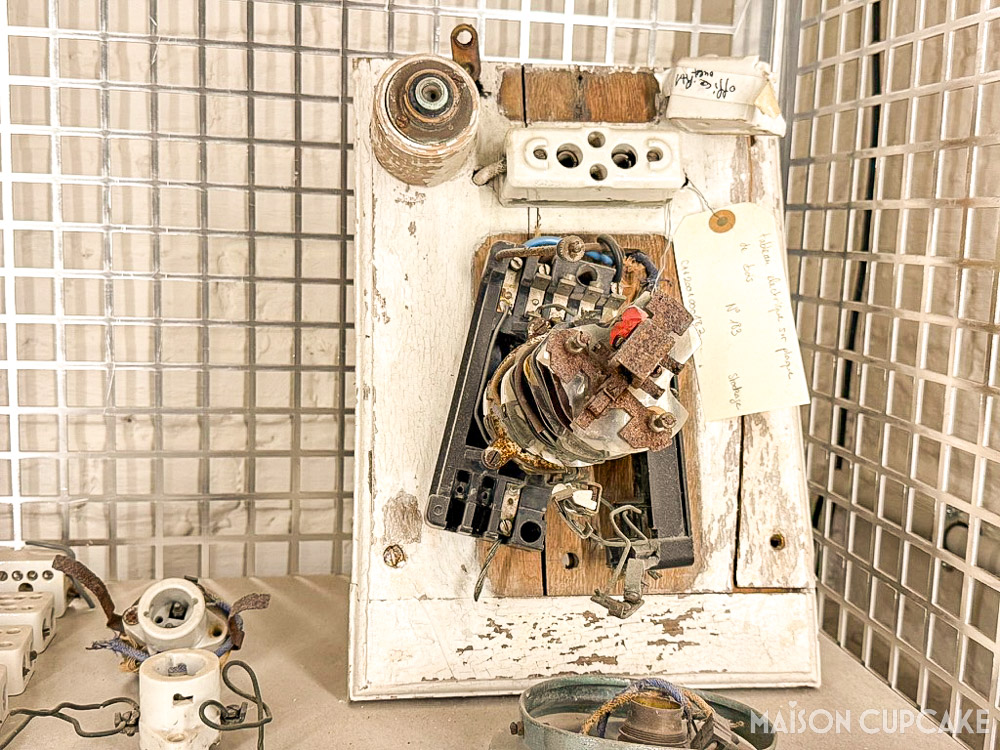
Materials archive electrical salvage at Villa Cavrois

Villa Cavrois Garden and Exterior

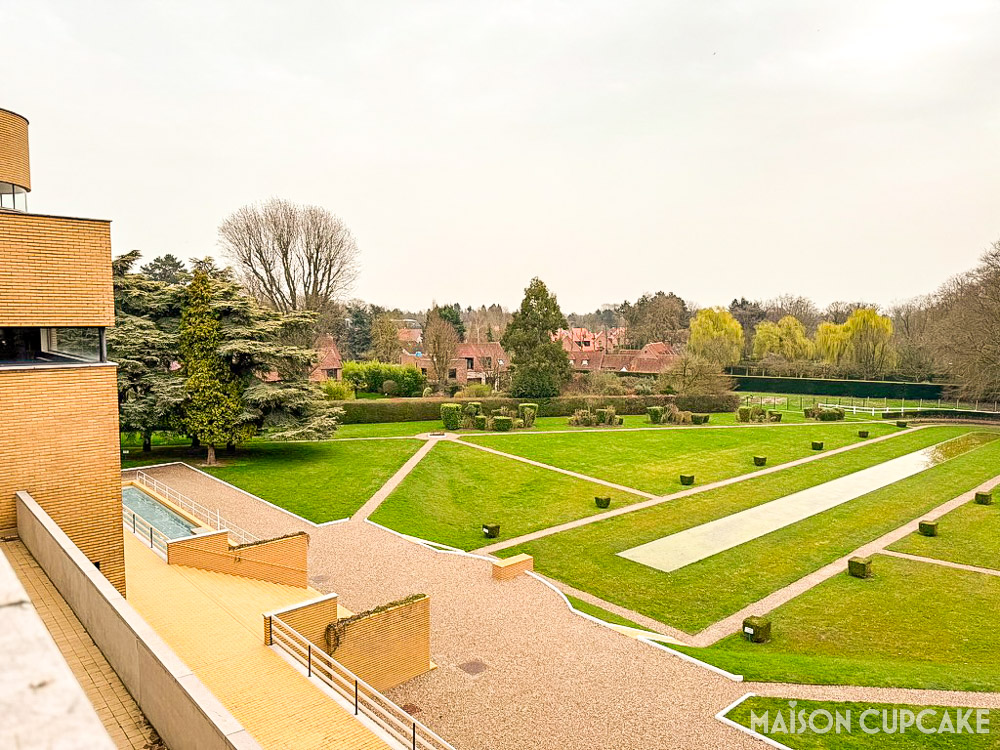
The proportions of the garden are slightly adjusted from the originals to stay harmonious in a slightly smaller space – some of the land was redeveloped as housing. This isn’t a garden for botanists, the main features are clean lines, pathways cutting through lawns and every angle creating a unique viewpoint. 
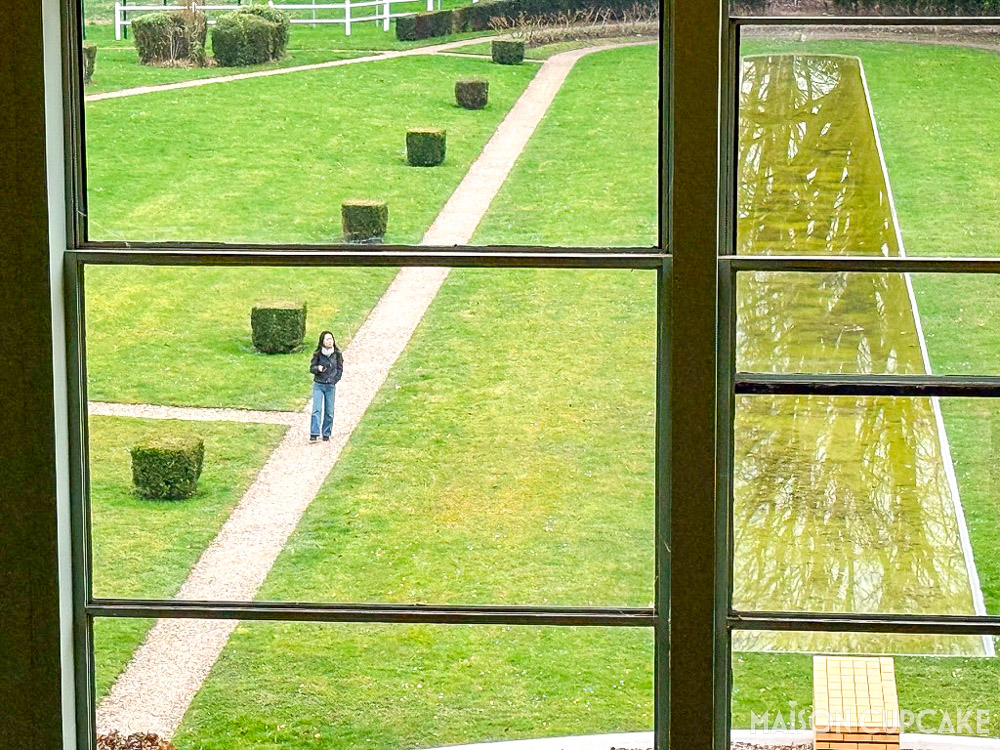
Art Deco window frames at Villa Cavrois overlooking landscaped modernist garden and water feature
Exterior garden view as seen from roof terrace showing Villa Cavrois symmetry and open lawns
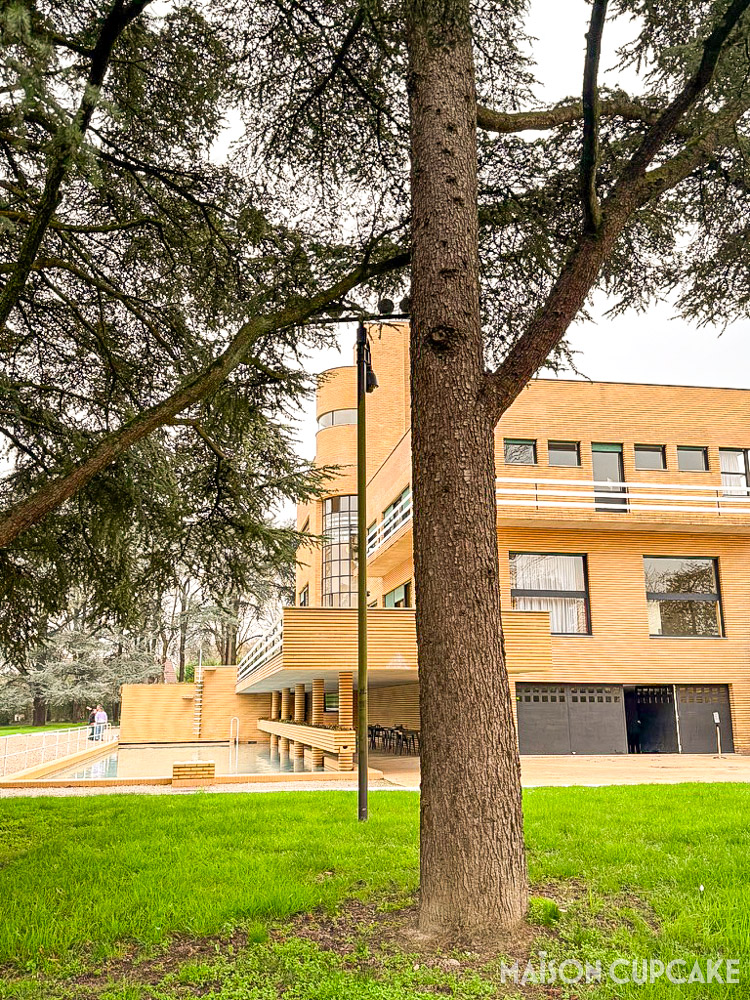
Side view with tree of Villa Cavrois modernist house near Lille
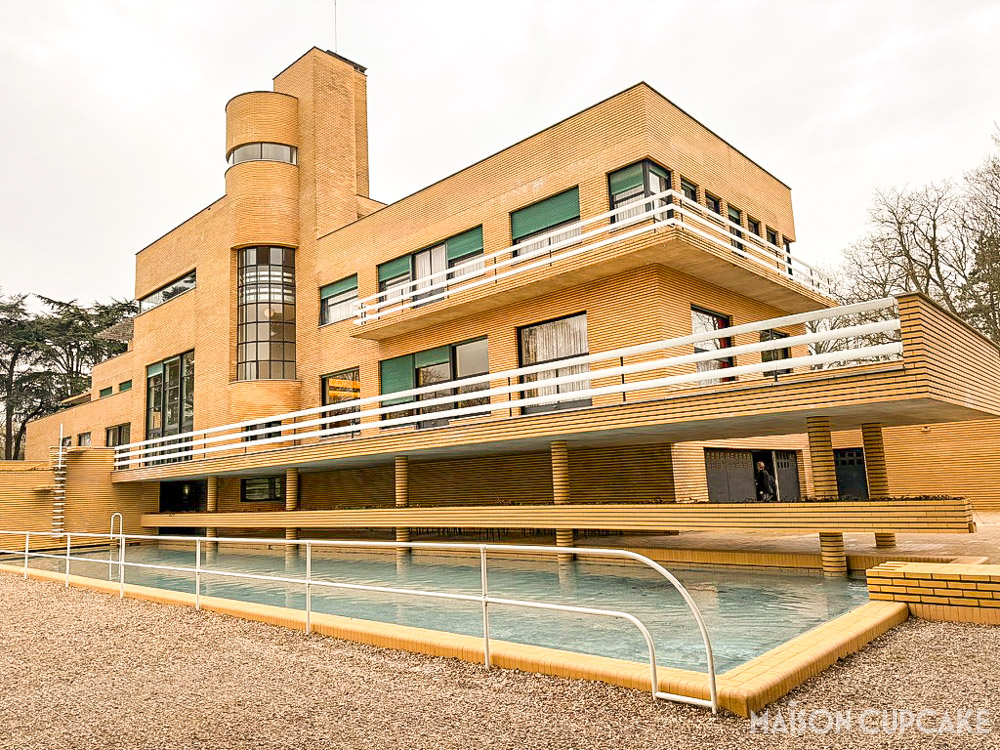
Rear exterior angle of Villa Cavrois Art Deco home with swimming pool and terrace

The rectangular pool clings under the rear of the house. It didn’t look very deep and I wondered if this was for safety reasons now that the house is a museum. A swimming pool, not to mention sunbathing would have been an aspirational 1920s-30s activity – although arguably Lille does not have the Côte d’Azur climate required to really enjoy it.
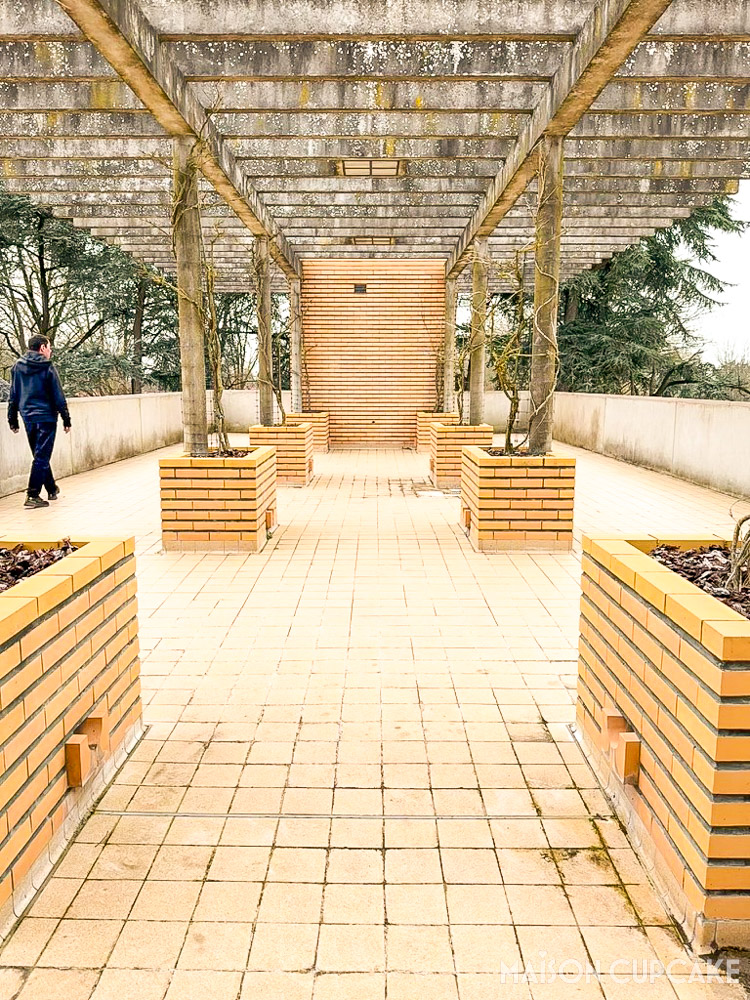
Upper Roof terrace at Villa Cavrois, modernist design icon near Lille

Up on the roof is a pergola covered terrace giving an optimum vantage point over the garden. I can imagine this would have been a quiet space to sit far away from any activity downstairs. Mr Cavrois’ office was adjacent on the top floor. 

Practical Points For Visitors

There are characteristically stylish toilets in the basement of Villa Cavrois but sadly no café. After our journey and a visit of over two hours, we were desperate for coffee and a pitstop but had to hold out until our onward journey to Roubaix. 

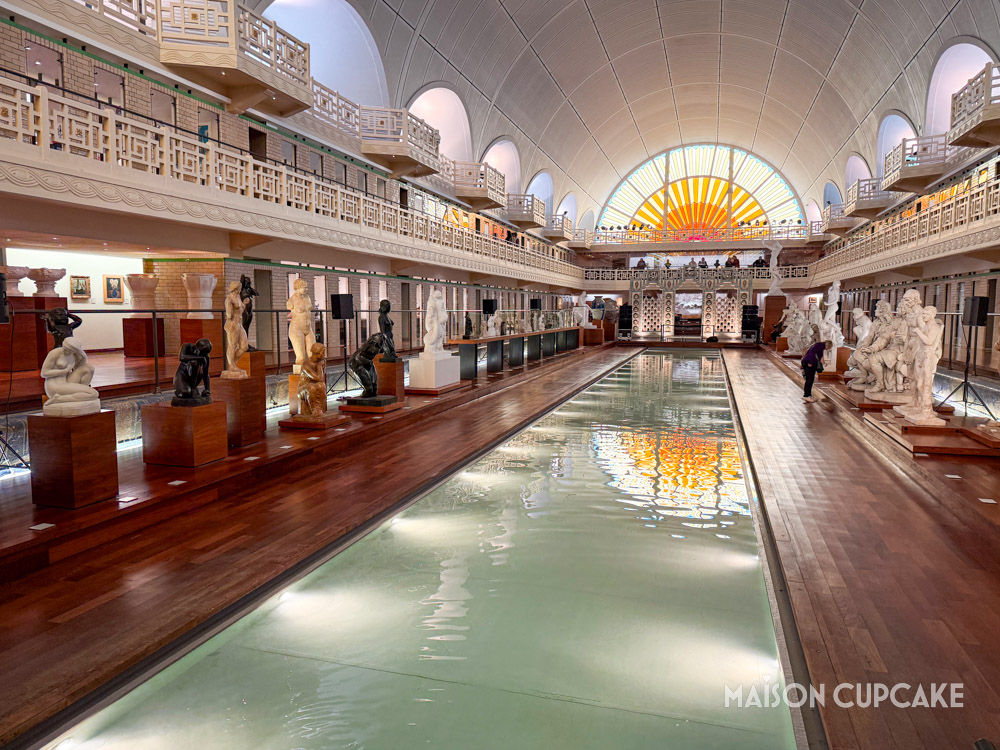
A black shipping container at the entrance holds a surprisingly well-stocked Modernist design book shop also selling more touristy souvenirs. If you are going to La Piscine art gallery in nearby Roubaix, you may wish to save money for their excellent gift shop too.

You can visit Villa Cavrois with admission via the Lille City Pass or a Centre Monuments Nationaux card, otherwise it’s around 10-11 euros. Allow two hours for your visit – plus travel time.

If sunny, you may wish to linger longer in the grounds, but it’s a bit manicured for picnics – I suspect a madam may rush up and tell you off – so don’t come hungry.  

Reaching Villa Cavrois from Lille

Villa Cavrois lies around 40 minutes outside of central Lille on the way to Roubaix. From Lille Flandres you take either the tram (Villa Cavrois stop) or metro (Croix Centre stop) with a 20 or 30 minute walk respectively.

You can buy a joint ticket for Villa Cavrois and La Piscine art gallery in Roubaix and these two attractions together make an excellent cultural day out from Lille. 

Villa-Cavrois-fr
60 Ave du Président John Fitzgerald Kennedy
59170 Croix, France

Have you ever visited Villa Cavrois? Share your thoughts in the comments below.
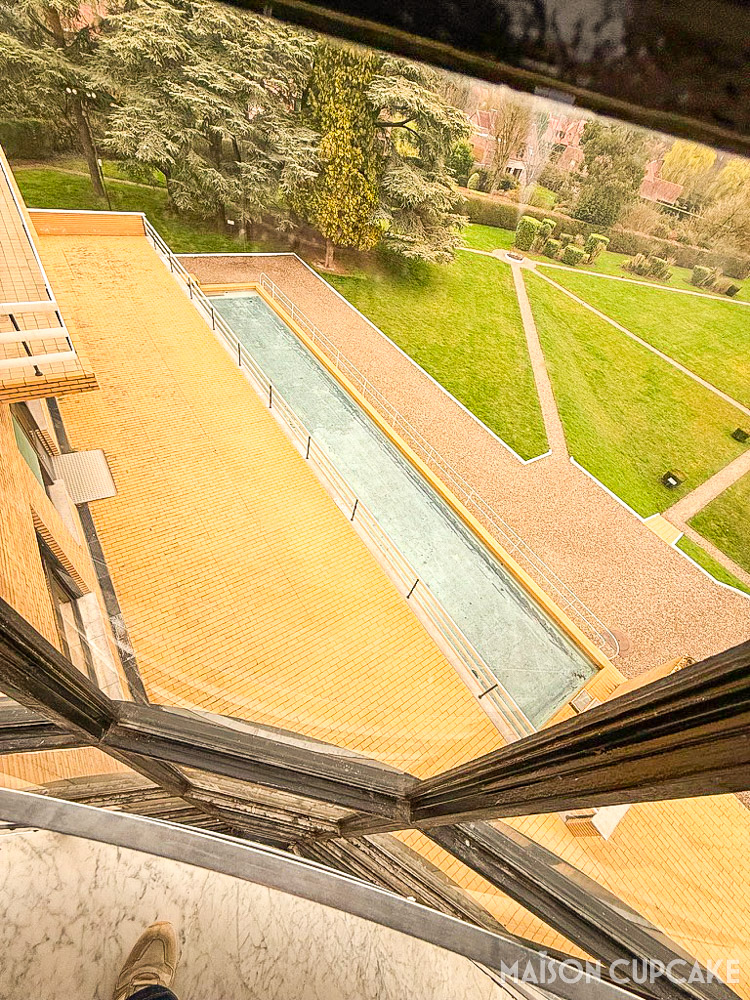
View from stairwell at Villa Cavrois modernist house looking down at pool and gardens

Originally published on Maison Cupcake
How to Get Around Lille (with real examples)

This guide to transport options in Lille covers what you need to know about getting to and around the city. It looks at arriving by Eurostar or driving to Lille, including where to park, as well as how to use the city’s metro, trams and buses. It also covers bike hire schemes and sightseeing tours to help you navigate Lille transport efficiently.

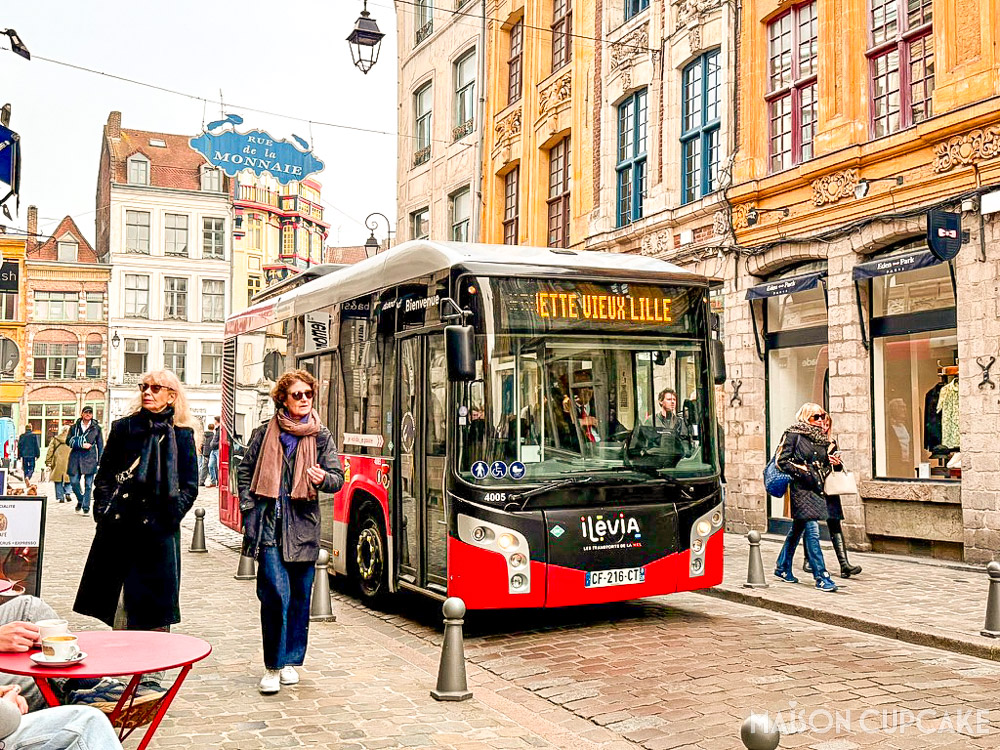
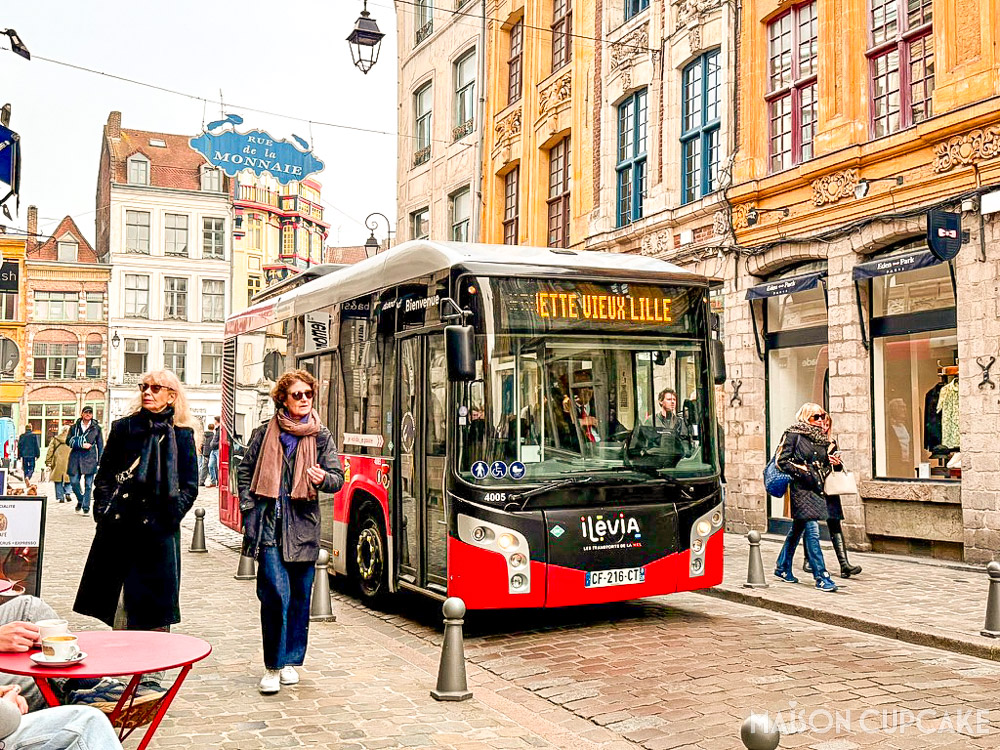
Passenger Bus in Vieux Lille Rue de la Monnaie

Getting To Lille on Eurostar

Eurostar train arriving in Lille Europe station

At only 90 minutes from London Saint Pancras, Eurostar is an obvious way to get to Lille. The Eurostar trains pull into Lille Europe station, which is around 15 minutes’ walk north of central Lille or a short metro ride away. 

Lille Europe is also served by long-distance TGV routes to cities such as Lyon and Montpellier without needing to change stations in Paris. 

Getting To Lille By Car

Alternatively, Lille is only 30 minutes from Dunkerque ferry port or 50 minutes from the Calais ferries or the Channel Tunnel making it equally convenient to arrive by car.

Lille is one of the cities covered by France’s Low Emission Mobility Zone scheme. Before travelling to France you can order a Crit’Air sticker to display in your windscreen. These are graded according to emission levels of your vehicle. The stickers cost around ten pounds and arrive by post in a few days. Vehicles with higher emissions may be restricted from driving in the zones when pollution levels are high.

Be mindful that whether you are on the French or Belgian side of the border, town names on road signs will be in French or Flemish accordingly. The Flemish name for Lille is Rijsel which can be confusing if you don’t know. Others to watch out for are Antwerp (Anvers in French), Gent (Gand), Kortrijk (Courtrai) and Ieper (Ypres). 

Parking In Lille

Indigo Car Park entrance, Lille France

There are numerous long stay car parks in Lille, often run by Indigo. We have used the car park above Lille Europe station twice for long stays; we like it because it’s well-lit with direct access into the metro. You can drive straight into the Lille Europe car park from a slip road off the main ring road although there are cheaper places to park than this.

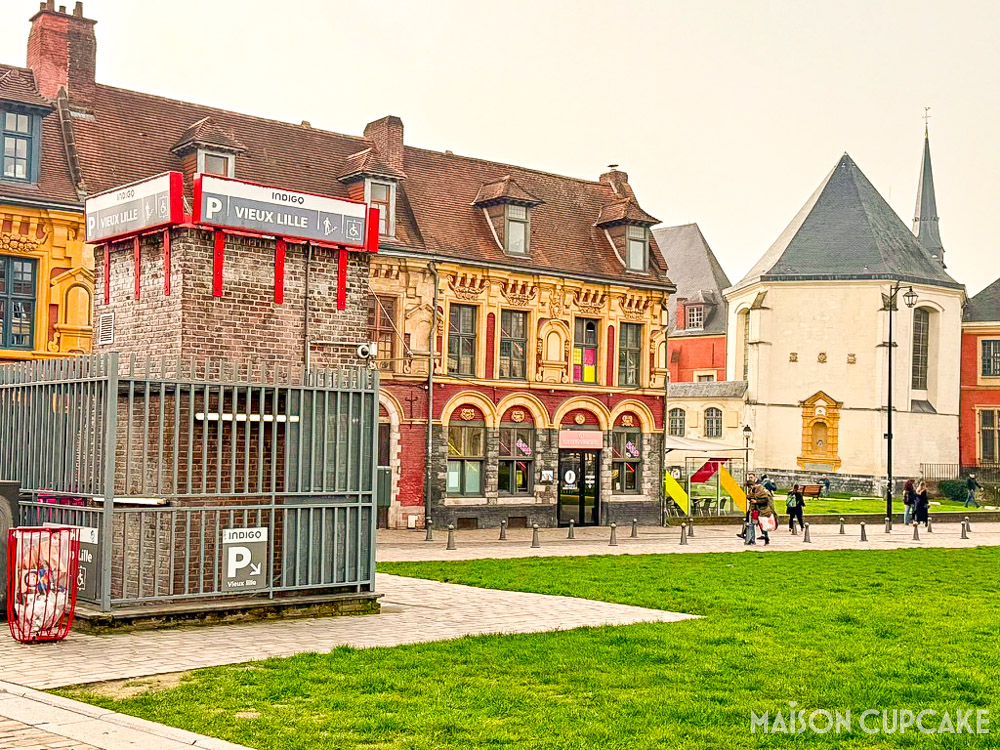
More central, and cheaper car parks include Parking Indigo Lille Plaza and Parking Indigo Lille Parc Vieux-Lille (pictured). Indigo Neo lets you prebook spaces if you set up an online account or you can drive in on arrival.

How Much Does It Cost To Park In Lille?

Expect to pay around 40 euros at Lille Europe per 24 hours but under 30 euros elsewhere in Lille. I can report that parking for 26 hours is charged at 26 hours rather than automatically tipping into a full second day. (The UK could take a lesson here!)

Paid French car parks tend to be pay-on-exit rather than guessing in advance how long you need. Parking charges tend to be lower than the UK, even in cities.

Do You Need A Car in Lille?

Whether taking a car to Lille is worthwhile depends on how many people are travelling and the relative prices for Eurostar tickets versus ferry or Channel Tunnel crossings.

Certainly you can get around Lille without a car although having one opens up the option to visit nearby cities such as Ypres over the Belgian border. Another benefit of taking the car is being able to fill the boot with goodies – Lille is stuffed with great shopping!

I would never take the car if travelling alone, but if it was several family members it might be cheaper than Eurostar, even after paying to park. 

Getting Around Lille (Public Transport)

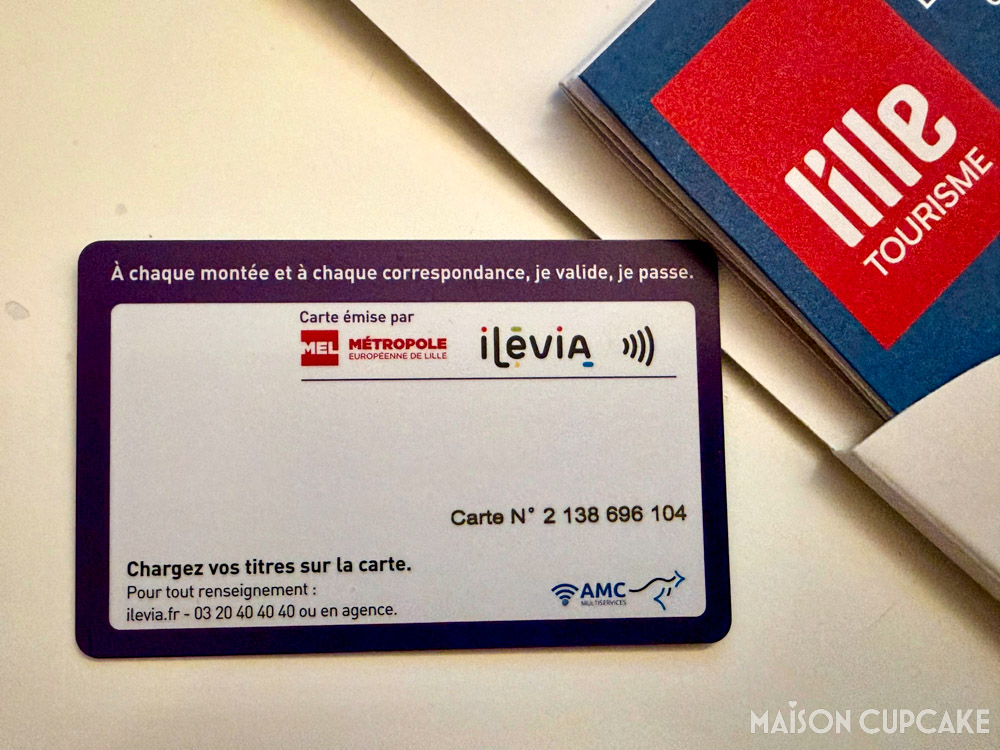
Lille has a comprehensive public transport system operated by Ilévia. If you are using the Lille City Pass you can get a small discount. Otherwise journeys are 1.80 euros each.

The Lille Metro

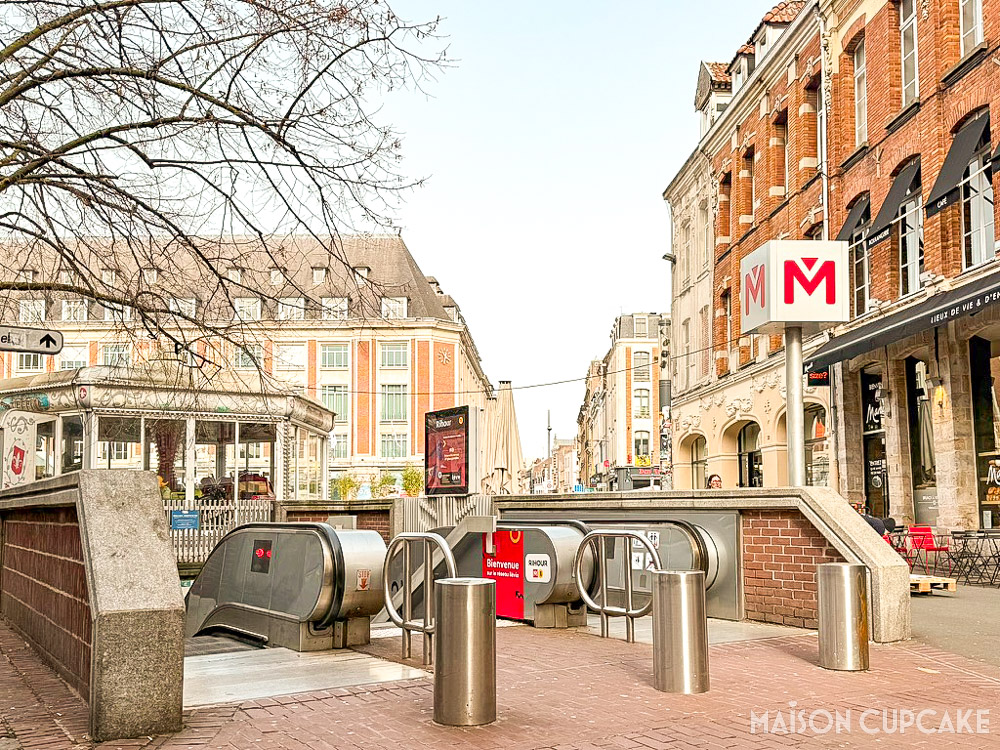
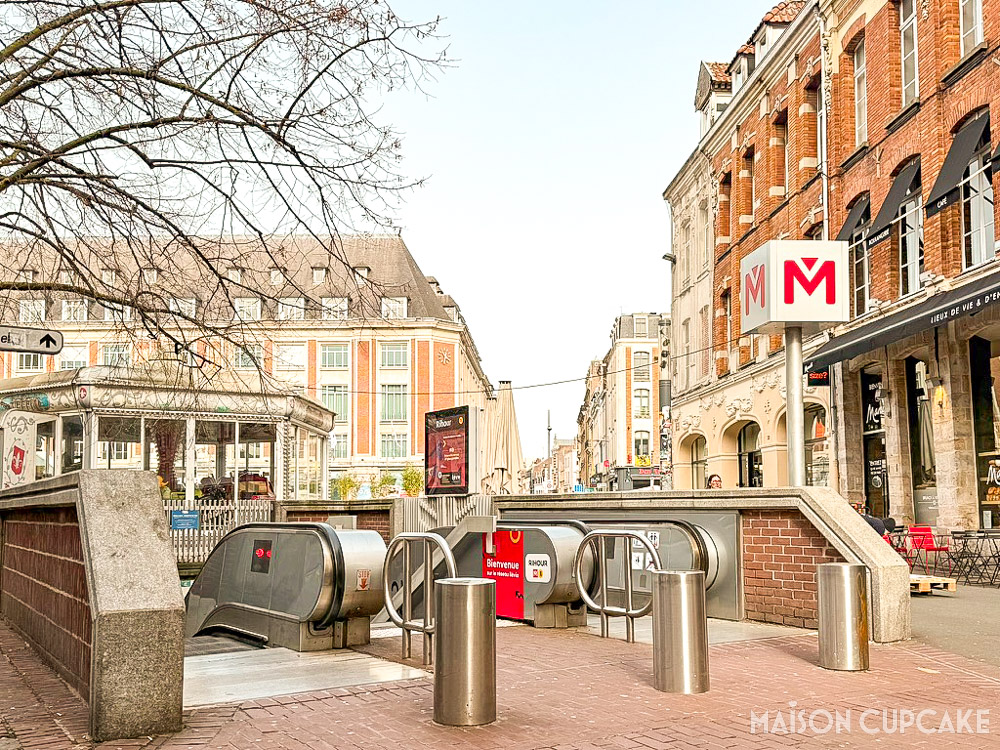
Lille has two underground metro lines intersecting at Lille Flandres and Porte des Posts. Services run every 4-5 minutes. Trains are much smaller than Paris or London although the network is less busy. Services run until late evening. Tap your card at the barriers to board – there’s no need to tap out.

In carriage display showing Lille metro lines

Whilst efficient for longer journeys, the metro isn’t terribly useful in central Lille as stops are far apart or journeys require changes at Lille Flandres. 

Lille metro platform with train and passengers

The Lille metro is useful but a bit grotty. Little changed since the 1970s, metro stations are shabby at best, downright filthy at worst. Lille transport stations are dark and dated, puddles and broken tiles are commonplace. 

Father and Son riding Lille Metro at front of driverless carriage with view of rails

The carriages themselves are fine and the seats are, thank goodness, plastic instead of upholstered. Long promised renovations are stuck behind hoardings. Nevertheless, the Lille metro is fast, reasonably reliable and the driverless carriages mean kids love playing “driver”.

Using Lille’s Trams

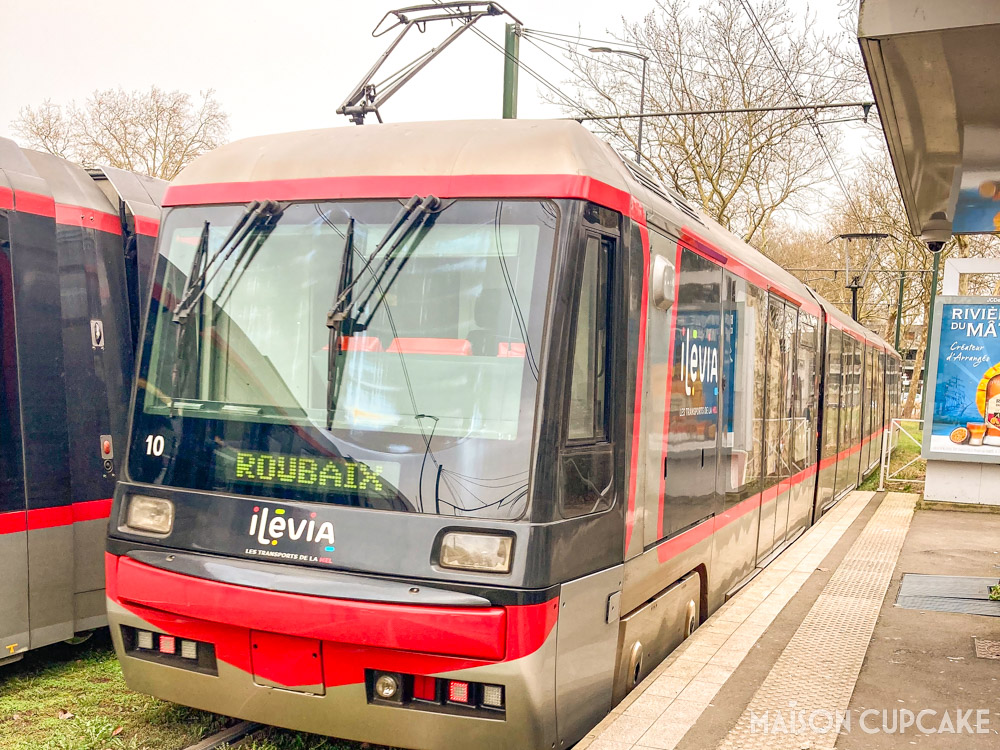
Tram to Roubaix - one of several forms of Lille transport

There are two tram lines going from Lille Flandres to Roubaix and Tourcoing. Services are around every 15 minutes although less often on Sundays. Tap your card on the terminal when boarding. The trams are more modern and cleaner than the metro. 

You won’t see the trams around the historic centre as they run underground into Lille Flandres. But most of the journey will be above ground – the Roubaix route follows an old boulevard with many early twentieth century villas along the way.

Using Lille’s Buses

Lille has a mix of “Navette” shuttle buses in the old town and long “bendy” buses reaching outlying areas. Simply tap your card when boarding. There are 140 routes including 12 “Lianes”, express routes with limited stops. 

Lille transport services are less frequent on Sundays. There is also one night bus route between the Pierre Mauroy stadium, the main centre and Douai.

For short-term visitors, buses are often less practical than the metro and trams as they tend to serve residential districts rather than link tourist attractions. 

That said, you’ll want a bus connection to reach LaM modern art museum in Villeneuve d’Ascq as it’s not near the metro or tram. I also wish buses went past the Zénith concert venue or Villa Cavrois but annoyingly they don’t and both involve some walking. 

Using SNCF Regional Rail

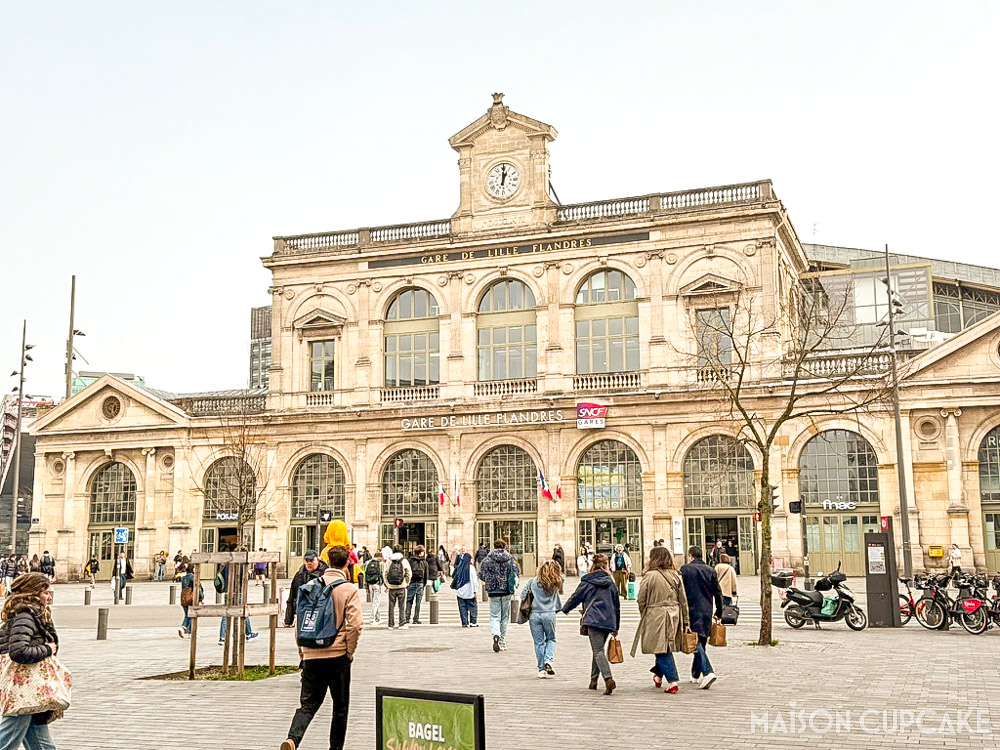
Lille Flanders SNCF station facade with pedestrians, France

Regional rail services leave from Lille Flandres SNCF station. From here you can get local TER trains to places such as Calais, Dunkerque or Courtrai over the Belgian border. Non-TGV trains to Paris leave from here instead of Lille Europe.

An easy way for UK visitors to buy train tickets in France can be via the Trainline app which works for many SNCF/TER routes but not all. If it sells tickets for your chosen route, you’ll receive a QR code for the inspector to scan onboard. 

You can also buy paper tickets from machines in the station. You need to validate these before boarding by stamping them at the orange “composter votre billet” machines on the station concourse or platform. 

Bike Hire in Lille

Bikes can be a handy form of Lille transport to get to places such as the Citadel, or for exploring Saint-Sauveur and Fives. Although there are a growing number of bike lanes, the cobbles in Vieux Lille will be bumpy. You don’t need to take your own bike, there are a couple of options for visitors.

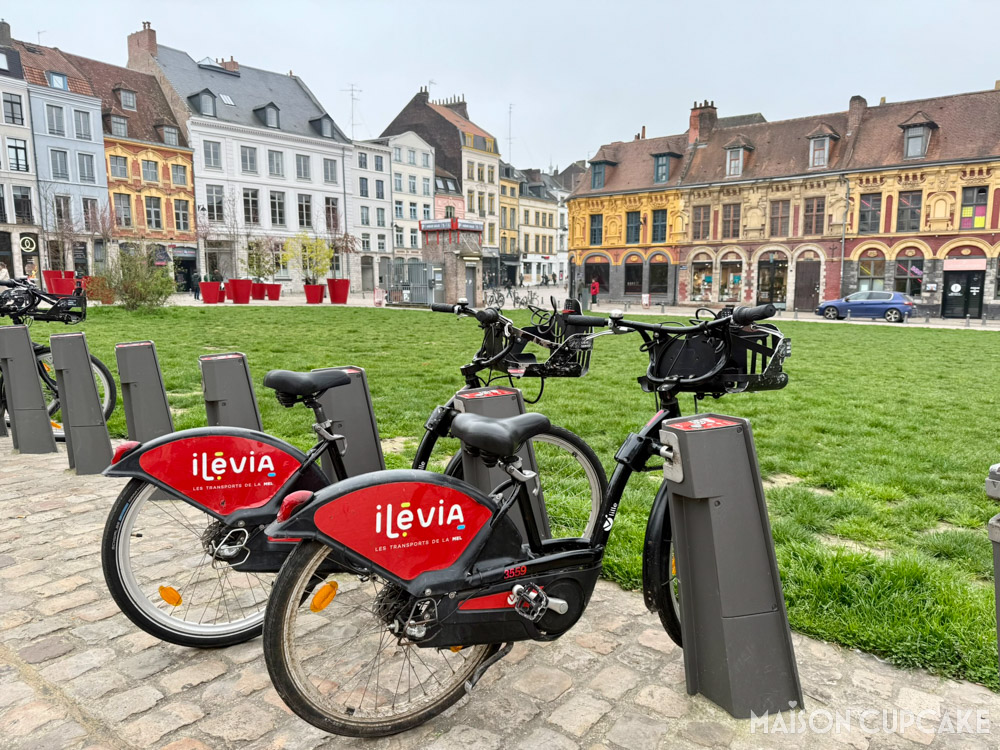
iLévia Docking Bikes in Lille

Velib hire bikes Lille France

There are at least 30 docking areas and 260 docking stations for V’lille bikes, also operated by iLévia, around central Lille. These are free for rides under 30 minutes or 1.85 euros per 24 hours. You need to be over 14 years old to ride and set up an account in the iLévia app. 

Lime Bikes in Lille

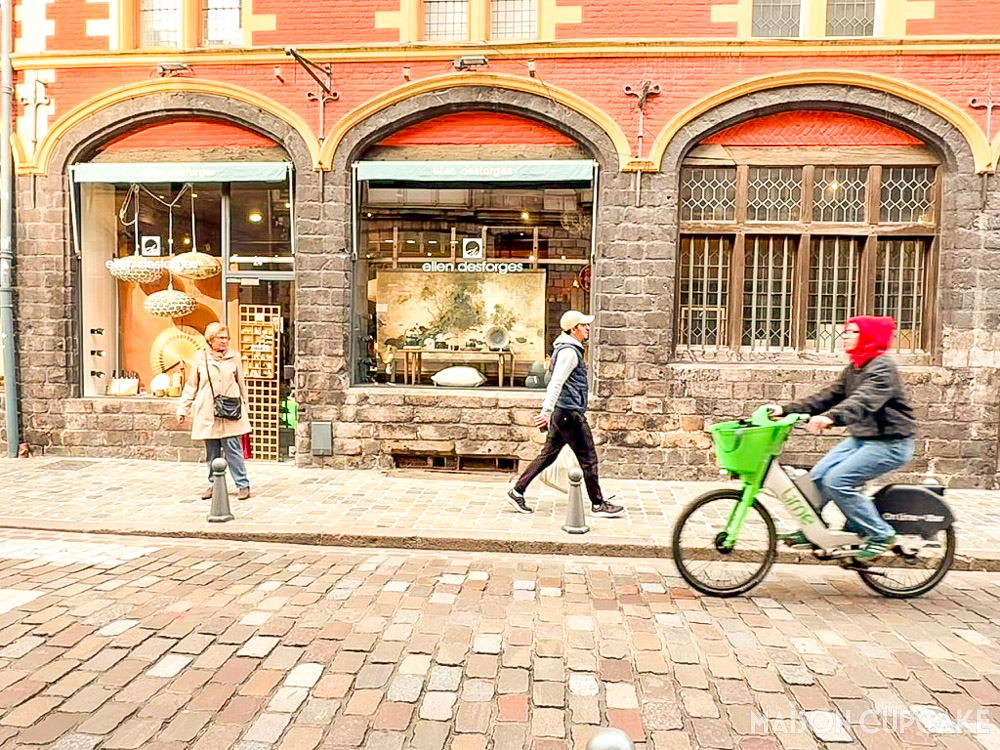
Lime bike seen in Lille old town, France

Lime e-bikes can be hired throughout Lille. There are dockless bikes but unlike some cities you can’t end your ride unless you’re inside a designated parking zone which keeps things tidier. I cannot comment how effective this is. You don’t need a separate French Lime account.

Tourist Transport Experiences in Lille

If you’d like to sightsee whilst someone else does the driving and navigating, Lille has several options available. All three of these tours leave from Palais Rihour.

Sightseeing City Tour By Bus

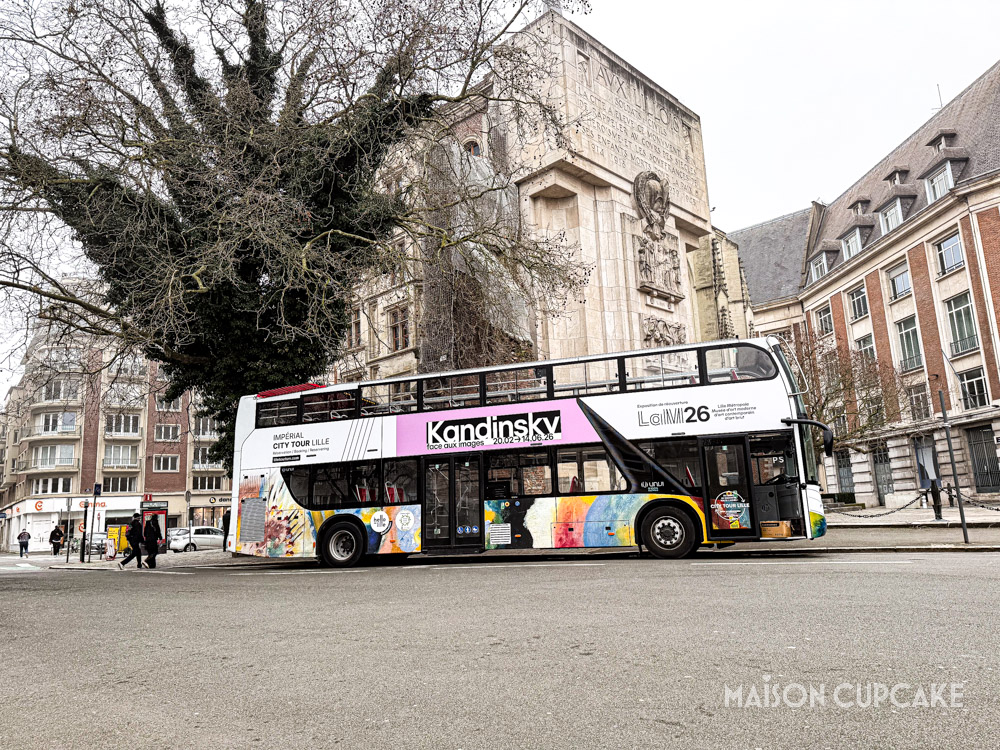
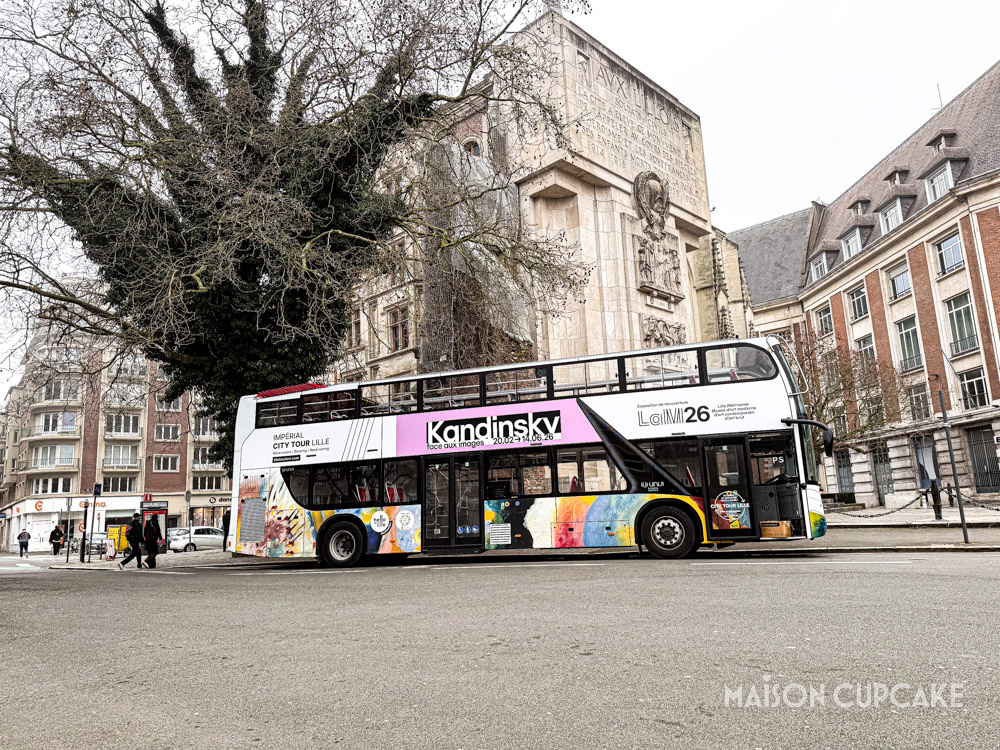
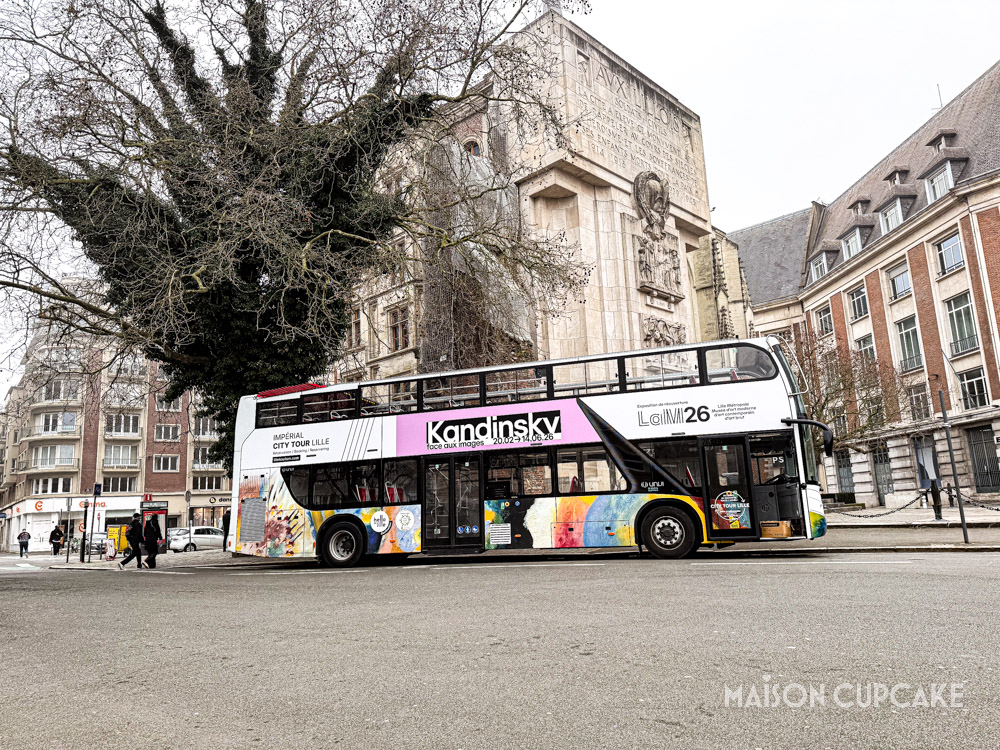
Guided Tour of Lille by Bus - open top double decker bus tour

The Impérial City Tour of Lille by bus lasts 75-90 minutes taking in key sights around the city centre with an audio tour. It runs twice daily and costs around 18 euros or comes included with the Lille City Pass.

Tradi’Balade Vintage Car Tours

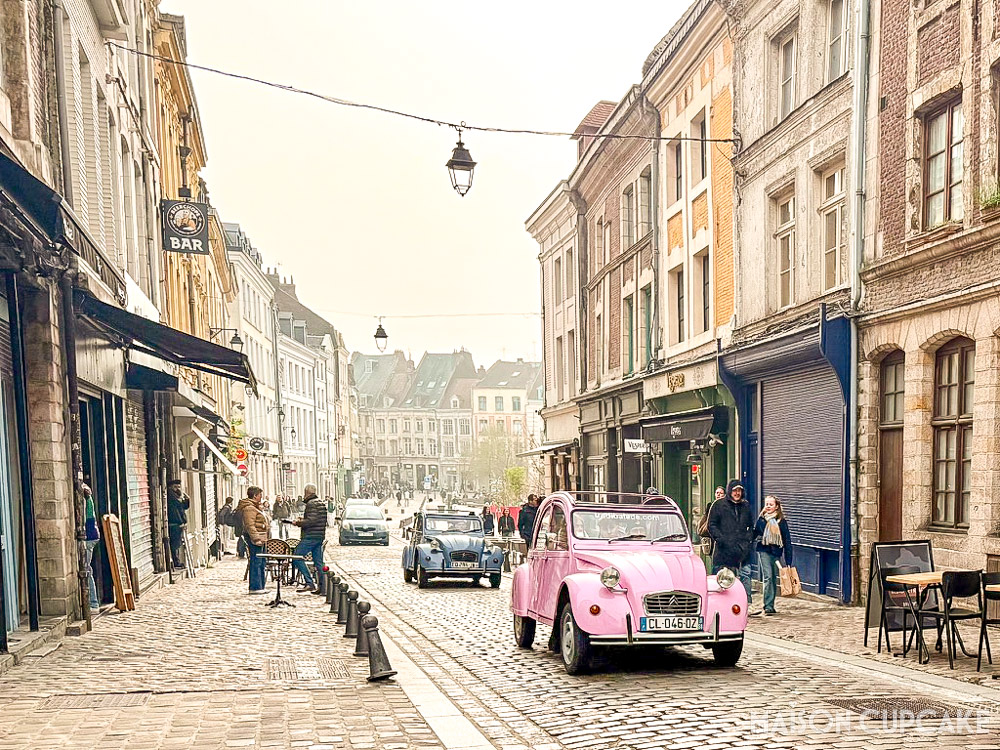
Citroën 2CVs Driving Tour around Vieux Lille France

You can’t fail to notice the rallies of brightly coloured Citroën 2CVs zipping around the middle of Lille. Tradi’Balade offer a memorable way to see Lille in themed rides lasting 30-90 minutes. 

The price per person ranges from around 40-80 euros according to tour length and group size. You can combine the vintage car ride with activities such as food tastings or solving a mystery!

Happymoov Vélo-Taxi Rides

Yellow Lille tuk tuk vehicle, France

A novel form of Lille transport is a Happymoov Vélo-Taxi ride. Journeys around Lille are charged per vehicle not per person. Two people can enjoy the tours lasting one hour.  Pre-booking is recommended, cheaper online and essential on Sundays or public holidays. 

Don’t Forget Walking!

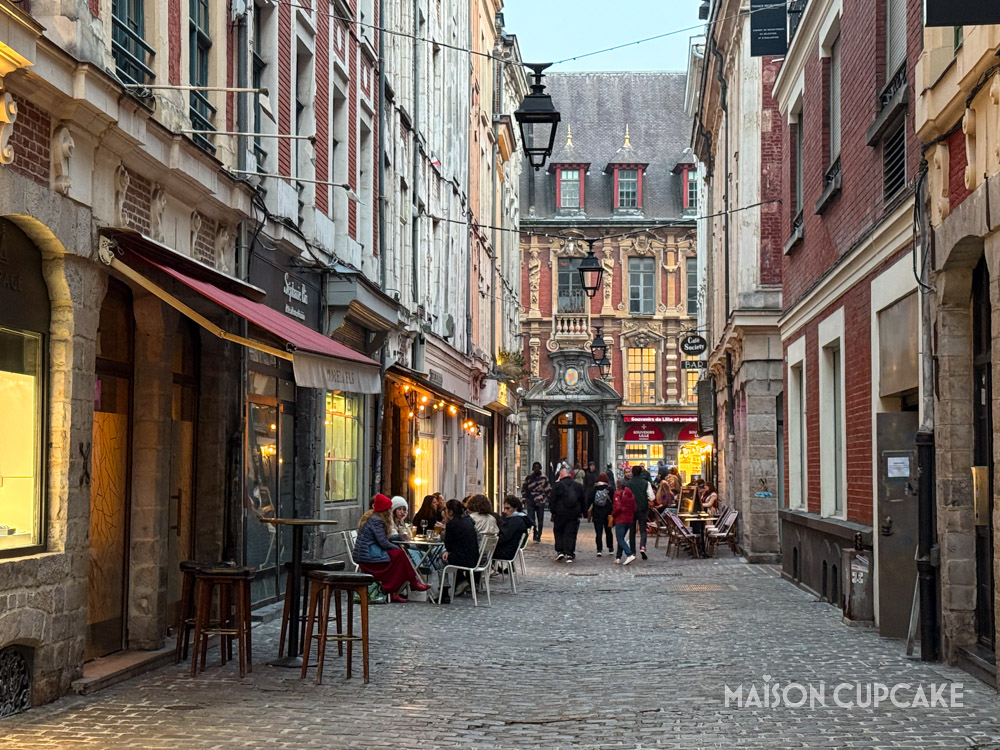
Shoppers walking in Vieux Lille cobbled street

Much of Lille’s historic centre is pedestrianised or low traffic areas, which often makes walking more practical than public transport. The narrow streets of Vieux Lille are filled with decorative buildings and perfect for taking your time to absorb details. Most attractions in central Lille are within 20 minutes’ walk of the Grand Place. 

If you spend your time around downtown Lille rather than visiting sites in Roubaix, Tourcoing or Villeneuve d’Ascq, you could see everything on foot if you don’t mind walking everywhere. Naturally there are plenty of French cafes to take a break.

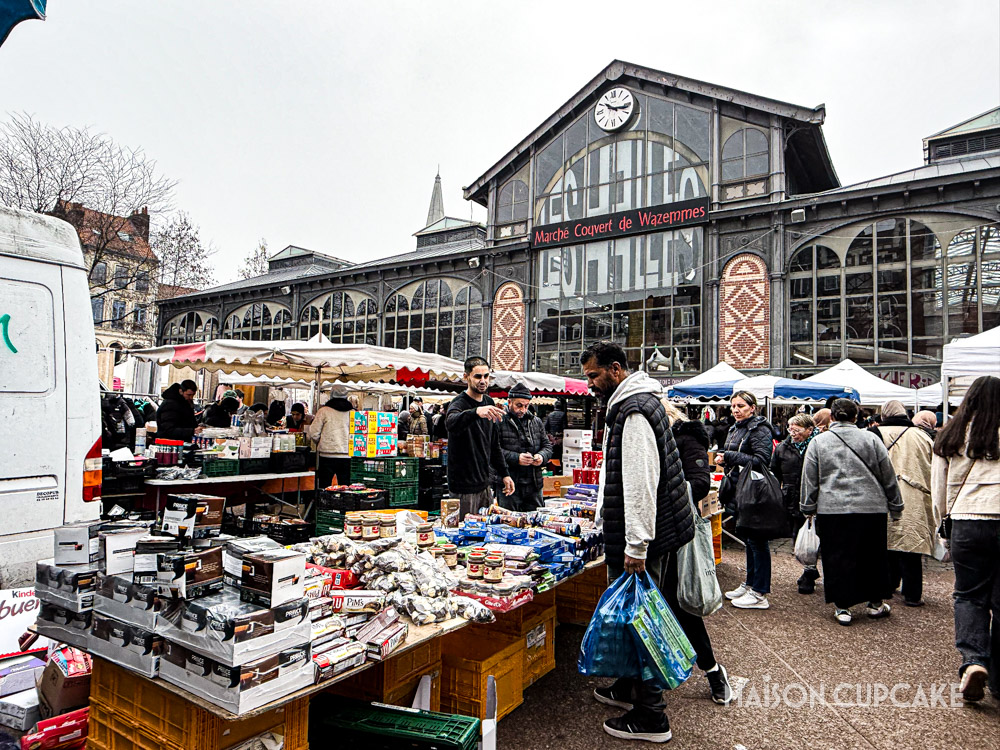
Even a metro trip three stops away to Wazemmes would only take 30 minutes to walk back to the city centre. Long avenues in Lille are increasingly being landscaped with shrubs and cycle paths making them pleasant places to walk. 

  • If you are planning a visit to Lille you may save money on museums and Lille transport by using the Lille City Pass – read my honest review for real life costs and visitor tips.
  • Or see How To Spend Three Days In Lille by reading my detailed itinerary about our busy weekend including a day trip to Roubaix, various museums and Wazemmes Market. 
  • If you prefer a slower pace in a more natural setting, I have written about Things To Do In The Somme For A Relaxing Weekend. 

Have you visited Lille? How did you travel around on Lille transport? Let me know in the comments!

Originally published on Maison Cupcake

Is Lille City Pass Worth It? Honest Review With Savings Tips

The Lille City Pass can help you access the best galleries, museums and attractions. Lille and its surrounding towns are well connected and packed with things to do; culture, shopping, open spaces. It’s no surprise Lille is a hugely popular weekend break destination meriting repeat visits to enjoy its food, architecture and vibrant atmosphere.

This article will cover how the Lille City Pass works, who might get the most out of it, realistic itineraries and several examples of how you might save money.

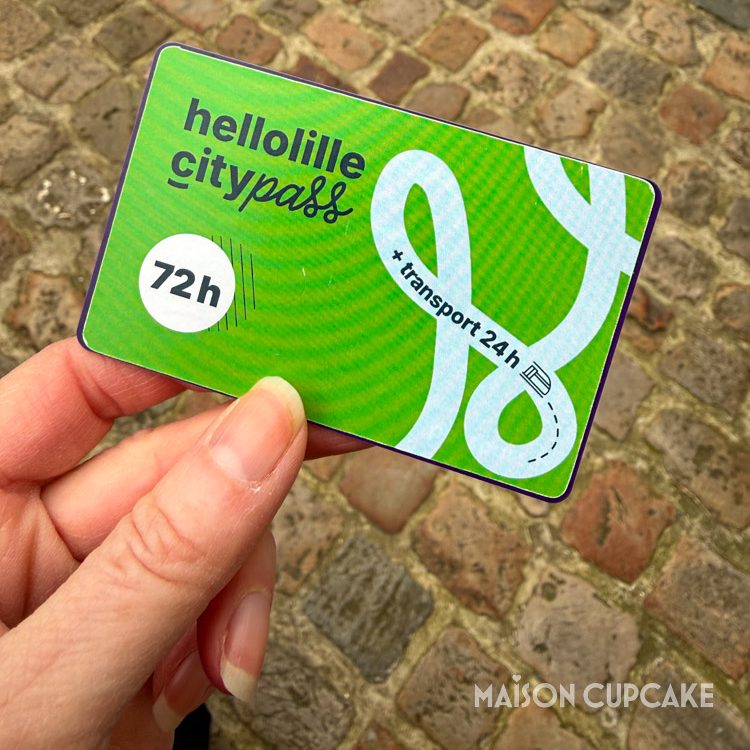
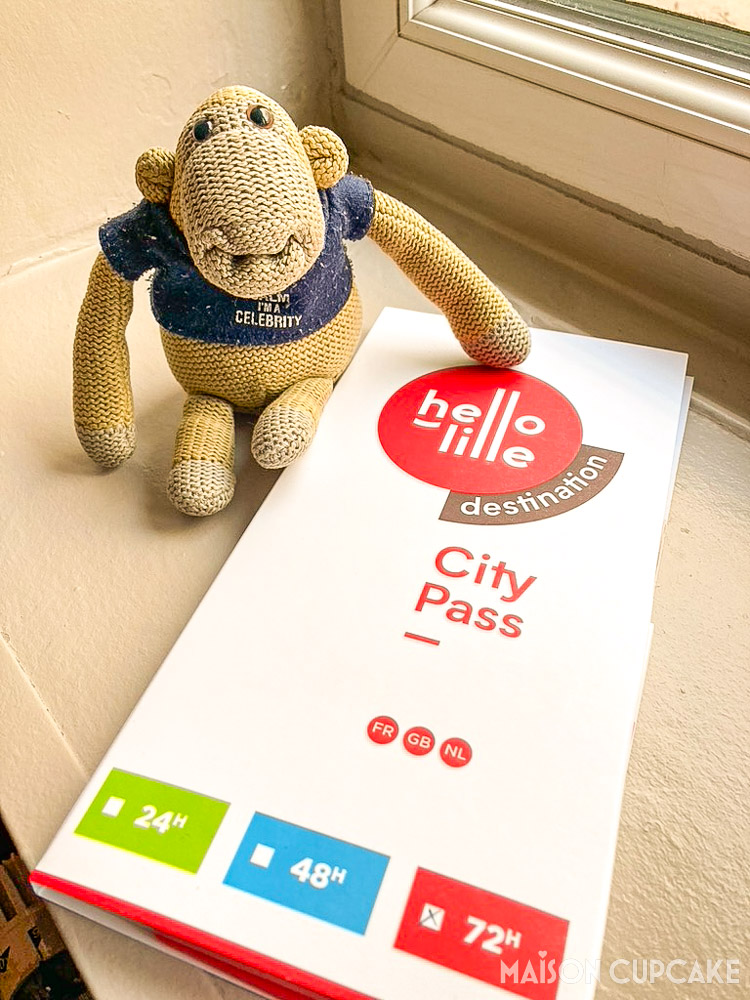
Hello Lille City Pass green plastic 72 hour card

Where to Buy Lille City Pass

Unlike similar city tourist passes i.e. Brussels, the Lille City Pass is a plastic card. The mobile app is only a directory, there isn’t a digital version of the pass as yet.

Ordering Online: You can order passes through the Hello Lille website, although 10 days’ processing time is cautioned to receive your pass by post. Once purchased, it’s valid for one year and your 24-72 hour window kicks in once you start using it.

Buying In Person: Face to face purchases of City Pass can be made at Lille’s tourist office in the Palais de Rihour and Rihour metro stop. Whilst the better option at the last minute, queuing and form filling (so French!) may eat into your morning. We had our passes within 15 minutes in early March but it may take longer in high season.

What Do You Get With Lille City Pass?

The Lille City Pass grants access to around twenty attractions and guided tours in the Lille Metropolitan area including Roubaix, Tourcoing and Villeneuve d’Ascq. Using the pass can save money compared to usual admission rates.

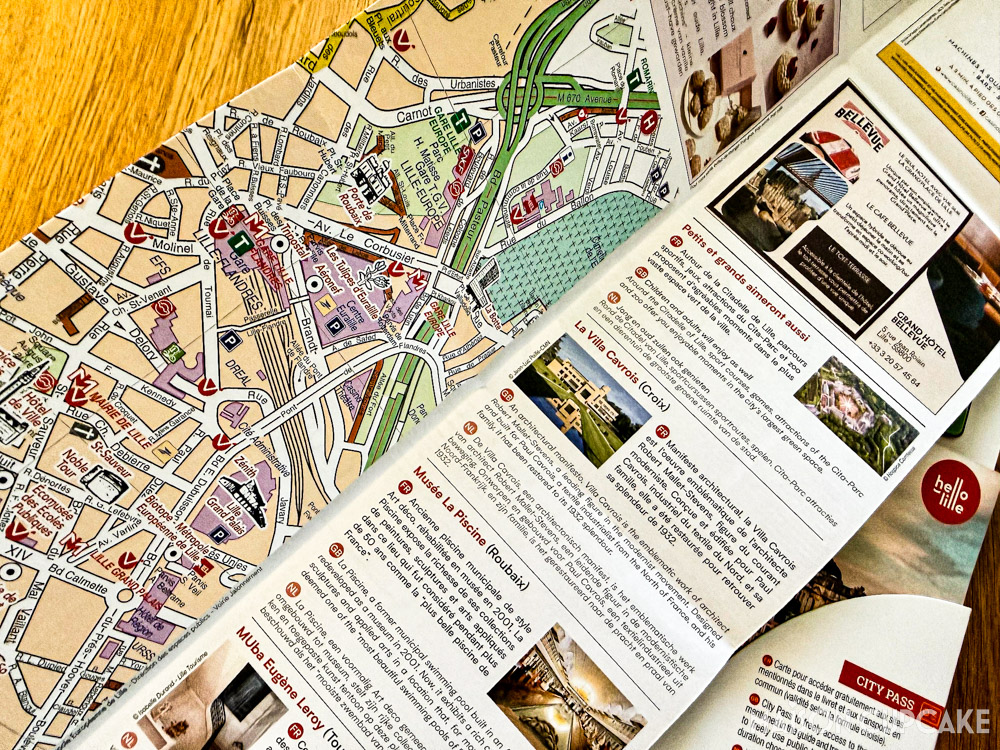
Lille City Pass Is Presented In A Slim Wallet With Map and City Guide

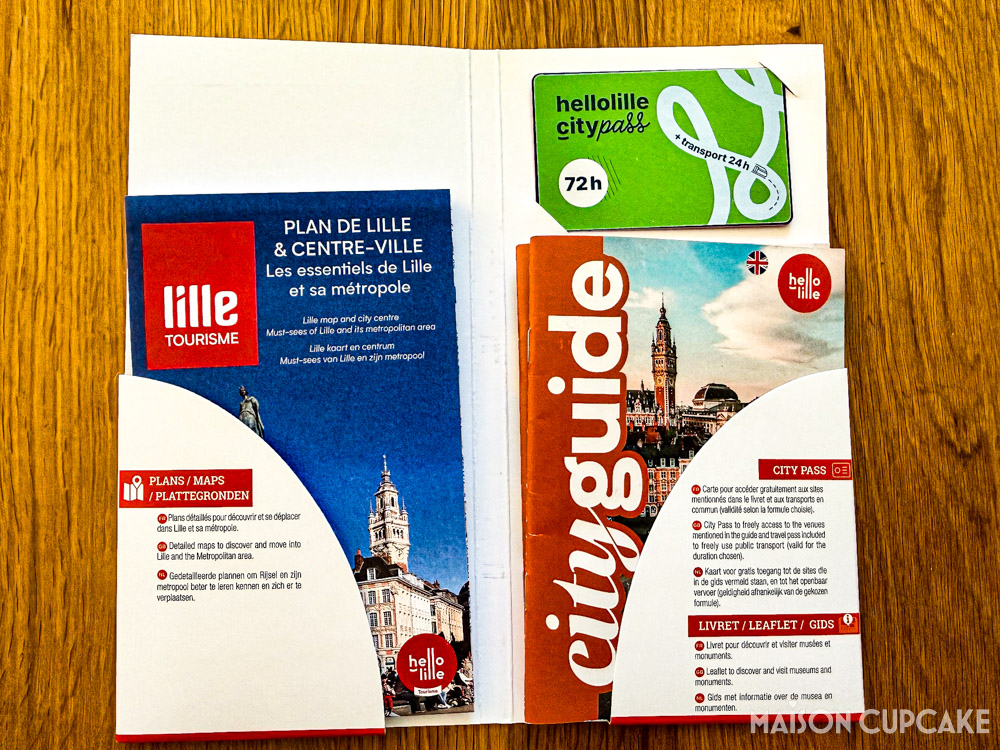
The pass itself is a credit card-sized ticket presented in a slim wallet with a city map and booklet summarising Lille’s heritage sites, parks, activities and shopping districts.

The City Guide booklet mixes attractions that are free with the pass, free to all anyway, or paid admission but aren’t covered by the pass – this can be a little confusing to unpick.

The packs are issued in English, Dutch or French as you wish.

What Does Lille City Pass Cost?

The rate per day gets cheaper depending whether you buy a 24, 48, or 72 hour pass. The 72 hour pass is most economical and you can easily fill an itinerary for Three Days In Lille.

In 2026, the cost was:

  • 24 hours – 25 euros
  • 48 hours – 35 euros
  • 72 hours – 45 euros

Is It Worth Adding Public Transport?

For 4 euros supplement, you can add 24 hours’ pass for Lille public transport – saving 1.50 euros on standard day pass rate. Single journeys would otherwise cost 1.80 euros. I have written about How To Get Around Lille in a detailed separate post covering public transport, bike hire and sightseeing tours.

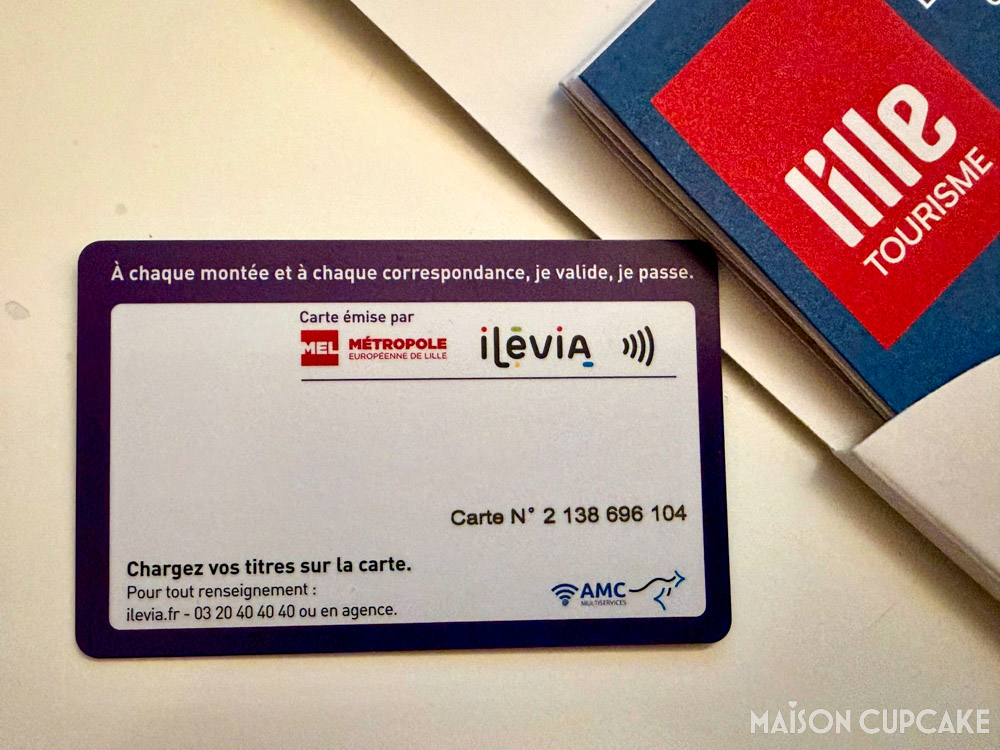
The rechargeable Ilévia network pass is physically glued to the back of your Lille City Pass. The 24 hours begins with your first journey so your transport pass may expire at a slightly different time to the City Pass itself.

Who Should Buy Lille City Pass?

The City Pass is Best For…

Museum Lovers: Culture Vultures will get plenty of value out of the Lille City Pass. There are around five large museums on the pass and a dozen smaller ones.

Guided Tour Fans: If you enjoy organised tours, the City Pass offers two types of bus tour and a walking tour of Vieux Lille.

If you are doing at least one organised tour plus at least one big museum, a City Pass makes sense.

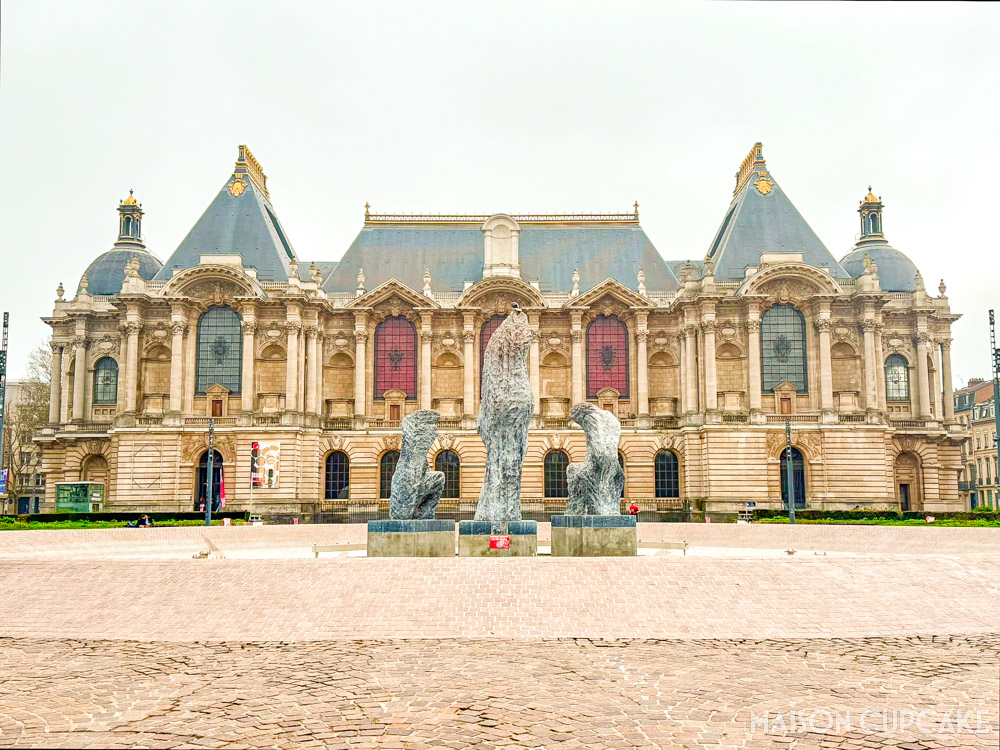
The vast Musée des Beaux-Arts collection in Lille is often dubbed “The Little Louvre”

The City Pass Is Not As Good For…

Shoppers and Foodies: If you’ve come to Lille primarily to go shopping, eat lazy lunches or enjoy open spaces, you may not find time left to make the City Pass worthwhile.

Small Museums: Most smaller attractions cost under 8 euros. If you are visiting Lille for 1-2 days, and only visit a couple of cheaper attractions, you may not save money.

Which Attractions Are Included in Lille City Pass

Museums and Galleries – Large and Small

The City Pass gets you into over a dozen art galleries and museums although the biggest ones are quite far apart. The biggest (and highest cost) sites are:

  • Musée des Beaux-Arts in central Lille
  • La Piscine in Roubaix
  • Villa Cavrois on the way to Roubaix
  • LaM modern art museum in Villeneuve d’Ascq
  • Le MUba Eugène Leroy in Tourcoing
La Piscine art gallery at Roubaix
La Piscine gallery in Roubaix is one of several excellent museums you can visit with Lille city Pass

There are several smaller and cheaper sites, all walkable in central Lille:

  • Maison Natale Charles de Gaulle – outskirts of Vieux Lille
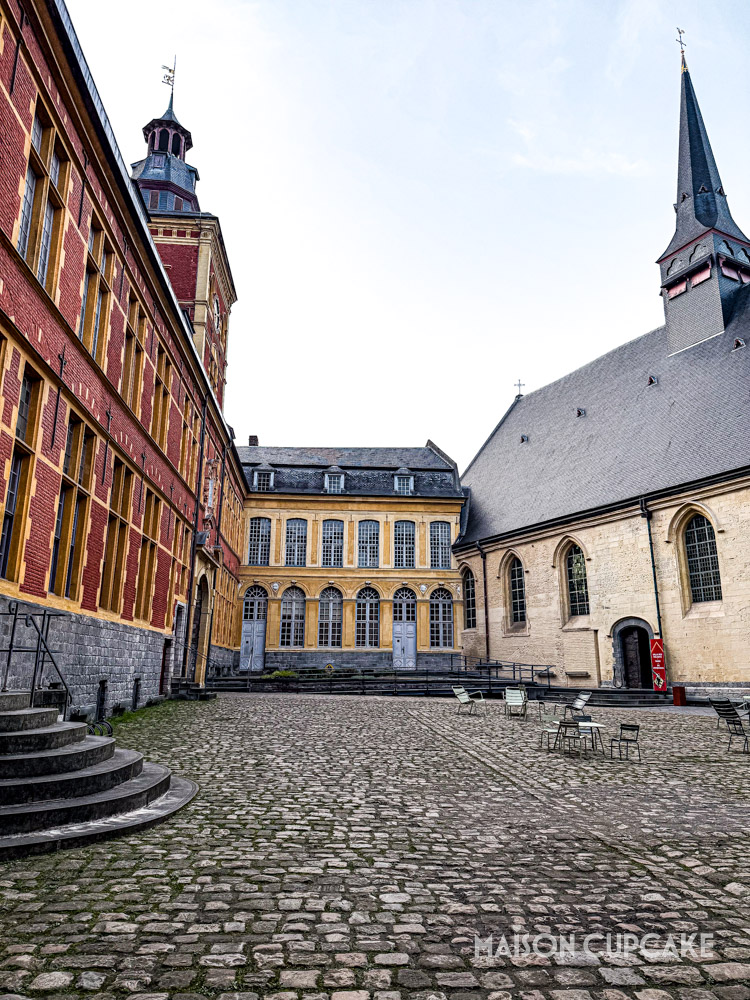
  • Musée de l’Hospice Comtesse – central Vieux Lille
  • L’Institut Pasteur – south east of central Lille
  • Le Beffroi – Belfry Tower, close to L’Institut Pasteur.

There are additional sites outside of central Lille. You’d never manage them all, even in 72 hours.

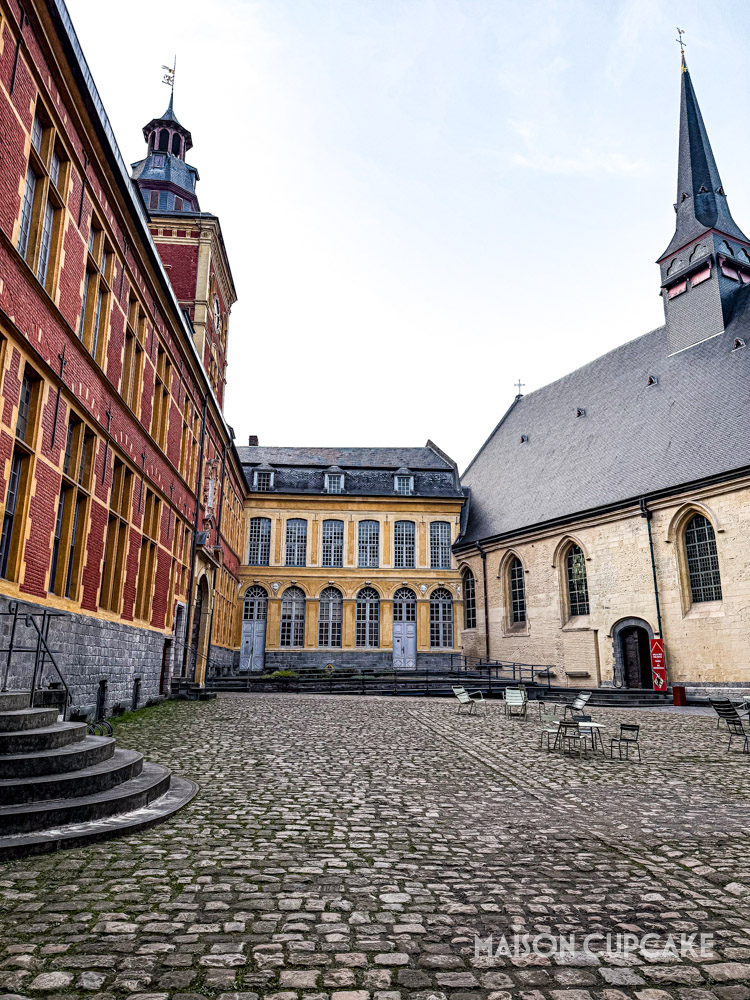
Lille Musée de l'Hospice Comtesse portrait shot of courtyard and decorative buildings
Musée de l’Hospice Comtesse, a former convent treating the sick now filled with Flemish artefacts.

Guided Tours of Lille

Lille Bus Tour: The bus tour circles the city centre for 75-90 minutes. Depending when you go, it runs 1-2 times daily and may be a single decker or open-top double decker. (There’s a cover if it rains).

The bus can be slow in traffic although it whizzes around bits of the ring road. It is good for new visitors getting their bearings or to reduce time walking. The audio guide is in several languages and informative if slightly corny.

Guided Tour of Lille by Bus - open top double decker bus tour
Lille’s City Bus Tour Has Audio Guides In Various Languages Including English

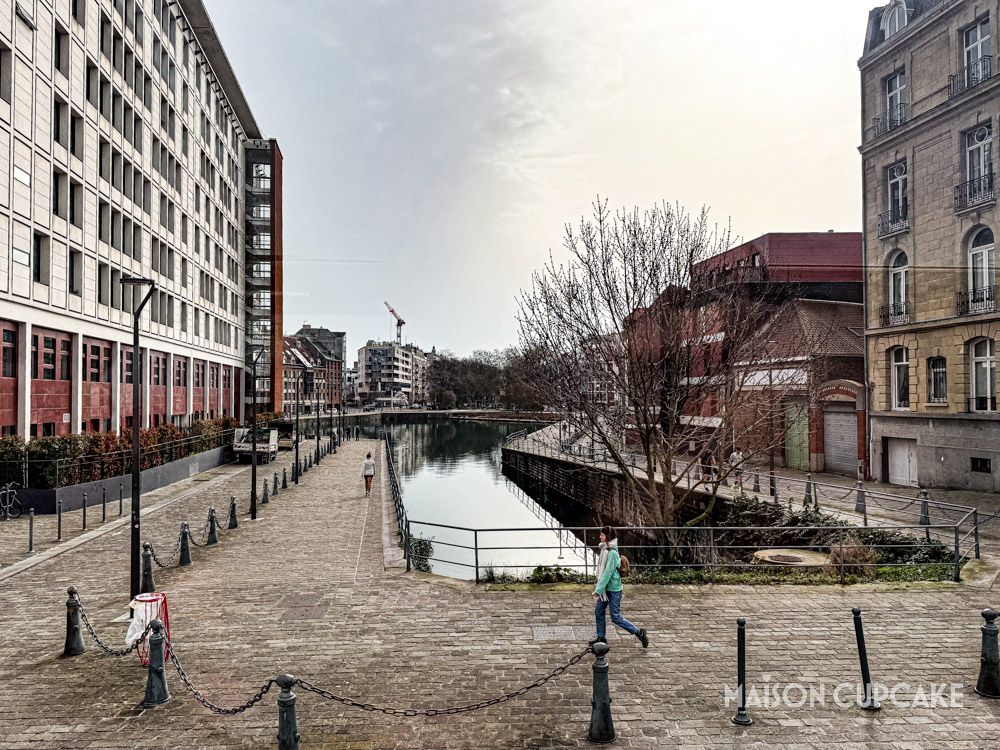
That said, the bus tour passed several places we’d missed on prior trips – such as Porte de Paris and the Quai du Wault. Being on the top deck offers a different vantage point.

Vieux Lille Walking Tours: There’s a 2 hour guided tour of Lille’s old town every afternoon. As my husband doesn’t speak French, we didn’t do this. A weekly English tour runs on Saturday mornings.

Public Transport in Lille

If your itinerary is due to include places such as Roubaix or Tourcoing, it is a no-brainer to add this to the pass. As you can read on my 3 days in Lille itinerary, we went to Villa Cavrois and La Piscine in Roubaix requiring public transport.

Which Attractions To Prioritise?

Best High Value Attractions

The most expensive items accessible with the City Pass are:

  • Bus tour (18 euros)
  • Walking tour (11-12 euros)
  • LaM modern art museum (9-11 euros)
  • Villa Cavrois (11 euros)
  • La Piscine (11 euros)

Most other things, even the rich fine art collection at Lille’s Musée des Beaux-Arts, cost around 6-8 euros.

Villa Cavrois modernist house now museum in Lille, France
Villa Cavrois -a Modernist marvel in Roubaix

Roubaix offers several attractions close together (Villa Cavrois, La Manufacture, La Piscine) however Villa Cavrois is nearly 30 minutes’ walk from a tram that only runs every 15 minutes. La Piscine and La Manufacture each involve 15 minute walks in opposite directions from the metro or tramline. You will clock up a high step count reaching all of these.

The Lille Bus Tour is easiest on the feet. That said, it only runs twice daily and there’s not a hop on/hop off option. A pity, as it reaches areas that merit exploring on foot.

A Few Lille Visitor’s Tips:

  • Account for Travel Time: Several attractions are 45 minutes on public transport from central Lille; some require bus connections or long walks beyond metro and tram stops. How much you can fit in depends on your start location and appetite for early starts/long days.
  • Sunday transport timetables: We noticed public transport connections were far less frequent on Sundays – for instance if travelling to LaM in Villeneuve d’Ascq. You don’t want to spent vital pass time waiting for buses do you?
  • Lunchtime Closures: The bigger sites tend to stay open all day; some smaller ones shut for lunch. Check opening hours carefully to maximise your time.
  • The Belfry: Lets you book slots for the first hour of the day only. After that you queue and have to wait for people to leave until you can go up.
Lille City Pass can include access to buses, trams and the metro.

Our Real Life Itinerary Using 72 Hour Lille City Pass

We paid 49 euros each for our 72 hour passes including 24 hours’ public transport. We thought we’d done well getting 65 euros’ worth of benefits thus saving 16 euros per person. Although I’ve since considered there were potential savings of up to 50 euros each if we’d really maxed our savings to the full.

This is what we spent during my Lille 3 Days Itinerary using City Pass:

Day 1 (with transport pass)
18 euros – Bus Tour
5.5 euros – 24 hours’ public transport
11 euros – Villa Cavrois, Roubaix
11 euros – La Piscine, Roubaix
Day 2
8 euros – Maison Natale Charles de Gaulle
7 euros – Musée de l’Hospice Comtesse
Day 3
7.5 euros – Lille Belfry Tower
7 euros – Musée des Beaux-Arts

Standard Costs Per Person: 65 euros
City Pass Cost with Transport: 49 euros

Amount Saved Per Person: 16 euros
Potential Savings Per Person: 50 euros – as explained below

How To Get Even More Value From City Pass

Had we organised our time slightly differently we might also have squeezed in an extra museum per day:

  • Day 1 : La Manufacture textile factory museum at Roubaix (6 euros) before La Piscine (which was open later that day);
  • Day 2: Vieux Lille walking tour (11 euros) if we’d taken a shorter lunch;
  • Day 3: Louis Pasteur Museum (6 euros) instead of visiting Wazemmes market.
  • Day 4: LaM or MUba Eugène Leroy before 72 hours ran out at 11am
  • These changes would have increased our savings to 50 euros per person.
Lille City Pass includes a map and guide to main attractions.

Also, we didn’t start using our 72 hour pass until 11am, and we could have still used it until 10.59am on the fourth day. For instance you might start with a bus tour at 11am on day one then finish with one of the bigger museums entering before 11am on the final day. This could stretch the time-value of your City Pass by several hours.

Nor did we maximise our 24 hours’ transport access – we effectively skipped half a day’s valid access until lunchtime as our last journey was taken the evening before.

More Suggested Itineraries For Lille City Pass

Best Lille Itinerary For Maximum Savings

72 hours with public transport option: Make sure you do at least one tour and tick off any three of the big museums and a couple of smaller ones. As explained above you can potentially save 15-50 euros. See the list above or my 3 Days in Lille post.

An Itinerary in Central Lille

24 hours but no public transport option: Do the bus tour in the morning, Maison Natale Charles de Gaulle over lunchtime, the walking tour at 3pm then Musée de l’Hospice Comtesse before it closes. You’ll pay 25 euros for 44 euros’ worth within easy walking distance plus any other gains made first thing next day – booking an early slot for the Belfry Tower is a good option or try the Pasteur Museum on opening.

Itineraries Using Lille Public Transport

24 hours with public transport option: Use the pass to visit multiple bigger ticket attractions such as Villa Cavrois / La Manufacture / La Piscine in Roubaix with public transport. You’ll save around 4 euros on day one but could still manage to enter one more big museum before the 24 hours expires – Musée des Beaux-Arts or LaM would bump the savings up to 15 euros and keep you busy until at least lunchtime.

Lille trams run regular services to Roubaix and Tourcoing.

Other Ways to Save Money Without Lille City Pass

The City Pass isn’t the only way to save money on Lille museum admissions. The rates mentioned are standard adult entry but it’s often cheaper for students or adults under 26 who qualify for lower rates or even free entry. Further ways to save money without buying the pass are:

  • Combined Ticket to Villa Cavrois / La Piscine (saves 2 euros)
  • La Piscine is free for late opening 6-8pm on Fridays
  • Pre-booking online can shave a couple of euros off some entry costs
  • LaM at Villeneuve d’Ascq grants 2 euros off to validated transport pass holders
  • Some museums are free on first Sunday of the month

What’s Not Included In Lille City Pass

  • Lille’s Cathedral Crypt
  • Tours of Lille Opera House
  • Le Musée d’Illusion (opposite Euralille)
  • Inside The Citadel (pre-booked with official guide only)
  • Science Museum and Planetarium (Villeneuve d’Ascq)
  • Lille Natural History Museum (currently closed for refurbishment – is normally big-ticket attraction included on the pass)
  • Lille Zoo
  • Maison Verte (art nouveau house in Roubaix)

Other Tours and Activities Not Included

Quirky driving tours of Lille in Citroën 2CVs Are Not Included With The City Pass.

The constantly visible Citroën 2CV tours zipping around the city in bright vintage cars are booked separately for around 70 euros. The Hello Lille Tourism website lets you book a number of organised activities such as guided visits to Fives écoquartier or Palais Rameau as well as a variety of food or drink related tastings geared around beer, chocolate and more.

Lille also hosts a multitude of festivals throughout the year which would add colour to your visit outside of the City Pass. These are mostly ticketed but some such as September’s Lille Braderie antiques fair or watching the Paris-Roubaix bike race are free.

My Honest Verdict on Lille City Pass

The City Pass really only works if you commit to multiple museums and activities. In theory our 16 euros saving was potentially only 7 euros – because our visit coincided with the free Friday late entry at La Piscine and a random free entry at Musée des Beaux-Arts.

Yet, as I outlined above, we could have saved up to 50 euros. Whilst theoretically possible, it’s hard even for enthusiastic museum-goers to keep up that kind of pace. Prioritising doing only activities on the pass distracts from simply soaking up Lille’s atmosphere.

Apart from pre-booked early belfry tower visits, nothing is open before 10am. Apart from Friday lates at La Piscine, last entries to museums are around 5pm. Given how far apart attractions can be, and opening windows, big savings are possible but hard work.

That said, the City Pass encouraged us to see places we may have passed over; we were nudged to visit a lot in 72 hours and it was memorable doing so. You should definitely do the Lille City Pass once and definitely visit Lille again regardless.

Our City Pass definitely saved us some money on day one and overall, but it was borderline whether we saved money on days two and three. In fact on day three and the final hours of the 72 hour pass, we didn’t save anything, although this wasn’t the fault of the pass, rather our choices.

And although I’ve been to Roubaix several times, I’ve not yet been to Villeneuve d’Ascq or Tourcoing, each of which have plenty to do. I guess I may end up buying another 72 hour pass after all!

What To Read Next

Have you visited any of these attractions in Lille? Did you use the City Pass? How do you think it compares with other tourist passes? Share your experiences in the comments below.

Originally published on Maison Cupcake
Things To Do In The Somme For A Relaxing Weekend


The Bay of the Somme, or Baie de Somme in French, is an easy weekend break from the UK. Located in Picardy, the Somme is popular with nature lovers and families, it’s a great slow tourism destination. Seals wallow on sandbanks, seabirds dive into the water and there’s a wide open grassy marshland to be explored by vintage rail, cycle paths or on foot.

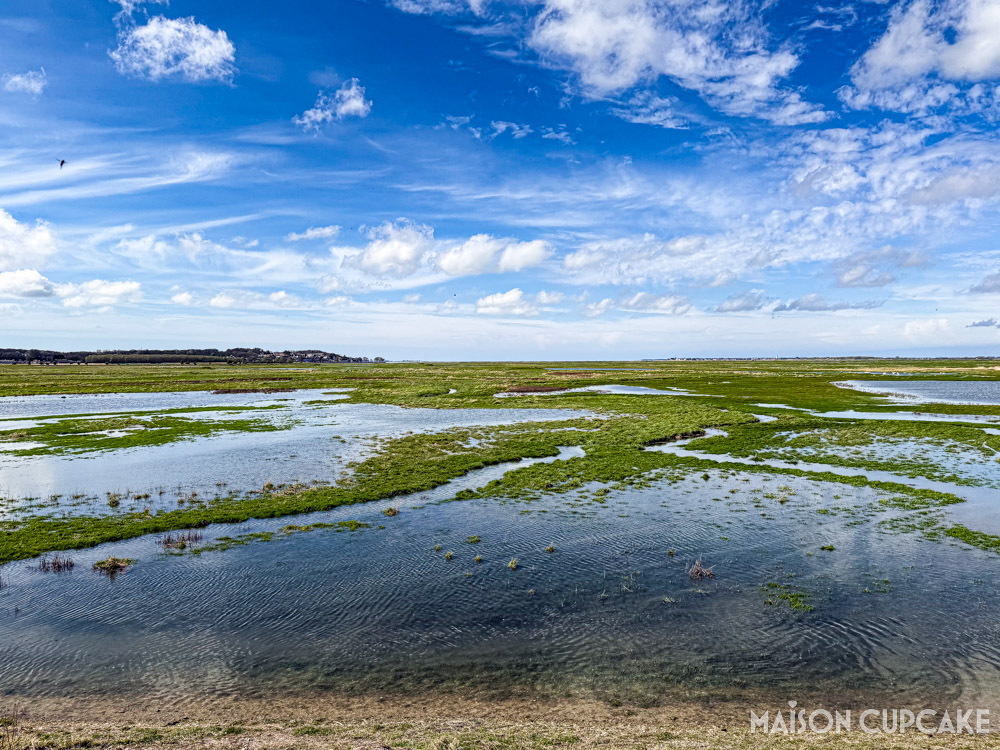
Bright blue sky with fluffy clouds reflected in wet marshlands of the Somme Bay, Picardy, northern France.
Marshland in Baie de Somme seen from the railway.

We spent three days in the Somme region, staying in Le Crotoy and visiting Saint-Valery-sur-Somme and Le Tréport. The climate is similar to the UK, but when the sun comes out, the light is magical: Le Crotoy benefits from an unusual southerly-facing aspect despite being on the northern French coast.

Driving To The Somme Through The Channel Tunnel

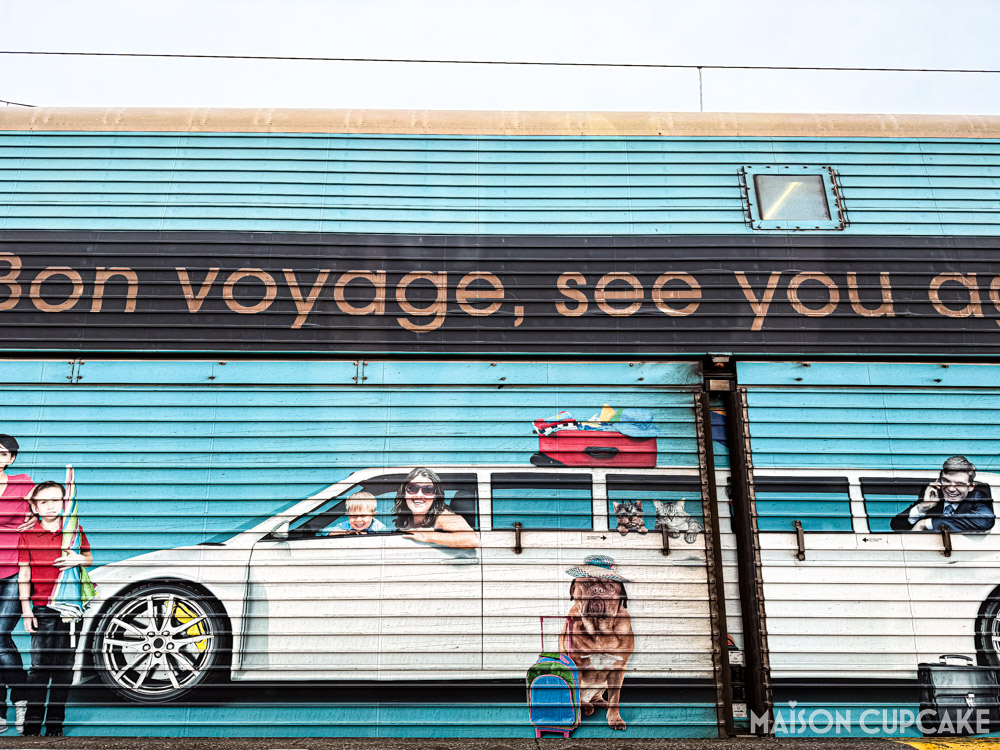
Brightly painted Channel Tunnel car coach with illustration of holiday makers in car captioned Bon Voyage
Departing on Le Shuttle through the Channel Tunnel

If you’re using the Channel Tunnel on peak holiday dates, it is worth departing one night ahead of the rush. On Good Friday our check-in and departure delays snowballed into four hours instead of the usual 60-90 minutes we’d typically experience. Happily on Tuesday, our return leg with Le Shuttle was seamless; just 4.5 hours door to door driving back to east London.

The journey between Calais and the Somme region is straightforward and takes 90 minutes; straight down the motorway through the Hauts-de-France region and turning off ten miles before Le Crotoy.

Arrival at Le Crotoy

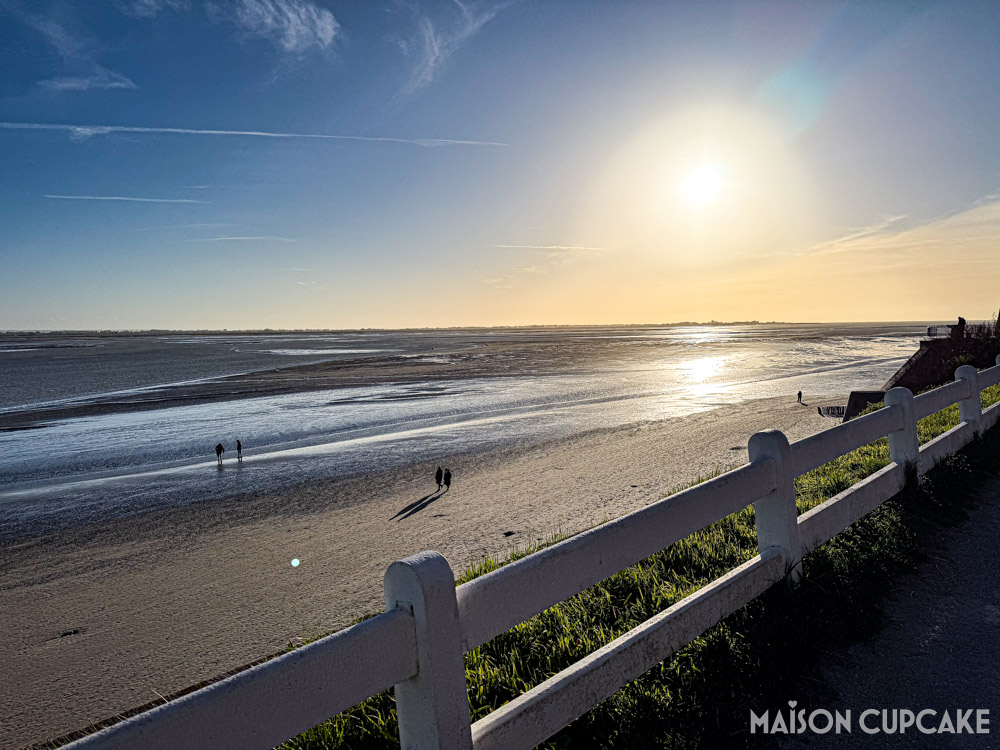
Sunset at Le Crotoy with sunlight reflecting on water as figures in distance walk on the sand, with white fence in foreground
A bright sunny spring evening in Le Crotoy

We reached Le Crotoy by 8pm. Quickly dropping luggage, we popped out for dinner on foot. The north French coast hooks round into the Somme bay so you get south-facing watery views although there is land opposite.

Day 1: Settling into Le Crotoy and steam railway to Saint-Valery-sur-Somme

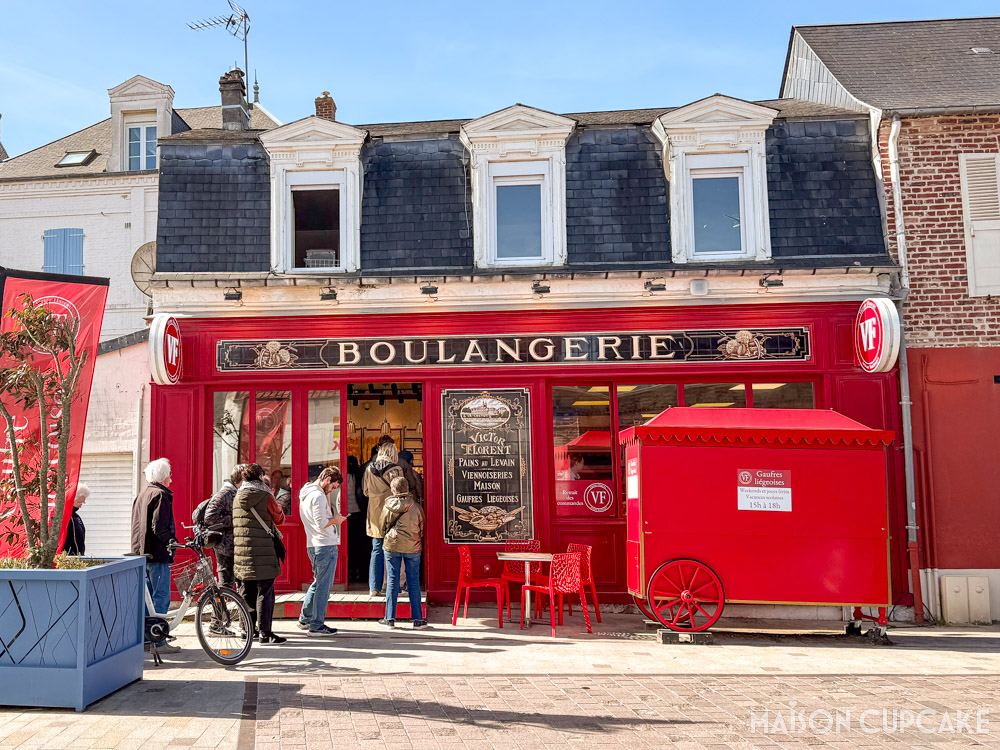
Bright red exterior of Victor Florent bakery in Le Crotoy with customers queuing, northern France
The popular Victor Florent Boulangerie in Le Crotoy with its waffle kiosk.

We had a lazy start to compensate for the time difference. The best boulangerie in town, Victor Florent, was the perfect place to pick up breakfast and almost close enough to smell the bread baking. Their baguettes, referred to as Victoriennes, are sold in three degrees of crispness and fetching red paper bags. We bought granary ones “aux graines” every day to make jambon-camembert sandwiches.

The main supermarket, Carrefour Contact, had everything else we needed within a ten minute walk. Although only shopping for four days’ worth of breakfast and snacks, I wished we’d taken the car to the supermarket, as basic groceries including milk, fruit juice – and some French wine of course – were a little heavy to carry back. 

Markets in Le Crotoy

Harbourside beer stall with two customers and dog talking to owner, at Le Crotoy, northern France - the sky is clear blue.
Boris beer stall at the harbourside artisanal market in Le Crotoy.

Normally, an afternoon market of artisanal producers overlooking Le Crotoy’s harbour runs just Wednesday afternoons, but to our delight, it was there all day, every day of Easter weekend. As well as cheese and charcuterie stalls, this market was notable for having three different bar stalls selling wine, beer and champagne. You could enjoy a tipple on the spot: champagne was only 4 euros a glass! 

Le Crotoy’s bigger main market runs every Friday on Digue Mercier and moves twice weekly to Quai Courbet in summer – we didn’t see this on this trip.

Close up of cooked crabs at Le Crotoy fishmonger stall in northern France. Smaller shellfish in background.
Fresh crabs and shellfish for sale at one of Le Crotoy’s fish markets.

There are also regular fish markets; the main building has several booths on Digue Mercier, but there are also daily fishmonger stalls such as Poissonnerie L’Oceane on Place Jeanne d’Arc. You can buy cooked crabs or fresh mussels by the kilo. 

The Somme Heritage Steam Railway

Bright blue and yellow locomotive of heritage steam railway at Saint-Valery-sur-Somme in northern France, with red station ticket booth behind on a clear sunny day.
The Chemin de Fer de Baie de Somme locomotive on its turning circle in Saint-Valery-sur-Somme.

The day’s main activity was a journey on Chemin de Fer de la Baie de Somme, the local heritage railway that circles the bay to St Valery and in high season, beyond to Cayeux-sur-Mer. 

Daily departures vary slightly but their website shows colour-coded timetables for the whole season. We hung out on the charming vintage station platform, eating our picnic before leaving.

The leisurely ride offers panoramic views of the landscape, set against a nostalgic railway soundscape of horn sounding and track-rattling, with cars tooting at road crossings. It’s great fun, whatever your age. 

Things reach peak Thomas-the-Tank engine theatrics at Noyelles station, where two trains meet on parallel tracks and each of the locomotives switches ends. This is a necessity due to the track being split into three sections but creates an amusing interval during the trip as everyone plays along with the self-aware silliness. The end carriages offer a chance for passengers to stand behind the locomotive watching the driver at the controls.

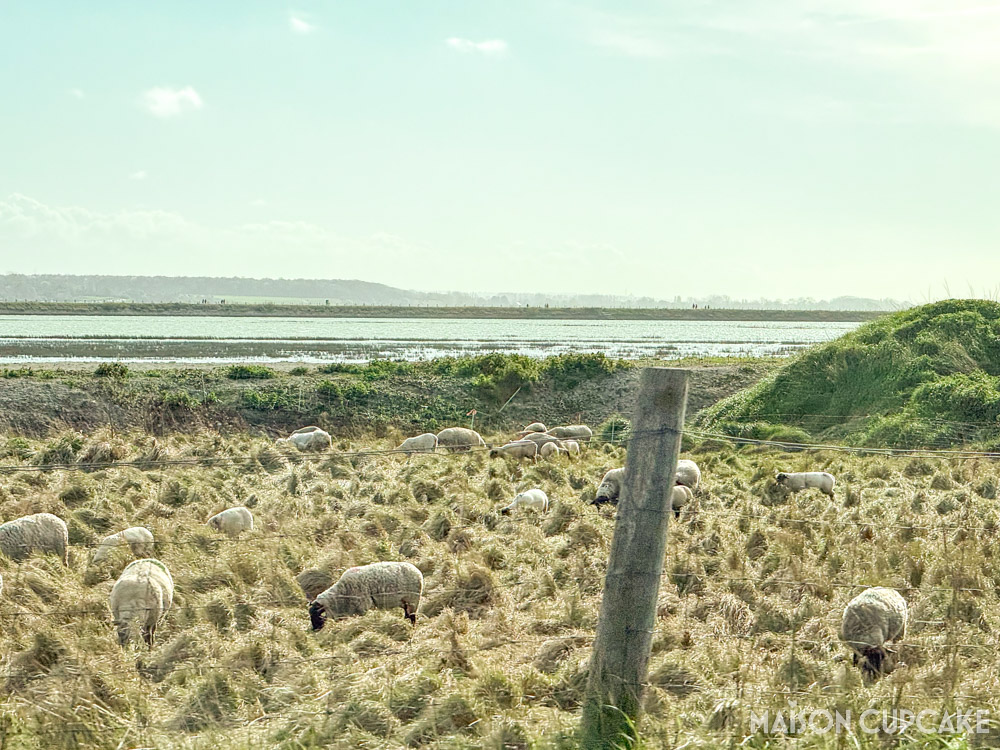
Sheep seen from the train in marshy fields in the Baie de Somme, northern France.
Sheep grazing on fields around Baie de Somme.

We saw plenty of wildlife. Pheasant flew up from the rails onto fields, we spotted a deer with a fawn, a heron amongst black headed gulls and cormorants. White cows lifted their heads as we passed, and flocks of sheep scuttled. As we circled the bay, points of interest changed throughout.

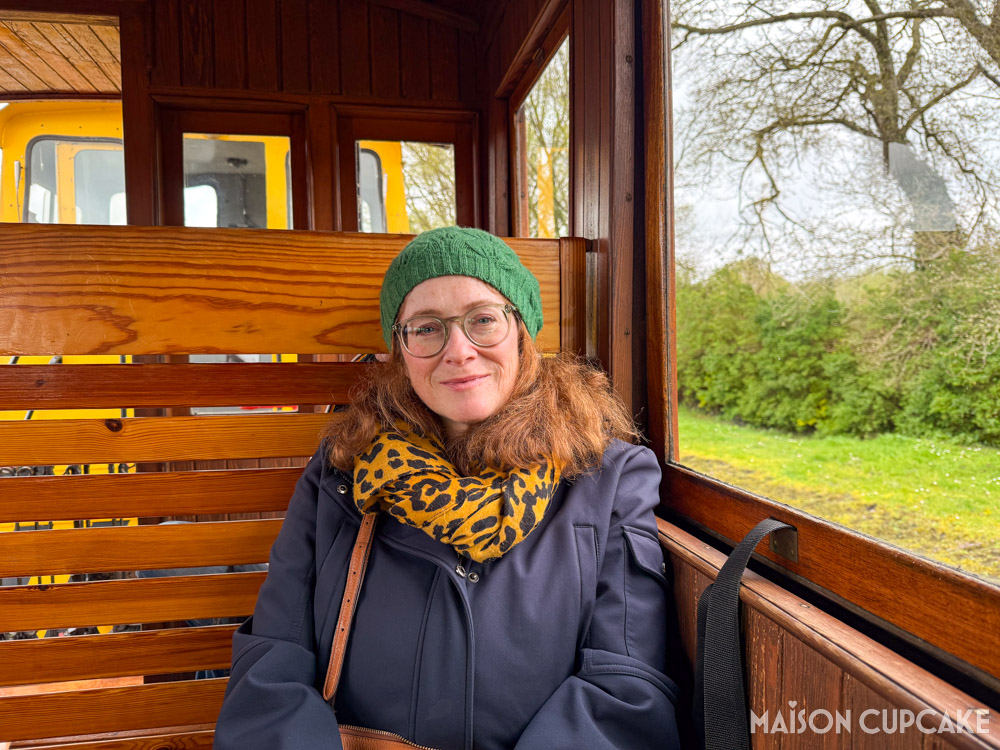
Sarah Trivuncic sat in wooden carriage of the Chemin de Fer de Somme, heritage railway in northern France.
Riding the Chemin de Fer de Baie de Somme heritage railway.

We rode two different types of train; a darker carriage with smaller windows pulled by a diesel engine, a slightly more comfortable version with vintage luggage racks and bigger windows pulled by steam. It was a smoother journey with the former but you got a better view with the latter.

I found the wooden seating pretty hard on the bum, although much of the time you end up standing and moving around. Although a shame not to be on a service to Cayeux, for me at least, one hour rattling to St Valery was long enough!

Two Hours in Saint-Valery-sur-Somme

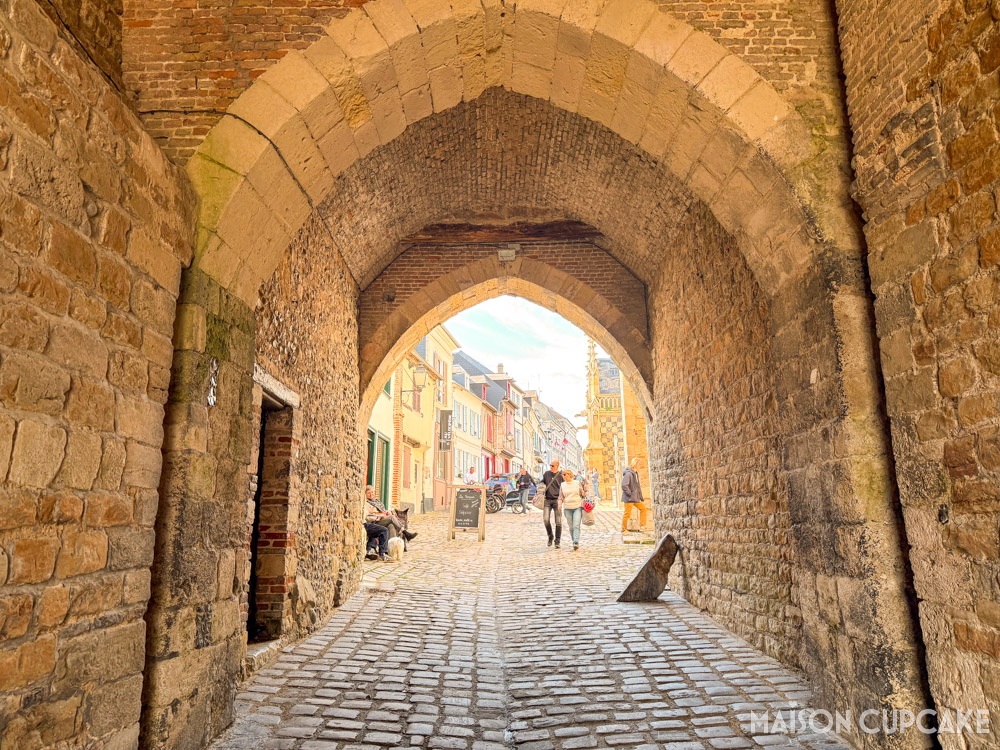
Medieval stone archway with cobbled street in Saint-Valery-sur-Somme, northern France
Medieval archway approaching the walled town of Saint-Valery-sur-Somme.

We had two hours in St Valery before returning to Le Crotoy; ample time to walk the mile to the medieval walled town and viewpoint over the bay. 

St Valery, bigger than Le Crotoy, would make an equally good base, especially if you want more shops and restaurants nearby. We walked past the marina – the sun, now definitely out, enhanced the views of passing boats. We climbed to the medieval town, enjoying the sea air.

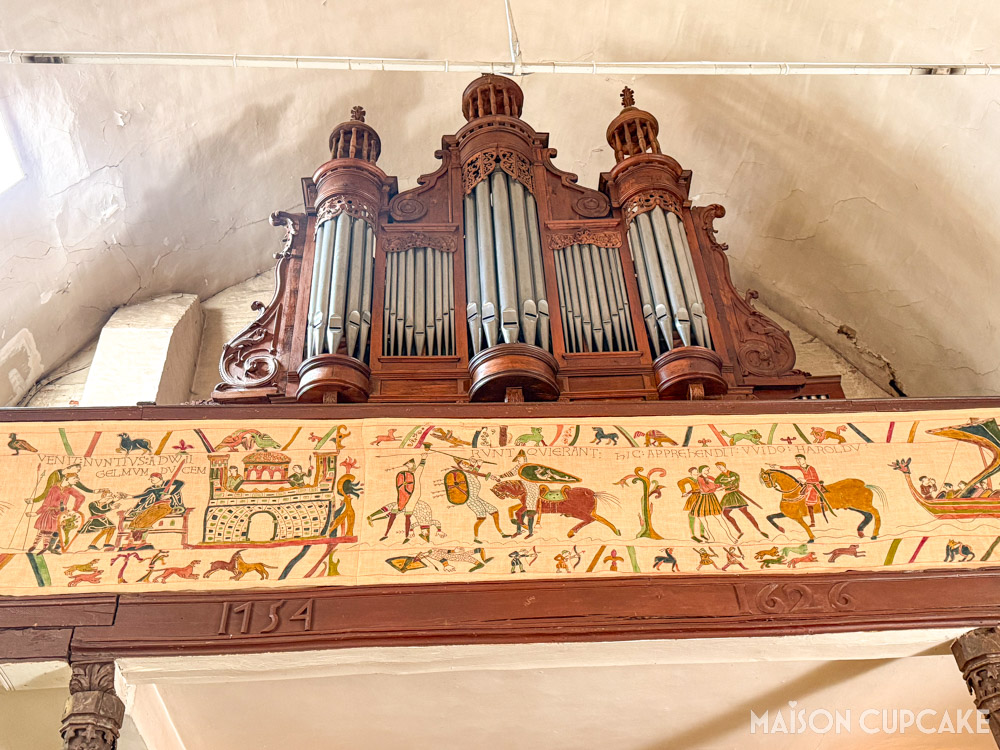
Frieze depicting the Bayeux Tapestry in a church in Saint-Valery-sur-Somme
Bayeux Tapestry frieze in Église-Saint-Martin commemorating William the Conqueror’s stop-off in 1066.

The medieval remparts have brick archway entrances and pretty streets – mostly residential with a few hotels. Église-Saint-Martin has a frieze of the Bayeux Tapestry, commemorating that William the Conqueror took shelter in St Valery before reaching Hastings in 1066. The town is twinned with Battle in Sussex.

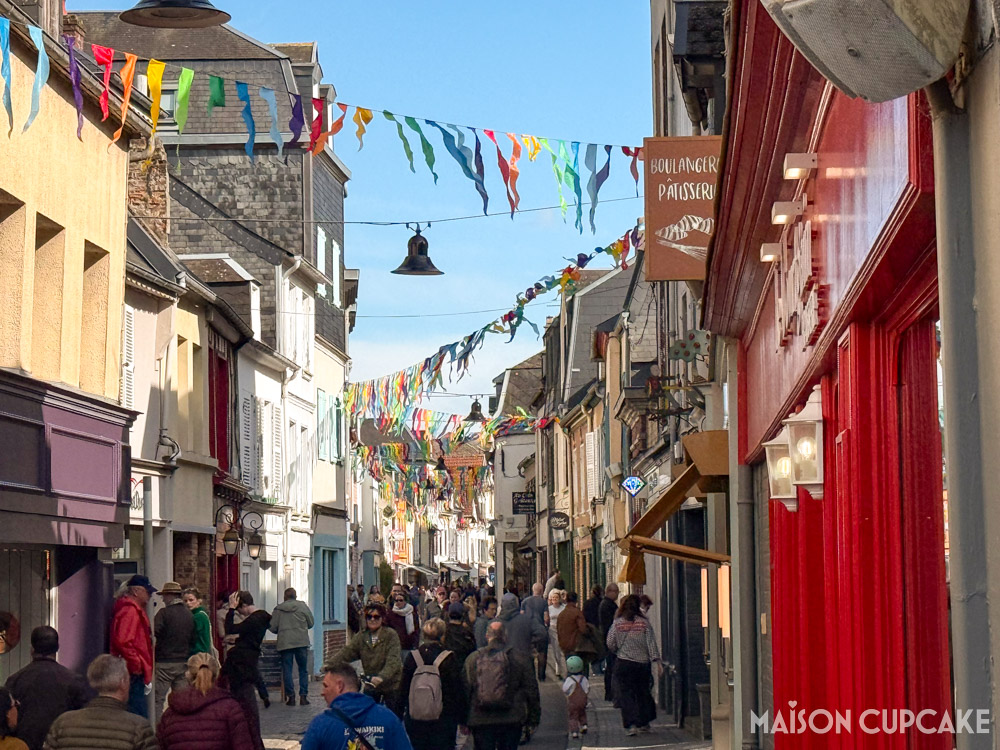
Busy shopping street with bunting in Saint-Valery-sur-Somme
Main shopping street in Saint-Valery-sur-Somme.

St Valery is also known for its floral displays with flower festivals in spring and summer. A rose garden close to the Porte Jeanne d’Arc had varieties named by Julia Child and Catherine Deneuve – these were not in bloom at Easter but hinted what you’d see in summer. The spring tulips filled flower beds on roundabouts and outside the church.

Walking back towards our train, Quai du Romerel runs parallel with the river Somme and has plenty of shops and half-timbered buildings decked with bunting. Musée Picarvie showcases local craft heritage and you could definitely spend longer in St Valery than the two hours we had. 

Day 2: Le Tréport – Railway Age Resort

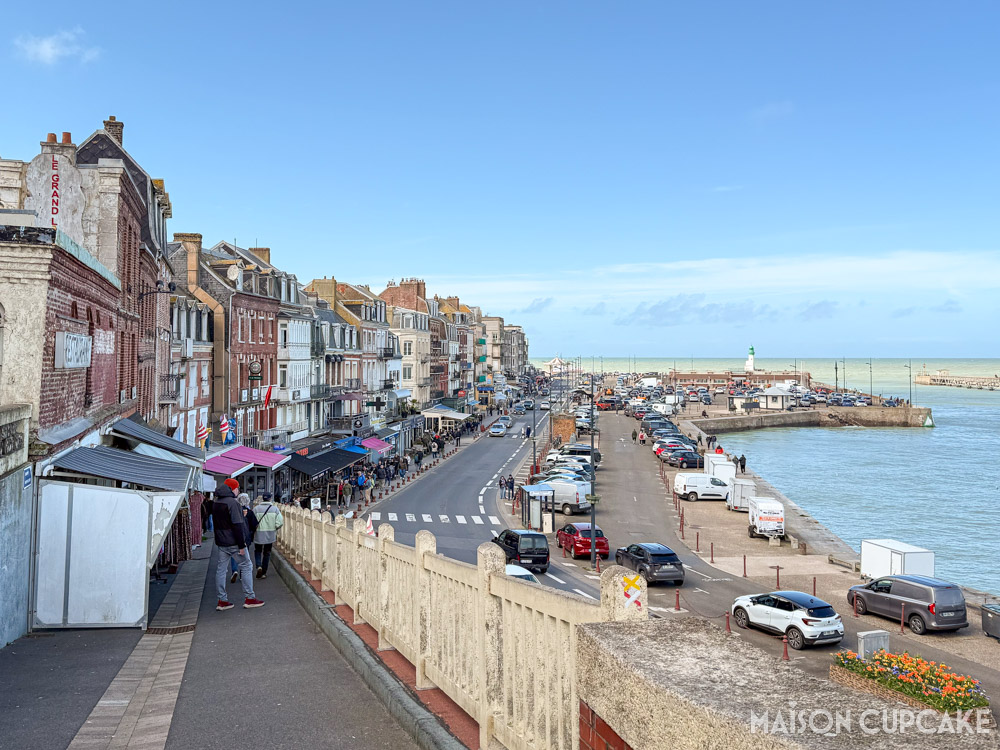
Le Tréport, northern France, with shops on harbour looking out to sea.
Le Tréport quayside.

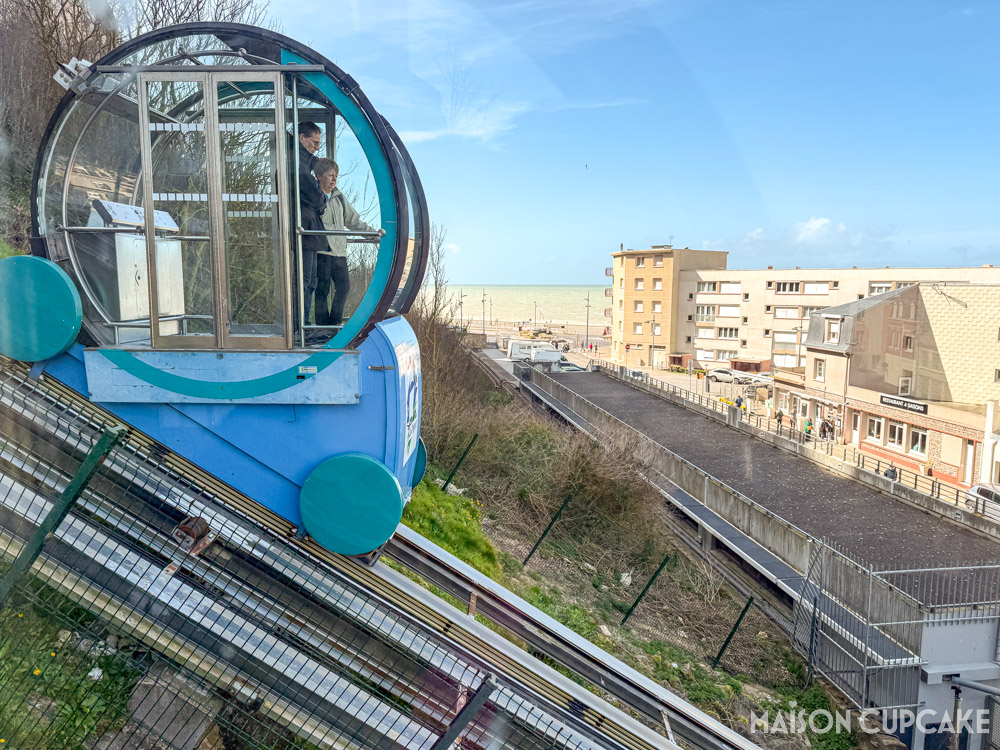
On Easter Sunday we drove to Le Tréport, 45 minutes away. Le Tréport was a resort built in the railway age, the SNCF station is across the estuary in Mer-les-Bains. The town is notable for its steep cliffs and funicular railway.

We parked twenty minutes away and walked to the seafront. Le Tréport is a larger fishing port than Le Crotoy, although originally built as a resort to attract wealthy holiday makers, the town today is distinctly un-gentrified.

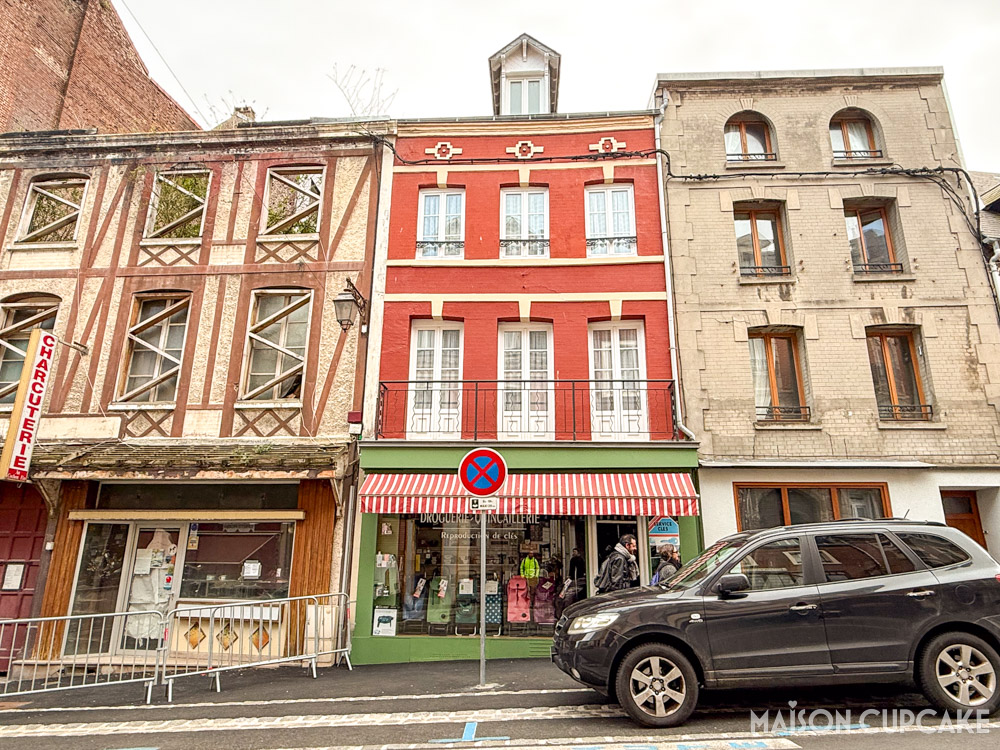
Le Tréport old town shops, northern France
Le Tréport old town is filled with retro shop fronts.

Most businesses were shut on our Easter Sunday visit – in any case, these are local utilities rather than gift boutiques. The old town is quaint rather than cute although there are decorative street signs in place of traditional French ones and the shopfronts often retain retro signage. Above, you might spot painted mouldings or religious icons looking back down. 

L’Eglise-Saint-Jacques Le Tréport

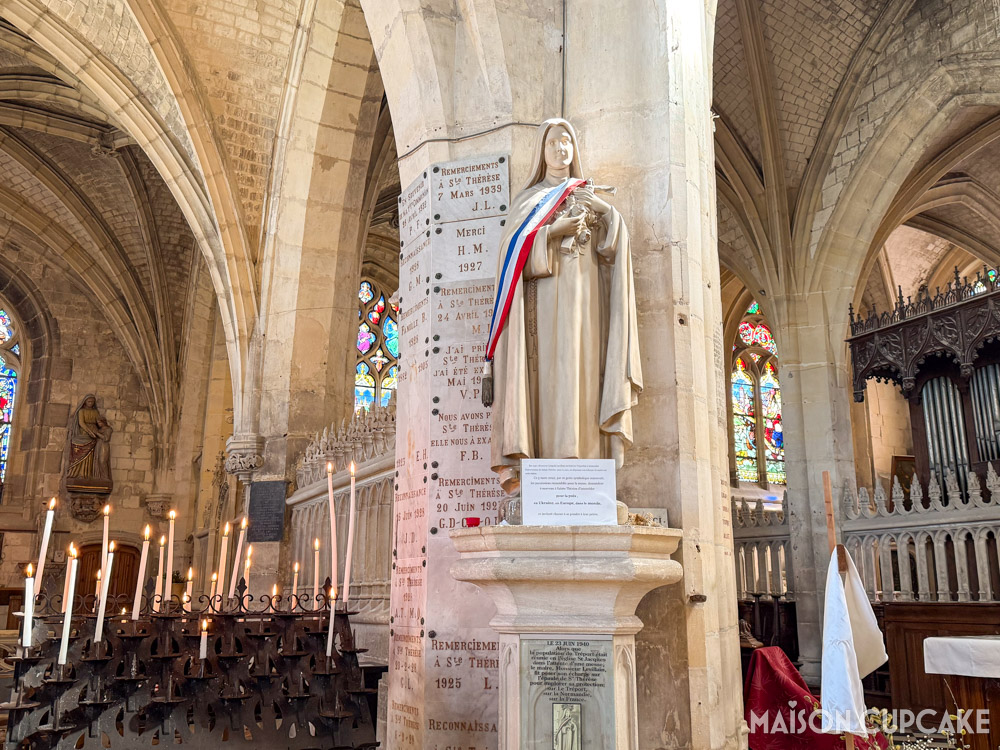
Saint Theresa statue in Le Tréport church, northern France
Statue of Saint Theresa of Lisieux at Église-Saint-Jacques, Le Tréport.

The Eglise-Saint-Jacques had features reflecting maritime heritage: a memorial adorned with fishing nets dedicated to lives lost at sea whilst local babies get baptised in a distinctive clam -shaped font. The church dates from the 12th century although rebuilt in the 16th.

A newer addition is a statue of Saint Theresa of Lisieux, who died in 1897 and is now second patron saint of France after Joan of Arc. Wearing a French tricolour fabric sash – a caption explained she has been the parish focus of prayers for peace in France since 1944, although this has recently been extended to peace in Ukraine and globally. The parish makes an annual pilgrimage to Lisieux in nearby Normandy.

Other landmarks were the turreted museum, housed in a 16th century prison, and the 18th century Hotel de Calais, where soldiers injured in the Battle of the Somme (First World War) recuperated.

Climbing The Cliffs At Le Tréport

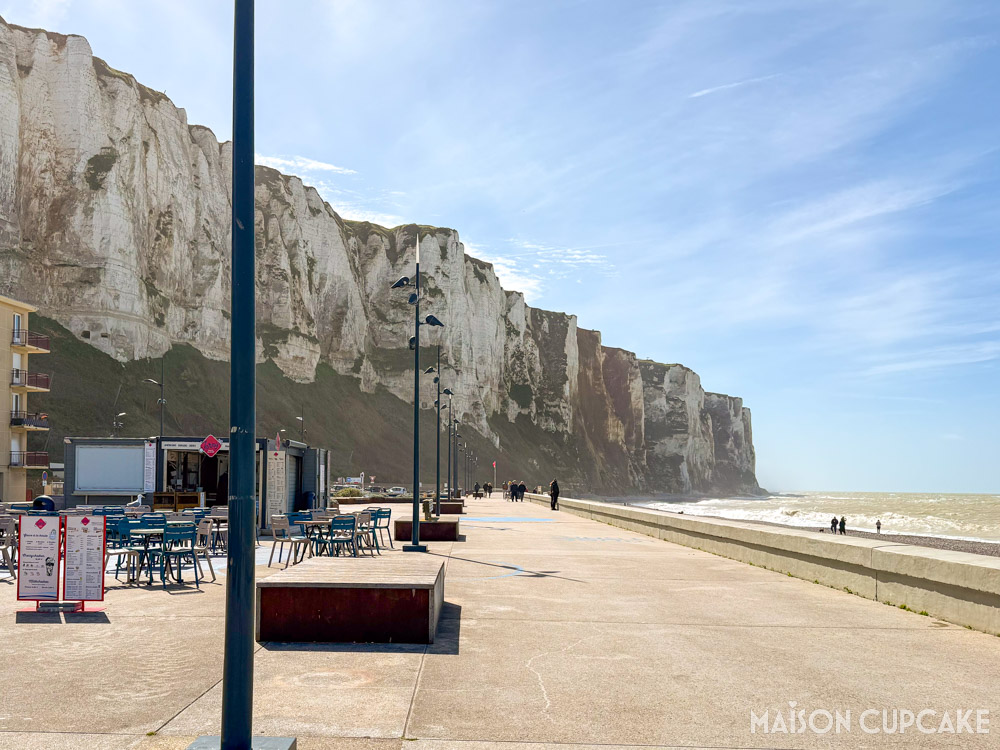
Dramatic cliffs at Le Tréport seen from beach level, northern France on a bright sunny day.
Promenade under the cliffs at Le Tréport.

Sweeping cliffs are the natural feature of Le Tréport; you have two routes to the top; several hundred stairs or the funicular railway. We took our time climbing up, finding a bench to eat our baguettes halfway and a mix of heritage panels sharing poems and famous local landscape paintings to study whilst you recover your breath. 

From the top there’s a view out to sea and over the estuary to Mer-les-Bains. A clifftop walking route spans several miles. We stopped for drinks at Les Falaises Qui Rougait (translation – the cliffs that make you red in the face), a smart grocery-cafe selling its own award winning gourmet fish pastes and spreads. It was the most stylish business we saw in Le Tréport and one worth buying gifts from.

Le Tréport Cliff Railway

Round blue carriage of Le Tréport cliff railway overlooking the sea and buildings on sunny day.
The funicular cliff railway at Le Tréport is free to ride.

The funicular is free and a set of four lifts rather than a true cliff railway; the blue circular cabins are whimsical and it was fun to ride. We used it to get down again. At beach level, the cliffs look imposing and the waves crashed in windy conditions; the promenade offers several snack cabins and built-in beach huts with colourful front doors. 

That you can park at the clifftop carpark for 3 euros all day, with an easy ride down to the town, makes Le Tréport very convenient. The cafes aren’t fancy, but often good value: we saw deals for crêpe and a coffee for under 5 euros and paid only 2 euros for our coffees. Deauville this is not.

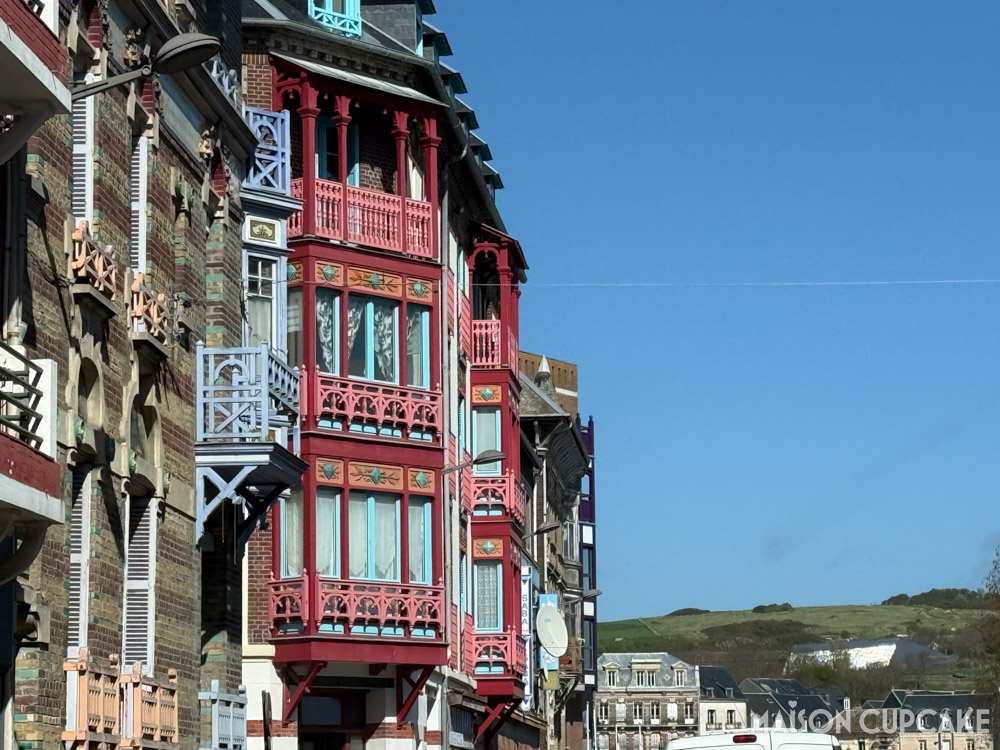
Brightly painted Belle Époque villa at Mer-les-Bains, northern France
Painted Belle Époque villas in Mer-Les-Bains.

Afterwards, we had intended to visit bird hides in a reserve outside Cayeux-sur-Mer but being late in the day and windy, we abandoned that. Instead, I wish we’d stopped in Mer-les-Bains, where we glimpsed the stunning 19th-century Belle Époque villas from the car.

Day 3: Relaxing in Le Crotoy and Somme nature reserve

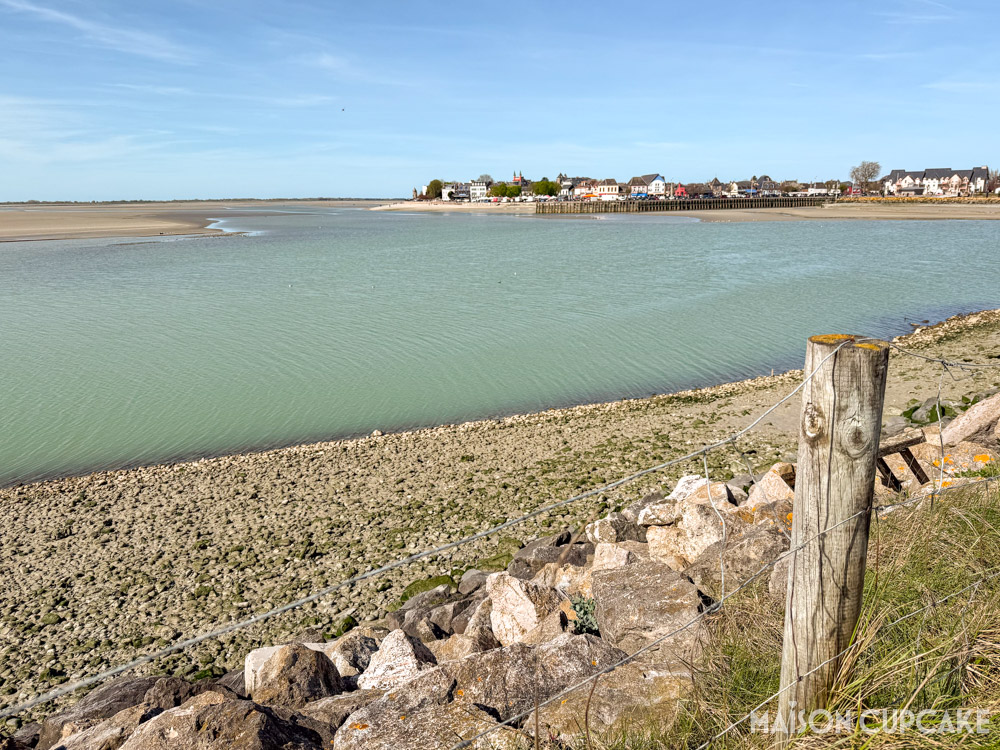
Le Crotoy as seen across bay from the locks at Bassin de Chasse with rocks and fence in foreground
Le Crotoy as seen from the locks at Bassin de Chasse.

Wandering around town, numerous local history panels tell stories behind various locations. French sci-fi writer, Jules Verne, started writing 2,000 Leagues Under the Sea whilst living in Le Crotoy – his former house is now a holiday rental. Also, in 1430, Joan of Arc was kept prisoner in Le Crotoy before her death in nearby Rouen. Although the fortress was destroyed in the 17th century, Joan’s statue looks over the harbour in commemoration. Another memorial marks French resistance during World War Two. 

Today was an opportunity to slow down and explore the local area on foot. We walked over to the locks spanning the Bassin de Chasse, where you hear a blend of birdsong and water rushing through the sluice gates; later that afternoon, my husband and son walked the periphery of the basin photographing birds. There are flat routes for easy bicycling although headwinds might be a struggle. 

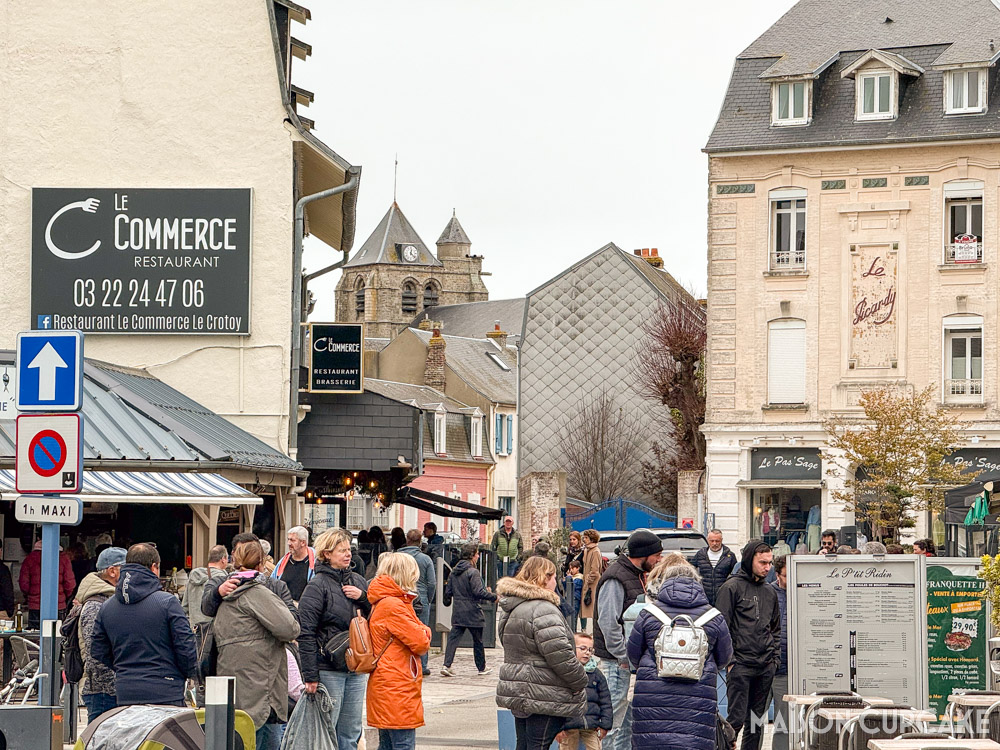
Street scene in Le Crotoy on overcast day; restaurant signage and church tower.
Day visitors in Le Crotoy.

Le Crotoy welcomed waves of visitors during the day; there’s only one main shopping street, Rue de la Porte du Pont, plus the quayside but the large carpark devoted to camper vans had filled up even if local holiday apartment complexes seemed quiet. Visitors are overwhelmingly French. 

Our Accommodation at Résidence de la Plage

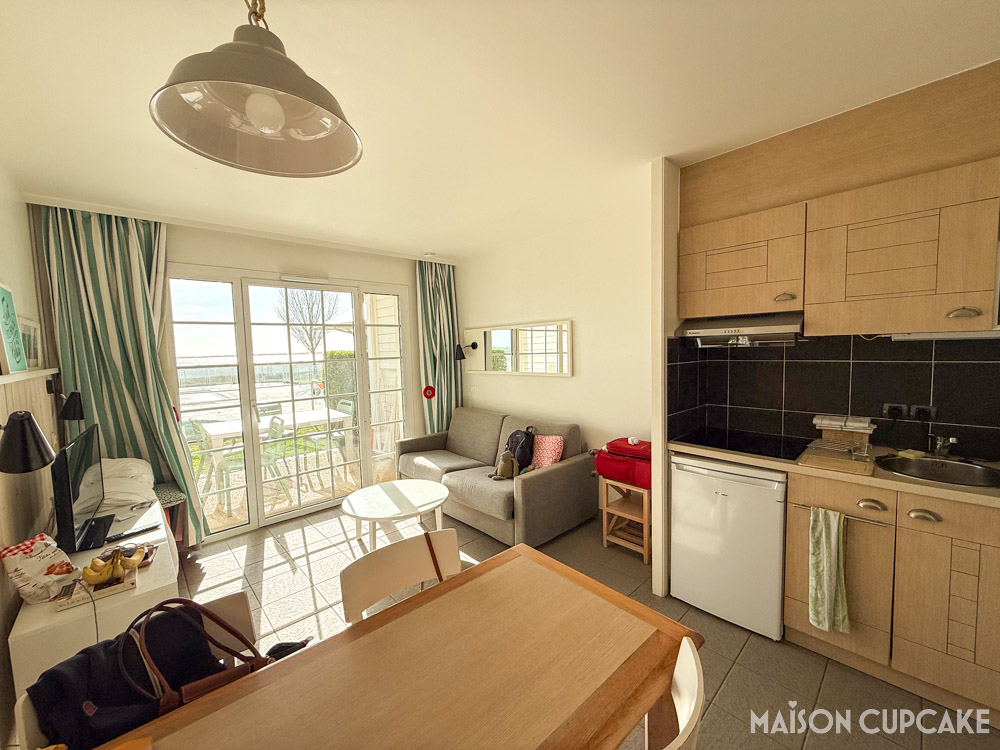
Studio apartment interior at Pierre et Vacances in Le Crotoy; kitchenette, sofa bed and dining table with bright terrace view over the pool and bay.
Studio flat at Pierre et Vacances, Le Crotoy.

I spent the afternoon sitting on the terrace of our studio apartment at Résidence de la Plage, a Pierre et Vacances holiday rental. I chose the accommodation to be relaxing with a sea view; end-of-stay cleaning meant we didn’t need to rush to do this ourselves on departure. Had we arrived later, there was key-safe entry – another thing not to worry about.

The dishwasher meant no washing up, there was a proper bath rather than only a shower, chunky bathrobes were provided – I only wish I’d made use of the indoor swimming pool. The reception had a pleasant seating area, loans of board games and kids’ play area. There are two swimming pools, although we didn’t use these this time. 

I’ve booked Pierre et Vacances apartments several times and like their flexible bookings, reasonable prices and find them more comfortable than caravans.

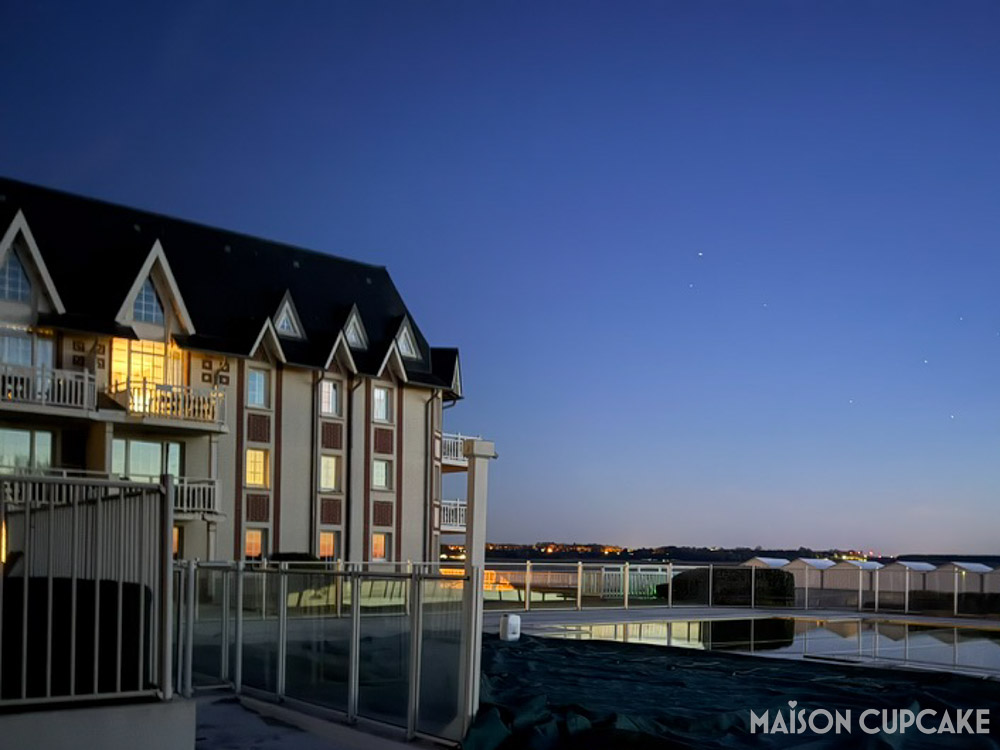
Clear blue sky at dusk, Pierre et Vacances property at Le Crotoy, Résidence de la Plage
Pierre et Vacances, Résidence de la Plage, Le Crotoy

From our terrace I could see the outdoor pool – open July and August – and lines of white beach huts. On arrival, mist had covered the bay but when the sun shines and the tide is in, the bay gleamed. You’d get a better view of the water from upstairs accommodation but at ground level we benefited from a lawn area boxed off with hedging for privacy. 

An underground carpark with designated numbered spaces per apartment made parking stress-free.

Shopping in Le Crotoy 

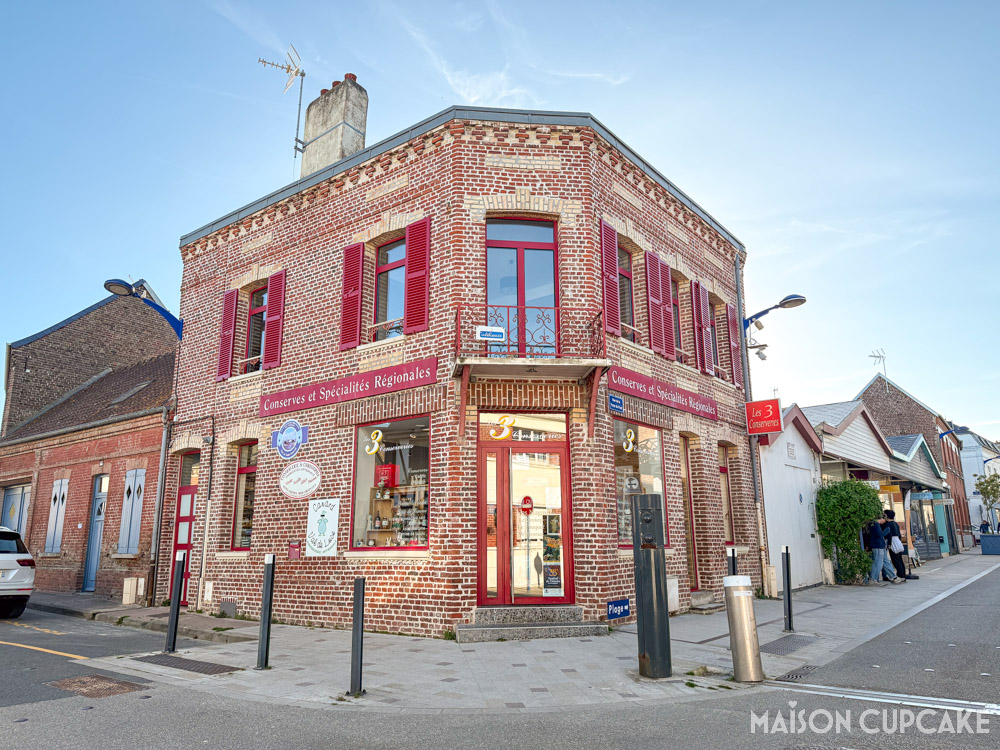
Red brick shopfront in Le Crotoy, northern France
Les 3 Conserveries – one of several gourmet grocery stores in Le Crotoy.

Although not a huge number of shops in Le Crotoy, Rue de la Porte du Pont, has enough to browse for gifts and food. There are several chic epiceries, a decent Maison de Presse for magazines and books, several souvenir shops and some bespoke chocolatiers.

Restaurants in Le Crotoy

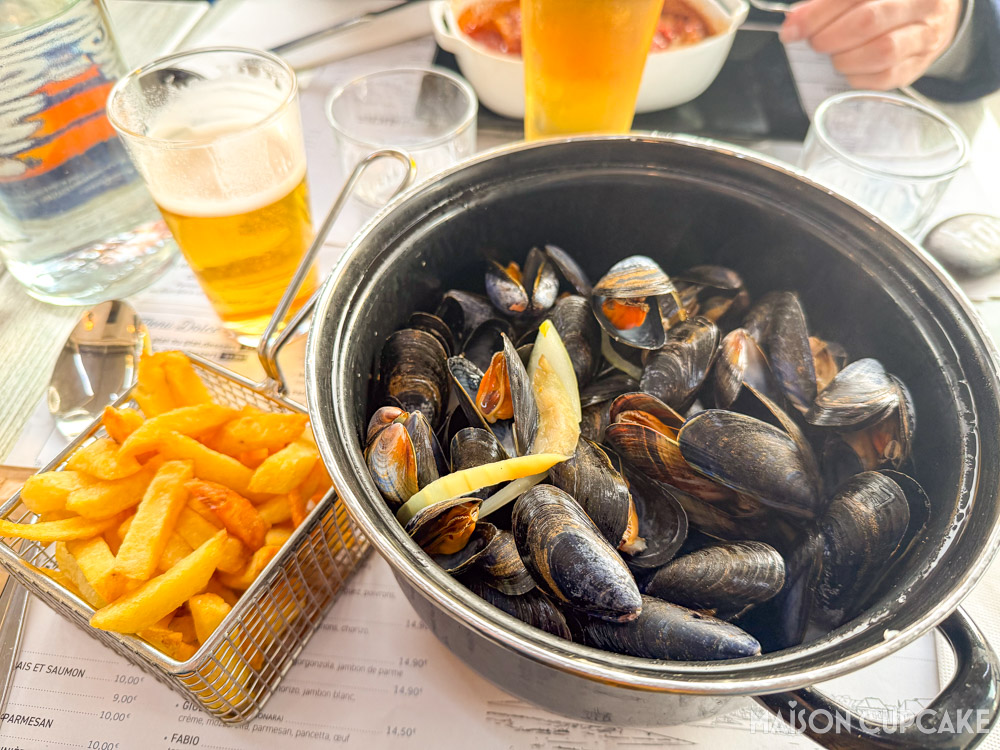
Moules Frites and beer, served in Le Crotoy, northern France
Moules frites and beer are served almost everywhere in Le Crotoy.

There are a solid dozen restaurants around Le Crotoy. Most of these are along Rue de la Porte du Pont and the quay. Booking is wise to get into smarter options like Le Bistrot de la Baie or Le Commerce, but if you’re not picky just arrive early and you’ll get a table somewhere.

Menus are unsurprisingly fishy: moules frites, often with creamy or cheesy sauces, skate wing or more British-style battered fish and chips. Local restaurants were unstuffy casual dining rather than gourmet presentation. 

Our favourite meal was at Café Jules Verne on Place Jeanne d’Arc; the staff were friendly and the interior had Verne-appropriate prints of submarines and hot-air balloons. A meatier menu here, we ate burgers, steak and tried the local dish, Ficelle Picard, which is a rolled pancake, ham and mushroom smothered in cheese – delicious! 

More Things To Do In The Somme Region

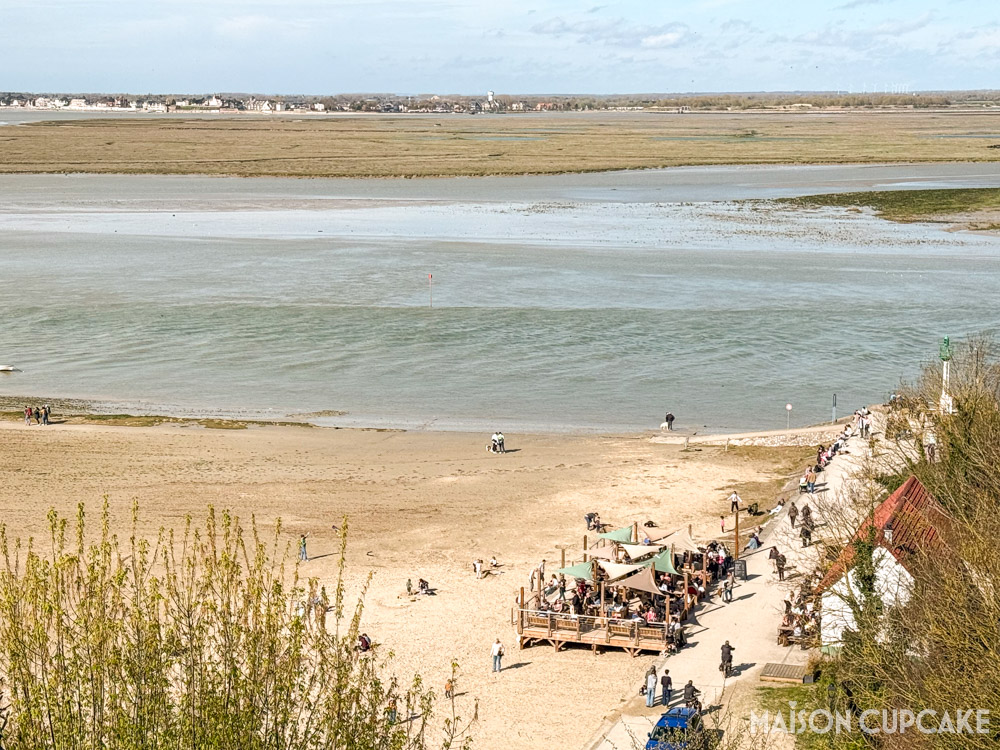
The beach at Saint-Valery-sur-Somme looking towards Le Crotoy, northern France.
Saint-Valery beach looking over the Somme bay to Le Crotoy.

This region is so convenient by car from Calais that we will definitely return. Things to do in the Somme region next time are:

  • Rent bikes and cycle along the many bike routes around the bay;
  • Book a guided walk across the sandy bay at low tide;
  • Take a boat trip to Pointe du Hourdel to see seals;
  • Visit Parc du Marquenterre, a nature park with walking trails and café;
  • Drive to Abbaye de Valloires, a beautiful abbey one hour away.

For a city-based weekend in northern France, take a look at my Rouen weekend itinerary or How to Spend Three Days in Lille.

Baie de Somme pinterest graphic with medieval archway and cobbles captioned A Relaxing Weekend in France, visiting Le Crotoy, St Valery.

Have you visited Baie de Somme? Share your tips below!

Originally published on Maison Cupcake
My Paris Guide: A Frequent Visitor’s Tips

From buzzing pavement cafés on boulevards, to the beehives in Parc du Luxembourg, from the noisy chimes of Metro doors closing, to gazing at éclairs through a patisserie window: Paris is a feast for the senses.

Out of over seventy trips I’ve made to France, at least ten of these were to Paris. Whether you’re a first-time visitor or want to explore hidden corners, here’s my overview guide to a great visit to the French capital. I have far more to share about Paris than I can fit into one post, so consider this an evolving jumping-off point.

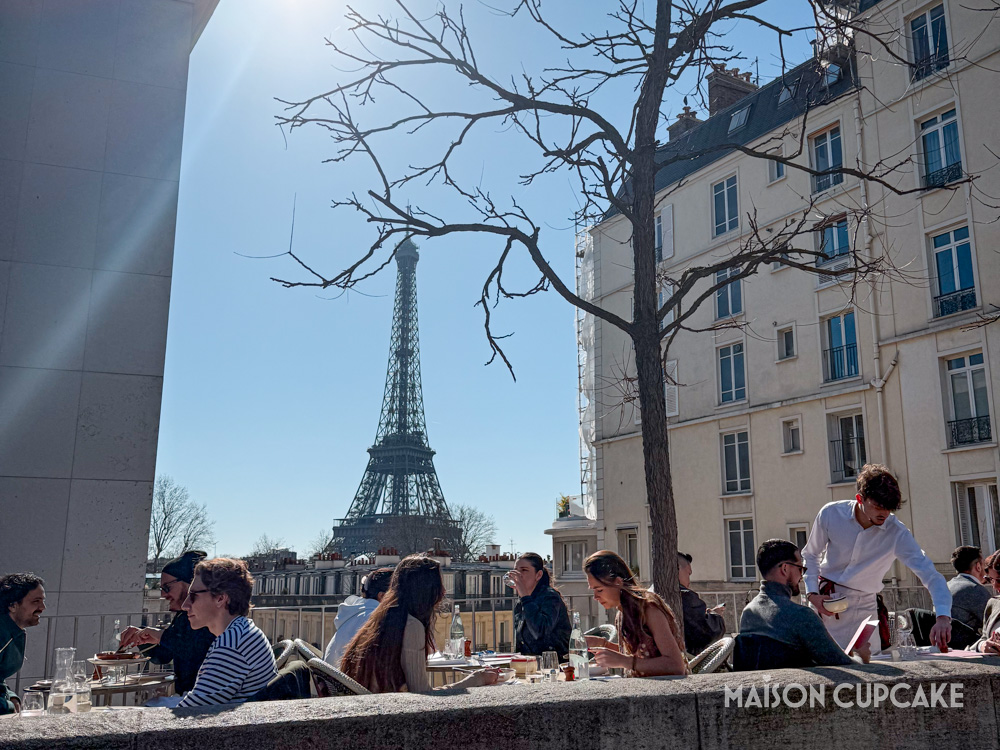
My Paris Guide: outdoor restaurant terrace with view of Eiffel Tower
Paris – outdoor restaurant terrace overlooking the Eiffel Tower.

Friends often ask me for personal recommendations where to go and what to do in the French capital. To make these tips easier to update, this will be my umbrella guide to my experiences in Paris. Some posts linked here were written on earlier trips. I still stand by these but am slowly updating and expanding this guide with more recent Paris experience.

Paris at a Glance

Regular visits to Paris – three times in 2024 and likely as many this year – gave me the chance to learn my way around on foot and by bus, rather than solely on the Metro. I’ve built up a map of places to return to, as well as a wish-list of new ones to visit.

I’ll use this guide to signpost some of my own Paris highlights and suggestions – these aren’t predictable checklists seen in every Paris guide; I share real experiences and practical itineraries from my trips. These are my lived experiences not listicles selling expensive tours.

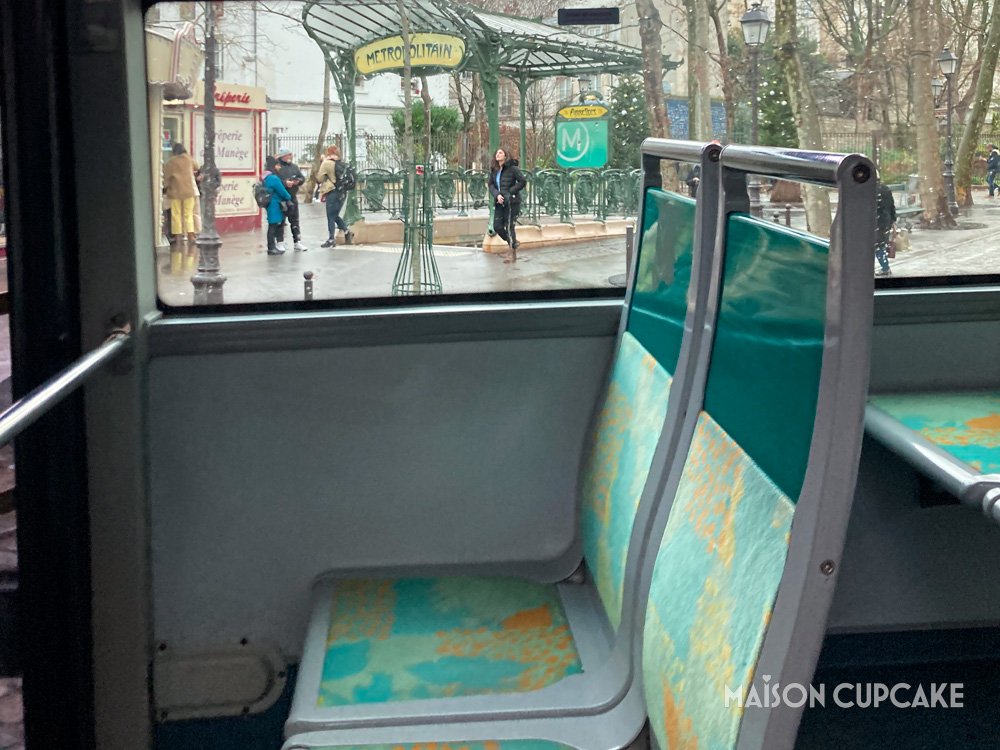
Paris bus interior with Art Nouveau metro entrance through window
You see more of Paris from buses than the Metro.

Central Paris is compact but densely packed with sights and attractions for any tourist. But Paris is more than beautiful monuments, this is a living breathing city full of Parisians going about their daily lives.

Ignore the clichés about the French being rude; follow a few simple rules, like saying “Bonjour” and keeping your voice down in restaurants, and you’ll get along fine. Paris has style but it isn’t always polished, you’ll see graffiti and rubbish piled up. It’s not the image shown by influencers swishing their hair and Chanel bags in one street by the Eiffel Tower.

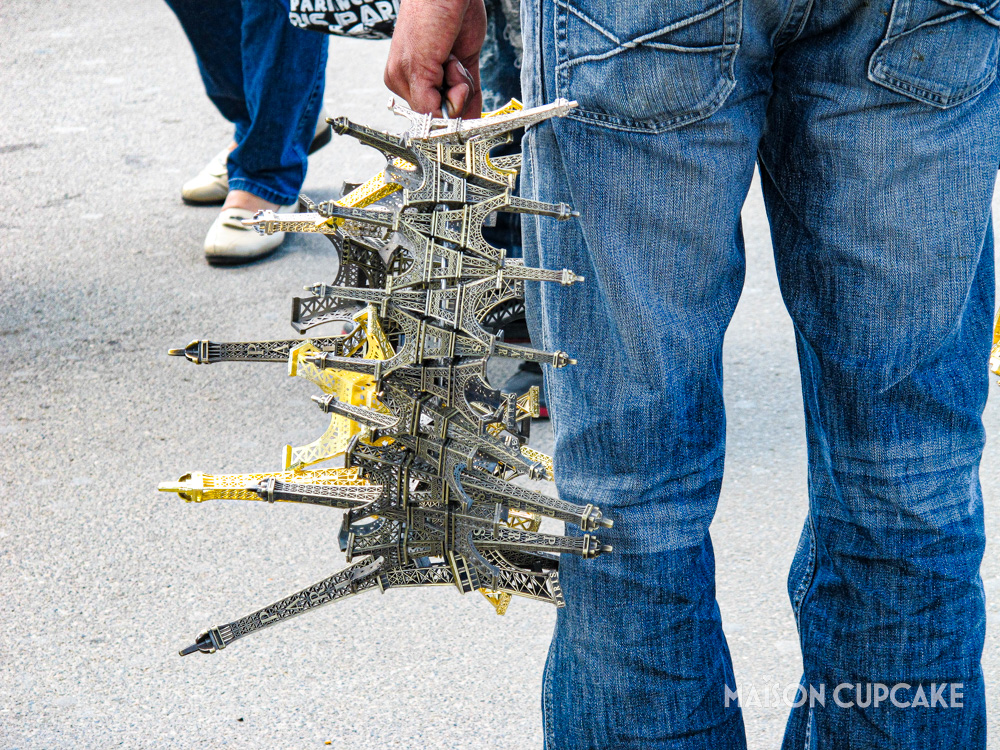
Souvenir seller's hand clutching bundle of metal Eiffel Towers.
Parisian souvenir seller holding bundle of little metal Eiffel Towers.

Paris is great to visit all year round, though it can be cold in winter and extremely hot in summer. Small businesses often close for extended holidays in August, and naturally the summer holidays are busier than off-season. I’ve spent bright, blue-skied January days there, when waves on the Seine sparkle in the sun – proof that any time can be a good time to visit Paris.

Choosing where to stay in Paris

I’ve stayed in several areas in Paris, but my personal preference is to be within walking distance of Gare du Nord. It means I can drop off luggage on arrival and avoid queues for Metro passes at one of Paris’s busiest stations.

I’m fond of the 10th arrondissement neighbourhood close to Canal Saint Martin which is about a 15-minute walk from the Eurostar terminal. In the other direction, it’s as easy to stroll towards Montmartre.

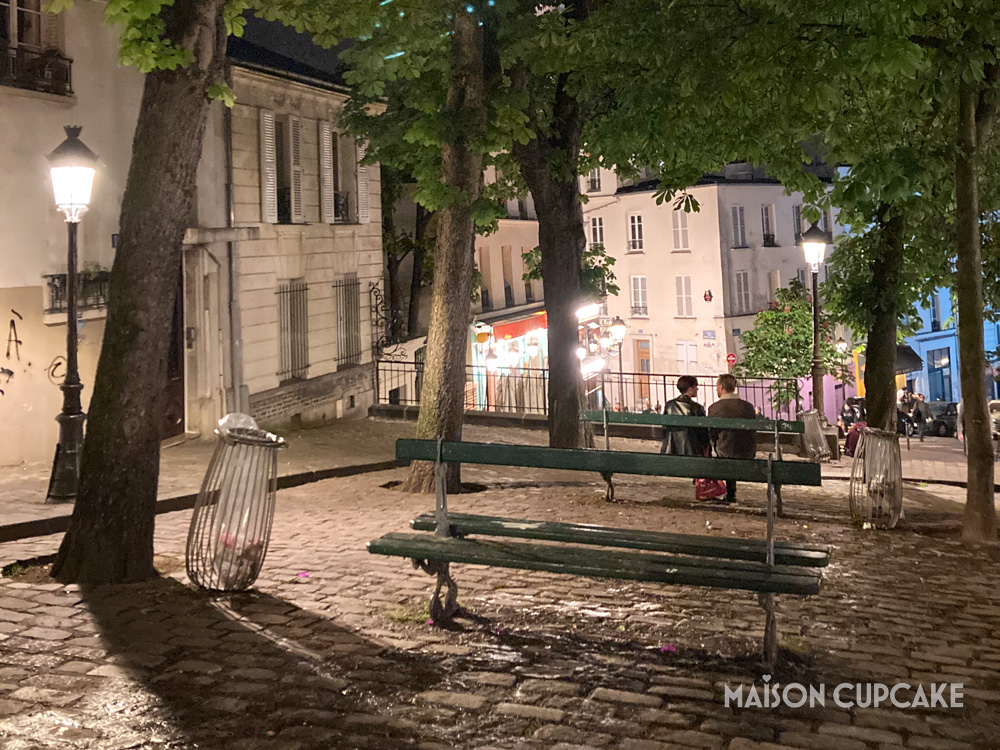
Montmartre by night with Parisian bench and lamps and cobbles
Paris – Montmartre, Place Émile Goudeau, site of Picasso’s one-time home at Le Bateau Lavoir – by night.

South of the Seine, the Sorbonne and Latin Quarter are a favourite. Here you’ll find restaurants, independent bookshops and cinemas frequented by students. Nearby are the domed Panthéon and the Emily in Paris-famous Place de L’Estrapade, or you can walk to Saint-Germain-des-Prés.

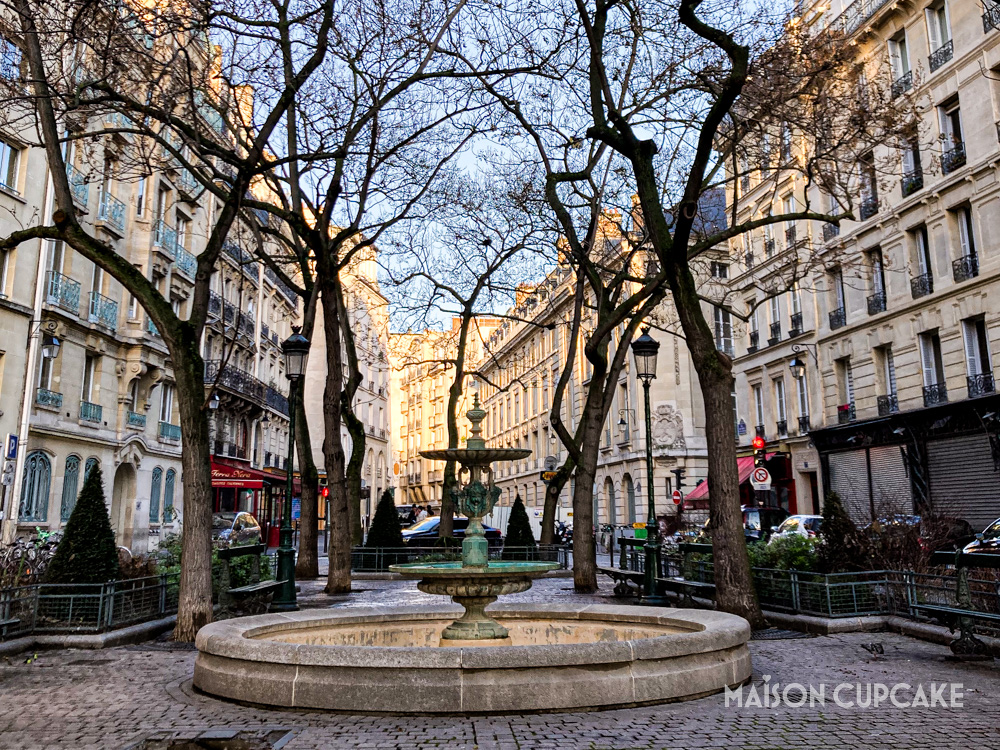
Paris Place de L'Estrapade with fountain
Paris in winter – fountain at Place de l’Estrapade, a key Emily in Paris filming location (outside Emily’s flat) with Gabriel’s red restaurant on left.

Further south still, Montparnasse offers iconic brasserie restaurants such as La Coupole and Café Le Dôme along its wide boulevards. I like the vibe of Montparnasse for its lived-in feel, rather than obvious proximity to big sights.

Its cultural history is fascinating too, former residents include Giacometti and Simone de Beauvoir, who grew up in a flat above La Rotonde. Montparnasse cemetery is less obvious, but with equally interesting “residents” to pay homage to than at the more famous Cemetière Père Lachaise in the east; Serge Gainsbourg and Jane Birkin are buried here.

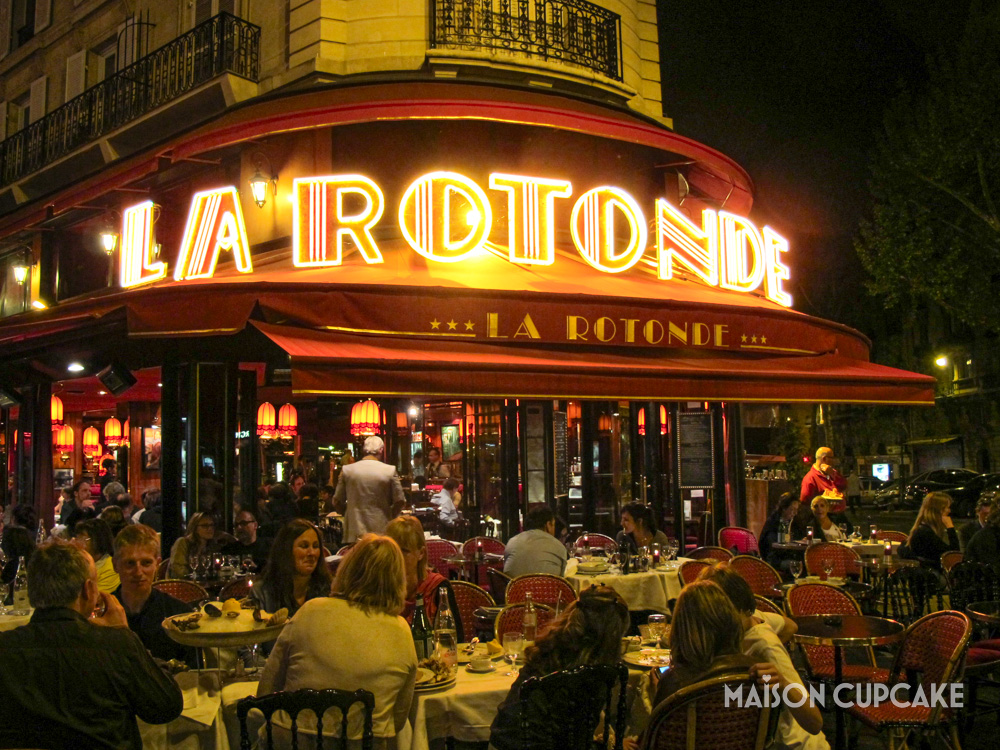
Paris La Rotonde by night with neon signage and diners eating.
Paris – La Rotonde brasserie on Boulevard Montparnasse

If you don’t mind staying further outside the city, there are several campsites around Paris. We have been camping in Maisons-Laffitte, west of the city, but under an hour away on high-speed RER trains. Saint-Germain-en-Laye is another leafy, well-heeled suburb worth considering and it’s not far from Versailles. An advantage of staying on the outskirts is the ability to park if you’ve arrived via car ferry.

Granted, Paris is also ringed by rough-edged Brutalist concrete banlieue that I wouldn’t recommend. My top tip is to scout neighbourhoods on Google Street View to gauge the vibe, especially to imagine the route between your accommodation and public transport at night.

Eating in Paris

My Google map is scattered with pins of cafes and restaurants I’d love to visit. I try to mix visiting old favourites and new discoveries each trip. Paris offers global cuisine, but given I have access to this in London, I like eating French food in France.

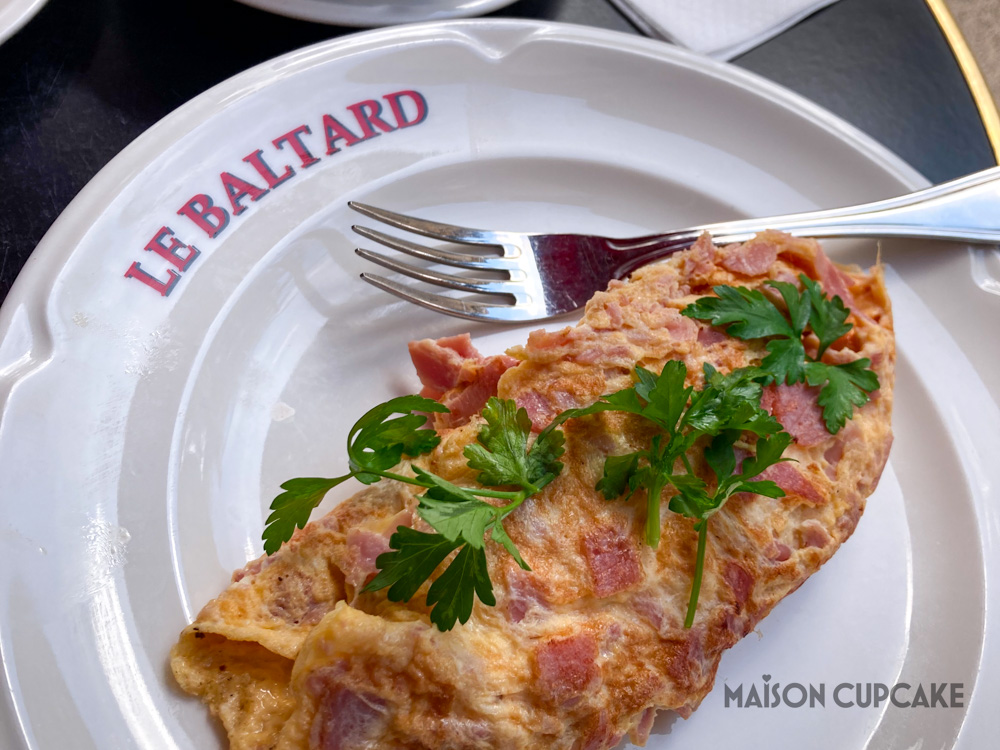
Omelette at Le Baltard, Paris
Ham omelette for lunch at Le Baltard.

If I’ve had a substantial hotel breakfast, I tend to choose sandwiches, salad or a light main dish at lunchtime. Most restaurants serve either croque-monsieur or omelettes at lunchtime. Paris also has plenty of crêperies serving savoury buckwheat galettes and sweet pancakes.

You don’t always have to book for dinner, I’ve wandered into many places last minute, but if you have a special destination in mind, a reservation is wise, even if only a few hours before. A lengthy menu in multiple languages with photographs of the food suggests a tourist trap you should avoid. Nevertheless, many restaurants will provide menus in English.

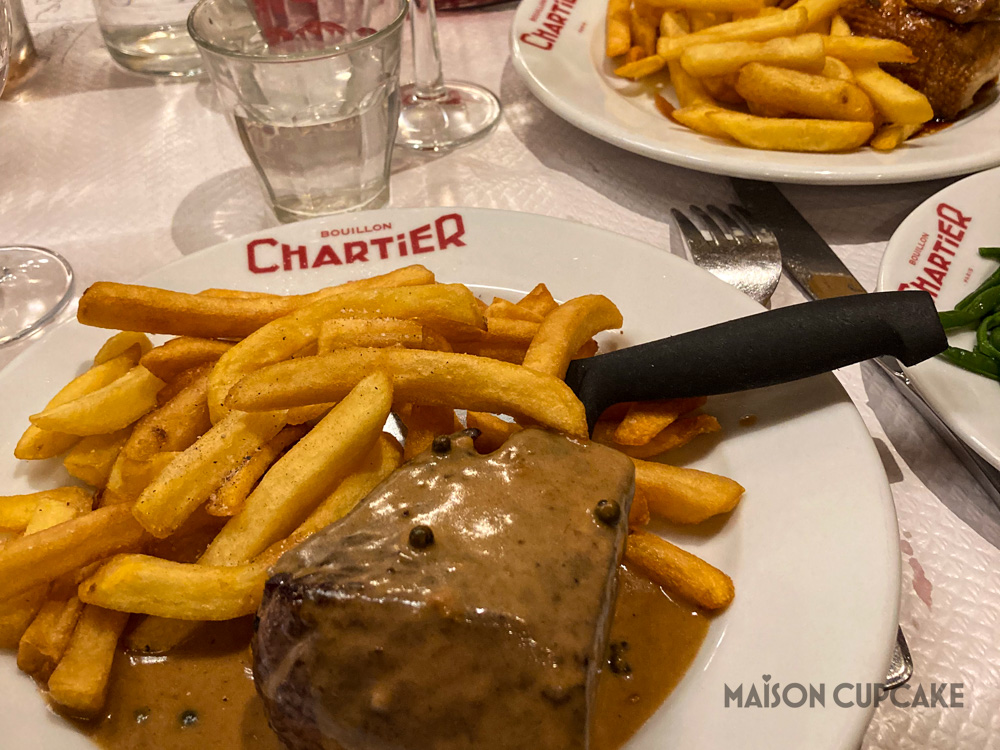
Steak frites at Bouillon Chartier, Paris
Paris – Steak frites as served at bargain bistro Bouillon Chartier
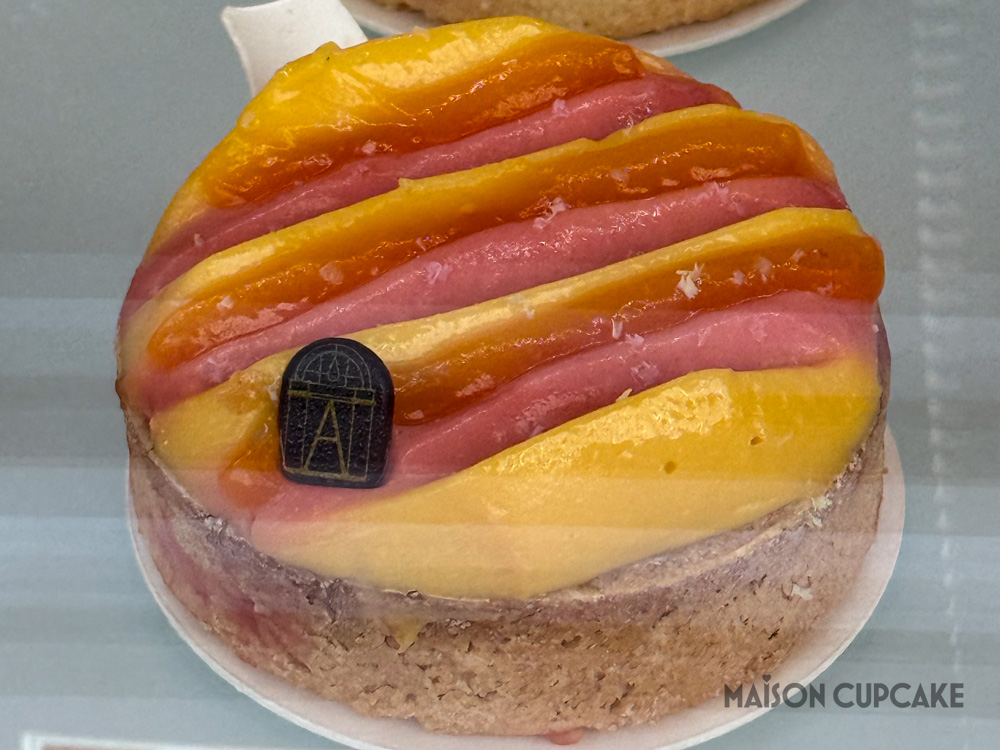
Rhubarb tart at Angelina Paris
Rhubarb tart at Angelina, Paris

Art, Culture and Galleries in Paris

The obvious pulls may be the Louvre and Musée d’Orsay but I encourage people to avoid the crowds and go to smaller museums of which Paris has dozens – I will write about my favourites in a future post but here are some tasters.

Up in Montmartre, you’ve got the Dalí gallery of his drawings and sculptures; you can even buy reproductions.

Close by and tucked away from the heaving Place du Tertre and gimmicky portrait artists, Musée Montmartre offers quieter refuge with a history of this Bohemian neighbourhood. Alongside a garden (and vineyard!) painted by Renoir, you can visit the studio of Parisian artist Suzanne Valadon. Early twentieth century artefacts from local establishments include a zinc bar, vintage telephones, paintings and black-and-white photos of can-can dancers. For fans of Moulin Rouge, it’s a must.

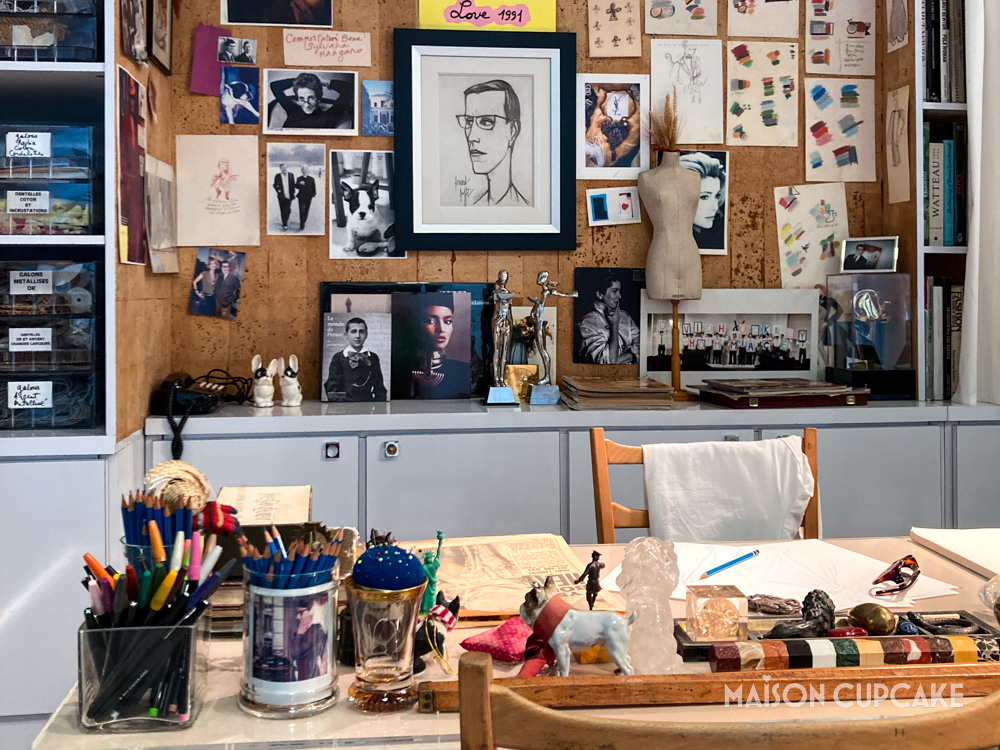
Atelier with pinboard at Yves St Laurent Museum Paris
Yves Saint Laurent Museum, Paris. The late designer’s top floor atelier, as he left it, displays personal items and work in progress.

My favourite fashion museum in Paris is the Yves Saint Laurent Museum. His former Parisian home, the museum shows regularly changing exhibitions exploring his clothing, accessories and jewellery focussed on themes such as gold, lace or flowers. Saint Laurent’s sky-lit studio packed with books, notes and fabric samples, has been left as if the late designer has just stepped outside and makes an emotional visit for fashion lovers.

Nearby, the Palais Galliera is the serious fashionista’s museum with bigger shows devoted to single designers. Recently these have included Coco Chanel, Stephen Jones (hats) and Rick Owens.

Meanwhile next door to the Louvre, an off-shoot of the more famous museum but venue in its own right, the Musée des Arts Décoratifs, Paris’s equivalent of the V&A, shows exhibitions dedicated to design movements, people or locations. Recent displays showcased Elsa Schiaparelli, Paul Poiret, Parisian department stores and the Art Deco movement.

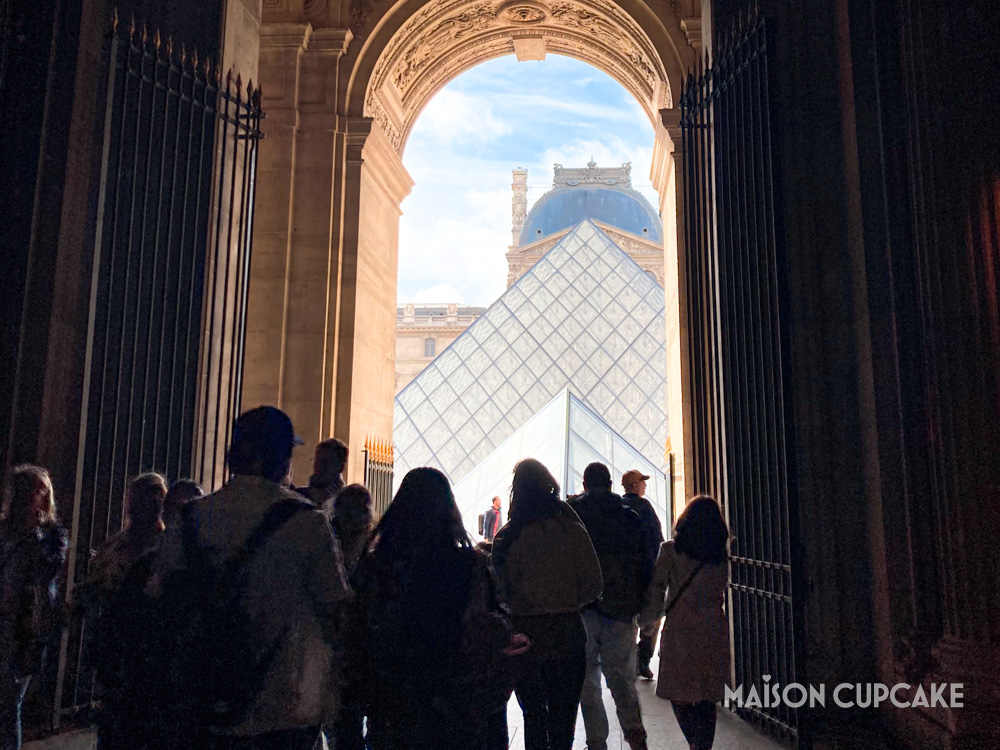
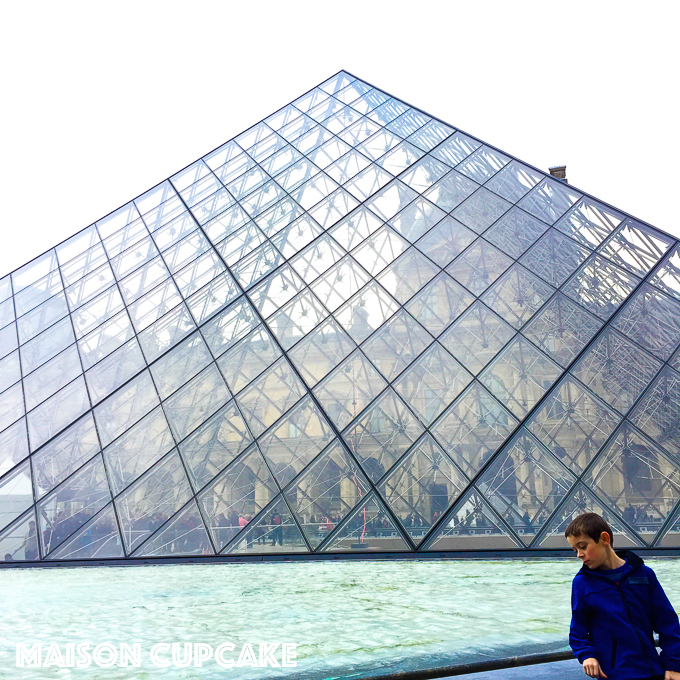
Glass pyramid and crowds at the Louvre, seen through archway.
There are always queues to enter Paris’s famous Louvre museum – but anyone can walk past the famous glass pyramid without a ticket.

Pre-booking is advisable for all of these if you have a strict itinerary and it’s essential for the Galerie Dior on Avenue Montaigne. That said, it’s often easier to get into Paris exhibitions without lengthy pre-booking, compared to say, the V&A in London.

My most recent experience pre-booking for the Louvre still entailed a 90-minute wait only to abandon going inside altogether. Given the alternative ways I might have spent my precious time in Paris, I was furious – so forgive me if I have little positive to say about the Louvre for now. I hope to be more fortunate on a future visit.

Planning Itineraries in Paris – An Example Day

Strike a balance between loose planning and flexibility – depending how the day pans out. Parisian buildings often have decorative features you should allow breathing space to look up and absorb. I do however, suggest booking early slots at museums and attractions to maximise your time.

To give an example of a full, but realistic timetable, here’s how we spent one day on a recent trip:

  • 8:00 Breakfast at our hotel near Gare du Nord.
  • 9:15 Left the hotel and took high-speed underground RER train to the Catacombs (south).
  • 9:45 Timed entry to the Catacombs (pre-booked and arrived early for 10:00).
  • 11:15 Found sunny spot to enjoy coffee afterwards.
  • 11:45 Headed towards Montparnasse and explored famous grave sites at the cemetery, (this was unplanned – instead of the Zadkine gallery, flexibility in action!).
  • 12:30 Wandered through authentic locals’ Edgar Quinet market then enjoyed relaxed lunch at a crêperie in Montparnasse’s Breton district.
  • 14:00 Walked to Bon Marché (iconic department store), browsed the food hall.
  • 15:00 Ambled up Rue de Bac, strolled along a short stretch of the Seine riverbank then wandered into Saint-Germain-des-Prés. We popped into smaller shops and had another pavement coffee midway.
  • 17:30 Went back to hotel for a brief rest.
  • 19:00 Ten-minute walk to Canal St Martin, then chose a random bistro for dinner.
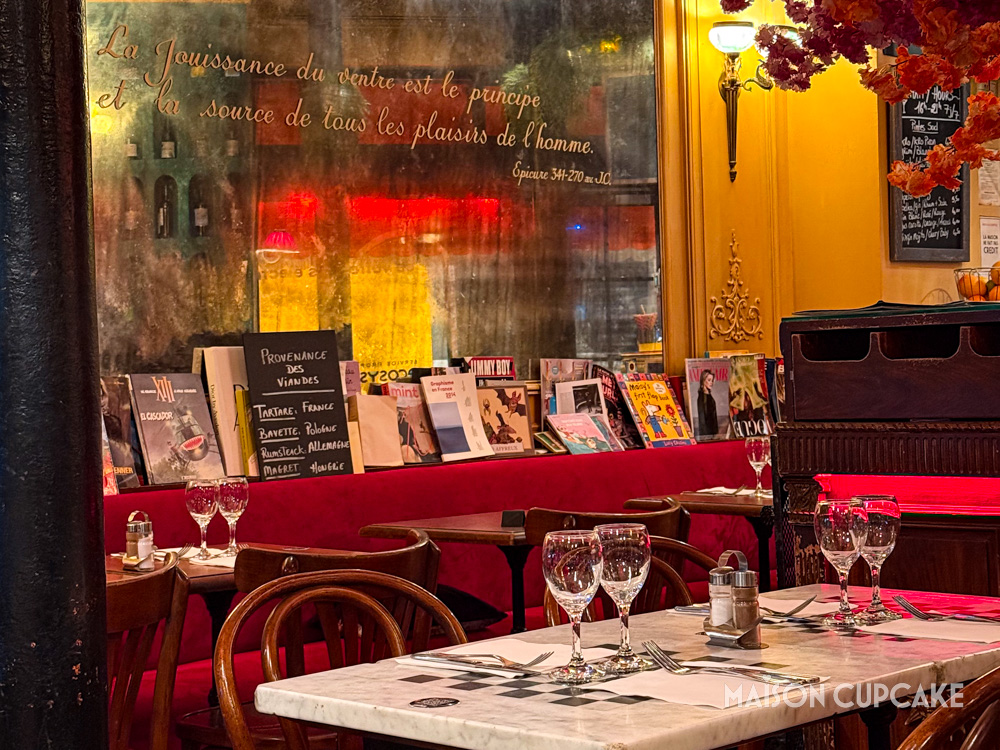
Warm red bistro interior with mirror, in Paris.
Atmospheric Paris bistro interior on Boulevard Magenta.

Be realistic how much you’ll get done in a day in Paris. Choose an area to circle around and pick a couple of activities or sights either side of lunch. Allow yourself time to grab a coffee. Choose a restaurant near your hotel on at least one evening rather than dashing about until late.

In Paris it’s important to sit still and watch the city happening before you. It’s not just about ticking off a visit to the Eiffel Tower. In any case, I’d suggest L’Arc du Triomphe as an equally memorable alternative with shorter queues and lower entry price.

Paris for different types of visitor

If it’s your first time in Paris, inevitably you’ll want to see the big sights. On my mum’s first visit we used local buses that took us past Notre Dame, L’Arc du Triomphe and the Trocadero (from where there’s an excellent vantage point towards the Eiffel Tower) on one day. I wanted to show her EVERYTHING but had to be realistic what she could comfortably manage.

There simply wasn’t time to waste queuing up to get into things. I don’t see the point of having two days in Paris but spending two-thirds of one day in The Louvre. Rather I focussed on showing my mum iconic buildings from buses, with more detailed walks around Montmartre and the covered shopping arcades north of Les Halles.

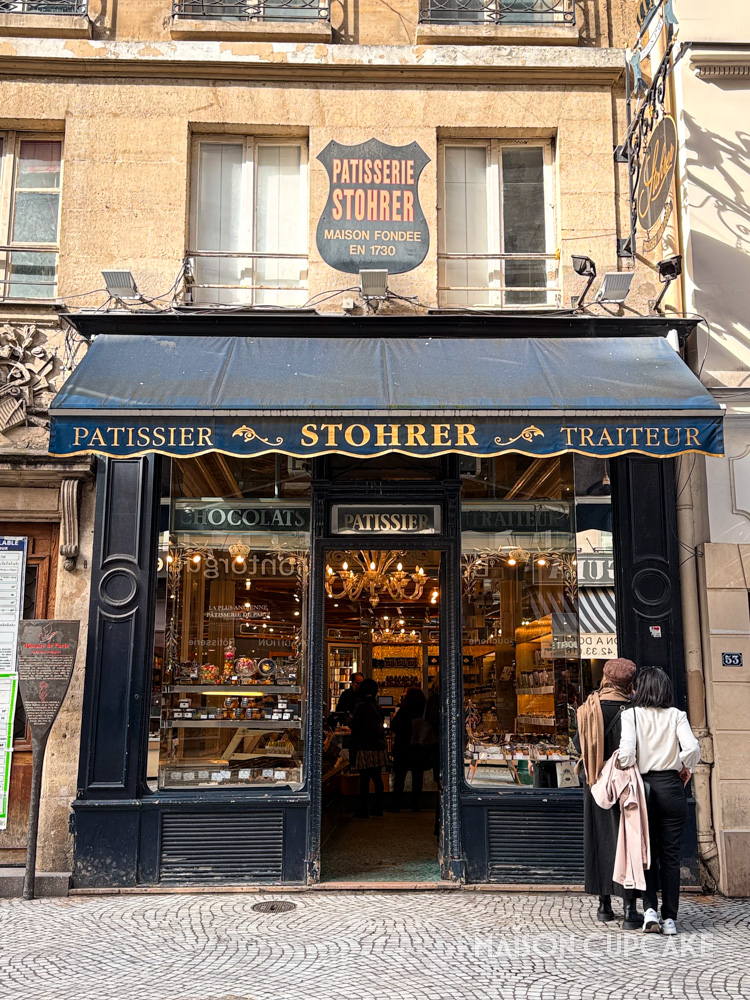
Exterior of Stohrer patisserie in Paris with navy awning.
Patisserie Stohrer, of Rue Montorgueil, is the oldest bakery in Paris and famous for its rum babas.

For fashion lovers: Browse boutiques, vintage stores and BHV Marais (department store) and the Azzedine Alaïa Foundation around The Marais.

For foodies: Zone in on Rue Montorgueil district, with its independent food stores and the oldest patisserie in Paris, Stohrer. E Dehillerin, packed with restaurant quality cookware is nearby.

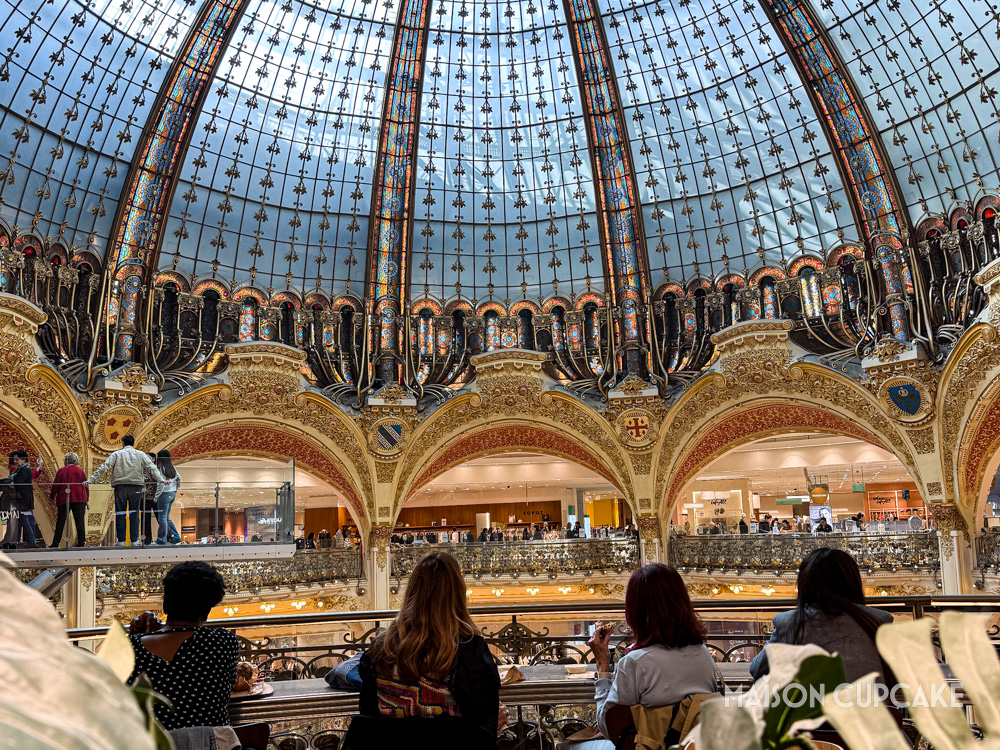
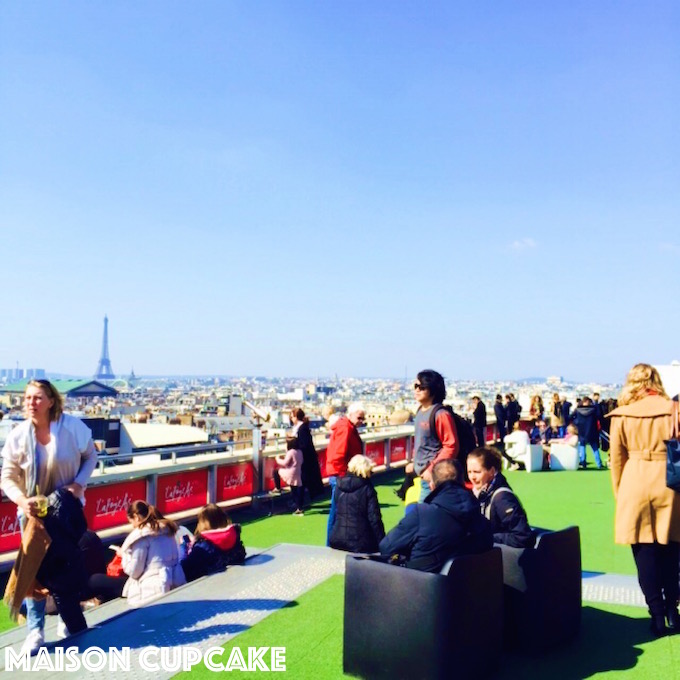
For shopaholics: Don’t miss the Grand Boulevards’ department stores. Galerie Lafayette has an iconic glass dome above the ground floor’s beauty hall. If you work your way up all six floors, the roof boasts a fabulous outdoor terrace overlooking the Opera Garnier.

The expensively refurbished Samaritaine, recently opened again after twenty years’ closure, has mille-feuille layers of swirling Art Nouveau iron balustrades, and a golden-hued painted atrium. It is visually stunning and an essential stop – even if you’re not buying a Celine handbag.

For children: When Ted was small we found plenty of things to do in Paris with children.

Galerie Lafayette glass dome
Galerie Lafayette’s domed ceiling is a must-see amongst the department stores along Boulevard Haussmann, Paris.

Practicalities in Paris

Even when using buses and the Metro, you will walk more than usual in Paris. I’ve clocked up as many as 30,000 steps in a day, so leave your heels behind and wear robust, comfortable shoes.

Metro stations often have huge flights of stairs to reach platforms; walking to a nearby station on a different line can save effort making connections. Plus, navigating Paris above ground helps you get your bearings. Places are often closer together than you realise.

Hotels can be cheaper on Sundays and Mondays though many independent shops and museums may be closed. Although I favour collecting loyalty points from certain hotel chains, Paris has many characterful independent hotels it would be a shame to rule out. But don’t expect a palace – unless you’re paying for The Ritz.

Paris hotel rooms can be cramped, and while an iconic view is unlikely, you may end up looking onto a dark inner courtyard. Triple or family rooms are harder to find so families may need multiple rooms. If I’m travelling alone, I choose hotels in wide (look on Google Street View) streets close to the Metro or bus stop rather than narrow alleys.

For clothing in Paris, I avoid wearing bulky coats and use a zip-up cross-body bag for my valuables. I carry a tote bag for purchases or layers removed along the way. If your trip is short, it’s easier to gauge whether to bother with a raincoat.

I like wearing a leather jacket as it’s showerproof and feels less touristy than a hooded anorak. Although I love cute French slogans on tops at home in London, I leave these behind – they do not translate so well in Paris.

On my last day, I store luggage securely at the hotel reception and fetch it before leaving. Even if you travel light, allow extra space in your luggage to squeeze in some French goodies to bring home!

Sarah Trivuncic in Paris
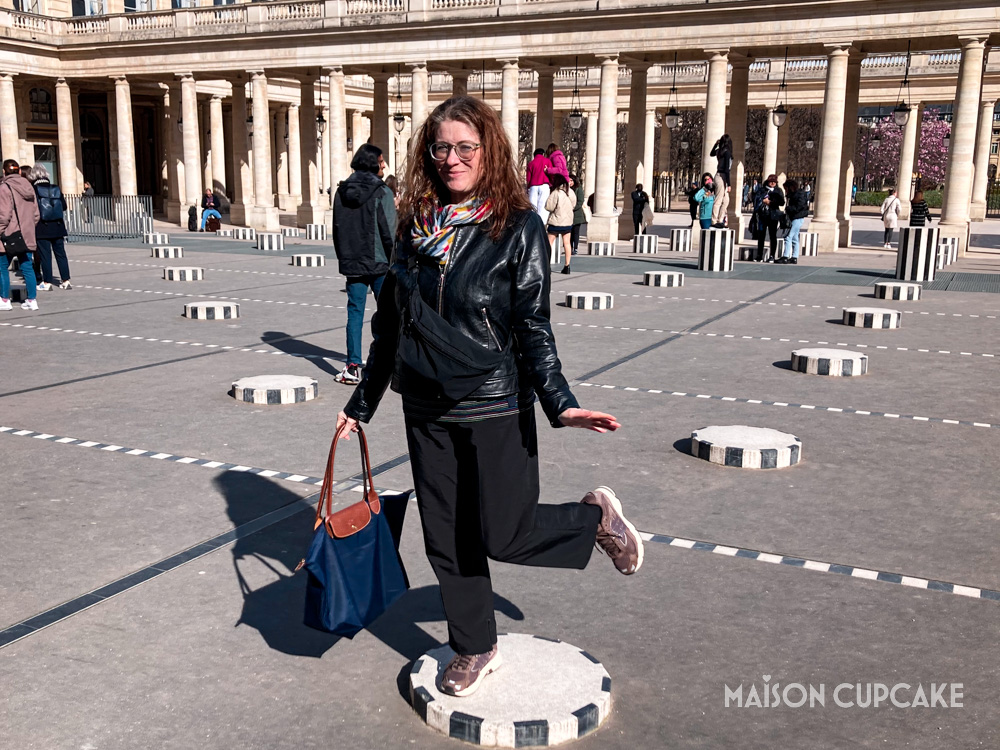
Paris – posing on the humbug podiums in Domaine Nationale Palais Royale.
  • Visit Canal St Martin – Explore the charming streets, bridges and cafés of this authentic Parisian locale.
  • Take a virtual Paris Patisserie Tour – Wander around Rue du Bac and sample the city’s finest pastries, cakes and chocolates.
  • The Paris of Amélie Poulain – the film may be 25 years old but the locations are still there in Montmartre.
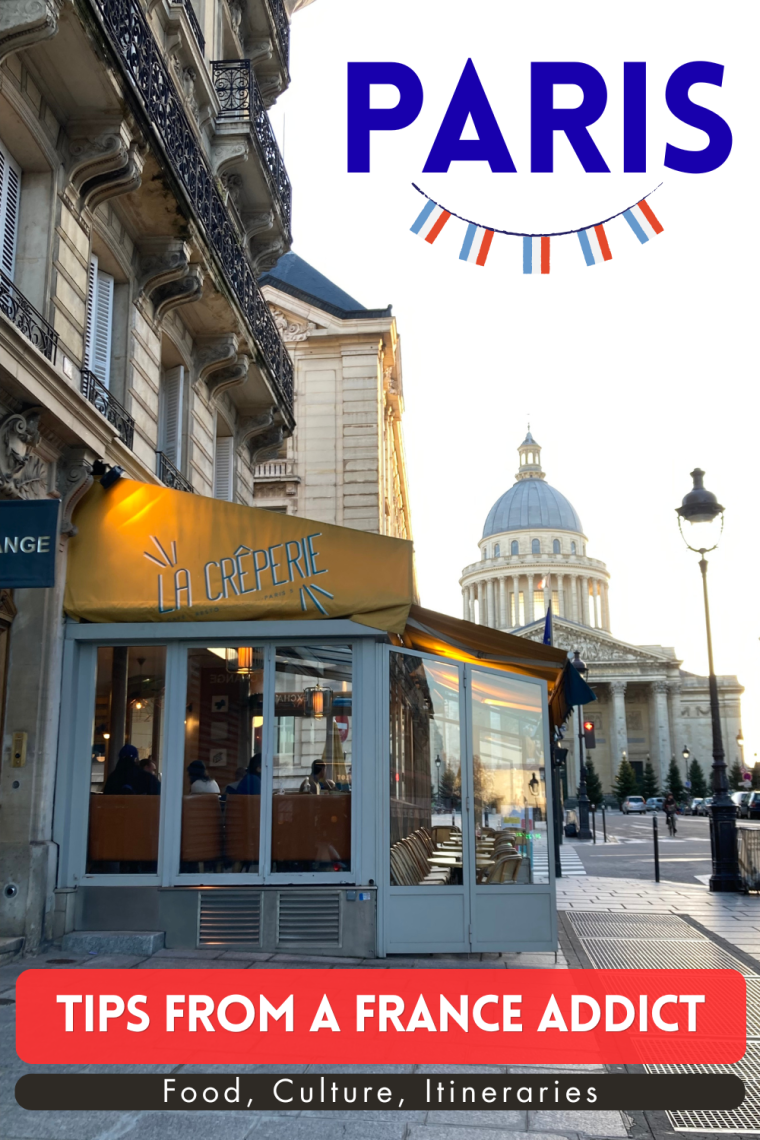
Pinterest Graphic for Paris guide with picture of creperie in front of the Panthéon.
La Crêperie at The Panthéon, close to the Sorbonne.

Are you planning to go to Paris soon? Pin this post to save these Paris tips for later!

Do you have any Paris questions? Leave them in the comments below and I’ll see if I can help.

Originally published on Maison Cupcake
Rouen City Break: Weekend Itinerary

Normandy’s Compact City is Full of Surprises

Why isn’t a Rouen city break closer to mind for city breaks? Packed with narrow streets filled with medieval houses, stunning Gothic buildings and the Joan of Arc factor. There are interesting shops and  museums to explore, and rich Normandy cuisine to sample. All within seven hours’ drive from London. 

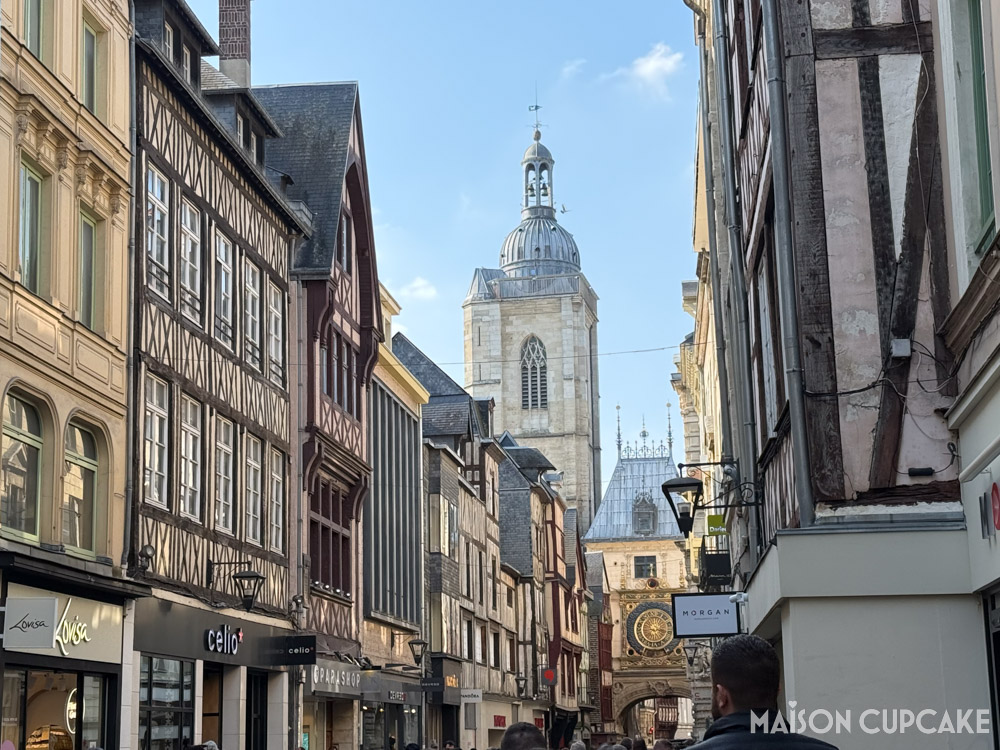
Rouen city break scene: shopping street with timber buildings and gros-horlogue medieval clock.
Rouen City Break in Normandy: A Compact City Filled With History

Follow our casual weekend itinerary from our real Rouen city break; these are real lived experiences, not a listicle selling expensive tours. To plan our weekend break in Rouen we used the very useful Visit Rouen local tourist office website.

We drove via the Channel Tunnel late on Friday evening and stayed until Sunday afternoon.

Day 1 in Rouen: Markets, Medieval Streets and a Concert

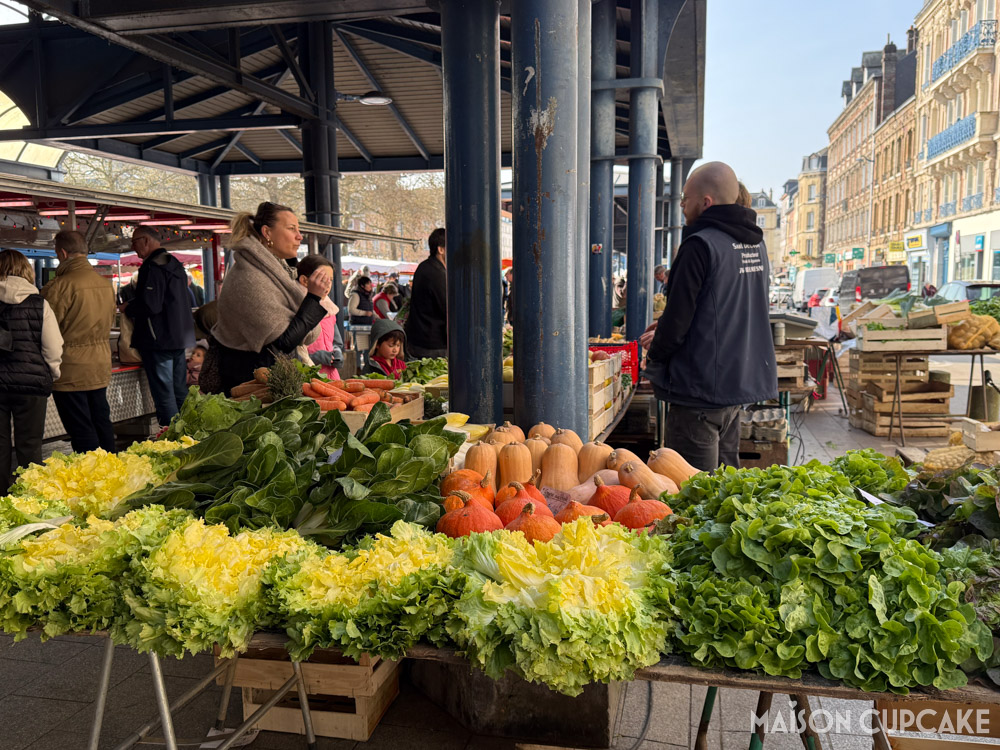
French market stall selling giant lettuce and vegetables in Rouen, Normandy.
Rouen’s Biggest Market At Place Saint-Marc

The northern French city is compact and easy to explore on a weekend break. Our Rouen city break was built around a Saturday night concert with a day and a half to see Rouen’s main sights on foot. It was our second trip there and we noticed some monuments had been cleaned and pedestrian areas were landscaped with plants. 

Morning at Marché Saint-Marc

We stayed in the same place as 2018, twenty minutes’ walk from the main town but close to the bustling Marché Saint-Marc. We planned to come back on Sunday – the market runs Friday to Sunday, plus Tuesdays – to maximise our schedule, but it was hard not to linger when passing generous displays of fresh produce. 

Exploring the Saint-Maclou Quarter

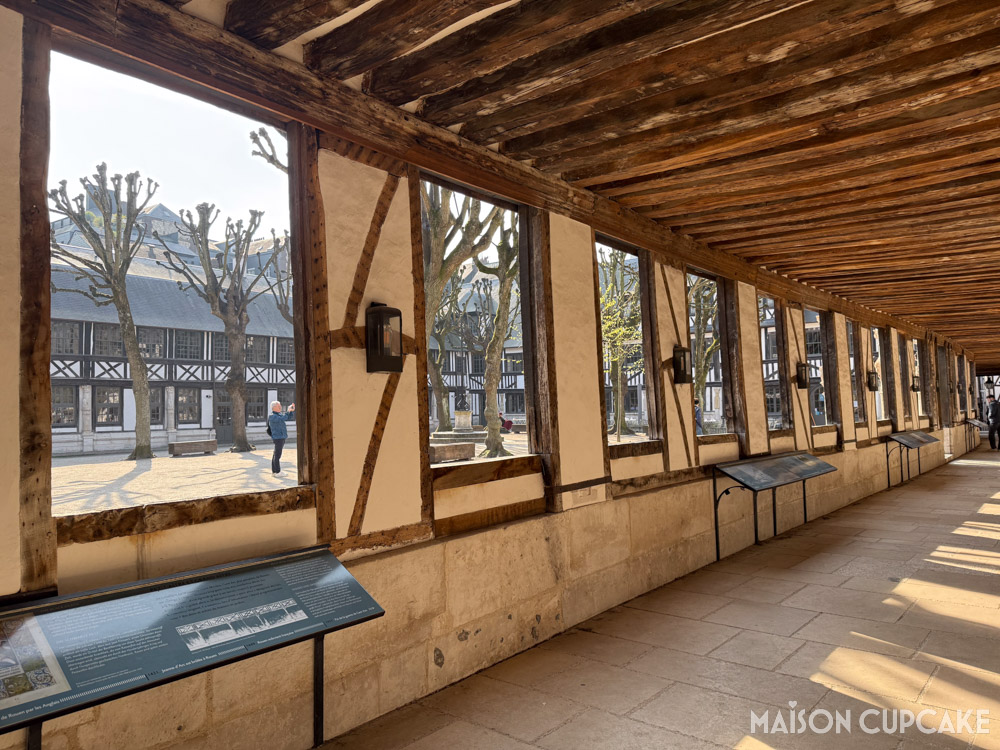
Timber ceilinged walkway overlooking Aître-Saint-Maclou in Rouen, Normandy, France.
Rouen’s Aître-Saint-Maclou, A Former Cemetery and Ossuary (Bone Gallery)

Heading west, our first stop was Aître-Saint-Maclou, which was being renovated during our last visit. This former parish cemetery is surrounded by timber panels that once housed ossuary bone galleries. The buildings lining the square were, until 2014, a school.

We scanned the information panels and admired the timber ceiling in the corridor linking the Aître with adjacent streets. Carvings depicting danse macabre skeletons edge the space and there was a craft gallery we’d love to see another time. The Aître merits more than the twenty minutes we spent looking. 

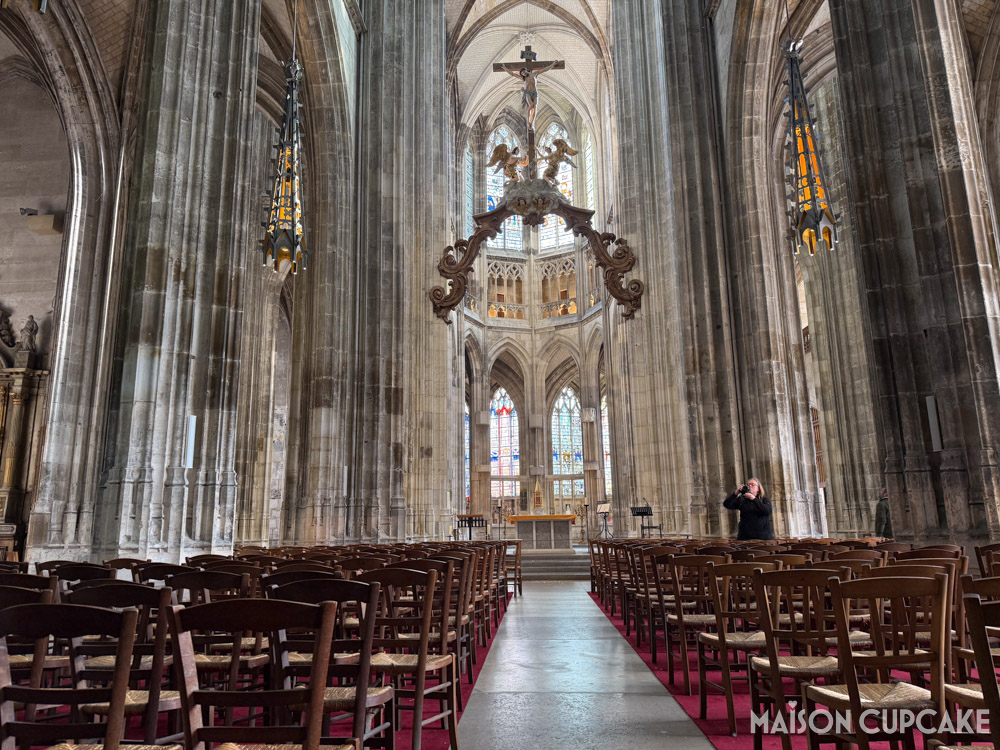
Interior view of nave and vaulted ceiling and crucifix inside Eglise Saint Maclou in Rouen, Normandy
The Nave inside Rouen’s Eglise Saint-Maclou

Alongside the Église Saint-Maclou – possibly even lovelier inside than the cathedral – is the wonky Maison du Bois at 4 Place Barthélémy squashed between other buildings, and a square lined with cafes. In the door wells of Saint-Maclou, we were fascinated by the headless stone figures seen up close, and in a quieter spot than those outside the cathedral. 

Literary Rouen and a Café Stop

Cafe interior with busts of Simone de Beauvoir and Jean-Paul Sartre in Rouen, France.
Rouen’s Café Metropole: Regular Haunt of Simone de Beauvoir and Jean-Paul Sartre

A recurring theme in Rouen seems to be long lunches and unusual opening hours; despite them closing at noon on Saturday, Café Metropole kindly allowed me to photograph their bronze busts celebrating Simone de Beauvoir and Jean-Paul Sartre. 

The couple were regulars in the 1930s when De Beauvoir was teaching philosophy at the local lycée and Sartre was catching trains back to his post in Le Havre; the handsome Art Nouveau railway station with clock tower is across the road. 

Ornamental facade of Maison Marrou in Rouen, Normandy.
Maison Marrou in Rouen: The Imagined Home of Madame Bovary

Nearby, the intensely decorative Maison Marrou is worth a glance. Once open as a museum, creating the imagined home of Emma Bovary, the building is sadly shuttered. Meanwhile Madame Bovary writer, Gustave Flaubert’s birthplace is now a medical museum east of the city centre. 

Lunch at Place du Vieux-Marché

Modern stained glass exterior of Eglise Jeanne D'Arc in Rouen, Normandy, France.
L’Eglise Jeanne D’Arc de Rouen and La Buche Marking The Spot of Her Death

After so many wooden buildings, the pointy roofs of Comptoir des Halles’ covered food market and Église Sainte-Jeanne-d’Arc de Rouen are striking. Reminiscent of Sydney Opera House, they curl around La Bûche, a cross marking the spot where Joan of Arc was burned.

We’ve still not managed to see inside the church, as it shuts between 12-2 but the daily market is easier to catch. 

Timber medieval exterior of Les Maraichers restaurant with outdoor tables in Rouen, France.
The Place du Vieux-Marché in Rouen is surrounded by timber buildings including Les Maraichers restaurant

Behind this modern silhouette, around Place du Vieux-Marché are foundations of a ruined church, Saint-Saveur, and 14th century buildings. Amongst them, La Couronne, which opened in 1345, claims to be the oldest restaurant in France. Bafflingly, they were closed at Saturday lunch, but next door we enjoyed a two-course lunch with Normandy cider at Les Maraîchers.   

Rouen’s Most Iconic Sights

Close up of the Gros-Horlogue ornamental clock in Rouen, France.
Rouen’s decorative Gros-Horlogue clock has a museum upstairs.

After a boozy apple dessert flambéed with Calvados liqueur, we wandered past more of Rouen’s main landmarks. The Gros-Horlogue is an ornamental gold clock straddling one of the pedestrian shopping streets. There’s also a little museum upstairs.  

Bullet marks in Rouen's Palais de Justice filled with colourful Lego pieces.
Bullet marks in the Palais de Justice de Rouen from 1944’s liberation – some now filled with Lego

The Palais de Justice de Rouen is a majestic public building crowned with gargoyles; its eastern wall still bears bullet holes received in 1944’s liberation from German occupation. Recently some have been plugged with colourful Lego. Under the Palais is the Maison Sublime, a Jewish archeological site only discovered in 1976, and now a visitor attraction. 

Gothic facade of Rouen cathedral on a sunny day, the fleche spire is covered with white tarpaulin during repairs.
Rouen Cathedral, painted many, many times by Claude Monet.

Rouen’s Cathédral-de-Notre-Dame with three towers is the jewel of Rouen’s numerous big churches. The Gothic iron spire or flèche caught fire in 2024 and is currently covered in a white cylinder – although my husband referred to this as a toilet roll.

The magnificent facade sings with columns of stone apostles and Archbishops. Inside hums with visitors admiring vaulted ceilings and chapels. We liked the decorative stone staircase and pews made from rush seating. You don’t need to be religious to be in awe of such architecture. 

Decorative stone staircase bannisters in Rouen Cathedral.
Decorative staircase in Rouen Cathedral.

Behind the cathedral lies L’Historial Jeanne D’Arc, a lively museum experience telling the Joan of Arc story using audio guides and digital displays – we had visited before in 2018. 

A Slower Side of Rouen: Rue Eau de Robec

Winding down, at Rue Eau de Robec, we sat down at Café Addict for coffee and a shared tranche of homemade carrot cake. A shallow green channel flows along this street, in front of the little shops and cafes. 

It’s not quite Little Venice, but the shimmering water brings quiet charm and character to this corner of Rouen.

Rue Eau de Robec in Rouen with watery channel filled with plants.
Rouen’s Rue Eau de Robec with watery channel in front of shops and cafes.

An Evening at the Zénith de Rouen

Our evening took us to the 8,000-seat arena, Zénith de la Métropole Rouen Normandie to watch French pop showman Julien Doré. Although Rouen has trams and buses, there has been a typically French, long-running public transport strike every Saturday since January(!). 

Our hotel receptionist wisely advised us to drive. We were amazed to find not only free parking but pre-gig snacks of freshly made crèpes filled with jambon-fromage and fruit beer at bargain prices. 

Julien Doré stageshow at Rouen Zénith, blue light fills the arena as an inflatable whale and bubbles float giving impression of being underwater.
Julien Doré show at Rouen Zénith

The concert highlight was an inflatable whale “swimming” in the concert hall with blue light and bubble machine making it seem the audience were underwater.

Day 2 in Rouen: Brocante, Green Spaces and Art

A Relaxed Hotel Breakfast

Breakfast buffet at hotel, a rack of glass cereal jars with wooden lids, copper saucepans dangle from above.
Breakfast buffet at Mercure Rouen Champ de Mars

Continuing our Rouen city break, on Sunday morning we took things easy. By organisational quirk, our hotel, Ibis Rouen Champ de Mars served guests breakfast at the more upmarket Mercure next door.

This upgrade, combined with a spacious room and sunny balcony overlooking a fountain, was a steal at under 100 euros per night. We also benefited from reasonably priced on-site parking – further proof our Rouen trip had been great value, even more so than our 3 days in Lille. 

Sunday Brocante at Marché Saint-Marc

French flea market brocante stall in Rouen on a sunny spring day, picture frames, metal urn and candleabra amongst goods for sale.
Brocante stalls at Rouen’s lively Saint-Marc Market

We crossed the market again, which was even busier than Saturday. Sundays are good for secondhand stalls; last time I bought a bundle of Étienne Daho singles. 

Heading north, Rue Armand Carrel was filled with independent food stores, all open on Sunday mornings with queues of customers pulling wheeled shopping trolleys. 

Walking Around the Abbey of Saint-Ouen

Rear of Abbey of Saint-Ouen as seen from the Town Hall Park in Rouen, Normandy, France.
Rouen’s Abbey of Saint-Ouen as seen from Jardin de L’Hotel-de-Ville

We approached the Abbey of Saint-Ouen from behind, crossing the peaceful city park, Jardin de l’Hotel-de-Ville. The Abbey had been almost black on our previous visit, but has been thoroughly cleaned. The barricades were still up, with information panels and photos illustrating the scale of this project. 

Visiting the Musée des Beaux Arts

Atrium cafe space with Grecian sculpture fountain and Raoul Dufy murals in Musee des Beaux Arts Rouen.
Atrium cafe in the Musée des Beaux-Arts, Rouen

We approached the Museum Quarter, passing by the Donjon de Rouen turret, where Joan of Arc was imprisoned. Outside the Musée des Beaux-Arts, we sat in another pleasant green space, as local women practised tai chi beneath a large modern sculpture, and children played in a nearby playground. 

Inside the museum, we enjoyed the atrium with cafe chairs dotted around a fountain sculpture (sadly off) and several huge paintings including some murals by Raoul Dufy. 

The permanent collection here is huge, and although we’d seen the Monet of the cathedral before, this time we felt rushed seeing only the southern wing. You could devote a whole morning to this free museum or combine it with the Musée Le Secq des Tournelles next door, which houses historical ironwork in – yet another – 1500s church.  

Pastry and Coffee Near Saint-Maclou

Vanilla Flan and Coffee on cafe table in Rouen: Les Patisseries de Gill.
Flan Vanille at Les Patisseries de Gill at Aître-Saint-Maclou, Rouen.

Between the late breakfast and mid-afternoon departure, we sat outside Les Patisseries de Gill for coffee. A robust vanilla flan in sweet pastry felt a fitting snack to say goodbye to Rouen until next time when we’d take better advantage of its food scene. 

Gill’s pavement seating offered a rear view of Église Saint-Maclou and brought us neatly to where we’d started. We had seen a huge amount of Rouen over a weekend, without even going in any paid attractions.

Although Rouen would be a lovely day trip during a holiday in Normandy but there is so much more here than you can visit on one day – it’s taking time to slow down here.

A Final Walk Through Old Rouen

Place Saint-Amand in Rouen with red planters, bust of Claude Monet and L'Espiguette cafe umbrellas and tables.
Bust of Claude Monet in Place Saint-Amand, Rouen.

Before leaving we discovered the tiny alleyway Rue des Chanoines which leads to Place Saint-Amand, a picturesque square – or should I say triangle – with a bust dedicated to Monet. 

L’Espiguette is an attractive café there, that we remembered seeing last time, eastwards we took a last stroll down Rue Eau de Robec where locals were now playing pétanque.  

More Details That Define Rouen

Details of mediaval building facade in Rouen, wooden carvings of figures and buildings, decorative ironwork and blue French door number.
Details of buildings in old Rouen.

Heading back to our car, I scoured buildings picking out wooden carvings, interesting ironwork and decorative doorways.

Old Rouen doesn’t have a huge street art scene but things felt earthier as we looped back to Place Saint-Marc and our hotel; old factory buildings, a cluster of ethnic restaurants, glimpses of the industrial riverside. I’ve not even mentioned that Rouen is also a river port sat on the Seine – freight barges are a common sight.  

What We Missed (And Tips For Your Rouen Trip)

We have plenty of things to soak up on a return trip; you could use Rouen as a base to visit the Somme, Amiens or Giverny (more Monet). 

Next time we would want to:

  • Visit paid-entry attractions with a museum pass
  • Exploring along the Seine – river cruises, a Viking attraction and L’Entrepôt food hall 
  • Tasting local foods including duck, Neufchatel cheese and apple sugar sweets
  • Spend time shopping – Rouen had everything from independents to upscale fashion
  • Take in views high up from Saint Catherine
Rouen city break Pinterest graphic "Exploring Rouen Your Ultimate Weekend Guide" with portrait shot looking up at the ancient clock Gros-Horlogue, Normandy, France.
Save This Itinerary For Your Own Trip To Rouen

Although we only spent 36 hours in Rouen, there’s enough to keep you occupied for a week. If you’d like a bit of sea air whilst you’re in the area, take a look at my Things To Do in Baie De Somme – around 75 minutes’ drive away from Rouen.

Have I inspired you to visit Rouen? Bookmark this post to keep hold of this Rouen City Break weekend itinerary. If you’ve been to Rouen before, tell me your experiences in the comments below!

Originally published on Maison Cupcake
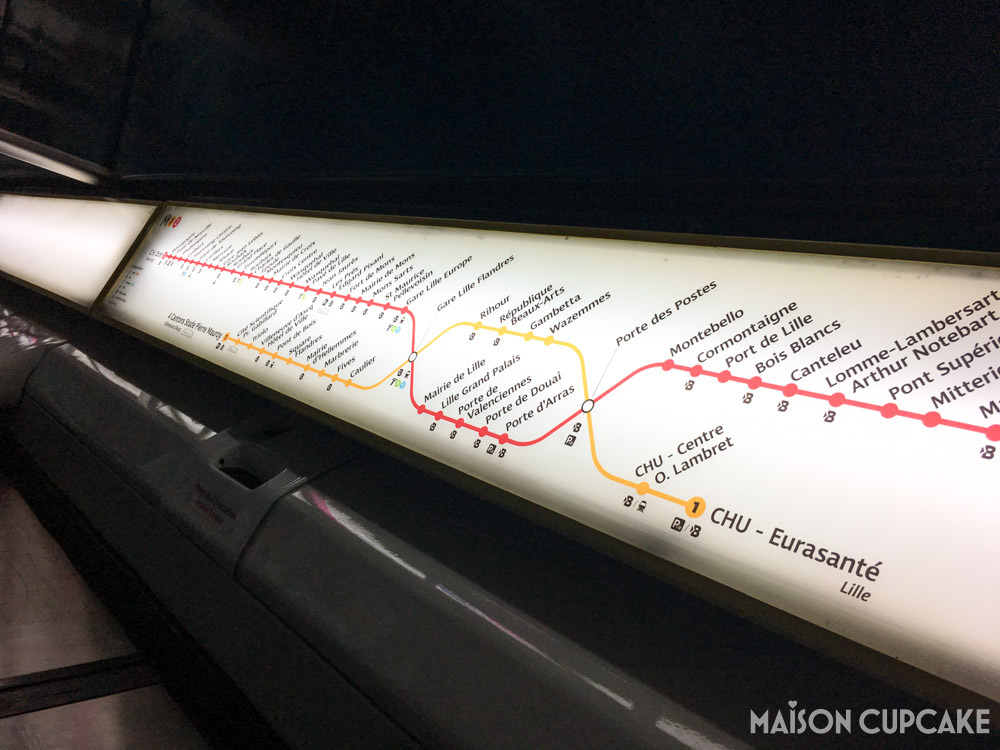
How to Spend 3 Days in Lille: Culture, Shopping & Food – An Honest Travel Report

3 days in Lille: Women walking dogs along a sunlit cobbled street in Vieux Lille
Saturday afternoon shoppers on a cobbled street in Vieux Lille

Planning 3 days in Lille or a long weekend in Lille? Here’s how we packed a long weekend exploring museums, food and charming cobbled streets. I return regularly for French pop concerts – the reason for this latest Eurostar trip from London – but Vieux Lille‘s lively atmosphere would entice me back anyway.

Our busy three-day itinerary featured a city bus tour, heritage sites and art in Roubaix, museums in Vieux Lille, the vibrant Wazemmes market and panoramic views from the Belfry tower.

This is an honest report on what is achievable during a three day Lille trip on a fixed budget, rather than listing expensive or impractical activities you won’t fit into a weekend break.

Our Budget for 3 Days in Lille (2 People)

Before diving into our 3-day Lille itinerary, here’s the budget for our trip for two people:

  • Travel: £69 return per person – Eurostar London to Lille during the Eurostar Flash Sale (£138 total)
  • Hotel: £90 per night including breakfast – double room at Ibis Styles Lille Grand Place (£270 total)
  • 72-hour Lille Citypass: £42.60 per person including 24-hour public transport (£85.40 total)
  • Restaurants and snacks: £240 for two people over three days
  • Total: £623.40 (excluding concert tickets)

For a long weekend in a walkable European city with great museums, interesting shops and food, we thought Lille was fantastic value in 2026.

Just 90 minutes’ journey on Eurostar makes Lille a perfect weekend getaway; after clocking off work we arrived at Lille Europe station by 10pm local time. Our hotel near the Opera House was close enough to walk to from the Eurostar.

3 days in Lille: Cafes in the Grand Place, Lille at dusk.
Grand Place in Lille, with its cafes and historic monuments

As it was not too late, we immediately headed out for an evening stroll around Lille’s handsome Grand Place, more formally known as Place du Général-de-Gaulle, after France’s famous President.

Seeing the stepped gabled roofs and decorative Flemish facades, hearing cars slowly rumble across the cobbles (although much of the centre is pedestrianised) in front of lively cafes – and you know you’ve arrived in Lille.

Day 1: Lille Citypass, Roubaix and a concert

Lille City Pass card held over cobbled street in Lille

On Friday morning, the first of our 3 days in Lille, we bought the 72 hour Hello Lille Citypass which includes public transport for the first 24 hours. Lille has two underground metro lines and two tramlines reaching to the suburbs – although the city centre is easily walkable.

Lille tourist passes are available for 24, 48 or 72 hours in Lille; you can order them online but picking up in person was easy at Lille tourist office. I have written a fuller review our using Lille City Pass including savings made.

Lille City Bus Tour

Double decker sightseeing bus parked beside Palais Rihour in central Lille.
The Lille Imperial City Tour bus at Palais du Rihour.

Having bought our tourist passes, we boarded Lille’s city bus tour which departs daily (except Monday) from the tourist office and passes the main sights alongside audio commentary.

Quai du Wault waterway in Lille with historic buildings and cobbles.
The picturesque Quai de Wault as seen on the Lille city bus tour.

The 75 minute tour passed sights farther from the centre we’d not yet seen; Quai de Wault, the Porte de Paris monument and Gare Saint Saveur cultural centre.

We saw Lille from a different angle on the open top deck; audio commentary on local history and architecture enhanced our knowledge of the city.

Afterwards, for quick sandwiches we went to KAF, opposite main transport hub Lille Flandres station, before boarding a tram towards Roubaix – where our evening concert would be.

Villa Cavrois: Modernist Architectural Monument

Modernist exterior of Villa Cavrois designed by Robert Mallet-Stevens.
Villa Cavrois in Roubaix: one of the most striking examples of modernist architecture in northern France.

We got off halfway to Roubaix: Villa Cavrois is twenty minutes’ walk from the tramway and lies in a well-heeled suburb of large privet hedged houses. A 1930s architectural marvel, designed by Robert Mallet-Stevens, the yellow bricked mansion had fallen into disrepair before being saved by the French government as a national monument. Allow 2 hours to visit.

Visitors reflected in mirrored interior at Villa Cavrois
The sleek interiors of Villa Cavrois have undergone full refurbishment.

The villa’s custom-designed modernist furnishings were sold decades ago; gradually some pieces are being bought back when they’re up for auction. The estate was photographed by period design magazines, allowing painstaking accuracy in recreating fixtures, fittings and the garden.

In the bunker-like basement, materials salvaged from the dilapidated site are displayed; bakelite light switches, rusty metal bath feet, parquet flooring. A short film depicts the scale of the ongoing project. There’s a great gift shop selling design books but sadly no cafe.

La Piscine Museum at Roubaix

Artworks displayed inside Roubaix's former swimming pool, now La Piscine Museum.
La Piscine museum in Roubaix, a beautifully converted Art Deco swimming pool.

Flagging, we rejoined the tram to La Piscine Musée d’Art et Industrie in Roubaix. Annoyingly, a press reception that evening meant the museum cafe there had closed early.

Nevertheless, the stunning re-worked Art Deco swimming pool interior made us forget our caffeine deprivation (if not our aching feet). Shimmering water reflects light from the sunrise feature windows and tiled vintage cubicles, once changing rooms, are now display cases.

The impressive collection of sculptures, ceramics and paintings is almost upstaged; being late in the day, we were overwhelmed. La Piscine at Roubaix may be my favourite gallery space ever; a memorable visit well worth a day trip from Lille.

Street art in Roubaix: a cartoon character with camera is captioned "Shot in Roubaix"
Roubaix has a gritty industrial past but plenty of character.

A post-industrial suburb, Roubaix punches above its weight with things to do, including two further museums and two big outlet shopping malls. The gritty urban setting – Roubaix is twinned with Bradford – contrasts with Vieux Lille’s more obvious tourist appeal.

Pop Concert at Roubaix Collisée

Art Deco auditorium interior of Colisée Roubaix
We ended our day with a concert at Roubaix Colisée, an Art Deco theatre

Evening approached and we sought food near Roubaix Collisée (another Art Deco gem). In a Muslim neighbourhood, the many food businesses were not yet serving as it was Ramadan. We found a friendly Japanese restaurant near the SNCF station called Happy Sushi; it was the first time we’d sat down since 1pm.

Our long day was catching up with us and once seated for our Benjamin Biolay concert, I could only muster energy for this single picture of the decorative ceiling. As a French music fan, I was thrilled to learn that the mighty Jacques Brel gave his two final farewell shows at Roubaix Collisée – most fitting, as he was Belgian-Flemish.

Ibis Styles Lille Grand Place

Hotel guest making himself herbal tea at self serve drinks counter in Ibis Styles Lille Grand Place hotel's colourful lobby.
Serving ourselves refreshments at Ibis Styles Lille Grand Place

It was my second stay at Ibis Styles Lille Grand Place. Although a chain, it feels independent with the original incarnation open since the 1920s. Rooms are simple but functional; a sound budget option in a central location.

There are personal touches such as a self-serve drinks area and board games in the bright lobby. At breakfast, staff offer freshly squeezed orange juice and homemade waffles.

My husband was delighted not to forgo his night-time herbal tea – he’s happily brewing it at the drinks station in the photo here.

Day 2: Exploring Vieux Lille, Museums and Local Food

On Saturday we had a more relaxed day exploring Vieux Lille on foot. The streets closest to the Grand Place and Opera House are densely packed with shops; but the old town is considerably larger spreading beyond this busy zone with quieter residential streets and old houses.

Vieux Lille’s narrow streets have lanterns strung across roads rather than conventional street lamps. Combined with cobbled streets and decorative stonework on many buildings, Lille is visually arresting without feeling like an over-touristed chocolate box.

Being close to the Belgian border, the architecture feels distinctively Flemish rather than typically French – a big contrast to Paris.

Quiet cobbled street in Vieux Lille with mix of peeling facades and bright brickwork.
Wandering the atmospheric cobbled streets of Vieux Lille.

Heading further out than our previous visits, we were charmed that Lille’s old town had retained its character. Although quiet, we didn’t get the impression it had morphed into an empty shell of AirBnB monoculture.

Lille still seems to strike a balance of supporting tourism and lively hospitality without turning itself into a circus or becoming a ghost town off-season.

Visiting the Charles de Gaulle Museum in Lille

Glass conservatory inside Maison Natale Charles de Gaulle
The conservatory at Maison Natale Charles de Gaulle in Vieux Lille.

On the northern edge of the old town lies the childhood home of former French president Charles de Gaulle, now a museum. Rather than offering dry political history, it’s an endearing period restoration of the de Gaulle family home filled with lovely French antiques.

Visitor numbers are controlled so we had a short wait to get in. The family were clearly devout Catholics: each room entrance has holy water wells and crucifixes. There’s even a small praying room with a kneeler and devotional statues.

I especially loved the vintage kitchenalia and Farrow and Ball-like arsenic green painted scullery with hanging pheasants. Upstairs there’s a laundry room with faded old hat boxes.

Allow 45 minutes inside and stick to the tour route because the friendly, albeit with military efficiency, staff prevent roaming freely. A separate wing houses a display about de Gaulle’s political timeline.

Lunch at a Traditional Lille Estaminet

Traditional northern French dish, Le Classic Welsh: toasted bread and ham smothered in cheese, served with frites and beer.
Le Welsh: classic Northern French dish of melted cheese on bread and ham with frites.

After Friday’s unremarkable dining (for convenience), we sought authentic Lille cuisine. The Rue de Gand is home to a cluster of authentic northern French restaurants, known as estaminets, each serving hearty regional food.

Estaminets get busy, we were turned away from several – so booking is wise. We found a friendly welcome at Chez Ronny. Estaminets have a unique personality – dark cluttered interiors, the unmistakable fug of Marouilles cheese – and deserve a post of their own.

I ordered Le Welsh: orange molten cheese smothering bread and ham, croque-monsieur on steroids. Served with frites, it’s best washed down with cold beer. Surprisingly, it was less heavy than expected – although guilt prevents me ordering one again.

Shopping in Vieux Lille

Café and shoppers in Rue de la Monnaie, Lille
Rue de la Monnaie, one of the main shopping streets in Vieux Lille.

To burn off our cheese feast we ambled around Rue de la Monnaie, one of old Lille’s most historic trading streets. Now it’s home to quirky shops although upmarket chains are creeping in.

I saw queues outside cool French fashion label Sézane and cult bakery Les Merveilleux de Fred. A beautiful mosaic-tiled storefront that was previously a fishmonger is now Louis Vuitton – but there are still grubby shuttered units and graffiti too. Aimlessly window shopping was a highlight of our 3 days in Lille.

Rue de la Clef was packed with more independent boutiques. Around Rue Esquermoise you’ll find several food shops including the ornate Meert tea room. We made sure to stop for a rest today at Le Post-Arrière, a coffee shop by day and stained glass-adorned cocktail bar by night. I can feature dedicated guides to Lille shopping, bars and restaurants soon – there is plenty to share.

Musée de L’Hospice Comtesse

Historic courtyard at Hospice Comtesse Museum, Lille
The charming cobbled courtyard of Musée de L’Hospice Comtesse.

Last Citypass stop of the day on our 3 days in Lille itinerary was the Musée de L’Hospice Comtesse, housed in a cluster of Flemish brick buildings around a Gothic courtyard. A former sick ward staffed by nuns may not sound enticing, but this surprising little museum was well worth seeing. Think Call The Midwife meets the V&A.

Beyond domestic quarters, you see the pharmacy where the nuns mixed remedies for patients, a chapel and main upstairs gallery. Displays include paintings by Brueghel, Faïence ceramics, silverware and scientific artefacts. We spent 45 minutes here, although we would have lingered longer if they weren’t closing at 6pm.

Nightlife in Lille

3 days in Lille: Cafes and warm lights in a narrow pedestrian street of Vieux Lille at dusk
Evening in Vieux Lille: street bars spring into life

That evening we explored pubs and bars around Vieux Lille. The areas around Place Louise de Bettignies and the bottom of Rue Royale had the most places to drink. A large student population and easy proximity for visitors from Belgium, Holland and the UK means Lille is always lively.

The old town is peppered with restaurants of all kinds; the estaminets mentioned, Michelin establishments and various world cuisine. Wanting a lighter meal, we opted for Thai food at La Table du Siam.

Around the Grand Place are plenty of larger French brasseries where you can usually walk in without reservation. Al Cid there, despite the name, is a French bouillon restaurant with low prices and queues to get in.

Night time bar scene with drinkers at outdoor tables in central Lille.
Lille nightlife around Rue de Gand.

Both the Grand Place and Opera House are dramatically lit at night, after a stroll around and some people watching, we needed a relatively early night.

Had we been up for a nightcap, Au Point Central on Rue de la Clef had guaranteed a great vibe every time we walked past, whilst Jacqueline on Rue de Gand was an intimate, casually stylish wine bar.

Day 3: Wazemmes Market, the Belfry tower and Lille Cathedral.

On Sundays, the majority of central Lille shops are closed, which feels strange if you’re used to Sunday opening in the UK. Westfield Euralille, the Vieux Lille boutiques will all be shut.

We still managed to pack a lot into the last of our 3 days in Lille by saving activities that were available on Sunday; the Belfry tower, Lille cathedral and the city museums are all open, although times may differ.

Shoppers browsing stalls at Wazemmes Sunday Market in Lille.
Busy Wazemmes Market on Sunday morning in Lille.

Wazemmes Sunday Market

Sunday morning is when best to visit the unmissable and huge outdoor Wazemmes Market, selling household goods, clothing and fresh flowers at low prices. It’s unglamorous, with ethnic foods such as olives and dates nestling aside knock-down LU biscuits. I bought a lovely knitted beret and scarf for just three euros.

The indoor part, Marché Couvert de Wazemmes, has specialist fresh food counters and places to eat; it is open every day except Mondays.

Watching shoppers choose produce for that day’s dinner embodies the enduring French preference for quality, unprocessed food: live lobsters in bubbling tanks, piles of freshly baked organic breads, massive vegetables still tinged with soil – and barely a sheet of plastic wrap in sight.

3 days in Lille: Couple drinking coffees near Wazemmes Market in Lille.
A quick coffee break after exploring Wazemmes Market

Rue Saint-Pierre Saint-Paul has boot-sale style secondhand stalls, although these are more flea market than brocante chic. Cafes at each end of the street overlook the church, Cafe Le Stout is on a busy corner to watch passers by.

Lille Town Hall Belfry Tower Views

To sharpen his appetite for lunch, my husband wanted to climb Lille’s town hall belfry tower. I’d been put off by the 400 steps, but in fact two-thirds can be done by lift. Visits can be booked at fixed times before 11am, but after that you queue – only 18 people are allowed up at once.

Brutalist apartment building with Lille gothic red brick Belfry tower.
Lille’s gothic Belfry tower next to Brutalist housing.

From the top of the Belfry, we spotted Porte de Paris below, the grand archway we’d passed on the bus tour. Knowing it was an original gate to the remparts – Porte de Gand, as seen close to Chez Ronny on day 2, was another – framed Lille as a historic walled city.

3 days in Lille: Aerial view of Porte de Paris city gate as seen from Lille Belfry tower.
Porte de Paris in Lille, seen from the Town Hall Belfry tower.

We’d learned on the bus tour that the name “Lille” derives from L’Île, reflecting its trading heritage as city surrounded by water in the Middle Ages – much like Bruges and Amsterdam.

Terrace Lunch: Carbonnade Flamande and Beer

Traditional carbonnade flamande beef stew with frites and beer.
Carbonnade Flamande – a traditional beef and beer stew from northern France.

By now the sun had poked through and we installed ourselves for a lazy lunch on an outdoor terrace near the Grand Place. Carbonnade Flamande is a traditional beef and beer stew with thick gravy served across northern France and Belgium. I’m tempted to revise my own beef stew with beer to see I can create a similar dish at home.

It was International Women’s Day and a passing upbeat procession of people waving feminist and anti-war placards brought some typical French protest energy to our afternoon. We sat sipping cold beers (and had a sneaky ice cream) until it was time for some final sightseeing.

The Smallest House in Lille

Narrow yellow building known as the smallest house in Lille
The charming “Smallest House in Lille” tucked away between larger houses.

Although very central, you probably won’t stumble across La Plus Petite Maison de Lille by accident. The tiny yellow building, barely wider than its door, is hidden along a footpath behind the cathedral.

I think the walls leading to it are a bridge over a ditch that was once a waterway in Vieux Lille; today there are flats at basement level.

Lille Cathedral

Place Gilleson in Lille with outdoor cafes and Cathedral Notre-Dame-de-la-Treille.
The modern facade of Lille Cathedral overlooks outdoor cafe terraces on Place Gilleson.

As one of the earliest sunny weekends of the year, the square outside Lille’s cathedral, Notre-Dame-de-la-Treille, was buzzing with people at open air cafe tables. We’ve previously eaten waffles at Beer Square (the red brick building above) so much we made gluten free waffles at home.

Sunlight shining through tall orange coloured modern stained glass window in Lille Cathedral.
Light streams through the modern stained glass window of Lille Cathedral.

Lille Cathedral, only completed in 1999, is a mix of Gothic revival and twentieth century modernist. The grey facade looks drab from outside but hides a distinctive amber-coloured stained glass window. It reminded me of the UK’s Coventry Cathedral.

The tall pew chairs have clean lines and the stations of the cross are abstract paintings. The crypt has a paid display of ecclesiastical “treasure” but it was sadly time to retrieve our luggage and head to Lille Europe’s Eurostar check in.

Going Home on Eurostar

Departure on Eurostar at Lille is even easier than London, we checked in 60 minutes before leaving. The Brussels train stops for 5 minutes whilst Lille’s passengers board. With security checks completed you can walk straight off in London. We were home by 7pm UK time.

French copy of Marie Claire magazine with actress Juliette Binoche on cover with wine aboard Eurostar train.
Heading home on Eurostar from Lille to London after three busy days!

If you’re planning your own 3 days in Lille, I hope this guide inspires you to explore the city’s culture, food, and shopping. This three-day itinerary is just the beginning of a series I intend to feature – if you have any questions or things I might cover, leave a comment below.

For an alternative to Lille, Rouen has equally beautiful historic buildings and attractions – read about my recent Rouen city break here.

Is 3 Days in Lille Enough?

Walking around central Lille and Vieux Lille on foot, you could have a lovely visit on a day trip, but this would only be a snapshot of what Lille has to offer. If you want to spend time shopping or visit several museums, then you really need a weekend or more.

3 Day Lille itinerary: A cobblestone street and shoppers in northern France.
Your Ultimate 3-Day Lille Guide: cafes, culture and charming shops to explore over a long weekend.

By spending 3 days in Lille, you get the space to explore beyond Lille city centre, either to Roubaix as we did, or other towns on the Lille transport network such as Tourcoing and Villeneuve D’Ascq – both of which have attractions of their own.

My honest answer? No – three days isn’t enough. But the joy of Lille being so close is that you can make repeat visits and still find new things to do. You might also plan a trip around the Christmas Market, Beer Festival or the Braderie, Lille’s famous city-wide flea market.

If you would prefer a seaside weekend itinerary rather than a city break, take a look at my Things To Do in Baie de Somme, which is around two hours’ drive from Lille but only 90 minutes from Calais.

My next Lille trip will be in November – for a Vanessa Paradis concert – and I still have a long list of things to do!

What To Read Next

Have you been to Lille? Have I inspired you to go? Tell me about your Lille experiences in the comments below and bookmark this page to follow my 3 Days in Lille Itinerary!

Originally published on Maison Cupcake
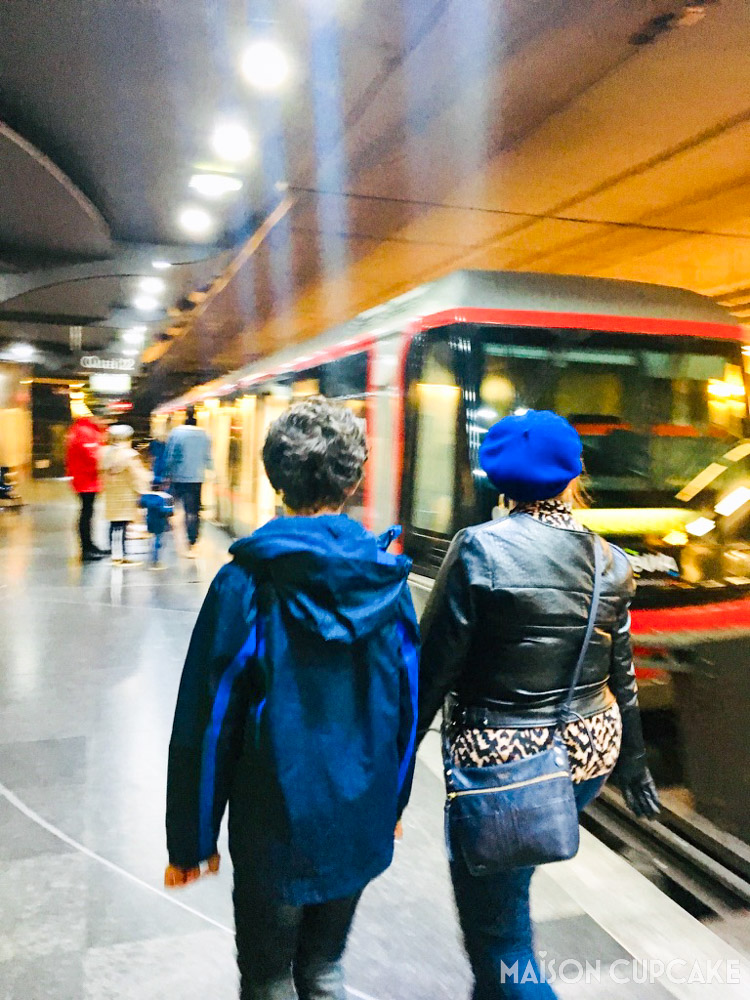
Top Patisseries in Paris Virtual Tour

Hugo et Victor grapefruit tarts

Window shopping for cake is my favourite pastime and I adore admiring French patisseries. Paris’s Left Bank is packed with patisseries and chocolatiers so it’s heaven for cake voyeurs and baking addicts. Carrie Bradshaw may have tirelessly admired shoes whereas for me it’s choux.

Left Bank resident and friend Hilda took me on a walking tour around the Rue du Bac and surrounding neighbourhood. It has become a pastry magnet in the past ten years and you can visit most of the biggest names in French patisserie within a walkable area.

A walking tour of Paris patisseries

Now obviously it would have been nutritionally irresponsible for me to try ALL of these in one trip. I limited myself to some Eric Kayser pistachio cake and some Christophe Adam eclairs and merely drooled over the rest. But I have so many delicacies to work my way through it’s a great excuse to take my family back to Paris. Frankly I could hop on Eurostar every weekend for six months and only scratch the surface.

So meanwhile at home I’ll have to follow these French patisseries on social media. Or console myself with visiting the best bakeries in London whilst working my way through the Bake Off Creme de la Creme cook book.

In no particular order, here are the places Hilda showed me and a few others nearby also worth pointing out. Some of these businesses have branches elsewhere in Paris but the Left Bank is a great place to explore lots of Paris patisseries within a short distance.

If you know someone who would enjoy these recommendations then do please share this post!

[L’innovation… dans le goût et les ingrédients] Notre maison compte dans ses gènes celui de l’innovation : cela ne se limite pas aux processus et aux boutiques, mais concerne aussi les produits et le goût ! Peut-être avez vous remarqué de nouveaux ingrédients dans nos sandwiches, salades et gourmandises : graines de chia, baies de Goji, chou Kale… autant de produits sains qui correspondent aux attentes de chacun en matière d’alimentation. [Innovation… in taste and ingredients] Our House has in its genes the innovation: this is not limited to processes and to the shops, but also concerns the products and taste! You may have noticed new ingredients in our sandwiches, salads and sweets: Chia seeds, Goji berries, Kale cabbage… so many healthy products that meets everyone expectations of food.#kayser #maisonkayser #erickayser #healthy

A photo posted by Eric Kayser Officiel (@maisonkayser) on

1. Maison Kayser

With a staggering 40 branches in Paris, nationwide and globally, Eric Kayser has achieved international recognition for his breads and pastries. Their website says a London branch in Marylebone will open soon. As well as more intricate items Maison Kayser was selling many varieties of majestic pound cake in different flavours. I bought a deep green chunk of his pistachio one and ate it for breakfast the next day.
18 Rue du Bac (and many others)
75007 Paris
Instagram:Maison Kayser

Envie de fraises ? #dalloyau #fraisier A photo posted by DALLOYAU Paris Official (@dalloyauparis) on

2. Dalloyau

Dalloyau has around a dozen branches in Paris then globally in the UAE, China, Japan and more bafflingly, Azerbaijan. The house of Dalloyau has an impeccable pedigree having been discovered by Louis XIV back in 1682. Their huge team of pastry chefs develops “collections” of cake a year in advance in the manner of haute couture fashion. These Maison Dalloyau YouTube videos are mesmerising showing off their stunning work.
63 Rue de Grenelle (and others)
75007 Paris
Website:dalloyau.fr
Instagram: Dalloy au Paris

3. Angelina

It seems unfair when Angelina produce a vast array of amazing cakes that it’s their hot chocolate that gets all the attention. Having tried one I could see why. Made from three kinds of African cocoas from Ivory Coast, Ghana and Niger, it’s no exaggeration to say you can almost stand the spoon up in it. Their chestnut mont blancs are another speciality. Established in 1903, both Marcel Proust and Coco Chanel were frequent visitors to Angelina’s original Belle Epoque Louvre salon but this quieter branch on Rue du Bac is one of nine alternatives around Paris.

108 Rue du Bac (and others)
75007 Paris
Instagram: Angelina

4. Jacques Genin

Jacques Genin now specialises in chocolate – his Easter egg collection looked like blown Venetian glass – and he has two glamorous branches that feel as much like Bond Street jewellers as chocolate shops.
27 Rue de Varenne
75007 Paris
Website: jacquesgenin.fr
Instagram: Jacques Genin

#easter 2016 Nous serons ouvert lundi de pâques aux mêmes horaires que d’habitude. #clairedamon #chocolate #chocolat A photo posted by des gâteaux et du pain (@desgateauxetdupain) on

5. Des Gateaux et Du Pain

Claire Damon’s sleek modern premises feel more like a fashion store than a bakery. Trained by Pierre Hermé, over the past ten years she’s established herself as a favourite of on the Paris patisserie trail and a role model attracting more women to the profession.

89 Rue du Bac
75007 Paris
Website: desgateauxetdupain.com
Instagram: 
Des Gateaux et Du Pain

6. La Grande Epicerie de Paris

La Grande Epicerie de Paris is the food hall arm of department store Bon Marché (no connection to the low cost fashion chain in the UK). Similar in scale to Harvey Nichols’ or Fortnum and Mason food halls, La Grande Epicerie was a fusion of upmarket grocery store and gift shop stocking foodie gifts from many big name French brands.

38 Rue de Sèvres
75007 Paris
Website: Lagrandeepicerie.com
Instagram: La Grande Epicerie

7. Hugo & Victor

Headed by award winning pastry chef Hugues Pouget, Hugo & Victor describes itself as “a universe of its own”. Their star flavours of chocolate, vanilla and caramel are sold all year round whereas other flavours are sold when “in season” for a true gourmet experience.

40 Boulevard Raspail
75007 Paris
Website: hugovictor.com
Instagram:  Hugo Victor


8. La Patisserie des Reves

With their iconic glass dome displays, La Patisserie des Reves is a visually memorable experience.

93 Rue du Bac
75007 Paris
Website: lapatisseriedesreves.com
Instagram: @lpdr_paris

Chocolat Chapon Rue du Bac Paris

9. Chocolat Chapon

69 Rue du Bac
75007 Paris
Website: chocolat-chapon.com
Instagram: Chocolat Chapon


10. Gosselin

258 Boulevard Saint-Germain
75007 Paris
Website: www.boulangeriegosselin.com
Instagram: @gosselin.paris

Eclairs by Christophe Adam at L'Eclair de Genie

11. L’Eclair de Genie

My favourite eclairs! I saw this lemon yuzu eclair on Facebook recently and knew I had to get back to L’Eclair de Genie to try one. The salt caramel one on the right was an old favourite I’d tried last year. Christophe Adam has several branches of L’Eclair de Genie and also makes eclair shaped tarts topped with fruit. I will have to try those out next time.

13 Rue de l’Ancienne Comédie
75006 Paris
Website: leclairdegenie.com
Instagram: Christophe Adam

Thank You @judithraenyc for this beautiful photograph of our bread rolls! #painpoilane #judithraephotography #bread #rolls #photography A photo posted by Poilane (Page Officielle) (@painpoilane) on

12. Poilâne

There was uproar in the UK when Poilâne’s loaves of rustic bread went on sale for £4 a piece but it’s a travesty anyone compare their wares with the sliced white variety. Poilâne make the ultimate sourdough bread using sea salt from the Guerande and the best wheat from their suppliers. I keep a loaf in the freezer and toast it a slice at a time for a treat with homemade soup.

8 Rue du Cherche-Midi
75006 Paris
Website: poilane.fr
Instagram: Pain Poilane

13. Pierre Hermé

Also famous for his macarons, Pierre Hermé is another 21st century pastry chef to have become a global phenomenon and was described by Vogue magazine as “the Picasso of Pastry.”

72 Rue Bonaparte
75006 Paris
Website: pierreherme.com
Instagram: Pierre Hermé

Laduree Paris St Germain

Vert, rose, ivoire, noir, bleu lilas, tant de couleurs emblématiques de la Maison Ladurée

A photo posted by LADUREE PARIS OFFICIEL (@maisonladuree) on

14. Ladurée

Picture Kerstin Dunst as Marie Antoinette in Sofia Coppola’s movie and that’s a good description of the atmosphere at Ladurée. They’re best known for macarons and choux pastry religeuses and an elegant destination for afternoon tea. The Rue Bonaparte corner shop branch with iconic eau de nil frontage is a must see. I wrote a post about the Laduree window displays in 2012.

21 Rue Bonaparte
75006 Paris
Website: laduree.com
Instagram: Ladurée

15. Pierre Marcolini

An haute chocolatier born in Belgium, Pierre Marcolini was crowned World Pastry Champion in 1995 and now has branches around the world. His range includes macarons as well as chocolates.

89 Rue de Seine
75006 Paris
Website:
marcolini.com
Instagram: Pierre Marcolini

16. Sadaharu Aoki

A Japanese pastry chef firmly entrenched on the Paris patisserie scene for twenty years.

35 Rue de Vaugirard
75006 Paris
Website: sadaharuaoki.com
Instagram: @sadaharuaoki

And just one more…

One of my favourites I sadly could not track down on Instagram or any social media at all for that matter – but it’s well worth a trip to…


17. Georges Larnicol

Maison du Georges Larnicol is somewhere I originally discovered and wrote about their St Malo branch back in 2010 but was later delighted to discover they had shops all over France.

It’s my favourite chocolate shop ever with endless displays of truffles, bars, biscuits and macarons. I feel like Augustus Gloop in Willy Wonka’s garden when I walk into this place. They have a very satisfying self service display in the manner of old fashioned Woolworths’ pick and mix and I frequently leave with about 5 different bags.  The kouign amann Breton pastries and chocolate seagulls’ eggs are my favourites.

132 Boulevard Saint-Germain
75006 Paris
Website: chocolaterielarnicol.fr


We were guests of Eurocamp to review Maisons-Laffitte campsite on this trip. Huge thanks to my friend Hilda for guiding me around her neighbourhood! For more Paris travel ideas read My Paris Guide: A Frequent France Visitor’s Tips


Originally published on Maison Cupcake
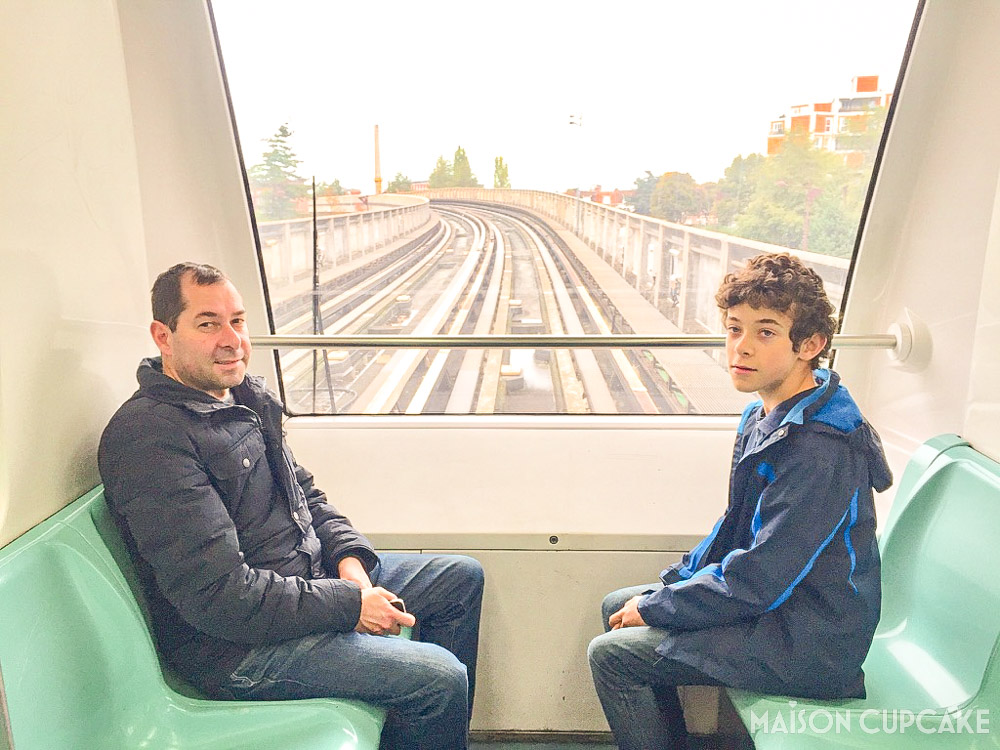
21 things to do in Paris with kids

It’s easy to entertain children in Paris. Here are some fun ideas for things to do in Paris with kids.

Paris Cafes: 21 things to do in paris with kids

We finally made it to Paris with Ted and he had a whale of a time. Everything is exciting in a new city for a seven year old but we had to start with the most obvious sight…

Eiffel Tower: 21 things to do in paris with kids
Tour Eiffel: 21 things to do in paris with kids

1. The Eiffel Tower

The long queues to climb the Eiffel Tower are not much fun for kids but it’s still worth going for them to get a close up look. There’s a playground near the bottom and the Champ du Mars is a great big green space to let off steam in. We arrived at 10am on Easter Sunday which was admittedly very busy nevertheless we were told the queue would take three hours. Time for an alternative… Eiffel Tower  Metro: Bir Hakeim, RER: Champ du Mars-Tour Eiffel. 

Paris Views: 21 things to do in paris with kids

Tour de Montparnasse: 21 things to do in paris with kids
Montparnasse Tower: 21 things to do in paris with kids

2. The Tour de Montparnasse

The Tour de Montparnasse gives an enviable 360 degree view of Paris from the south. It’s similarly priced to the Eiffel Tower only without the queues. We were admitted to the lift to the top within ten minutes which seemed much more civilised than the scrum at the Eiffel Tower. 47 floors up and you can view Paris alongside some interactive displays or go up on the roof where there’s a helipad and a champagne bar. Tour de Montparnasse  Metro: Montparnasse-Bienvenue. 

Montparnasse: 21 things to do in paris with kids

3. Walking and more walking

We did a ridiculous amount of walking in Paris. I would avoid Paris until your children are old enough to walk independently rather than in buggies. That said, we did spend an awful lot of time on The Metro…

Metro Station: 21 things to do in paris with kids
Gare du Metro: 21 things to do in paris with kids

4. The Metro

Kids love trains at the best of times but Ted was especially captivated by the Metro. We bought zones 1-3 day tickets which were valid beyond the Boulevard Peripherique to our hotel near Stade de France. These cost around £12 for two adults and one child. The barriers aren’t as child friendly as the London tube; there aren’t always disability barriers to walk through with your child and there’s often a Parisian trying to jump their fare right up your bum as you leave the gates. We took a day or so to get used to it and we’re tube savvy Londoners. Line 14 is the newest line with driverless trains so kids can sit at the front and pretend they’re driving the train.  Paris Metro with ticketing information.

21 things to do in paris with kids

5. Double Decker Trains

Some of RER trains which cross Paris from the suburbs (their equivalent of London’s new Crossrail only they built theirs twenty years ago) are double deckers. These were an even bigger hit than the metro trains. The RER double decker trains take you to La Defense…

La Defense: 21 things to do in paris with kids

6. Grand Arche – La Defense

Ted was incredibly excited by the prospect of a big square building with a hole in it. Le Grand Arche is the most notable building in Paris’s La Defense business district and intended to be a modern version of the Arc du Triomphe and indeed on a clear day you see how it lines up perfectly with its counterpart. But La Defense is looking a little shabby these days, it’s no Monaco style Canary Wharf.  RER / Metro: La Defense. 

7. Macdonalds at La Defense

This is a very sensible place for a loo break. It’s one of the branches with a cafe selling pastries. Ted had a fresh fruit smoothie made in a power blender right before our very eyes. So don’t dismiss a trip in here. RER / Metro: La Defense

Arc du Triomphe: 21 things to do in paris with kids

8. Arc du Triomphe

It makes sense to come here after La Defense as there’s a direct rail connection. The exit from the Metro is awash with tourists taking selfies. If you brave the roundabout, the monument itself has a visitor’s gallery on the top. Arc du Triomphe visitor information in English. Metro: Charles de Gaulle-Etoile. 

9. Champs Elysees

This is a cross between London’s Piccadilly and Leicester Square. Around a three quarters of a mile long, fiercely busy and packed with flagship stores for luxury fashion, jewellery and car brands. This isn’t somewhere to hang out, more a place to walk through to reach Place Concorde and the Jardin du Tuileries. “Not terrible” near Champs Elysees by Paris by Mouth.  Metros: Charles de Gaulle-Etoile, Franklin D Roosevelt, George V. 

The Louvre Pyramid: 21 things to do in paris with kids

9. Jardin du Tuileries

This reminds me of Kensington Gardens or Hyde Park, these grand gardens with tidy lines of trees and a traditional carousel are an oasis from the traffic clogged streets. I recommend buying take-aways of the world famous hot chocolates from Angelina and bringing them here. Tuileries garden and carousel on Louvre website. Metro: Concorde or Tuileries. (Angelina is near Tuileries).

10. Pyramid du Louvre

Practically speaking, trawling the Louvre is not most kids’ idea of fun but the pyramids up top are well worth a visit. Explore the Pyramid du Louvre on Google Streetview. Metro: Louvre-Rivioli. 

Galeries Lafayette roof top terrace Paris

11. Galeries Lafayette

Eight floors up and monumental department store Galeries Lafayette has a free roof top viewing deck with astro turf. The panaroma is obscured by the Paris Opera House but you can still see the Eiffel Tower and Montmarte. Galeries Lafayette is also a useful loo break. The homeware branch across the road has a branch of Pret a Manger. Read about the rooftop terrace at Galeries Lafayette. Metro: Chausee d’Antin-Lafayette. 

River Seine: 21 things to do in paris with kids

12. The Seine

Dotted along the Seine are artists, market stalls and antiques dealers. Some of it is expensive tat but if you want a 1960s copy of Paris Match with Catherine Deneuve on the cover you’ve come to the right place. Metros: Bir Hakeim, Pont Neuf and others. 

Pont Neuf: 21 things to do in paris with kids

13. Pont des Arts

What was once a delicate pretty iron bridge has now been defaced by thousands of brass padlocks left by misguided lovers who throw the keys into the river. They’re putting the bridge at risk of collapse from their sheer weight. Ted was nevertheless fascinated and said it looked “like a lock shop”.  Metro: Pont Neuf or St Germain-de-Pres.

14. Pont Neuf

The next bridge at the foot of the Ile de la Cite is Pont Neuf as featured in one of my favourite films, Les Amants du Pont Neuf starring Juliette Binoche and a memorable night time jet ski down the Seine. There’s a little park with benches for a sit down accessible from the middle of the bridge as well as the departure point for Les Vedettes du Pont Neuf riverboat tours.  Metro: Pont Neuf.

Canal St Martin: 21 things to do in paris with kids

15. Canal St Martin

The Canal St Martin cuts through the east of Paris and a now chic neighbourhood with an air of Little Venice. Watch boats navigate through the locks. There are some small play areas alongside too.  Metro: Jacques Bonsergent, Goncourt or Republique. 

16. Montmartre

Montmarte is very busy but an essential cafe pitstop. We had crepes as featured in my previous post about the Paris of Amelie Poulain. Metro: Anvers or Abbesses


Sacre Coeur: 21 things to do in paris with kids
Funicular railway: 21 things to do in paris with kids

17. Sacre Coeur

Definitely a landmark to be photographed in front of. There is a carousel here too. Sacre Coeur  Metro: Anvers or Abbesses

18. Funicular railway

If you cannot face the steps, the short funicular railway up to the top of Montmartre and Sacre Coeur is a must. Children always like novelty forms of transport. Funiculaire Montmartre  Metro: Anvers or Abbesses 


Pomidou Centre: 21 things to do in paris with kids
Centre Pompidou: 21 things to do in paris with kids

19. Centre Pompidou

France’s equivalent of Tate Modern with its curious escalators on the outside. There’s an area for kids inside although we preferred admiring the exterior. It is possible to board the escalators to the top and enjoy the view from the sixth floor. Centre Pompidou.  Metro: Rambuteau, Chatelet or RER Chatelet-les-Halles. 

Butte du Chaumont: 21 things to do in paris with kids
Parks: 21 things to do in paris with kids

20. Parc Buttes-Chaumont

A little further out in north eastern Paris beyond Gare du Nord. Away from the main tourist trail this is a lovely park to visit with children. Parc Buttes-Chaumont. Metro: Buttes-Chaumont. 

Le Marais: 21 things to do in paris with kids

Paris Cafes: 21 things to do in paris with kids

21. Cafe stops in the Marais

The Marais district reminds me of London’s Covent Garden with quirky shops and plenty of traditional cafes. On the northern side of the Seine, it’s around twenty minutes’ walk from Pont Neuf and the Louvre.

If you get chance to explore the shops, do visit BHV Marais which is owned by same group as Galeries Lafayettes. It’s kind of a cross between Peter Jones and Harvey Nichols. And it has an all important loo stop opportunity on the top floor with fabulous views of the roof tops of Paris!  BHV Marais  Metro: Hotel de Ville

Cafe Gourmand: 21 things to do in paris with kids

Goodness me, rather like our trip to Paris, there’s so much more we could do… I haven’t even mentioned Versailles, Jardins du Luxembourg, Disneyland Paris, Notre Dame… and never mind all the things that cake loving grown ups might want to see. Those will have to wait for another post or another visit.

Have you taken your children to Paris? What do you recommend as good things to do in Paris with kids?

Originally published on Maison Cupcake
Brittany Ferries Saint Malo night crossing

“Postcard from” is my occasional series of weekend non-recipe posts. This postcard comes from my recent experience travelling on the overnight ferry to France.

For peak holiday times, you have to book very early to get a cabin on the overnight crossing from Portsmouth to St Malo. It’s not cheap but when you consider how pricey a Dover Calais crossing can be during school holidays (£90 each way sometimes) and bear in mind the extra petrol costs, motorway tolls and an extra night staying in a hotel to break up your journey, actually the £200 extra you are likely to pay for the longer crossing becomes more tempting.

We’ve previously travelled on the overnight ferry from Portsmouth to Cherbourg. Big mistake. Driving down the Cherbourg peninsula is like going from Dover to Birmingham without motorways. It’s a long, dull drive. Plus you’ve only had four hours sleep on a six hour crossing (they wake you up at 5am British time, an hour before you get into port at 7am French time).
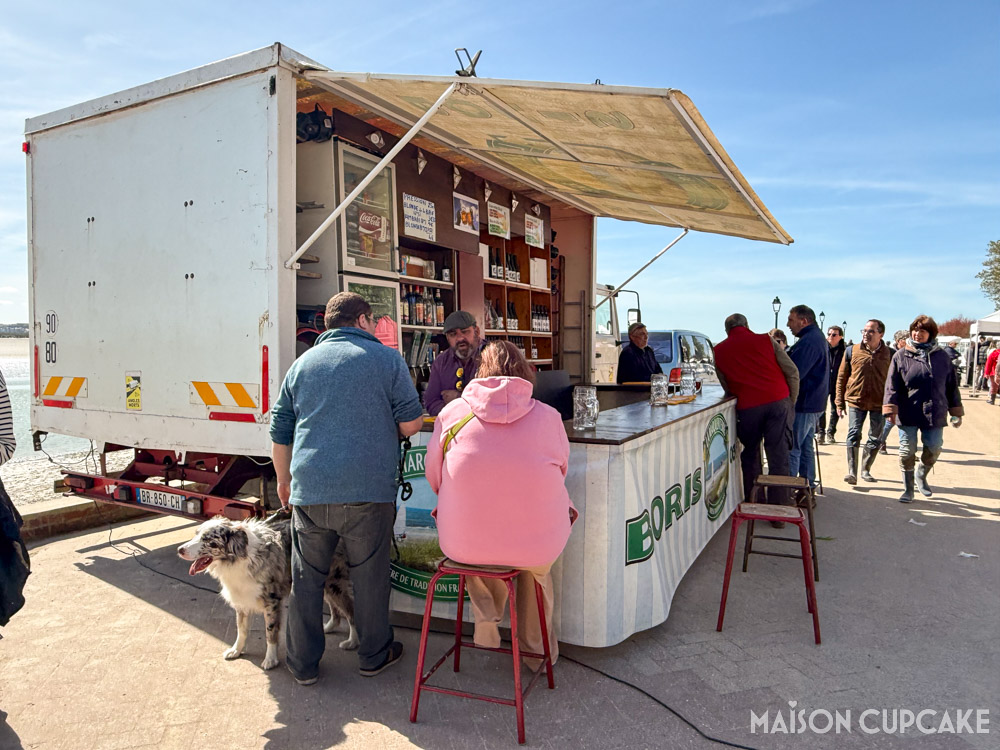
However the Portsmouth to St Malo crossing is around ten hours and arrives in port at 8am French time so you get more sleep and do less driving. It’s a win win situation, especially if you have a toddler who doesn’t like sitting in the back of a car for more than two hours at a time (less if hungry).
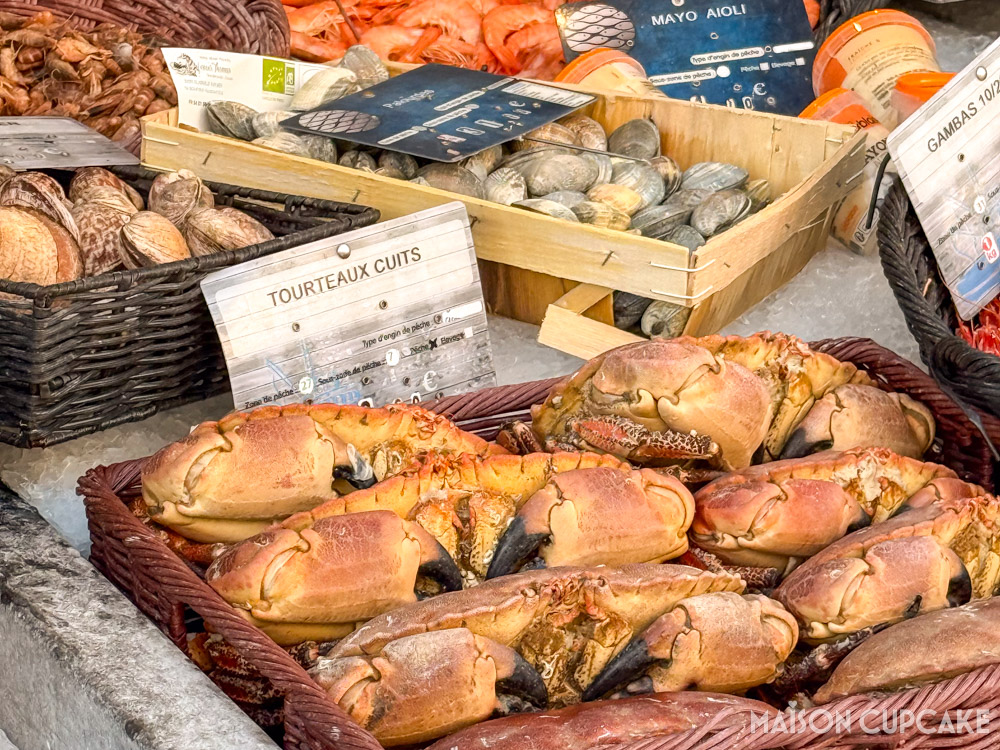
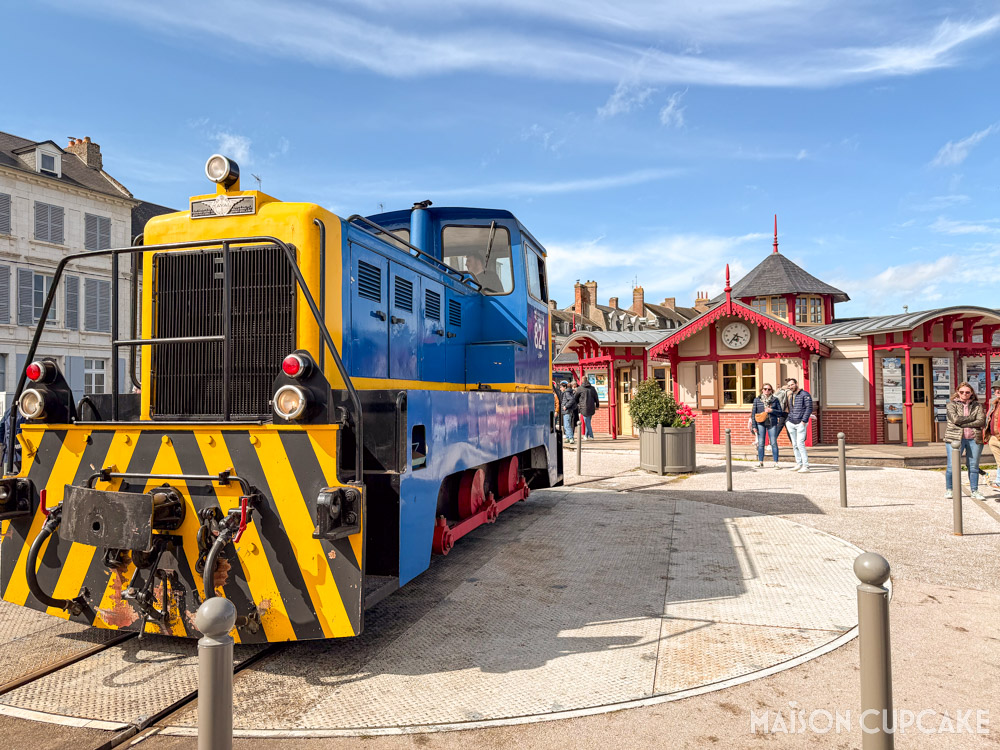
So with much excitement we boarded Brittany Ferries’ Bretagne en route to L’Ile de Re which would be four hours further drive from St Malo the next morning.
There are a few sights to see on the way out of Portsmouth…. HMS Victory got my dad rather excited.
The Spinnaker Tower and harbour side bars
I dislike planes and avoid flying. Truth is though, I’m not wild about ferries either. I guess I like my feet on the ground. Walking along decks like the one shown above and I have scenes from Titanic with Kate Winslet debating numbers of lifeboats running through my head.
“We don’t need a window” I told my husband.
“But Teddy could have looked out of it at the sea.”
“It’s cheaper to not have a window and we will be asleep when we’re in the cabin anyway.”
I hadn’t bargained for this. Rooms without views are not confined to the inner corridor of the upper decks where we’d stayed last time.  They put you down there. As in, under the cars down in the hull of the boat. I didn’t even know that was possible.  All cabins were sold out so we were down in third class.

The food lifted my spirits, I had one of these salads.

The desserts looked very tempting too.
My husband had fish and chips which admittedly looks like the meal from the Secret Nuclear Bunker post.
The photo of the chocolate-mousse-to-die-for is rubbish.  Imagine though if you will, that scene in Pulp Fiction where John Travolta tells Samuel L Jackson that “it’s the little things” that make Europe special i.e. the glass of cold beer in the cinema, mayonnaise on the fries etc.  Well the little thing that I thought made these chocolate mousses special was that they were served in china ramekins.  A totally unnecessary touch since they were in plastic pots as well but it’s these details that make eating on a French ferry company more special than the service station service you get from the British equivalents.
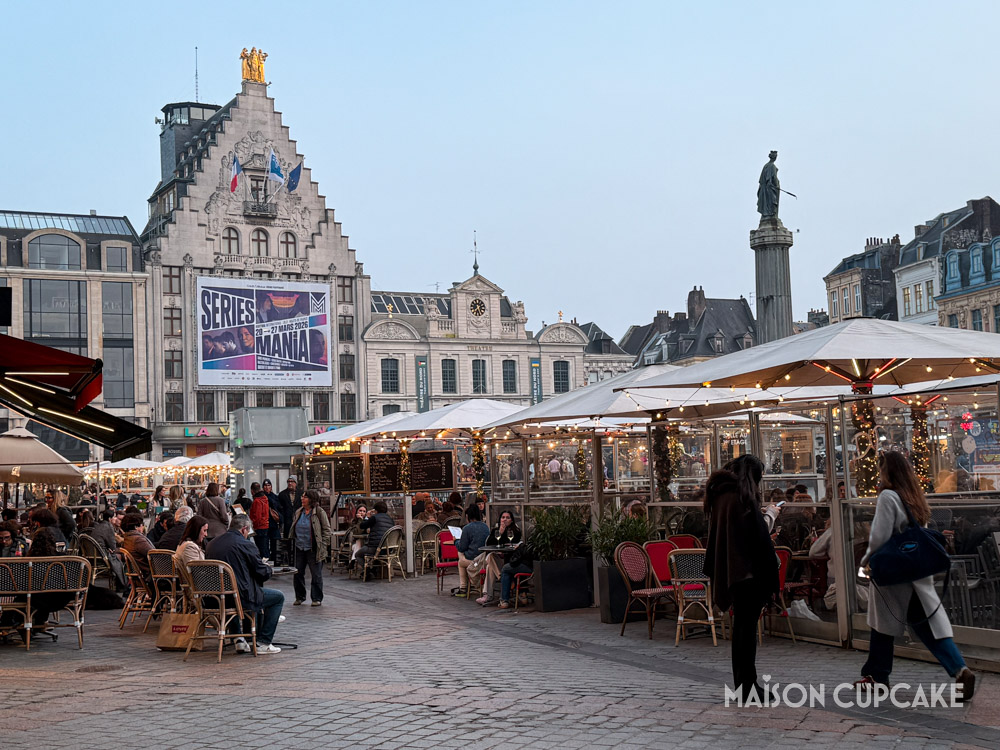
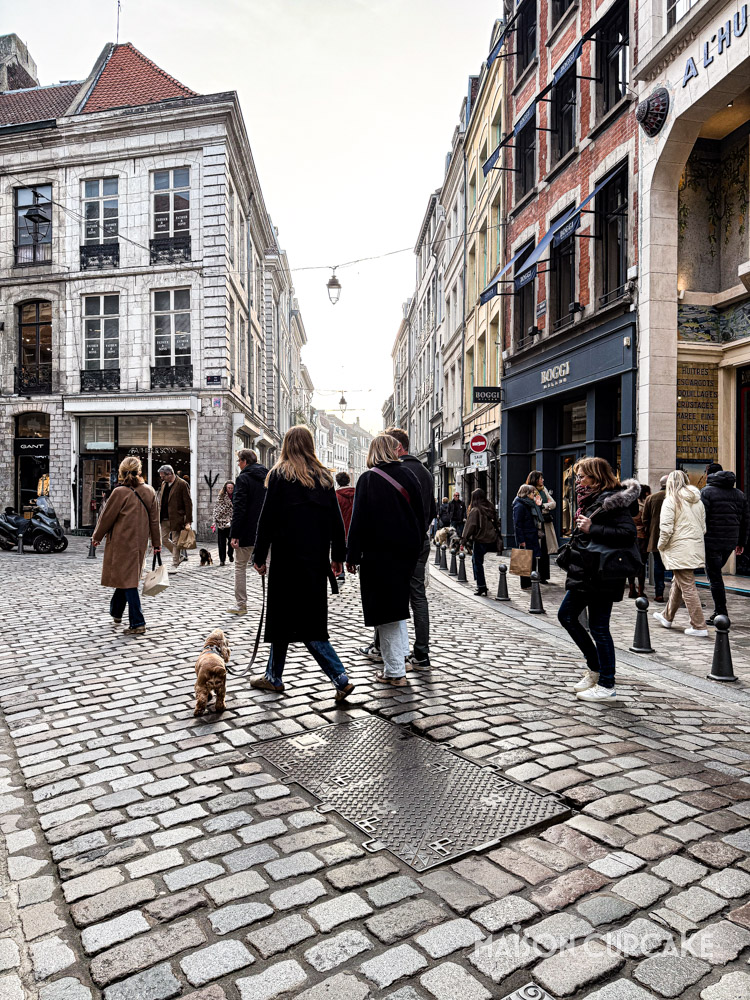
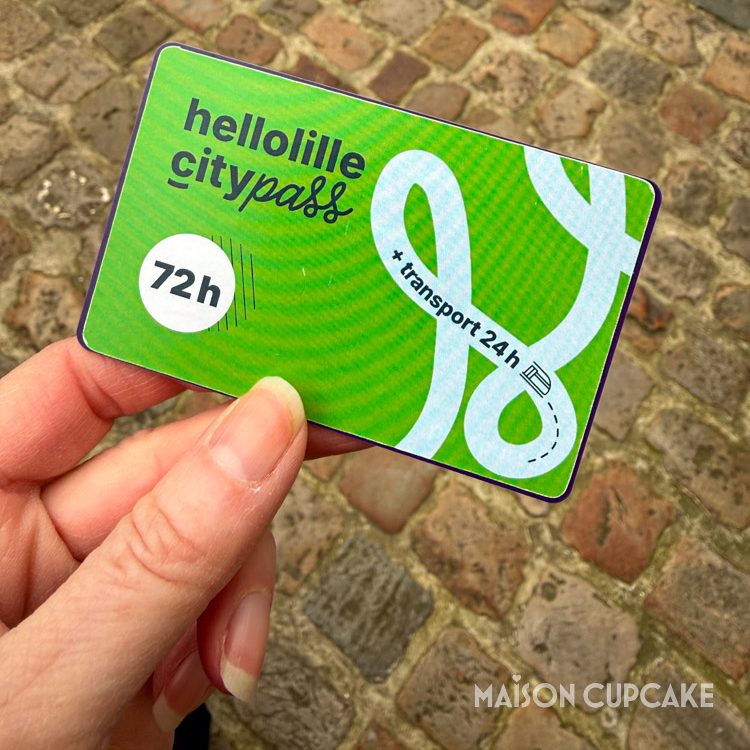
Off to bed.
“It’s rather nice” said my father, impressed it had a telly.
“It’s like a mausoleum, ” I replied.
The bathroom was predictably tiny but serviceable. It reminded me of the scene on the train in Sex and the City where Sarah Jessica Parker and Kim Cattrall are travelling with Amtrak to LA and have a toilet situated underneath their shower.
So down in the bowels of the ship how did I sleep? Not very well. How much this was to do with feeling like I was in K19: The Widowmaker and how much to do with fretting that Ted would roll out of bed I’m not sure.  It was extremely dark in there as well and there were loud noises. I was mentally calculating how far away we were from water and visualising the murkiness out there.
I wanted to go and pace the decks upstairs in my slippers, even if it meant dashing down a corridor that looked like another scene from Titanic, the one where Leonardo has been chained with handcuffs to a pipe and Kate dashes off to get help. But I couldn’t as my husband and father were on the top bunks and there was only I to stop Ted rolling out.
Which he did, with a loud thud, head first at 4.30am. None of us went back to sleep after that.
We will be travelling with Brittany Ferries again this summer, but not overnight. If I were travelling Portsmouth to St Malo again, I would make certain I had a room with a view as that was I could be sure it was above the waterline.


Originally published on Maison Cupcake