lille

Step Inside Villa Cavrois: Modernist Masterpiece Near Lille – A Photo Tour

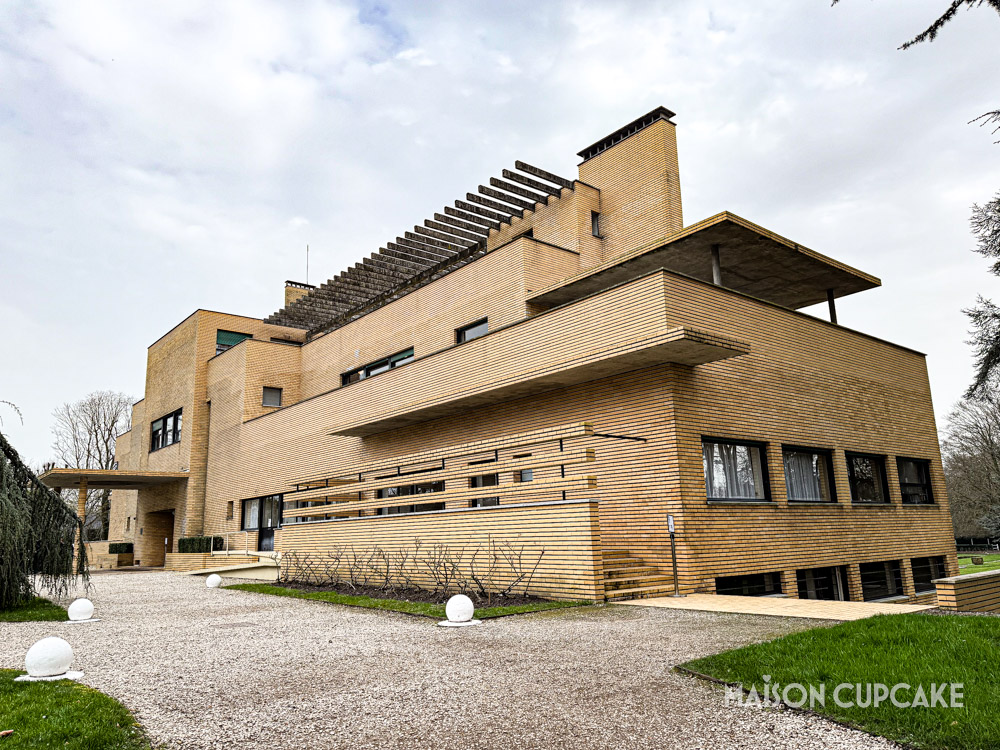
Villa Cavrois is an architecturally designed Modernist home lying just outside Lille, France. Commissioned from Robert Mallet-Stevens by Paul Cavrois, this yellow brick-clad villa exceeding 1,800 square metres’ living space is a prime example of Mallet-Stevens’ design manifesto blending architecture, decoration and landscaping.
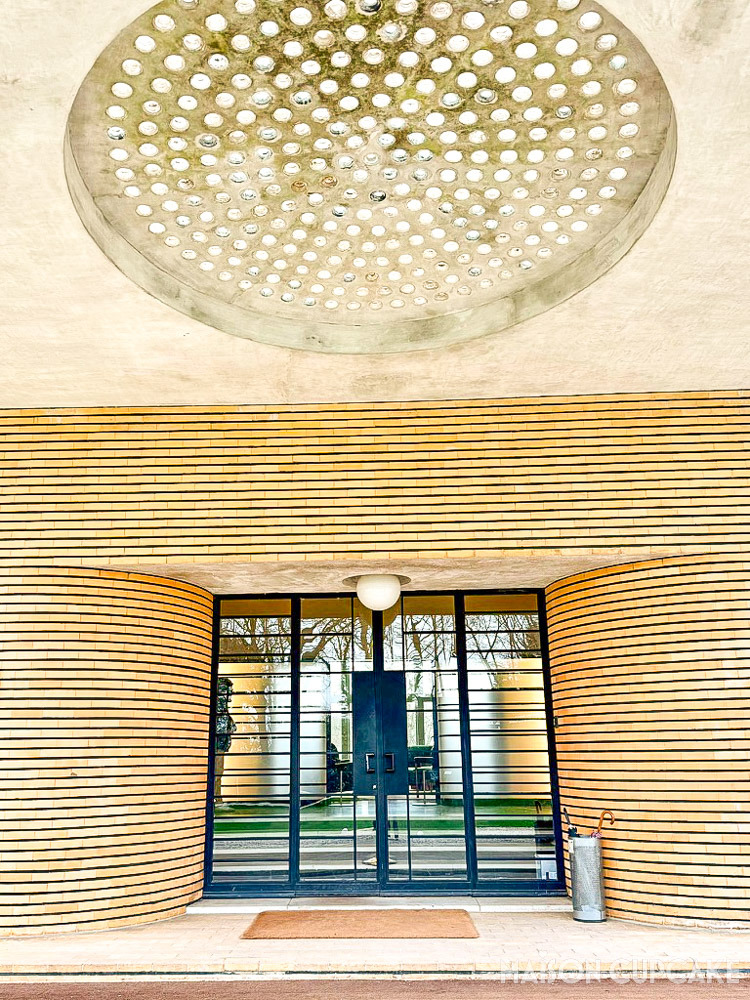
Front entrance at Villa Cavrois showing materials, Art Deco detail and structure
Front entrance at Villa Cavrois showing Art Deco detail and structure

We visited on an overcast Friday in early March. Getting to Villa Cavrois on public transport involves a 20 min walk from the tram so it was several visits to until we fit it into our Lille weekend itinerary – but we were very glad we did! Approaching via the affluent neighbourhood of Croix, there are many mansions set in grounds surrounded by hedges and gates, yet Villa Cavrois strongly stands out as something special.

The restored villa is still a work in progress; it wasn’t until we watched the film in the basement that we appreciated how dilapidated Villa Cavrois became before being rescued for the French nation. Here’s how a visit looks.

The Building and Restoration of Villa Cavrois
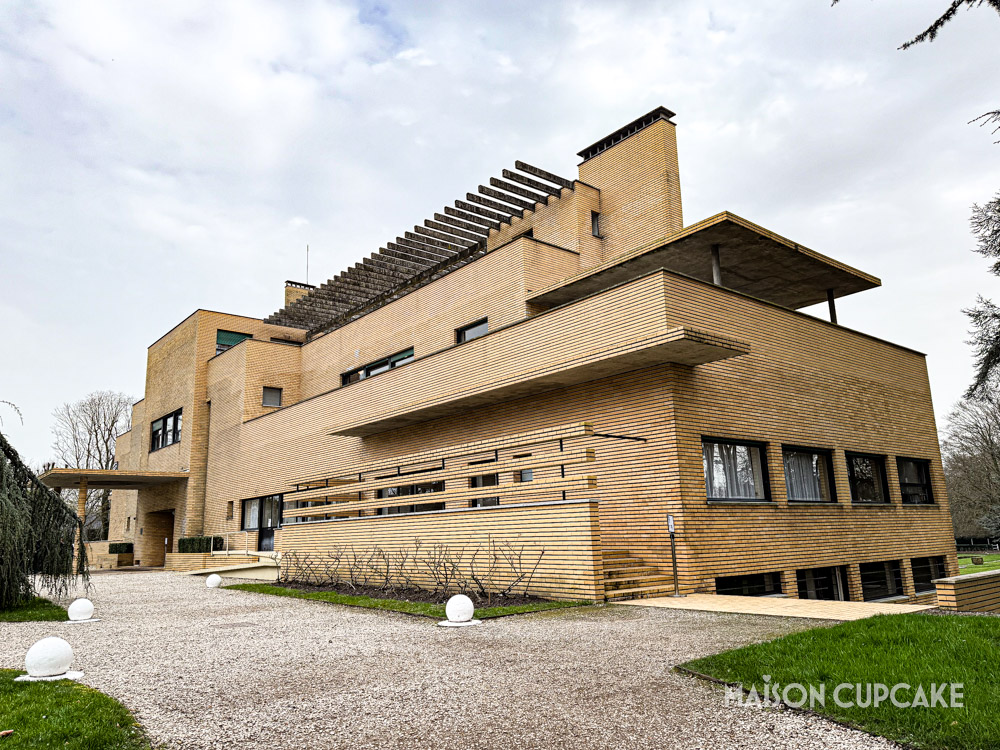
Villa Cavrois modernist house now museum in Lille, France

Built between 1929 and 1932, the Villa was originally home to Paul Cavrois, his wife, seven children and their service staff. After a hiatus being occupied by German troops during World War Two, the layout was reconfigured with self-contained apartments for two of Cavrois’ grown up sons. 

Family members continued to live at Villa Cavrois until 1986 when Paul Cavrois’ wife died; the house was subsequently sold to a property developer. Although automatically classified as a historic monument, the villa was allowed to disrepair by its new owner and was in poor condition by the time the state repurchased it in 2001. 

After twelve years’ restoration work, the restored Villa Cavrois, now managed by Centre des Monuments Nationaux (a French equivalent of English Heritage or the National Trust) was opened to the public in 2015.

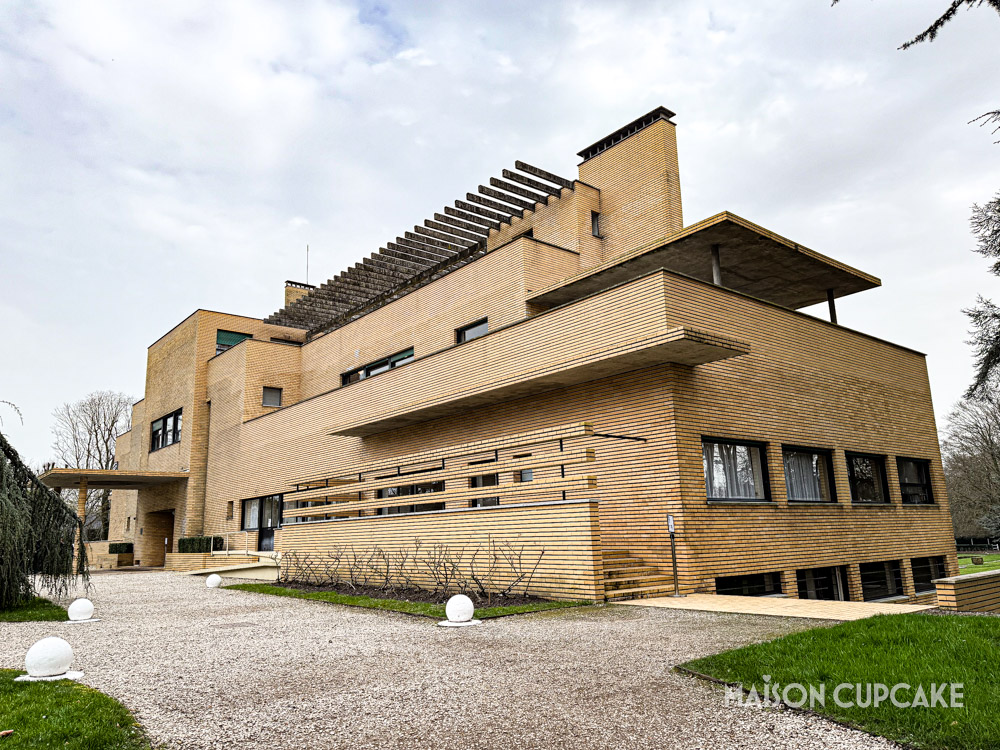
The flat simplicity of Villa Cavrois’ facade is broken up by pale yellow brickwork and Art Deco curves; the house stands with calm poise beyond a wide entrance lawn and sweeping driveway. 

The entrance feels designed for sweeping up in a newly luxurious motorcar at a Great Gatsby-era party. The front entrance, with pale gold pebbles underfoot, is minimalist and the dark concrete foyer almost bank-like and cold as you go inside. However, on climbing a short stairway, your eye is drawn through the sunlit lounge with terracotta tones and its green furniture complementing the flat sectioned-off lawns.

Ground Floor: Living and Social Spaces 

Lounge
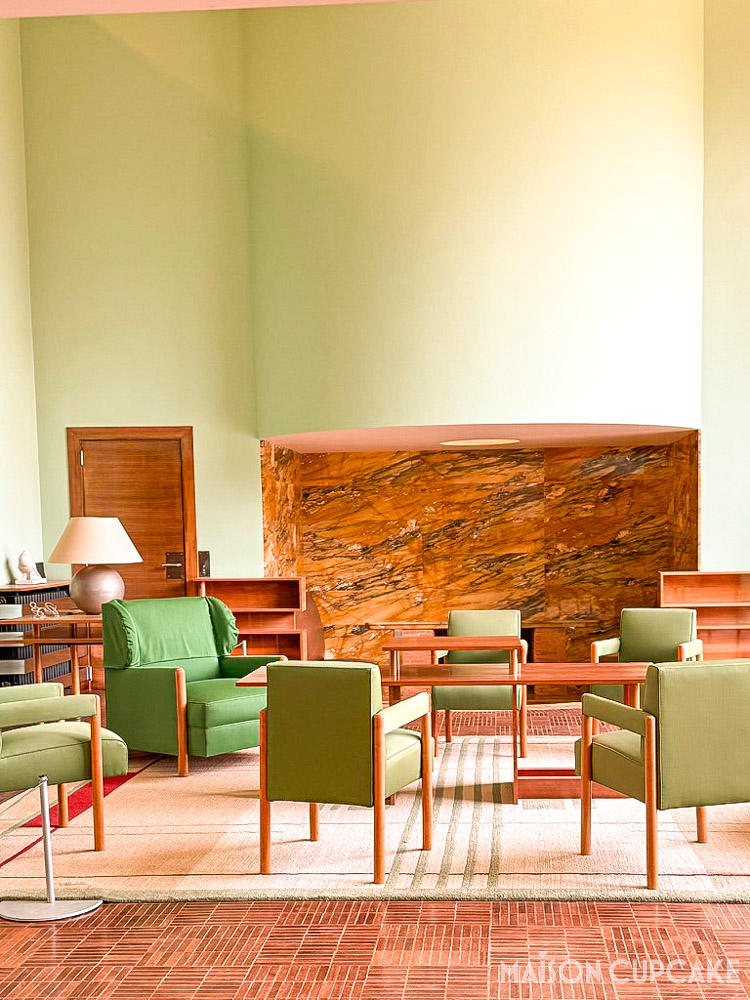
Interior of Villa Cavrois salon with strong geometry and minimalist décor

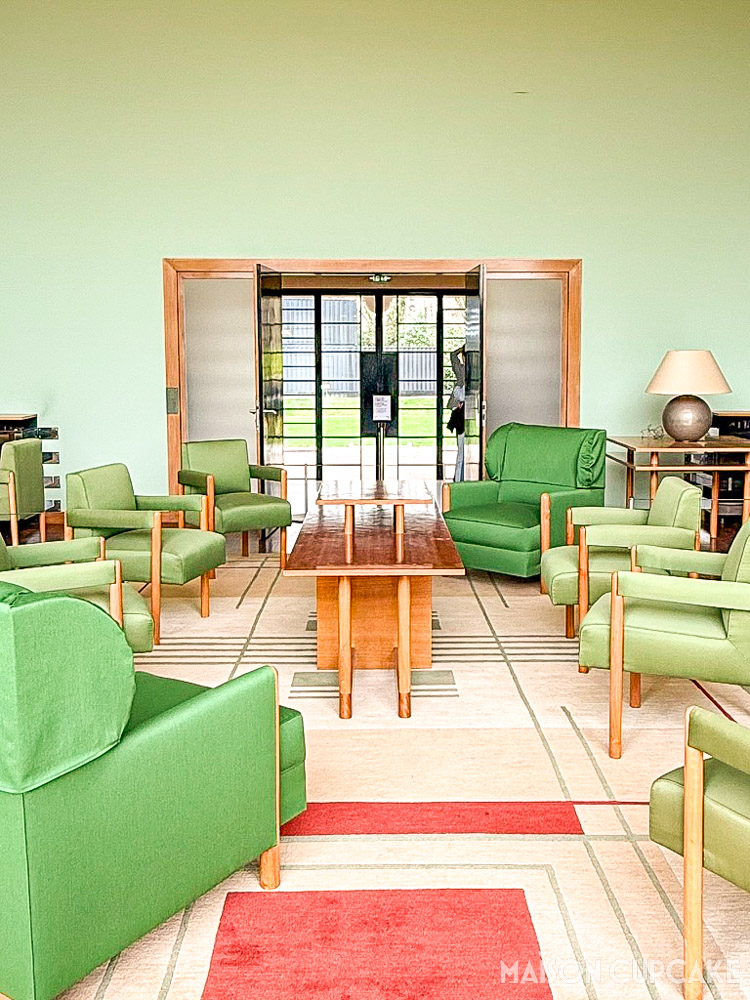
The main lounge is the architectural blueprint of Villa Cavrois; I felt like I was walking into a real-life magazine cover with amber wood-framed chairs and square cushioned seating.
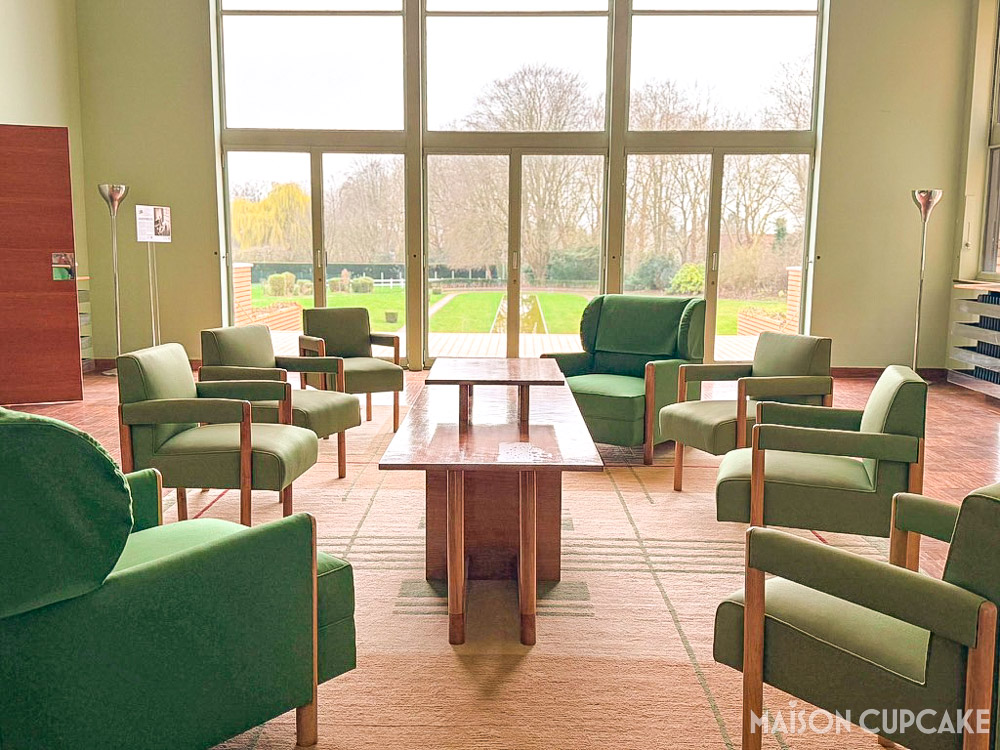
Interior lounge at Villa Cavrois with modernist furniture and natural light
Interior lounge at Villa Cavrois with modernist furniture and windows overlooking garden

The floors are parquet-style wooden tiles, the ceilings are double height with a curved green wall around a marble conversation pit and brick fireplace. 
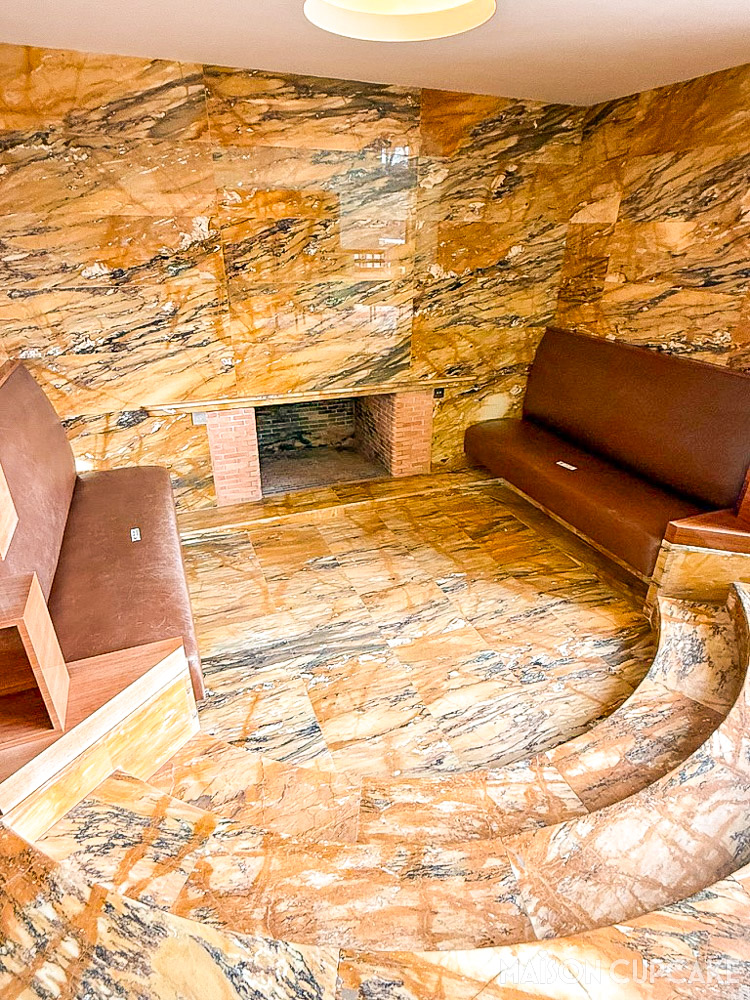
Warm toned marble conversation pit at Villa Cavrois with modernist lines and natural light
Marble conversation pit at Villa Cavrois with modernist lines
Interior of Villa Cavrois salon with strong geometry and green minimalist chairs

After the sombre foyer, natural light flooding in through floor to ceiling windows has great impact. It’s a space that’s both relaxing but would be conducive to entertaining. The central coffee-height table brings structure to an area that likely felt more casual as seating got moved around.
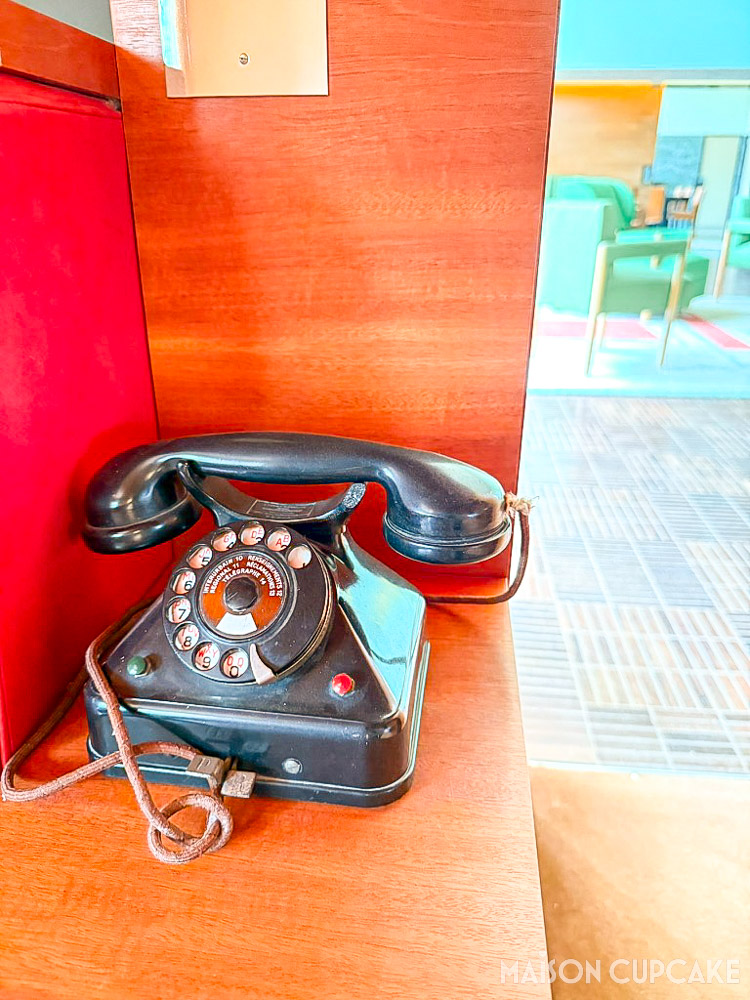
Black 1930s Vintage telephone at Villa Cavrois with modernist interior design
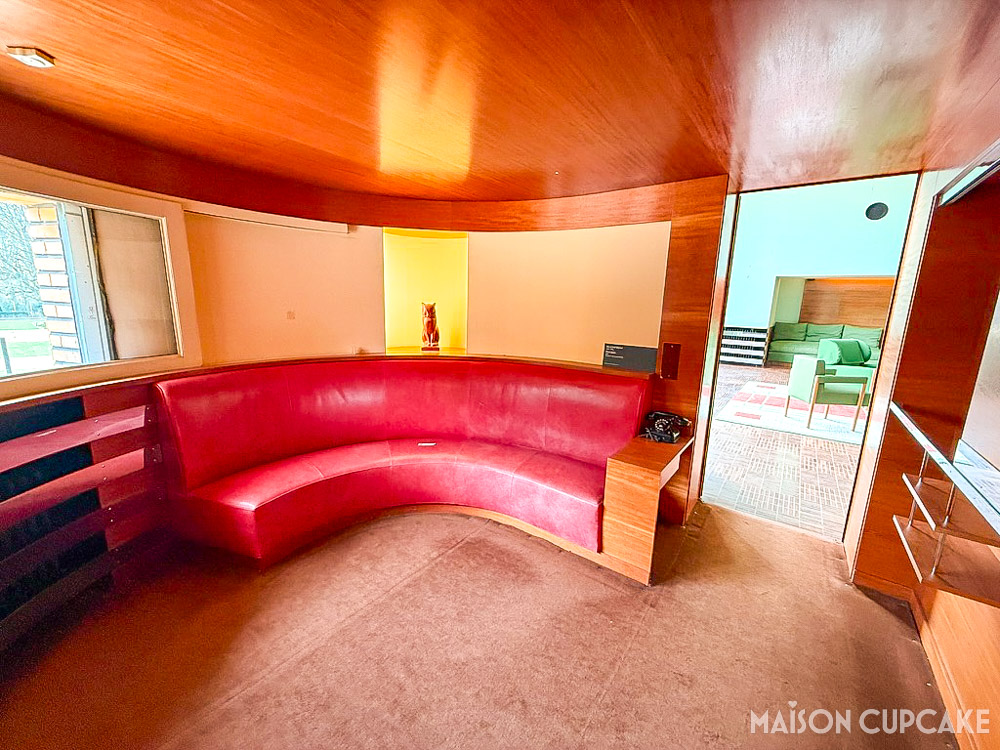
Round Art Deco smoking room with banquette seating, light feature and wooden ceiling at Villa Cavrois near Lille
Round Art Deco smoking room with banquette seating, at Villa Cavrois near Lille, France

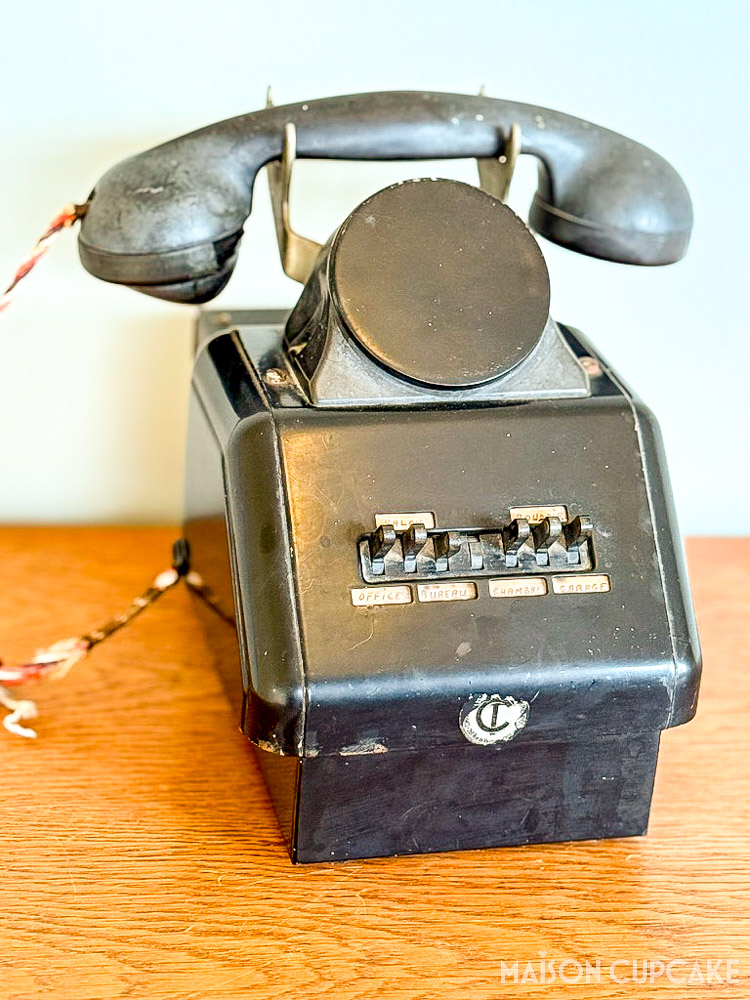
A cosy circular “smoking room” lies adjacent with telephone and more windows onto the garden. I’m sure house guests would sneak off here for a cigarette and a gossip whilst peeping at what people were doing in the garden. The ceiling and windows are much lower there, as if in a bird-hide.

Kitchen

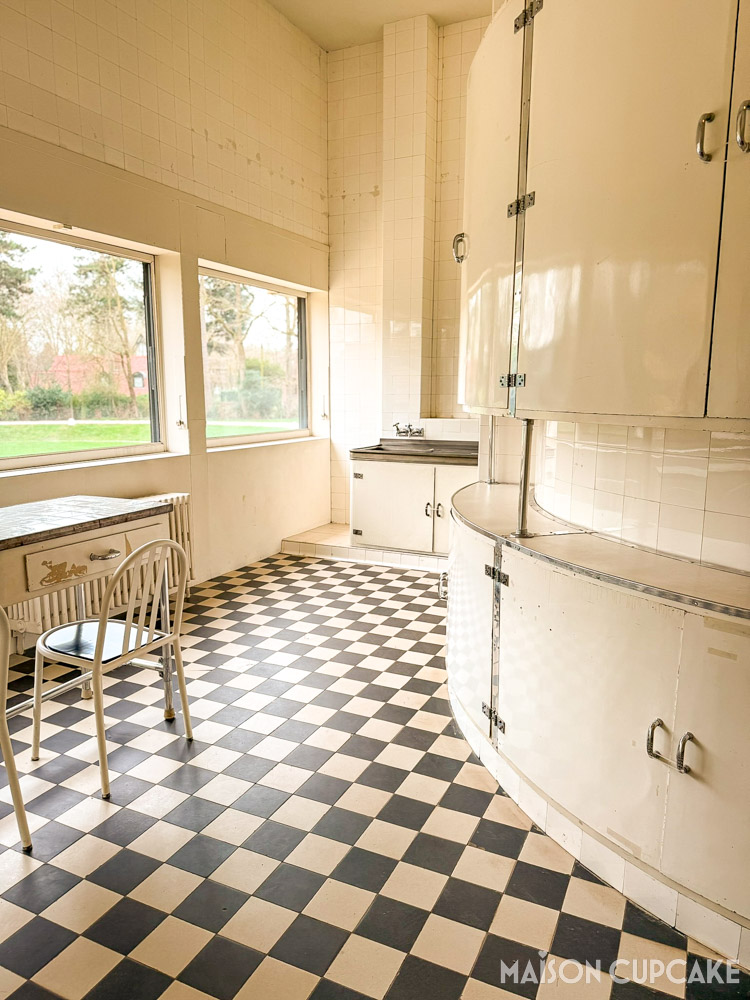
The monochrome tiled kitchen and utility areas are vast; I didn’t get to photograph in as much details as I’d have liked as a school group of children was having a presentation here. But you can see the 1930s style of clean surfaces and chrome that continues throughout the kitchen, bathroom and dressing areas. 
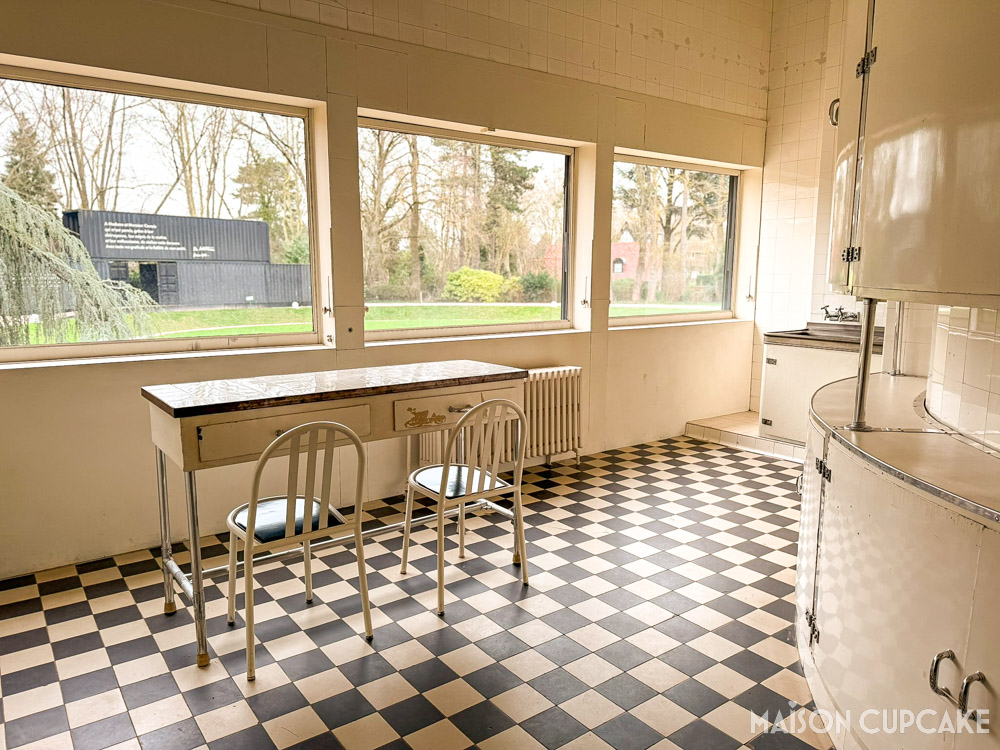
Kitchen interior at Villa Cavrois showing restored modernist design features
Functional service kitchen space in Villa Cavrois near Lille
Functional service kitchen space in Villa Cavrois

The space is quite clinical but curved counters and picture windows overlooking the front gardens soften what might otherwise be a sterile space. It’s also important to consider that much of Villa Cavrois has been emptied of the personal objects that made it a family home.

Dining Rooms

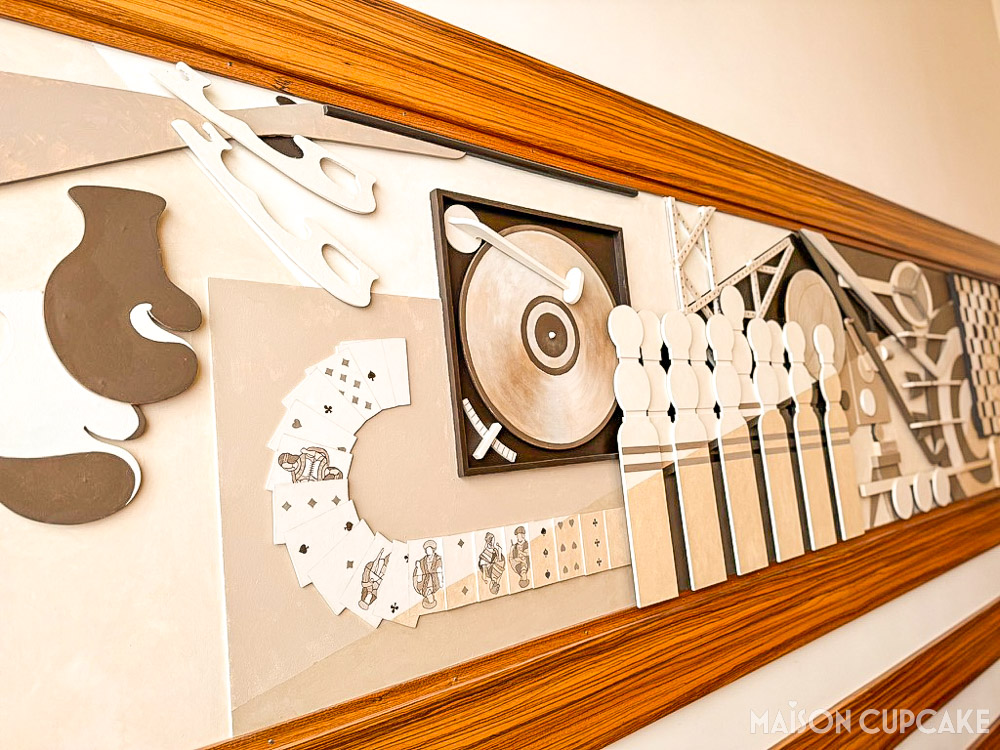
The first dining room is a much warmer space with wood veneer panelled walls and furniture. The amber tone is a bit 1970s flatpack but the fitting are elegant. I especially liked the games themed relief frieze depicting tonic, chess and skittles. 
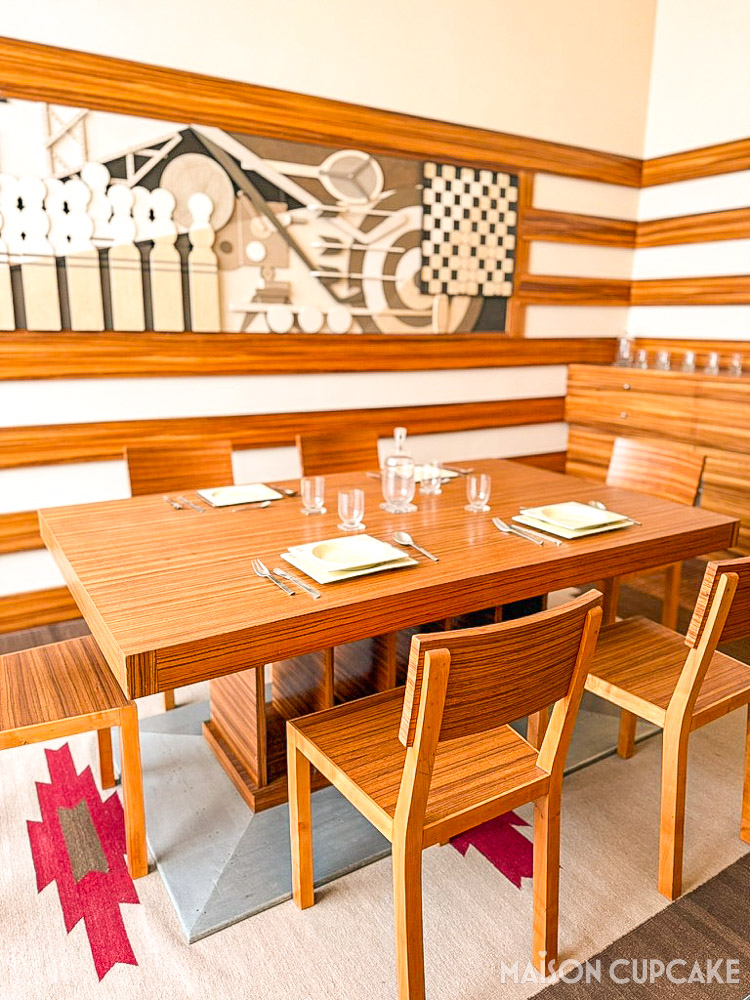
Monochrome Art Deco relief fresco with warm wood in dining room at Villa Cavrois near Lille
Monochrome Art Deco relief fresco with warm wood in dining room
Monochrome 1930s relief fresco at Villa Cavrois dining room
Warm toned wood interior with Art Deco square shaped place settings at Villa Cavrois restored modernist home France
Warm toned wood interior with Art Deco square shaped place settings

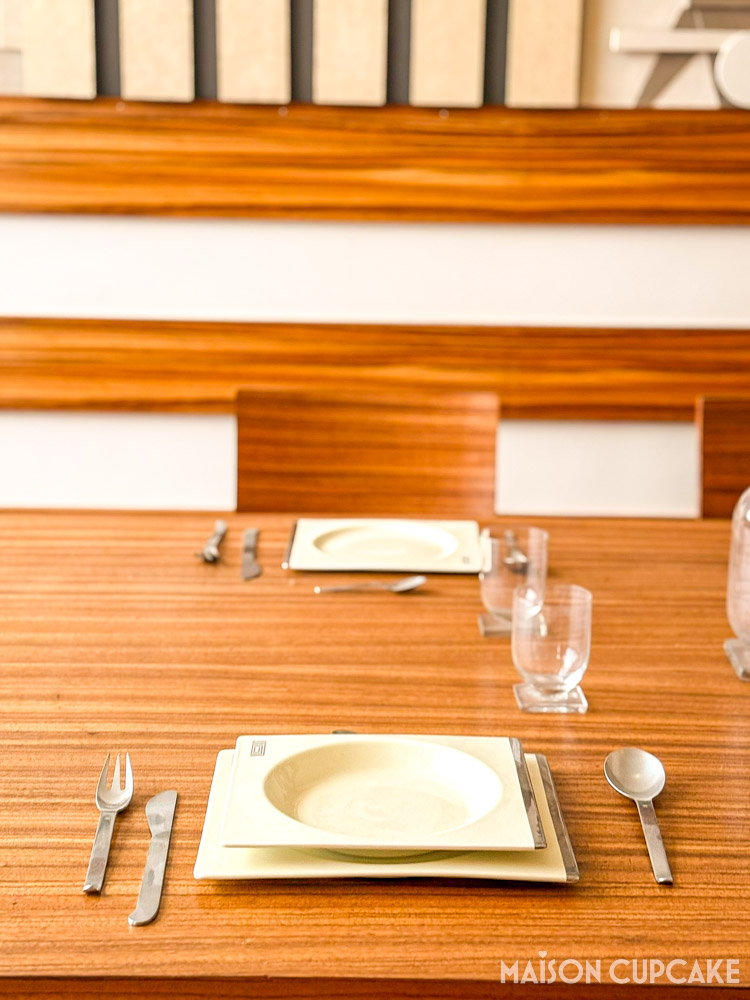
Some places are set for dinner with square tableware. The woven rug is the only textile item yet the room still feels warm and ready for convivial conversation.
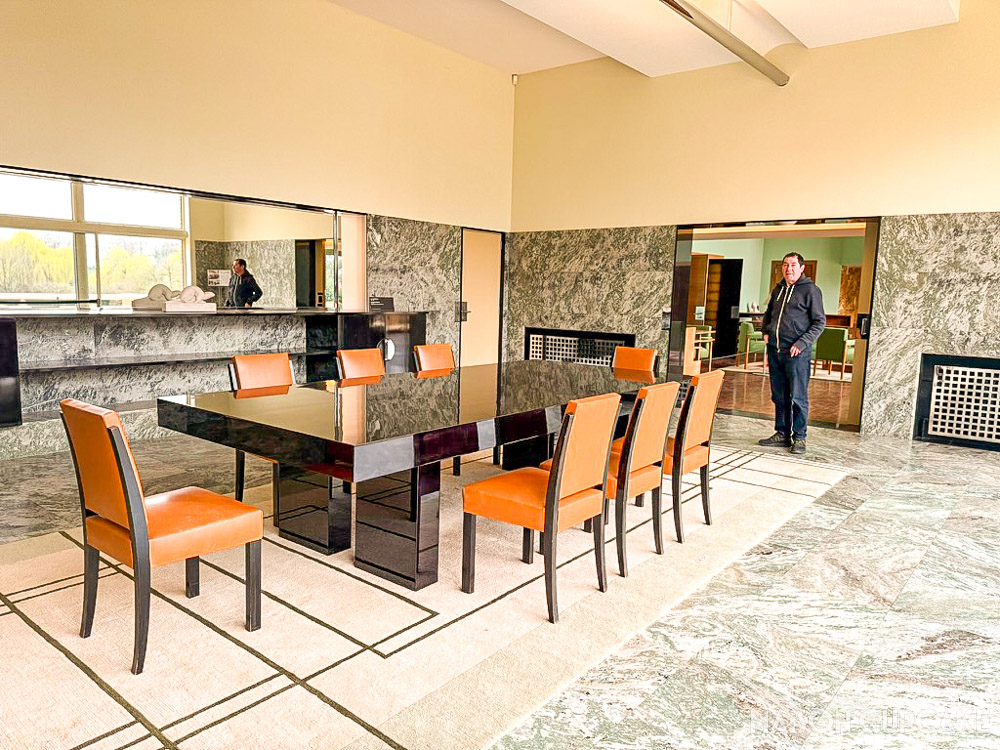
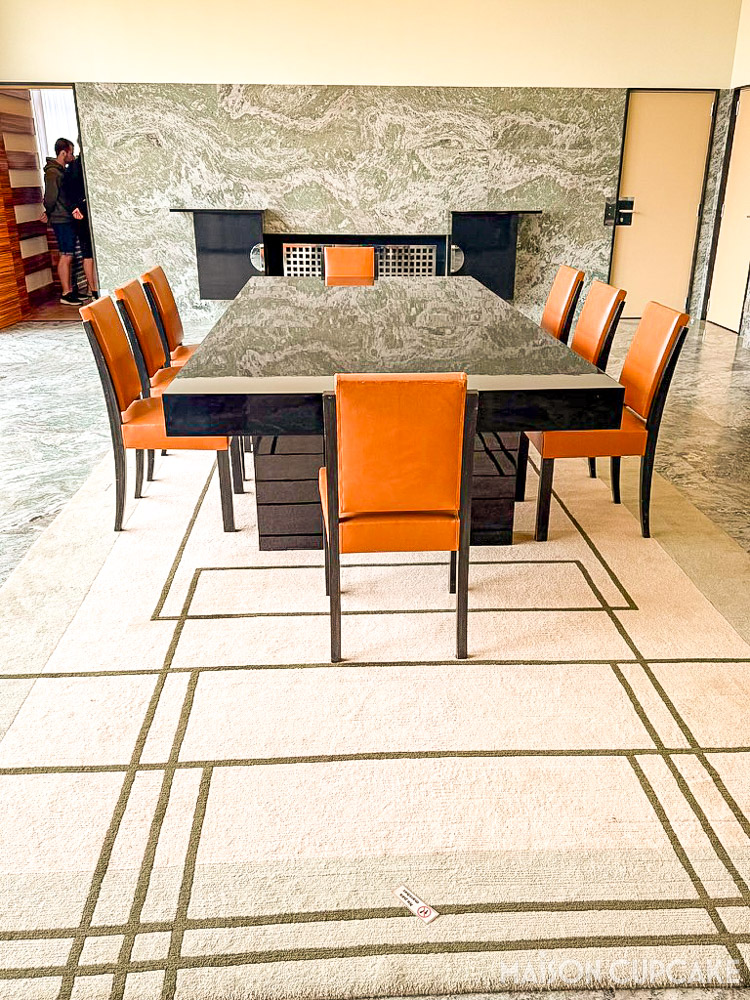
Dining room at Villa Cavrois with long table and modernist interior design
Dining room at Villa Cavrois with long table and minimalist geometric monochrome rug.

The second dining room feels more corporate with marble walls and table top, high-backed leather dining chairs as if ready for a business meeting. The tufted rug adds softness and the chairs feel very contemporary.

This dining room was much brighter and spacious. I wonder if the family ate by themselves in the smaller one and had grander dinners with serving staff in the large one?
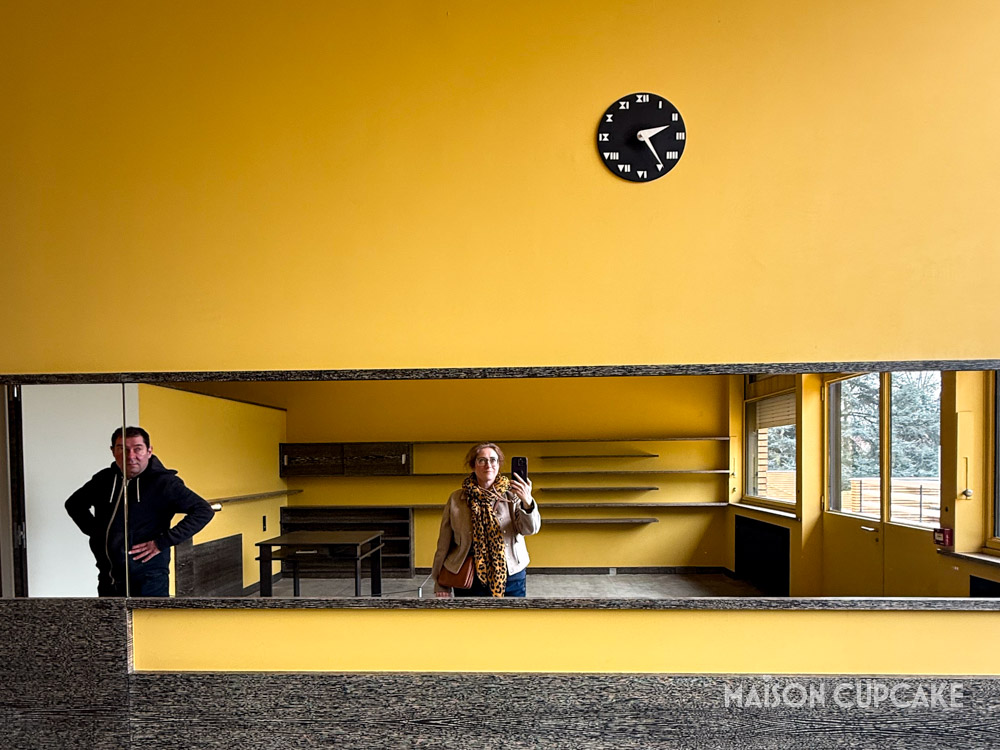
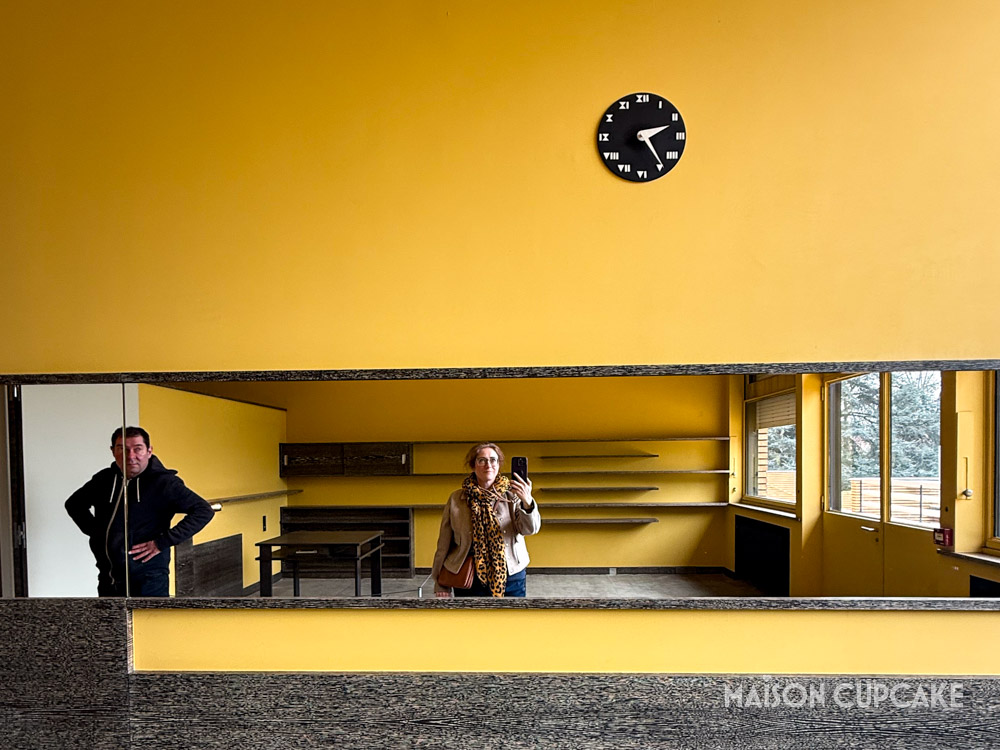
Yellow Art Deco Room with clock at Villa Cavrois, Lille France

Although most shelves are empty, the many magazine spreads featuring Villa Cavrois capture how the house looked with personal effects such as vases and books adding to the interior. It was never a cluttered house but the magazine photography shown on some information panels conveys a more “lived in” atmosphere rather than James Bond villain lair.

Private Family Rooms and Upstairs 

Bedrooms

The master bedroom mixes cream textiles with dark wood. If the room feels empty then bear in mind the dressing area was immediately next door. I liked the lighting feature along the ceiling but this room felt a bit bland to me.
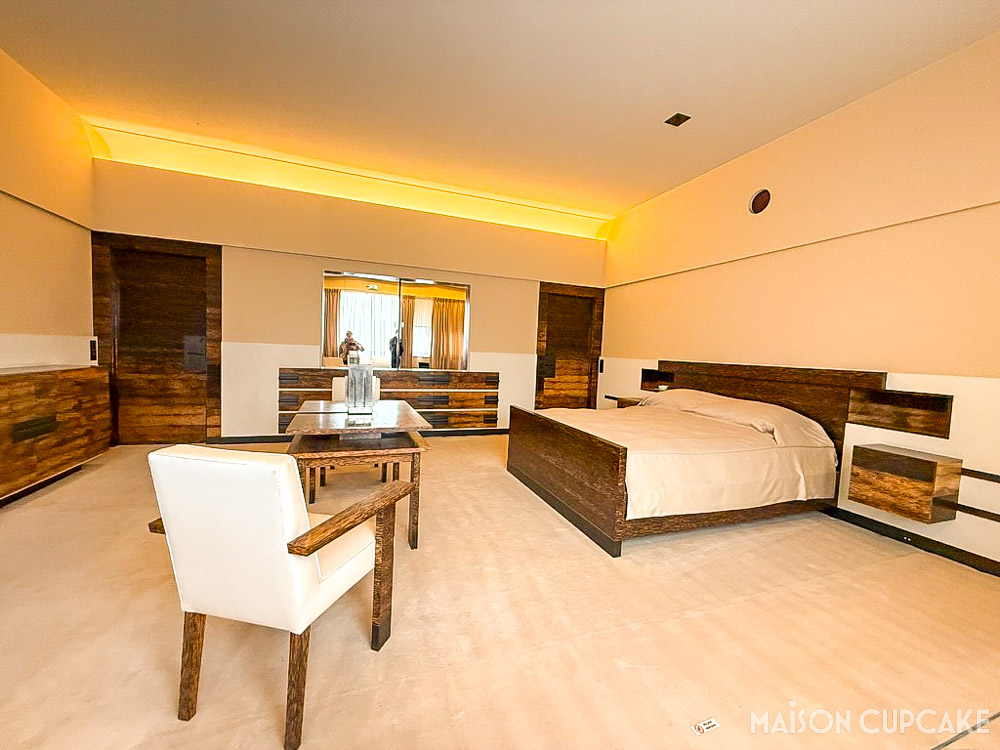
Master bedroom with restored minimalist Art Deco furnishings at Villa Cavrois
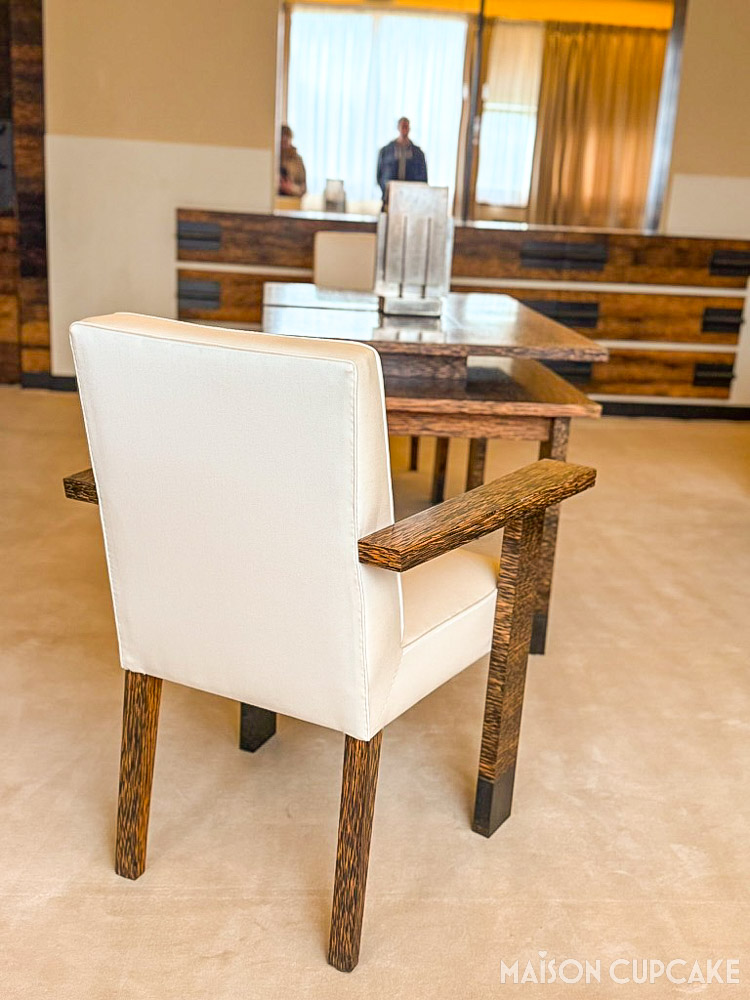
Master bedroom furniture detail at Villa Cavrois with minimalist modernist interior design
Master bedroom furniture detail, cream leather modernist chairs with wooden arms and legs

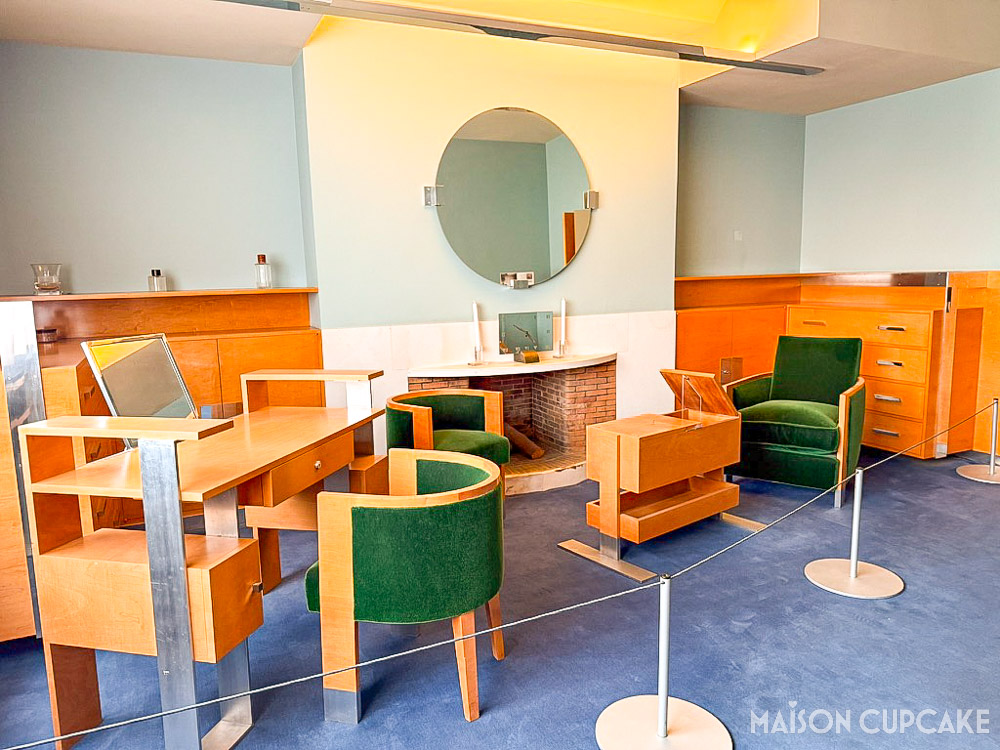
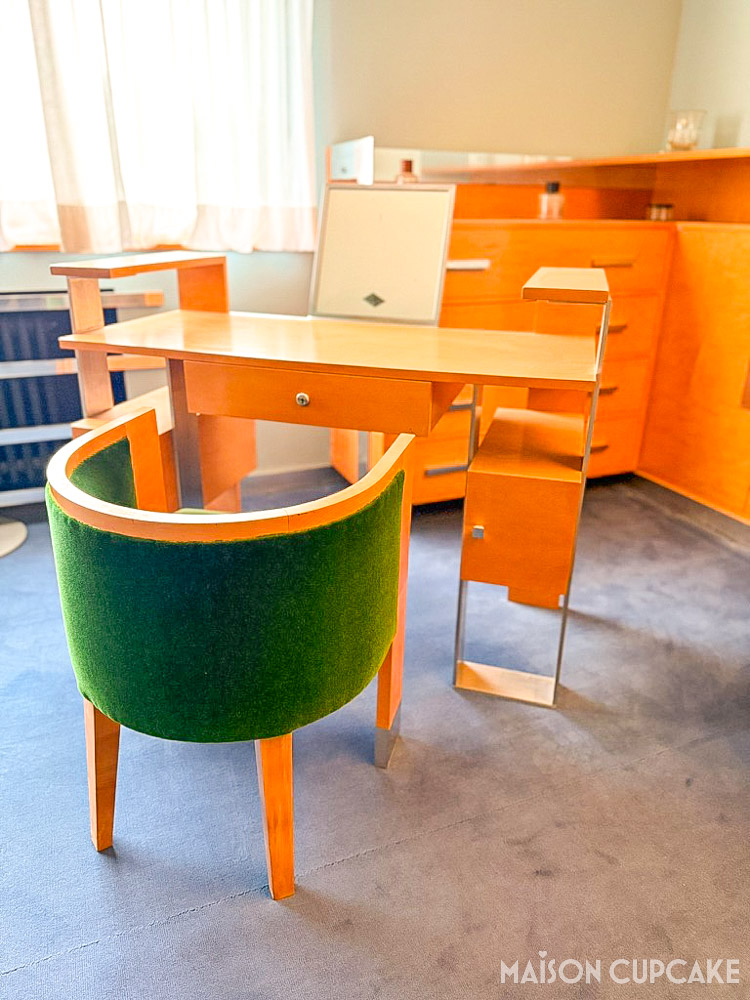
Next door, the smaller bedroom was more interesting with an array of wooden Art Deco furniture. Mrs Cavrois used this as her bedroom after Paul Cavrois died – she outlived him by around twenty years. 
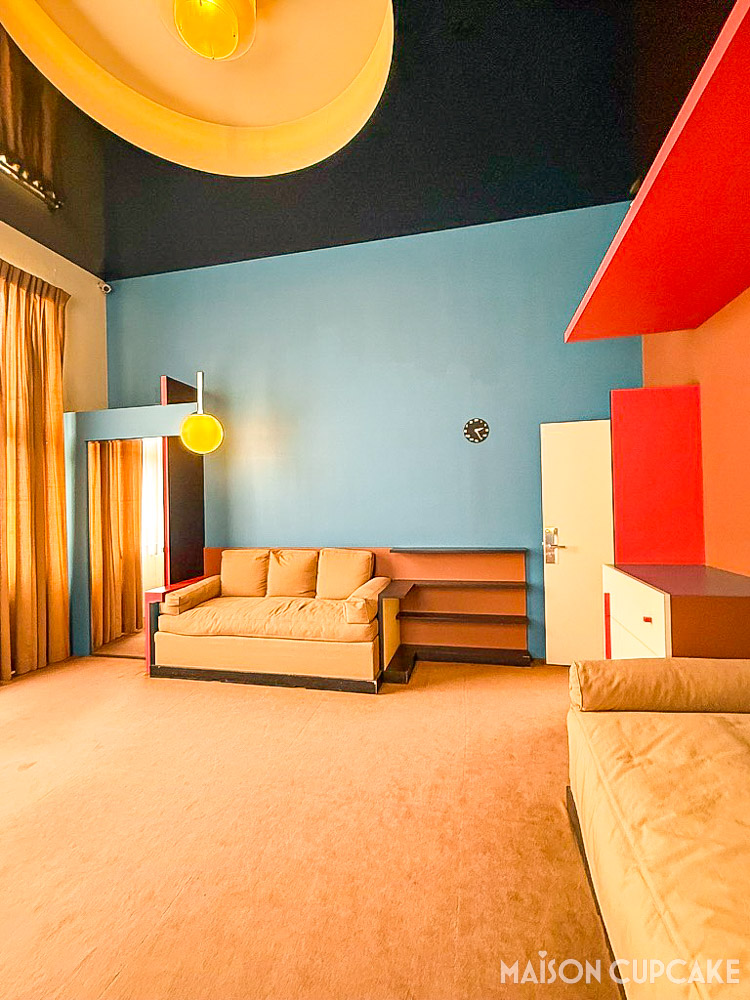
Restored smaller bedroom space with Art Deco furniture at Villa Cavrois
Art Deco bedroom furnishings at Villa Cavrois near Lille
Restored Art Deco chair and dressing table at Villa Cavrois in smaller bedroom

Bathrooms and Dressing Room

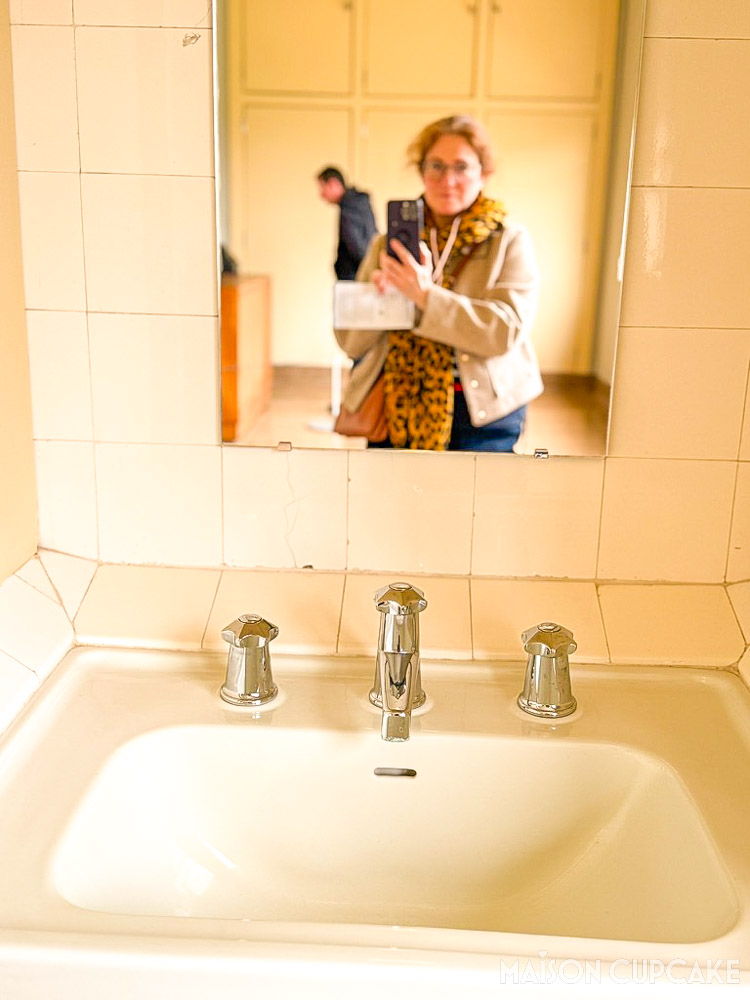
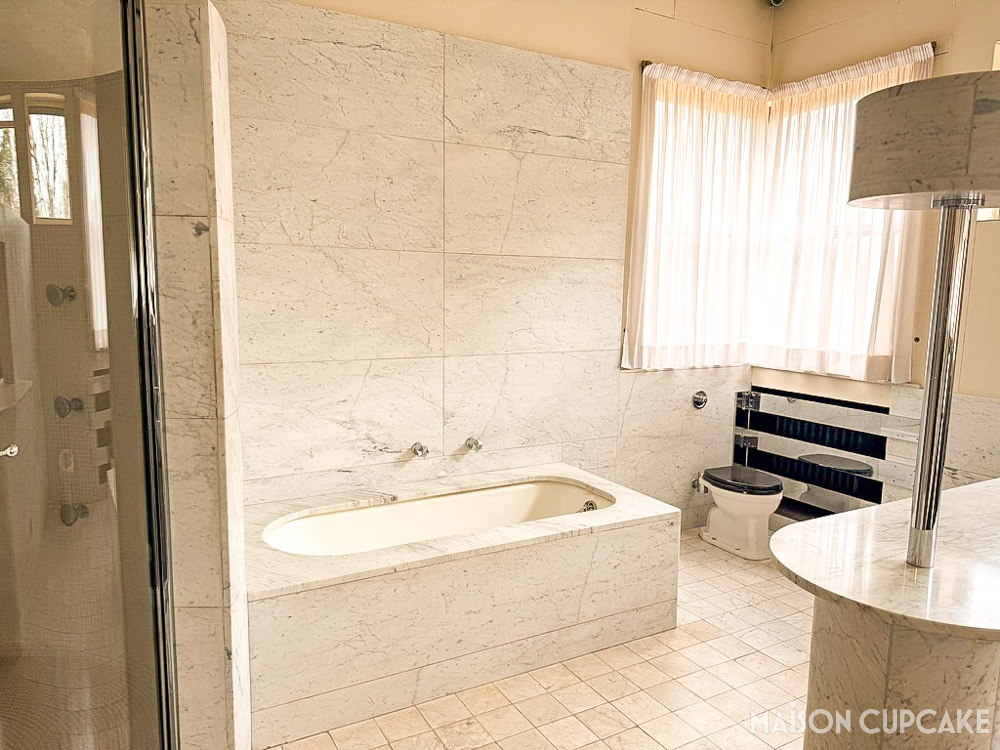
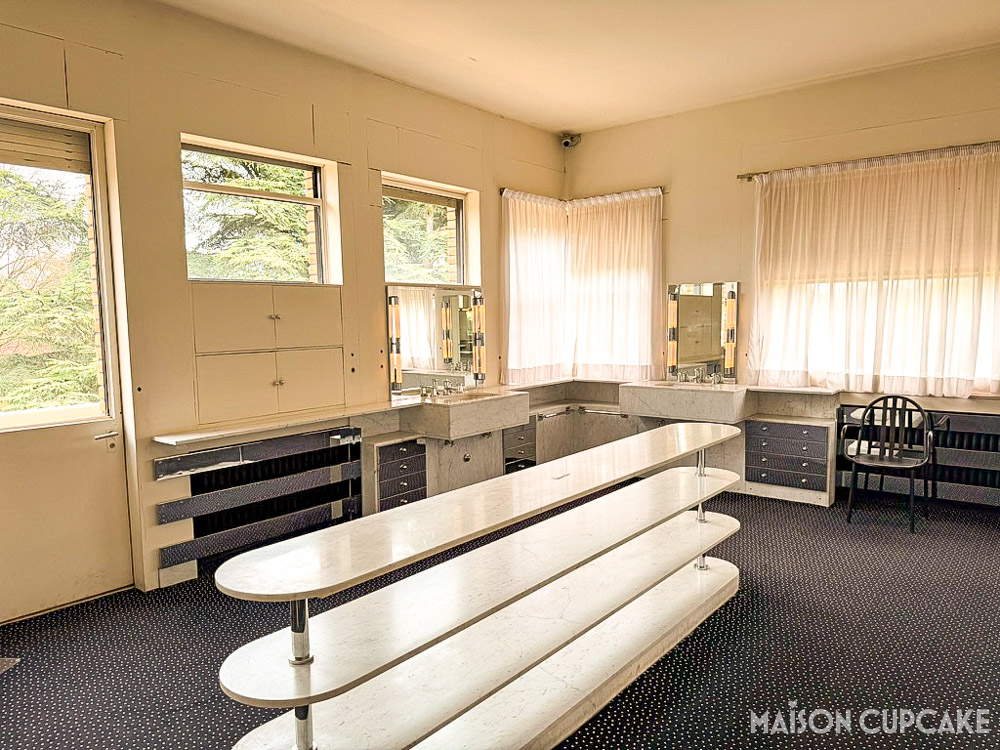
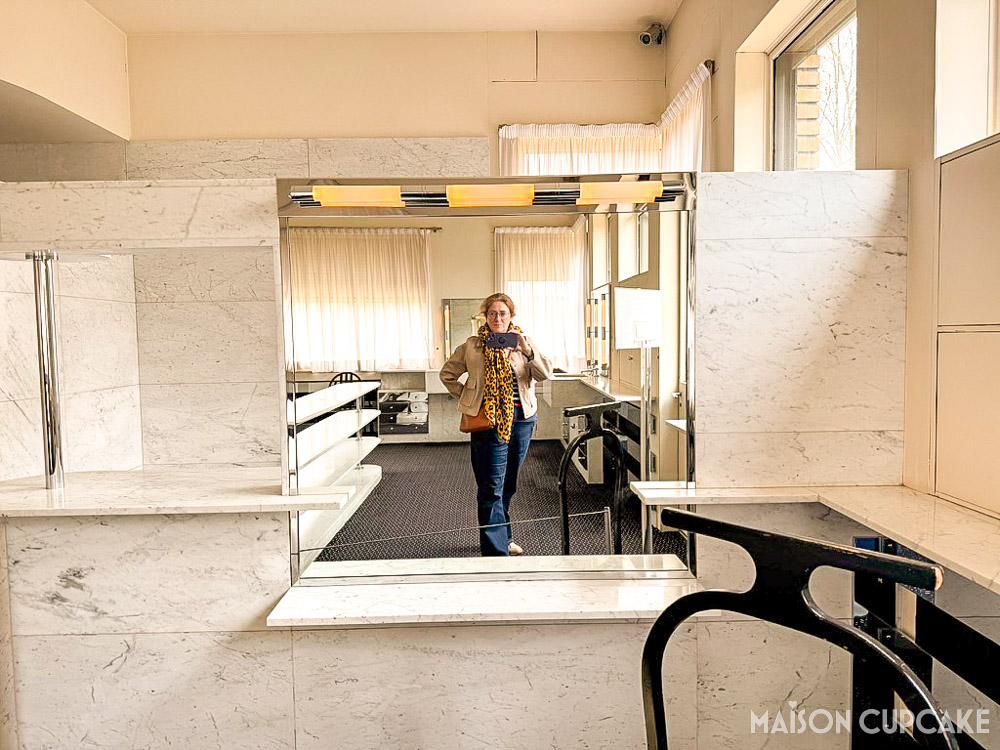
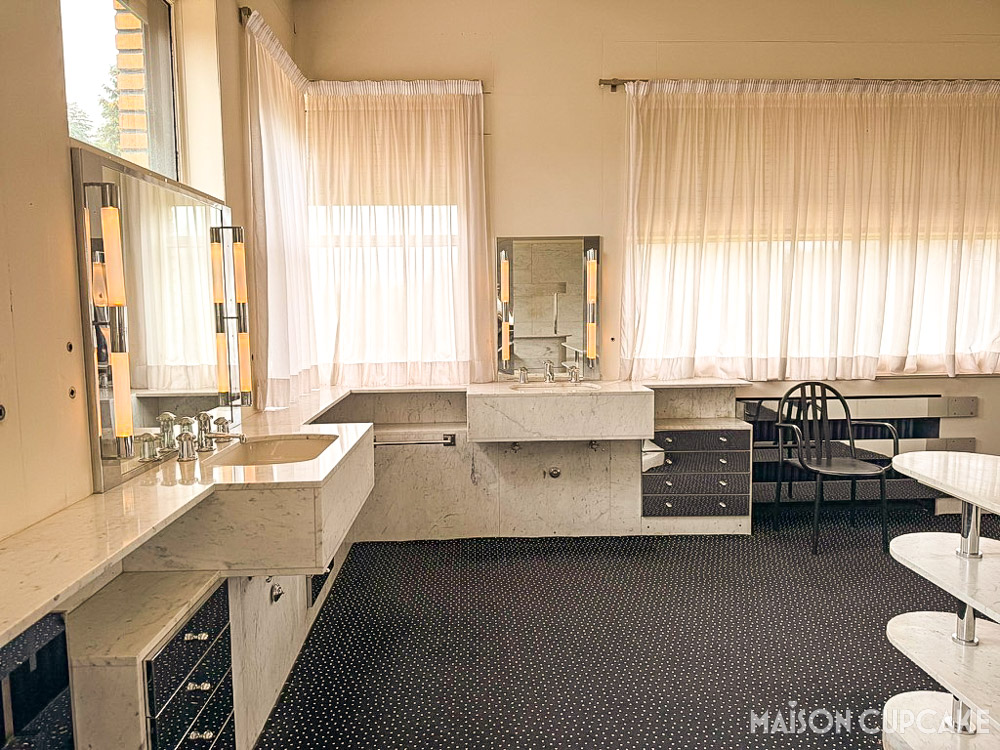
Most impressive upstairs was the vast grey marble-clad bathroom and dressing area. As well as a luxurious bathroom, there are Hollywood style vanity mirrors and generous shelving units for displaying accessories. 
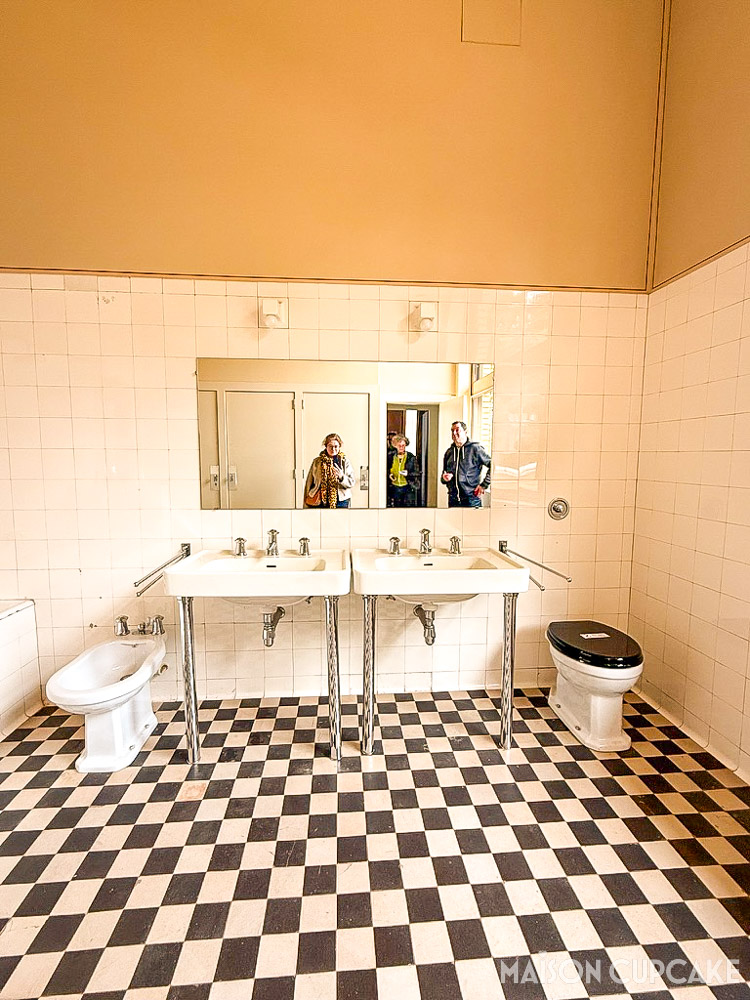
Restored bathroom space at Villa Cavrois showing chequered tiles and material contrast
Close-up of Art Deco bathroom sink, taps and tiles detailing in Villa Cavrois modernist house
Bathroom interior at Villa Cavrois featuring bold Art Deco surfaces and fixtures
Interior dressing area in Villa Cavrois with architectural built-in furniture
Minimalist Art Deco dressing area with mirror at Villa Cavrois near Lille
Dressing room at Villa Cavrois with built-in storage and geometric design

Definitely a dressing room fit for a film star. This bathroom and dressing space felt much more luxurious than the bleak tiled bathrooms seen at Eltham Palace in London (a similar status heritage property built in the same era). 

Design Details: Materials, Fixtures and Lighting

Stairwell 

The stairways at Villa Cavrois can look a bit office-blocky in the photo but as you climb the steps and the lawns and rectangular pond come into view, the space feels more like a house than an insurance building. 
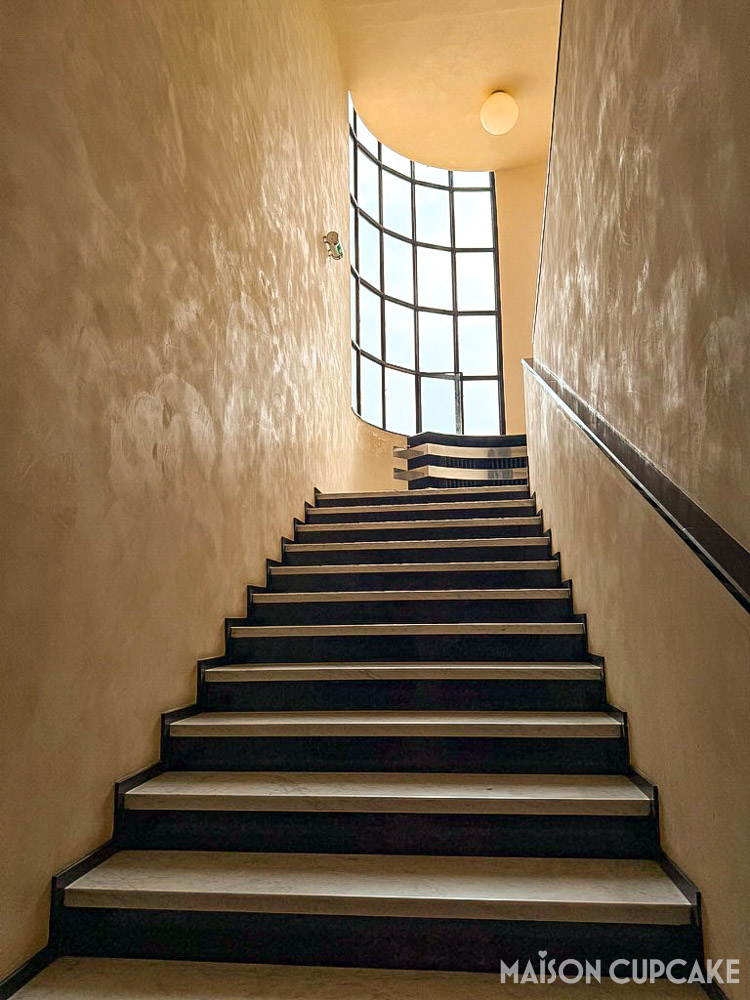
Stairwell at Villa Cavrois with large windows and natural light geometry
Vintage 1930s telephone from Villa Cavrois restored modernist house
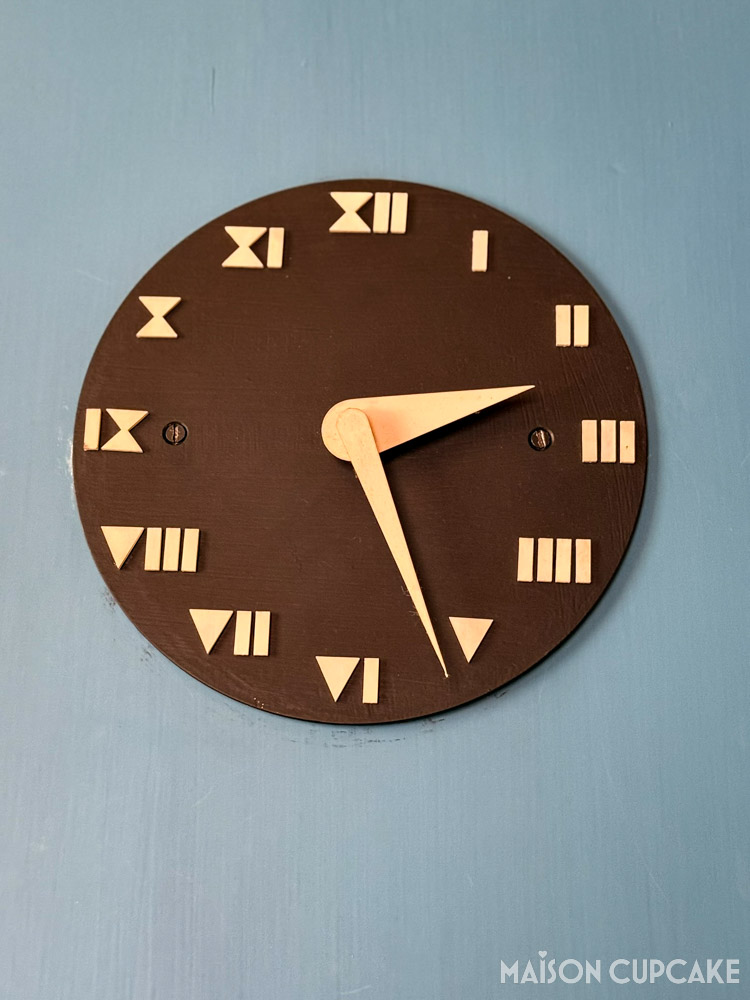
Art Deco Wall Clock at Villa Cavrois, Roubaix near Lille France

The black framed panelled windows are perfect inspiration for a contemporary side-return extension. The curve of the building is echoed by a chrome-edged window seat should you wish to pause half way up.  

Lighting
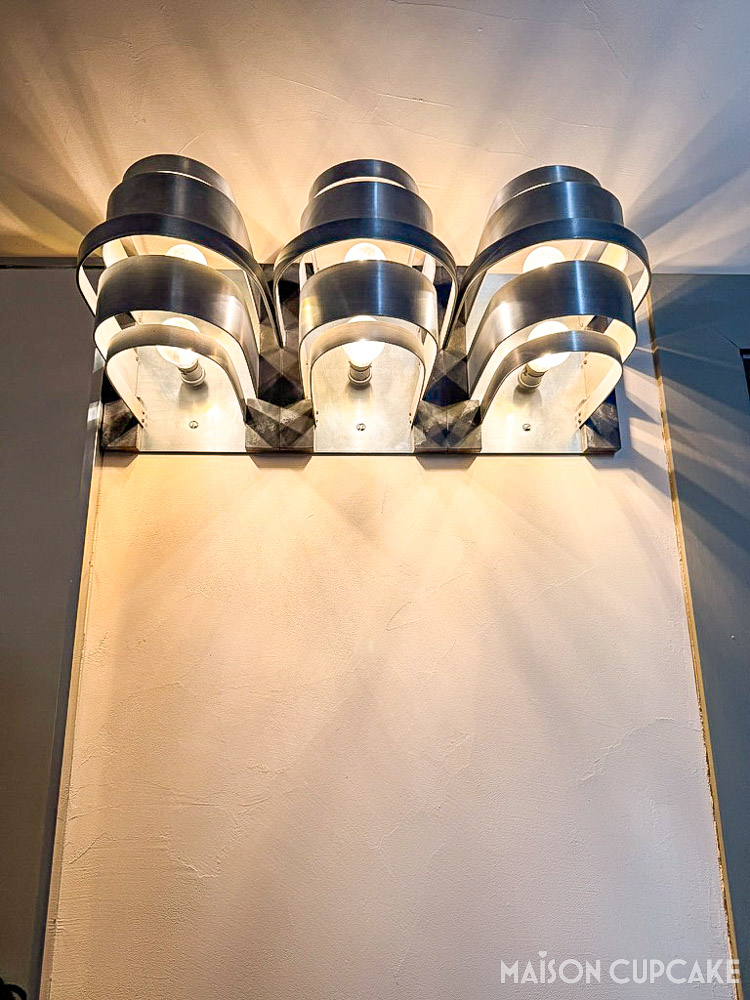
Lobby Art Deco lighting feature at Villa Cavrois near Lille

This light feature is in the entrance hallway, the house holds a mix of original fittings that have been repurchased at auction or recreated. I’m not sure which category this falls into but the layers of curved metal bands mixed with bare lightbulbs peeping through and angular shadows created are unmistakably Art Deco.

Restoration Archive
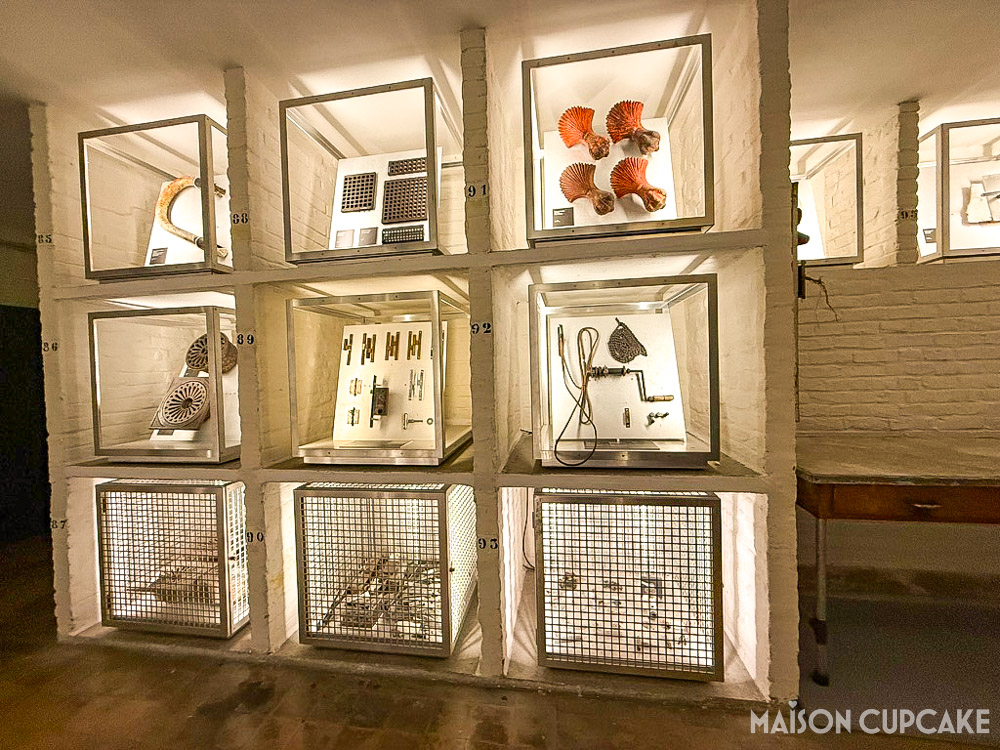
Materials archive gallery at Villa Cavrois, Lille France

The basement of Villa Cavrois holds a museum film show portraying the restoration phases of the house – I was shocked to see a tree growing through a room and the amount of graffiti vandalism afflicted on the property. By watching this looping film you get a feel for just how extensive a project the restoration was. 
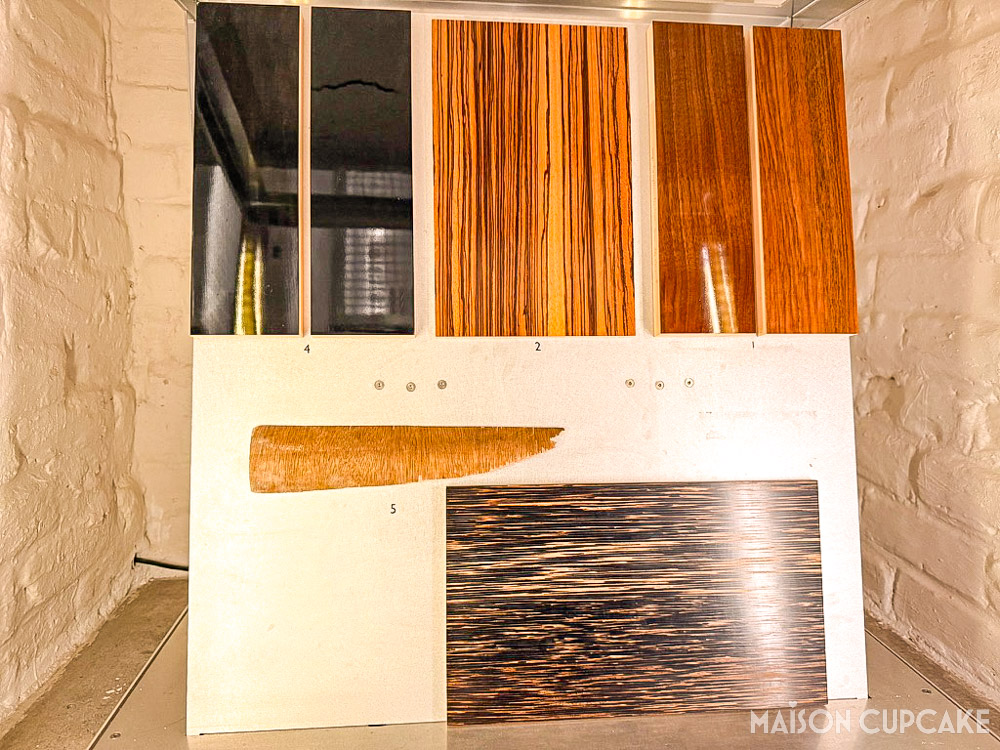
Restoration archive veneers at Villa Cavrois near Lille

Also downstairs you can view the materials gallery, dozens of cases displaying original materials and fittings that were left behind after the 1986 sale.
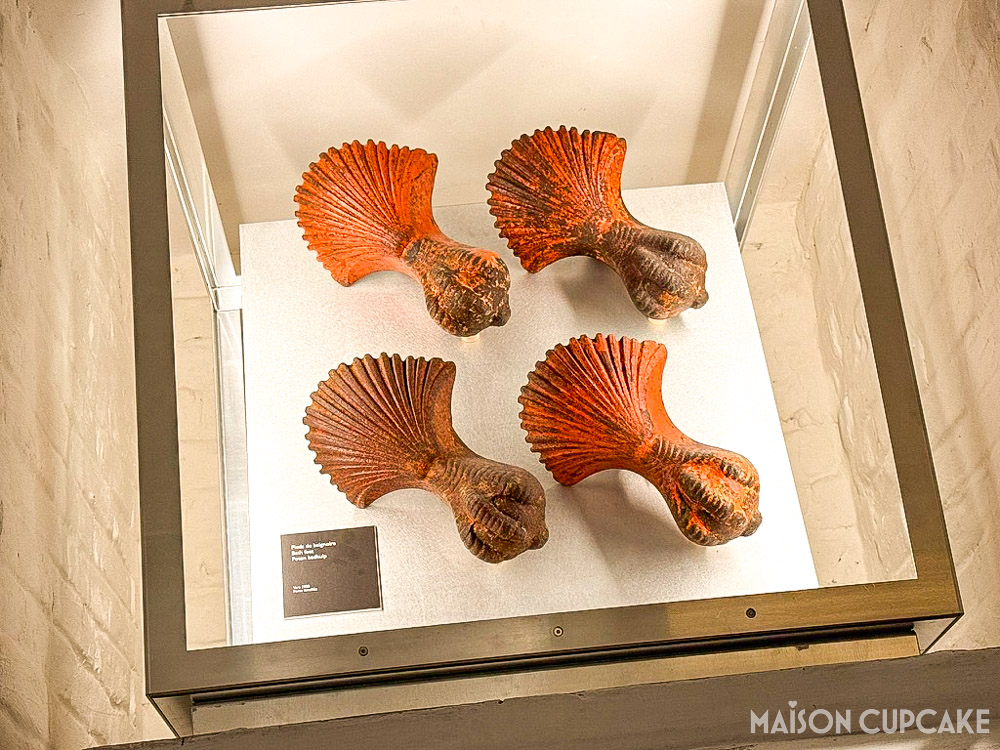
Salvaged scalloped iron bath feet in the materials archive at Villa Cavrois France

This area has a feel of the V&A Storehouse in East London, you will see lit-up cases of electrical fittings, wood samples and my personal favourite, some ornate rusty bath feet.  
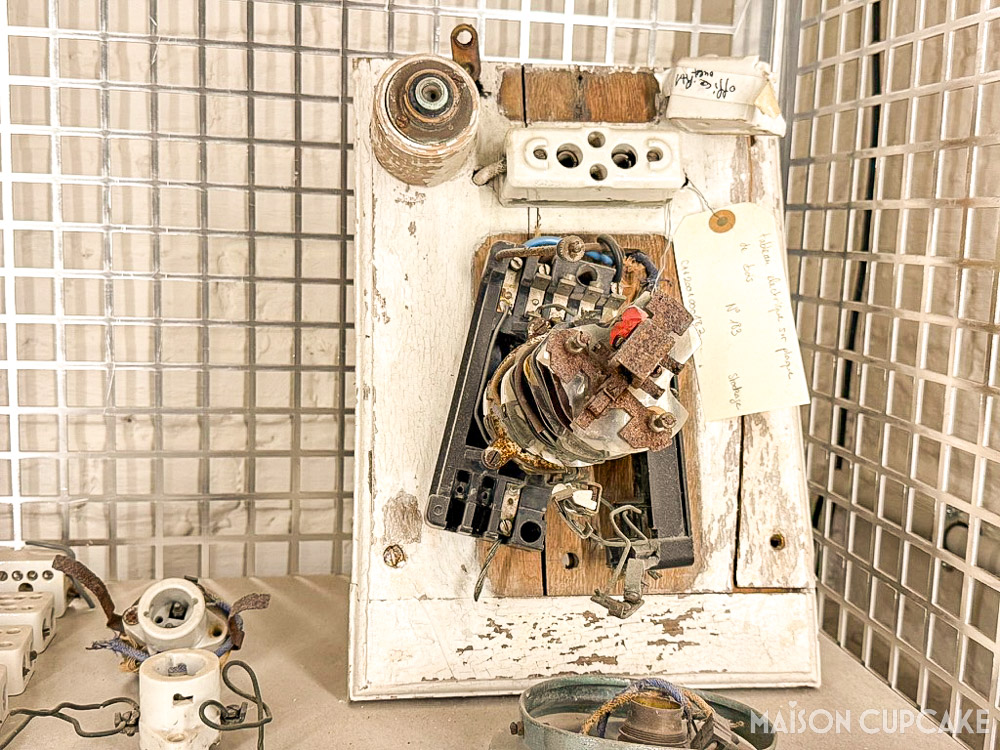
Materials archive electrical salvage at Villa Cavrois

Villa Cavrois Garden and Exterior

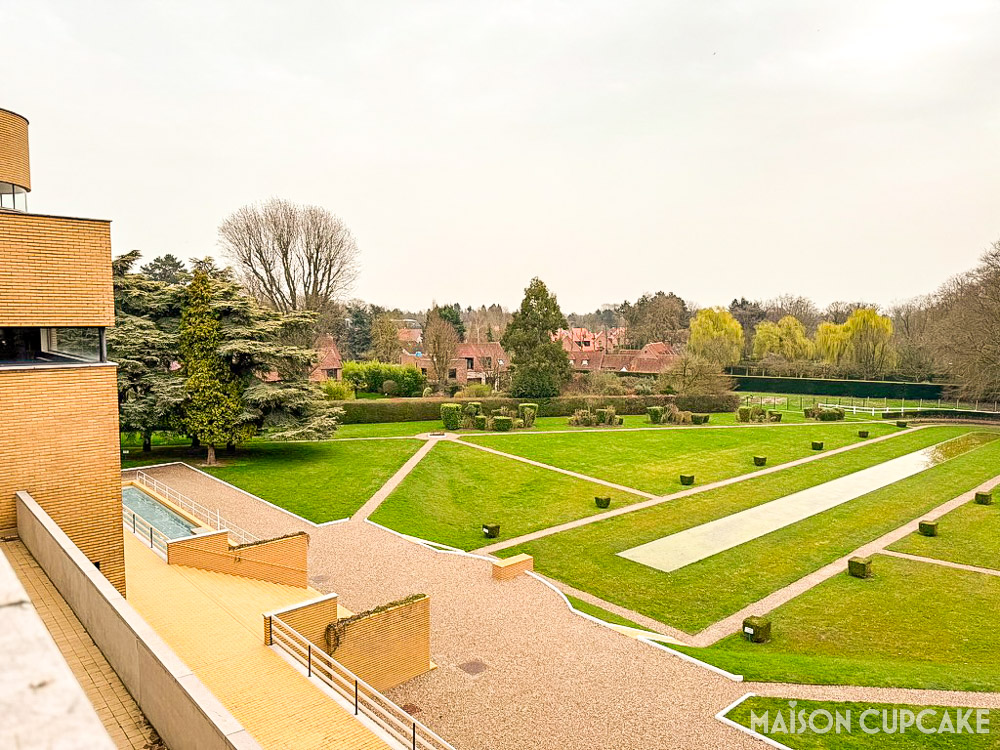
The proportions of the garden are slightly adjusted from the originals to stay harmonious in a slightly smaller space – some of the land was redeveloped as housing. This isn’t a garden for botanists, the main features are clean lines, pathways cutting through lawns and every angle creating a unique viewpoint. 
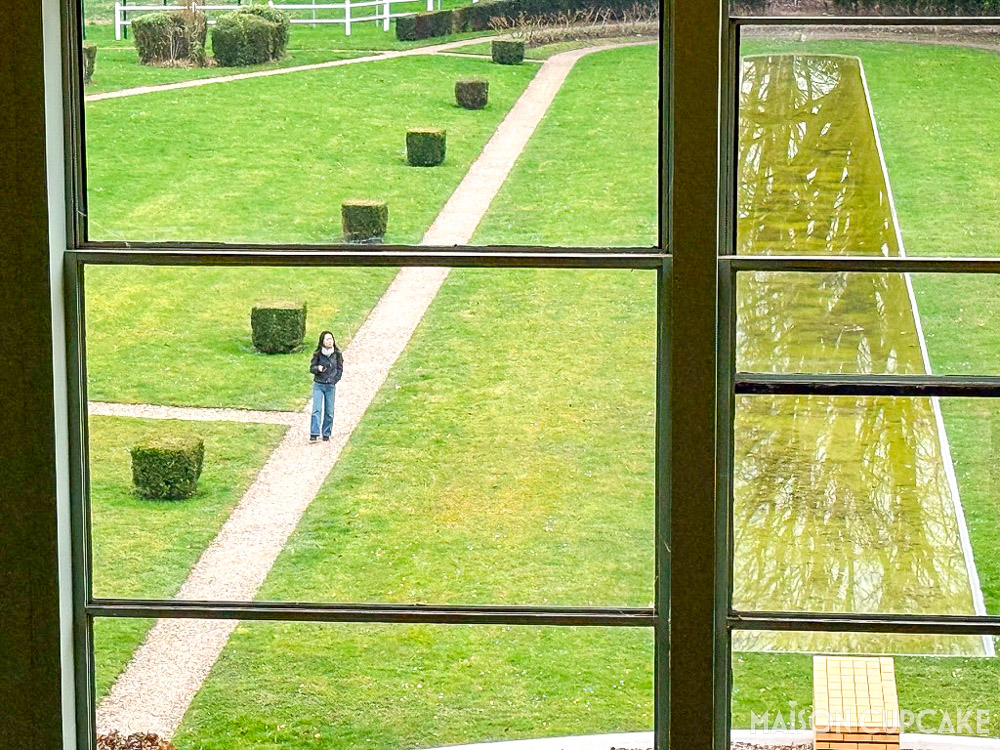
Art Deco window frames at Villa Cavrois overlooking landscaped modernist garden and water feature
Exterior garden view as seen from roof terrace showing Villa Cavrois symmetry and open lawns
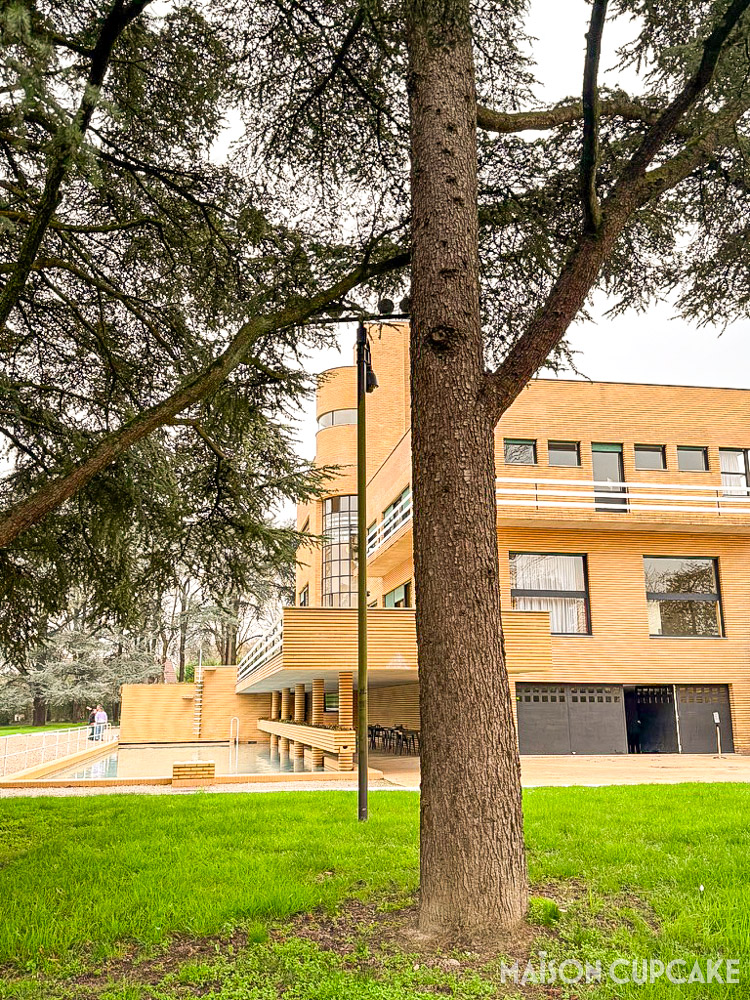
Side view with tree of Villa Cavrois modernist house near Lille
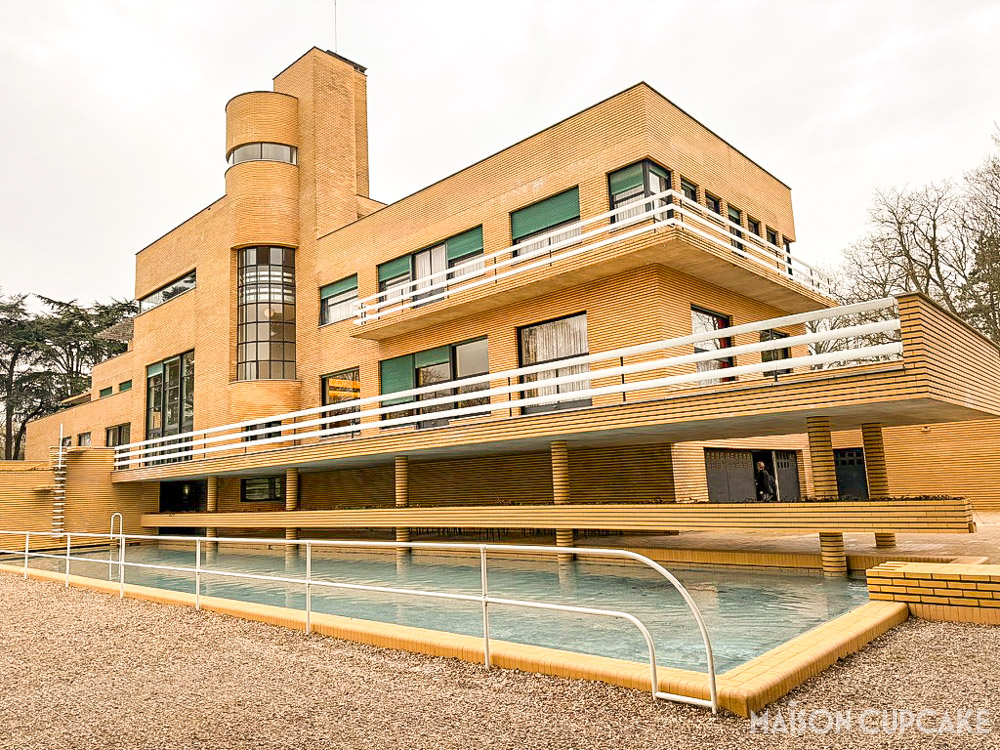
Rear exterior angle of Villa Cavrois Art Deco home with swimming pool and terrace

The rectangular pool clings under the rear of the house. It didn’t look very deep and I wondered if this was for safety reasons now that the house is a museum. A swimming pool, not to mention sunbathing would have been an aspirational 1920s-30s activity – although arguably Lille does not have the Côte d’Azur climate required to really enjoy it.
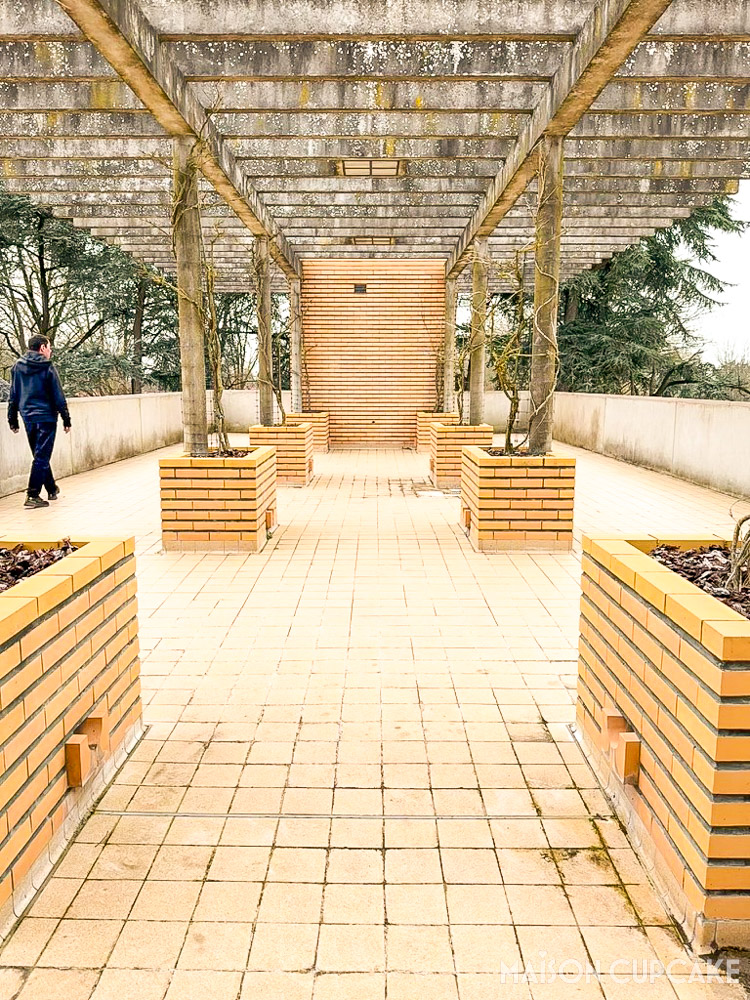
Upper Roof terrace at Villa Cavrois, modernist design icon near Lille

Up on the roof is a pergola covered terrace giving an optimum vantage point over the garden. I can imagine this would have been a quiet space to sit far away from any activity downstairs. Mr Cavrois’ office was adjacent on the top floor. 

Practical Points For Visitors

There are characteristically stylish toilets in the basement of Villa Cavrois but sadly no café. After our journey and a visit of over two hours, we were desperate for coffee and a pitstop but had to hold out until our onward journey to Roubaix. 

A black shipping container at the entrance holds a surprisingly well-stocked Modernist design book shop also selling more touristy souvenirs. If you are going to La Piscine art gallery in nearby Roubaix, you may wish to save money for their excellent gift shop too.

You can visit Villa Cavrois with admission via the Lille City Pass or a Centre Monuments Nationaux card, otherwise it’s around 10-11 euros. Allow two hours for your visit – plus travel time.

If sunny, you may wish to linger longer in the grounds, but it’s a bit manicured for picnics – I suspect a madam may rush up and tell you off – so don’t come hungry.  

Reaching Villa Cavrois from Lille

Villa Cavrois lies around 40 minutes outside of central Lille on the way to Roubaix. From Lille Flandres you take either the tram (Villa Cavrois stop) or metro (Croix Centre stop) with a 20 or 30 minute walk respectively.

You can buy a joint ticket for Villa Cavrois and La Piscine art gallery in Roubaix and these two attractions together make an excellent cultural day out from Lille. 

Villa-Cavrois-fr
60 Ave du Président John Fitzgerald Kennedy
59170 Croix, France

Have you ever visited Villa Cavrois? Share your thoughts in the comments below.
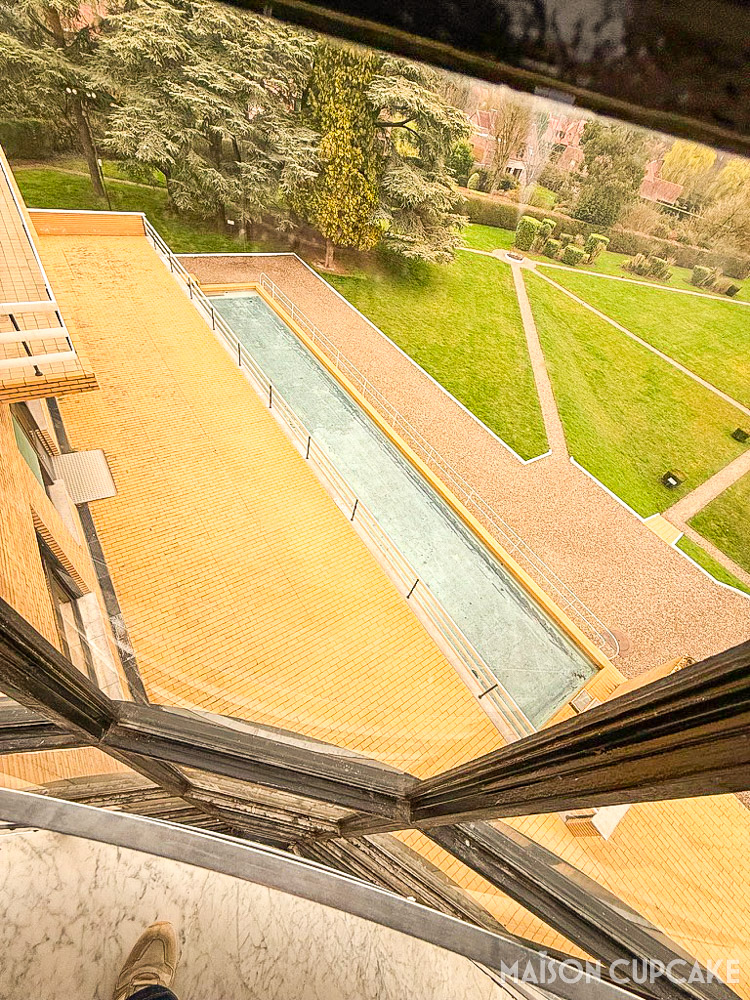
View from stairwell at Villa Cavrois modernist house looking down at pool and gardens

Originally published on Maison Cupcake
How to Get Around Lille (with real examples)

This guide to transport options in Lille covers what you need to know about getting to and around the city. It looks at arriving by Eurostar or driving to Lille, including where to park, as well as how to use the city’s metro, trams and buses. It also covers bike hire schemes and sightseeing tours to help you navigate Lille transport efficiently.

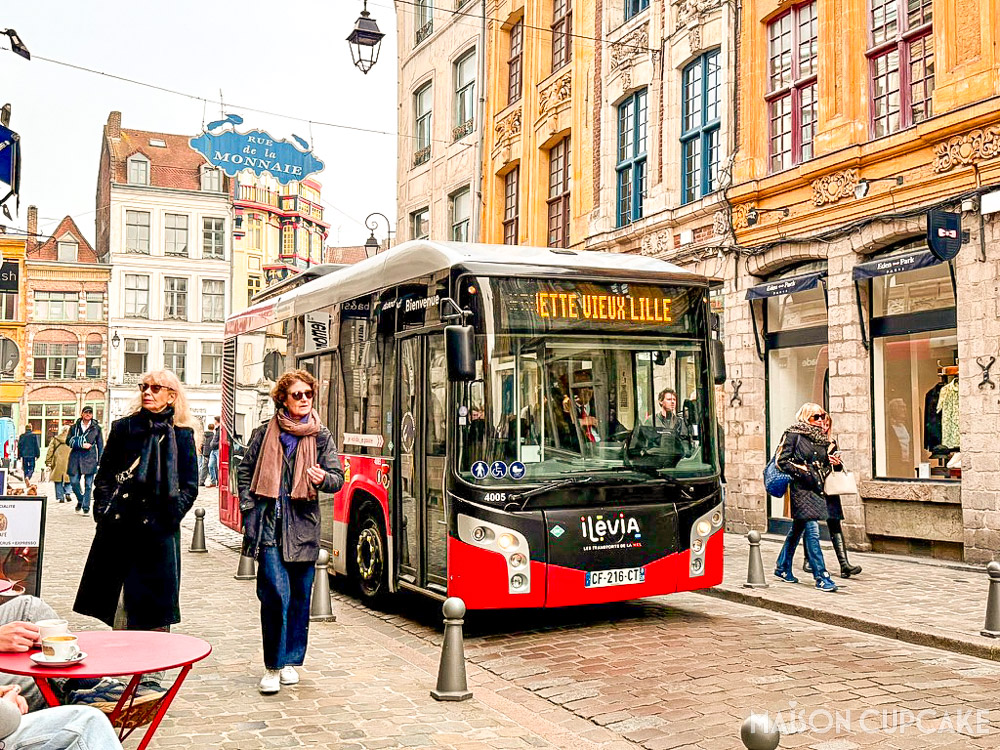
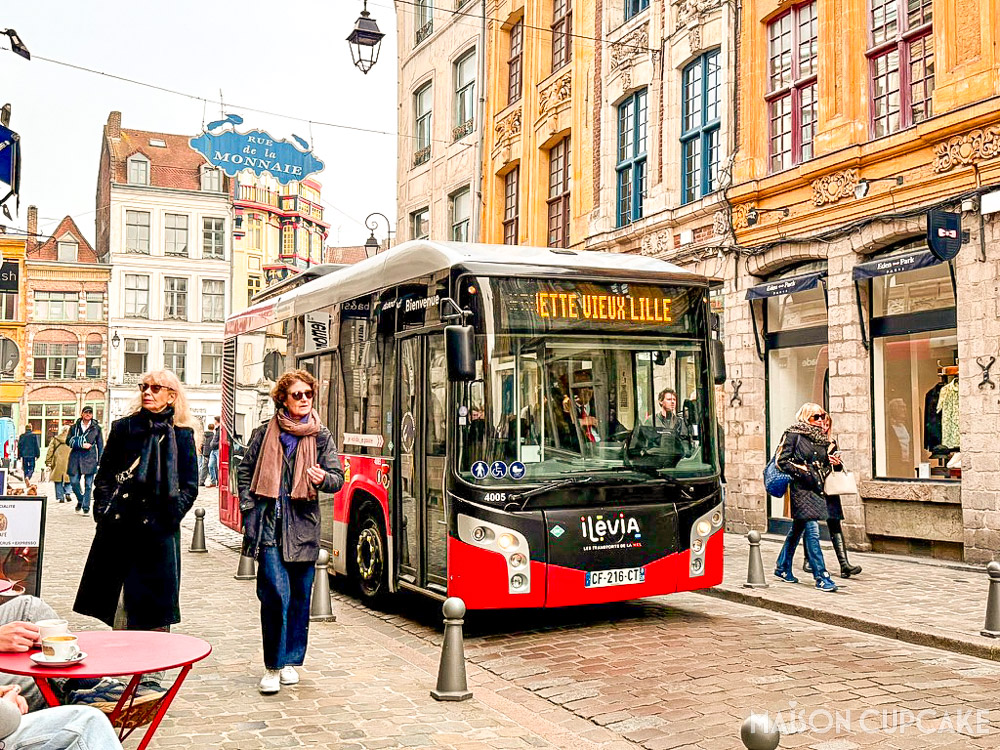
Passenger Bus in Vieux Lille Rue de la Monnaie

Getting To Lille on Eurostar

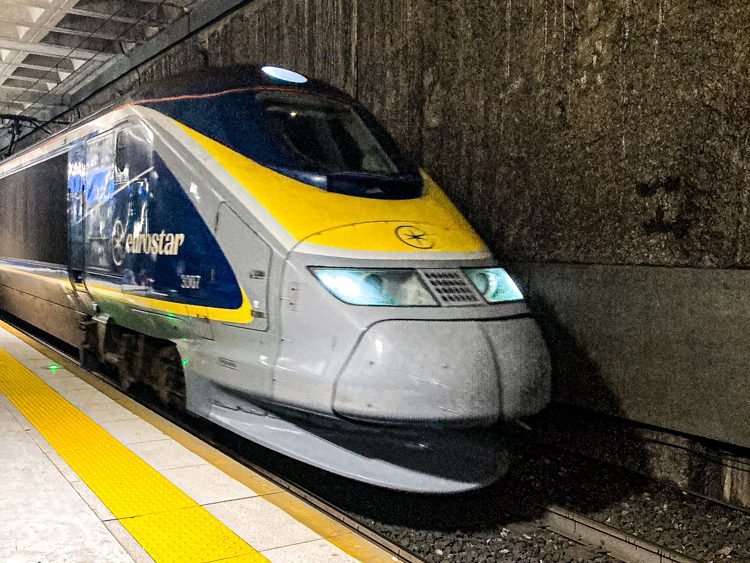
Eurostar train arriving in Lille Europe station

At only 90 minutes from London Saint Pancras, Eurostar is an obvious way to get to Lille. The Eurostar trains pull into Lille Europe station, which is around 15 minutes’ walk north of central Lille or a short metro ride away. 

Lille Europe is also served by long-distance TGV routes to cities such as Lyon and Montpellier without needing to change stations in Paris. 

Getting To Lille By Car

Alternatively, Lille is only 30 minutes from Dunkerque ferry port or 50 minutes from the Calais ferries or the Channel Tunnel making it equally convenient to arrive by car.

Lille is one of the cities covered by France’s Low Emission Mobility Zone scheme. Before travelling to France you can order a Crit’Air sticker to display in your windscreen. These are graded according to emission levels of your vehicle. The stickers cost around ten pounds and arrive by post in a few days. Vehicles with higher emissions may be restricted from driving in the zones when pollution levels are high.

Be mindful that whether you are on the French or Belgian side of the border, town names on road signs will be in French or Flemish accordingly. The Flemish name for Lille is Rijsel which can be confusing if you don’t know. Others to watch out for are Antwerp (Anvers in French), Gent (Gand), Kortrijk (Courtrai) and Ieper (Ypres). 

Parking In Lille

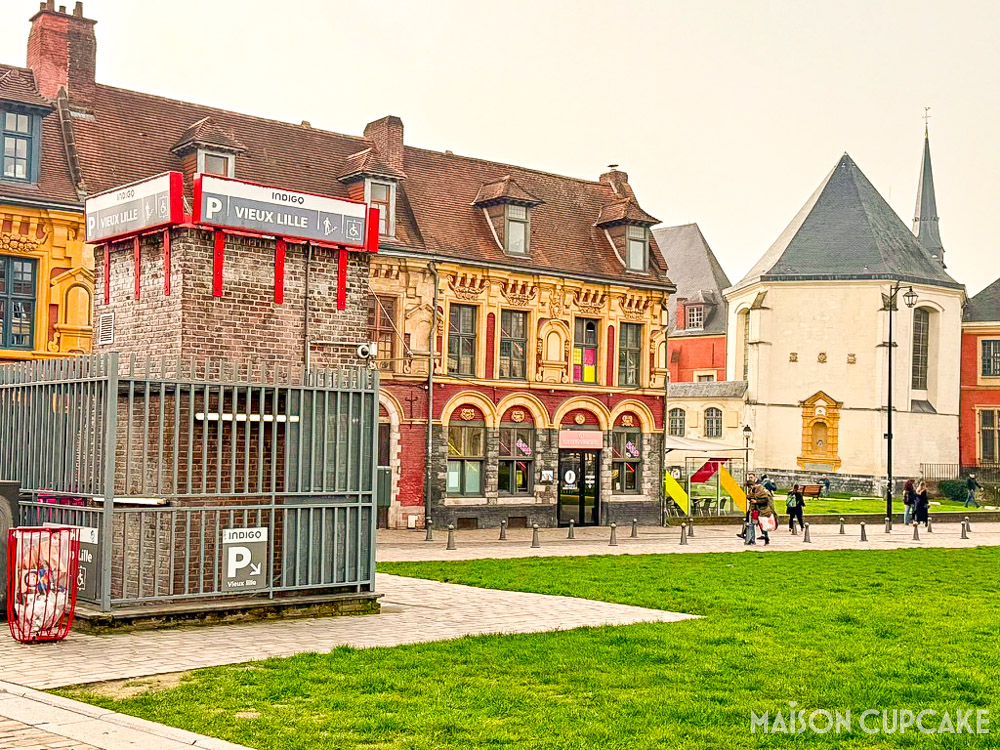
Indigo Car Park entrance, Lille France

There are numerous long stay car parks in Lille, often run by Indigo. We have used the car park above Lille Europe station twice for long stays; we like it because it’s well-lit with direct access into the metro. You can drive straight into the Lille Europe car park from a slip road off the main ring road although there are cheaper places to park than this.

More central, and cheaper car parks include Parking Indigo Lille Plaza and Parking Indigo Lille Parc Vieux-Lille (pictured). Indigo Neo lets you prebook spaces if you set up an online account or you can drive in on arrival.

How Much Does It Cost To Park In Lille?

Expect to pay around 40 euros at Lille Europe per 24 hours but under 30 euros elsewhere in Lille. I can report that parking for 26 hours is charged at 26 hours rather than automatically tipping into a full second day. (The UK could take a lesson here!)

Paid French car parks tend to be pay-on-exit rather than guessing in advance how long you need. Parking charges tend to be lower than the UK, even in cities.

Do You Need A Car in Lille?

Whether taking a car to Lille is worthwhile depends on how many people are travelling and the relative prices for Eurostar tickets versus ferry or Channel Tunnel crossings.

Certainly you can get around Lille without a car although having one opens up the option to visit nearby cities such as Ypres over the Belgian border. Another benefit of taking the car is being able to fill the boot with goodies – Lille is stuffed with great shopping!

I would never take the car if travelling alone, but if it was several family members it might be cheaper than Eurostar, even after paying to park. 

Getting Around Lille (Public Transport)

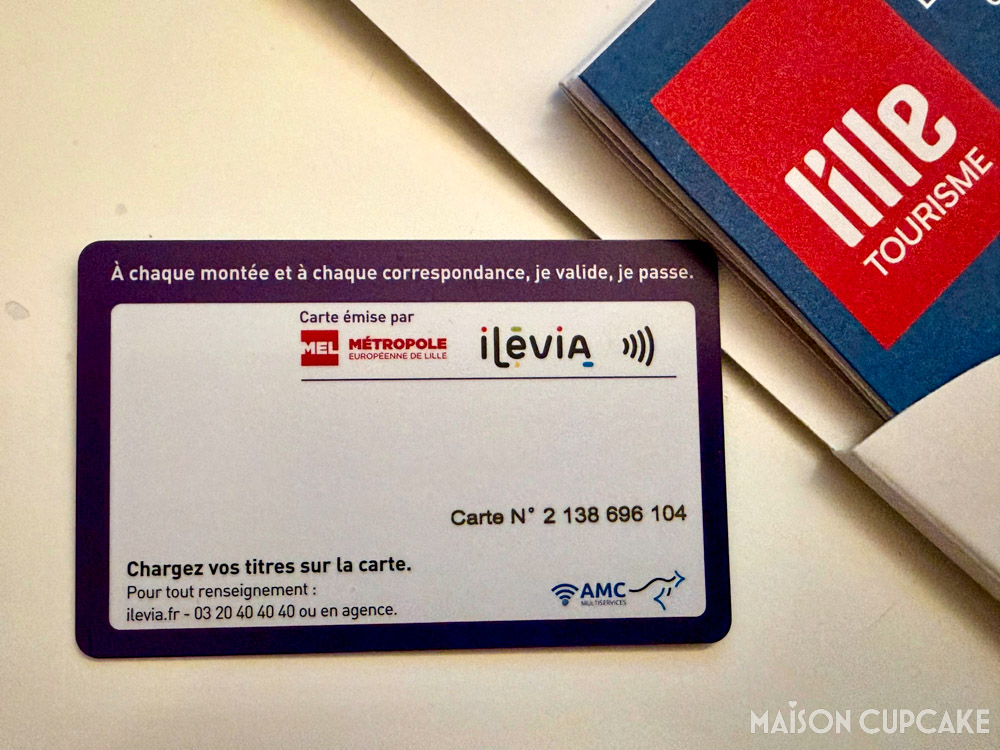
Lille has a comprehensive public transport system operated by Ilévia. If you are using the Lille City Pass you can get a small discount. Otherwise journeys are 1.80 euros each.

The Lille Metro

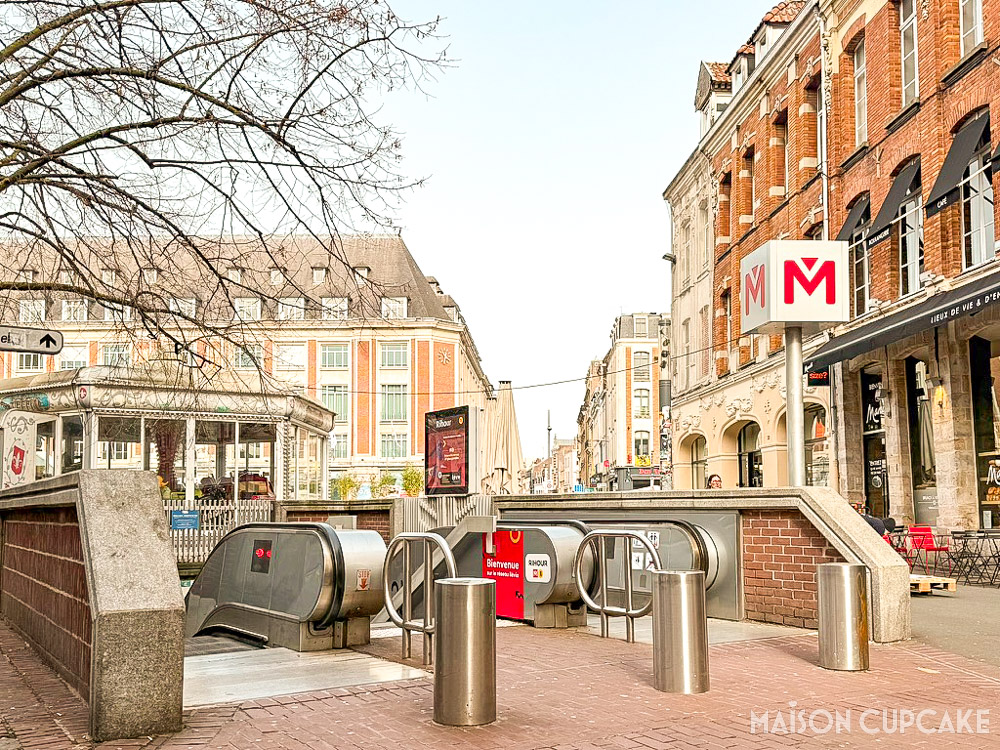
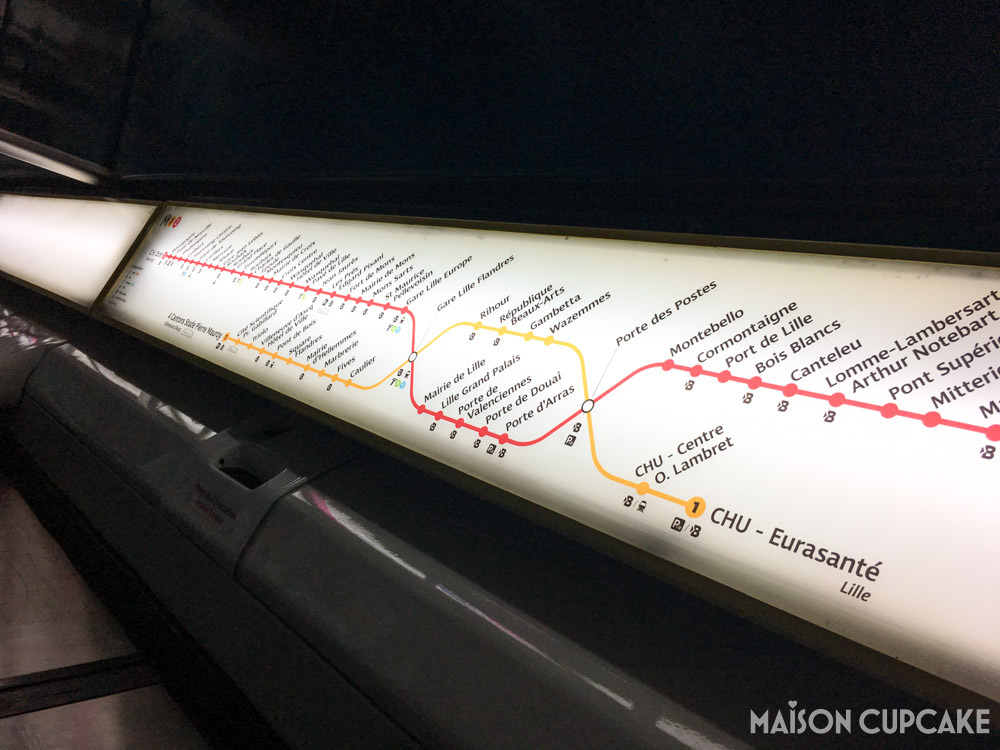
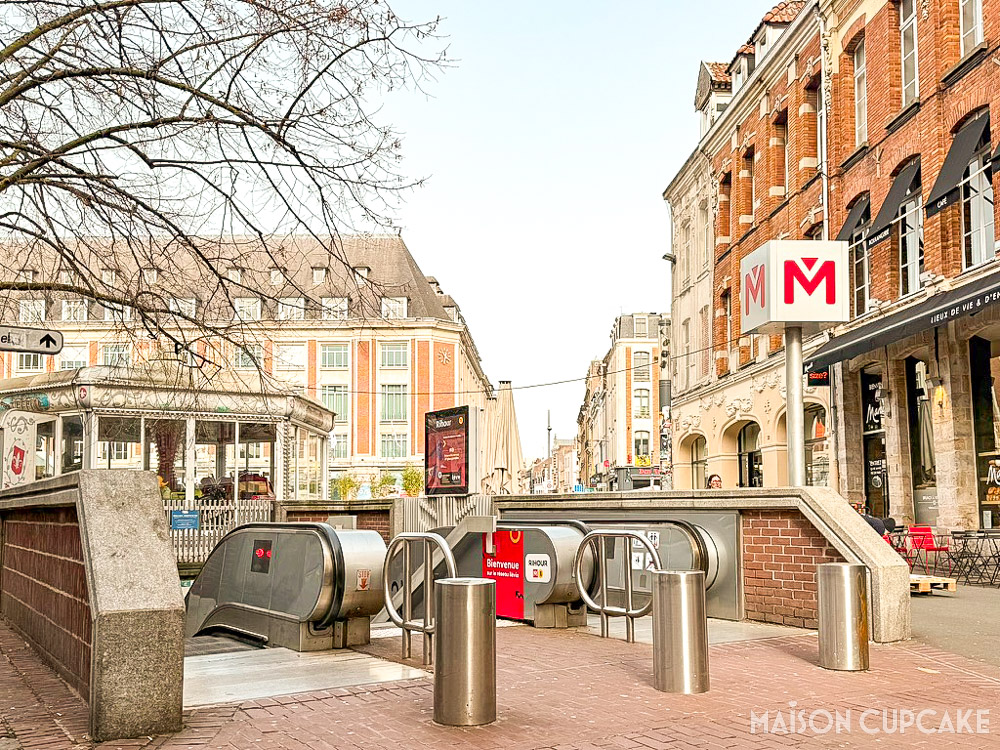
Lille has two underground metro lines intersecting at Lille Flandres and Porte des Posts. Services run every 4-5 minutes. Trains are much smaller than Paris or London although the network is less busy. Services run until late evening. Tap your card at the barriers to board – there’s no need to tap out.

In carriage display showing Lille metro lines

Whilst efficient for longer journeys, the metro isn’t terribly useful in central Lille as stops are far apart or journeys require changes at Lille Flandres. 

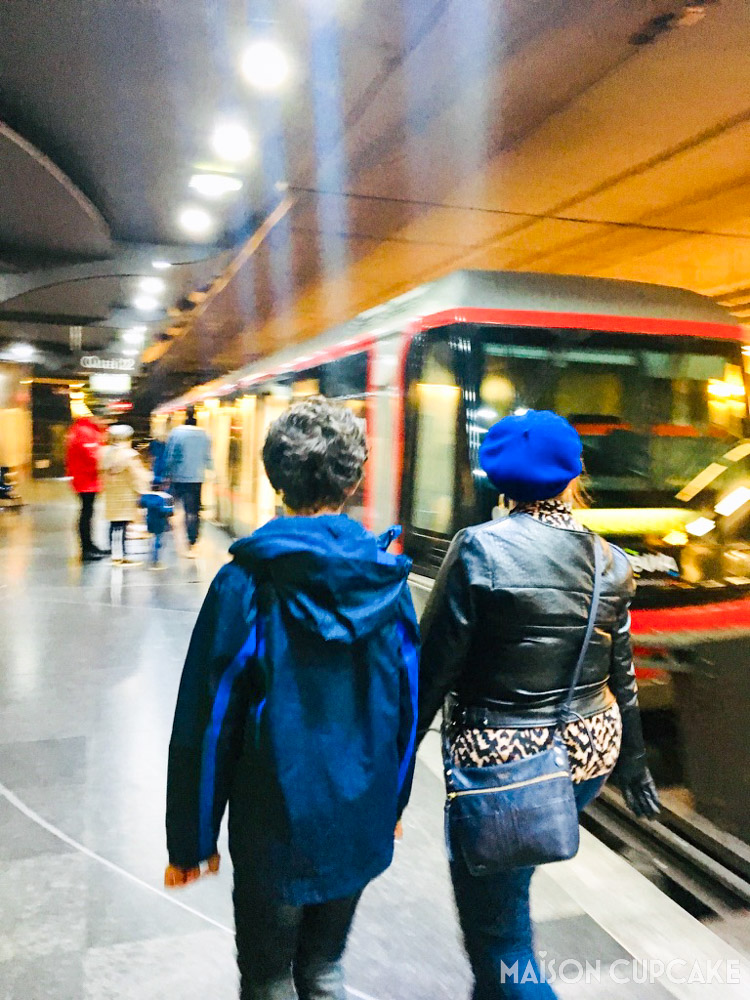
Lille metro platform with train and passengers

The Lille metro is useful but a bit grotty. Little changed since the 1970s, metro stations are shabby at best, downright filthy at worst. Lille transport stations are dark and dated, puddles and broken tiles are commonplace. 

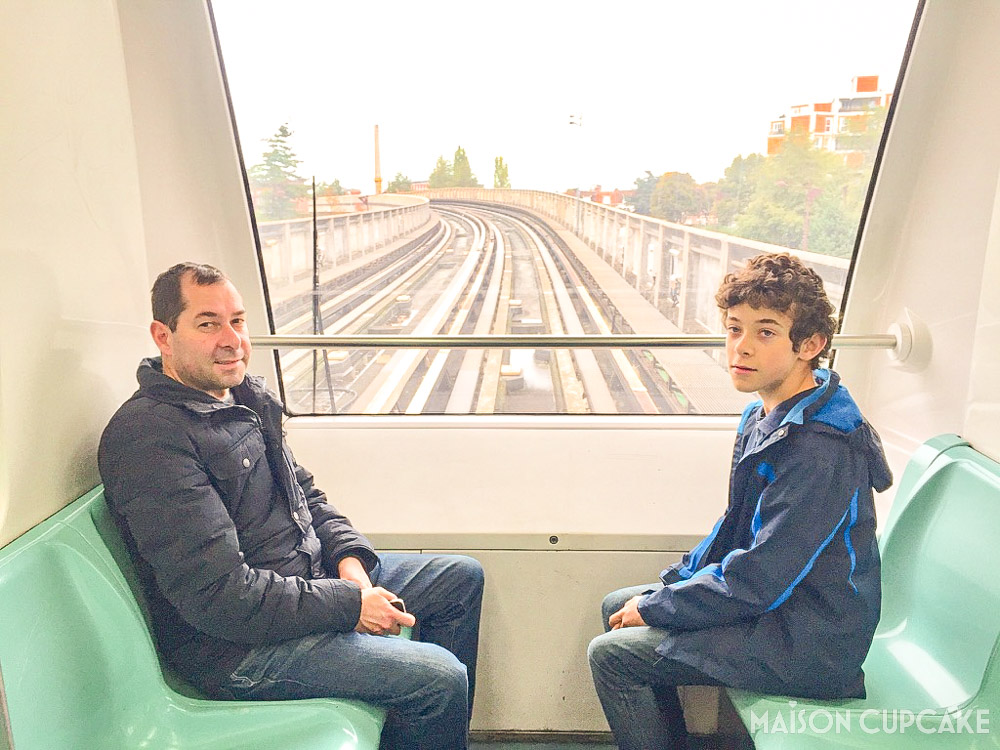
Father and Son riding Lille Metro at front of driverless carriage with view of rails

The carriages themselves are fine and the seats are, thank goodness, plastic instead of upholstered. Long promised renovations are stuck behind hoardings. Nevertheless, the Lille metro is fast, reasonably reliable and the driverless carriages mean kids love playing “driver”.

Using Lille’s Trams

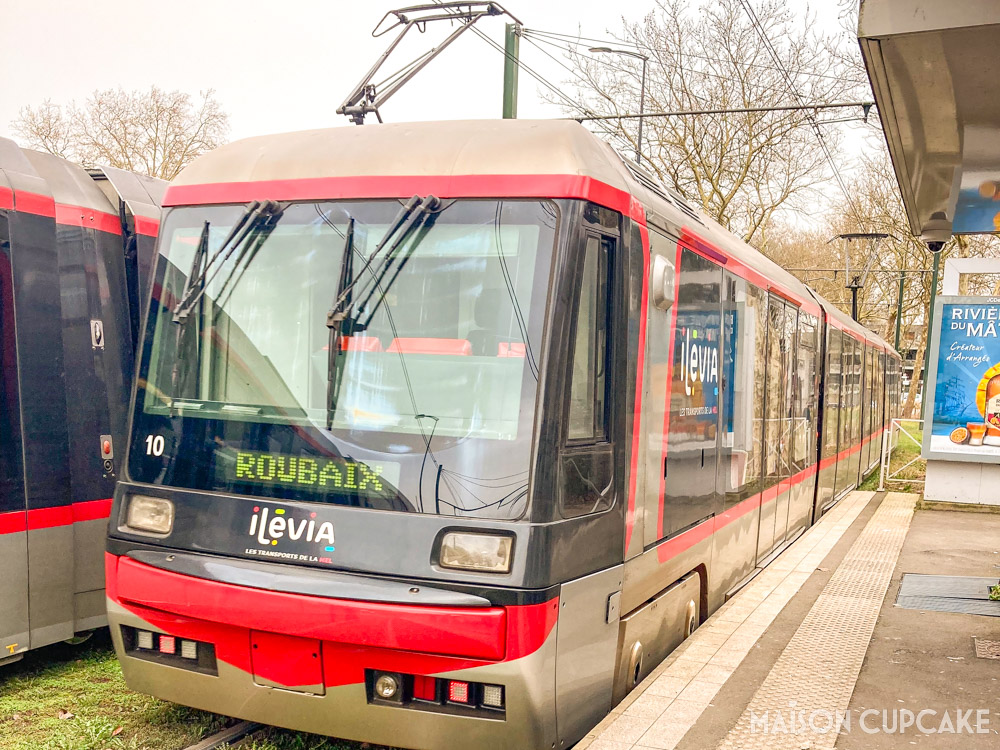
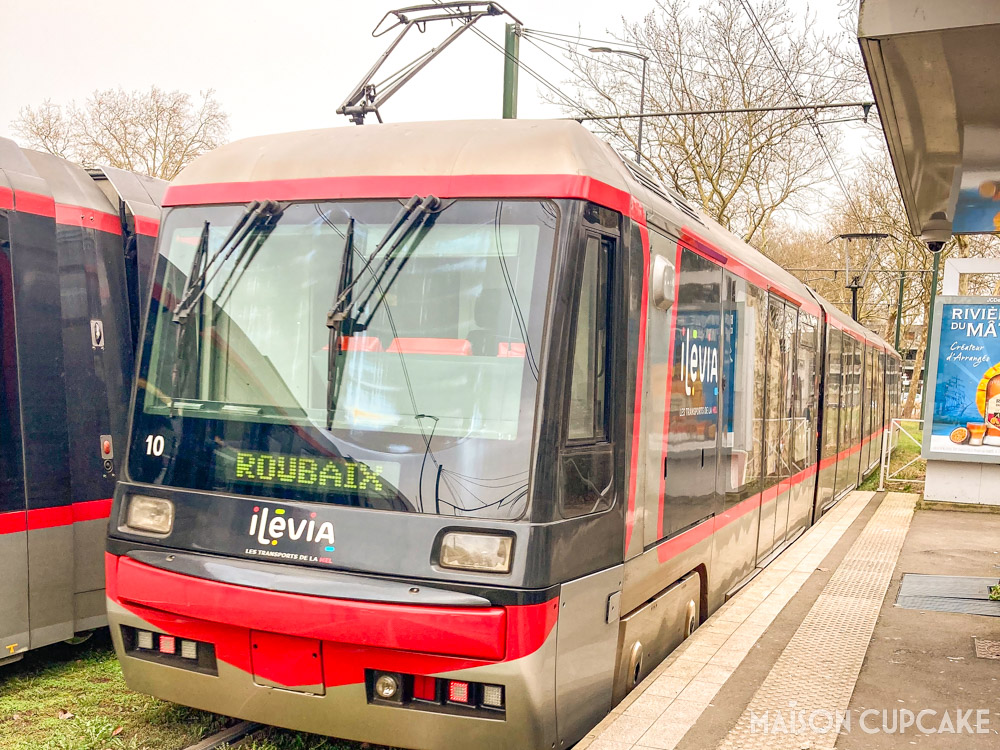
Tram to Roubaix - one of several forms of Lille transport

There are two tram lines going from Lille Flandres to Roubaix and Tourcoing. Services are around every 15 minutes although less often on Sundays. Tap your card on the terminal when boarding. The trams are more modern and cleaner than the metro. 

You won’t see the trams around the historic centre as they run underground into Lille Flandres. But most of the journey will be above ground – the Roubaix route follows an old boulevard with many early twentieth century villas along the way.

Using Lille’s Buses

Lille has a mix of “Navette” shuttle buses in the old town and long “bendy” buses reaching outlying areas. Simply tap your card when boarding. There are 140 routes including 12 “Lianes”, express routes with limited stops. 

Lille transport services are less frequent on Sundays. There is also one night bus route between the Pierre Mauroy stadium, the main centre and Douai.

For short-term visitors, buses are often less practical than the metro and trams as they tend to serve residential districts rather than link tourist attractions. 

That said, you’ll want a bus connection to reach LaM modern art museum in Villeneuve d’Ascq as it’s not near the metro or tram. I also wish buses went past the Zénith concert venue or Villa Cavrois but annoyingly they don’t and both involve some walking. 

Using SNCF Regional Rail

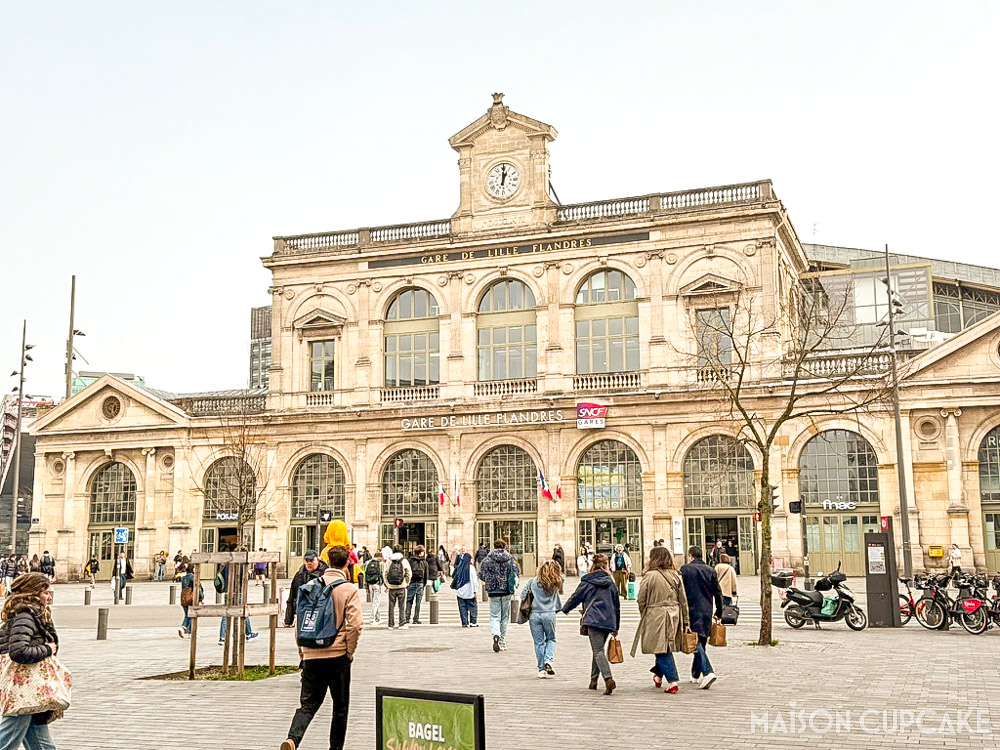
Lille Flanders SNCF station facade with pedestrians, France

Regional rail services leave from Lille Flandres SNCF station. From here you can get local TER trains to places such as Calais, Dunkerque or Courtrai over the Belgian border. Non-TGV trains to Paris leave from here instead of Lille Europe.

An easy way for UK visitors to buy train tickets in France can be via the Trainline app which works for many SNCF/TER routes but not all. If it sells tickets for your chosen route, you’ll receive a QR code for the inspector to scan onboard. 

You can also buy paper tickets from machines in the station. You need to validate these before boarding by stamping them at the orange “composter votre billet” machines on the station concourse or platform. 

Bike Hire in Lille

Bikes can be a handy form of Lille transport to get to places such as the Citadel, or for exploring Saint-Sauveur and Fives. Although there are a growing number of bike lanes, the cobbles in Vieux Lille will be bumpy. You don’t need to take your own bike, there are a couple of options for visitors.

iLévia Docking Bikes in Lille

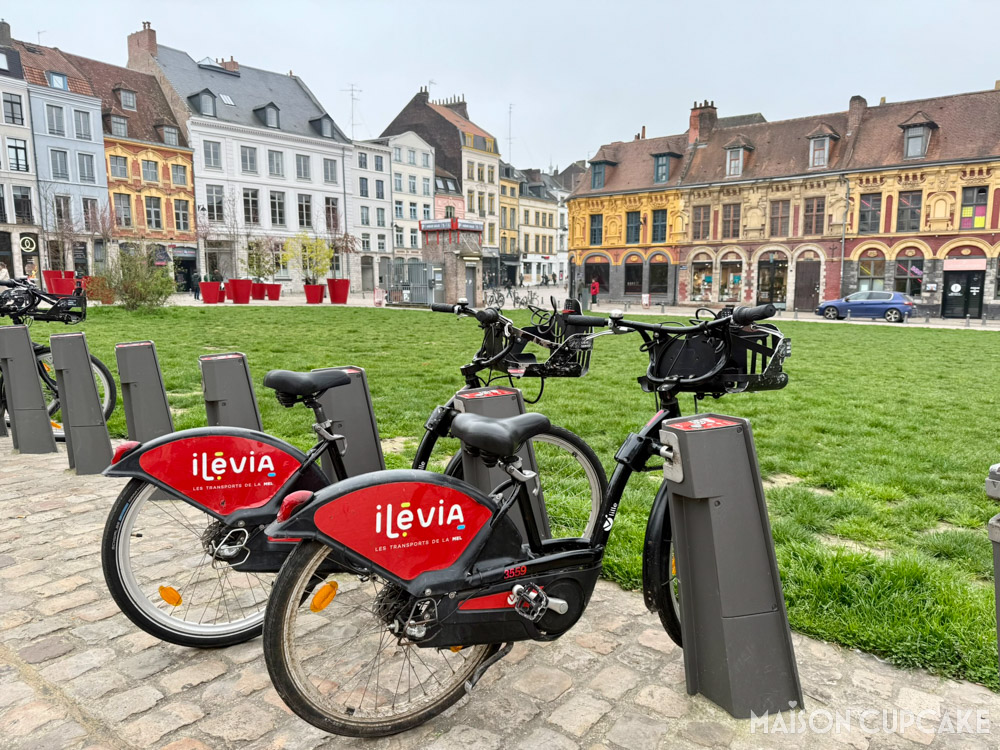
Velib hire bikes Lille France

There are at least 30 docking areas and 260 docking stations for V’lille bikes, also operated by iLévia, around central Lille. These are free for rides under 30 minutes or 1.85 euros per 24 hours. You need to be over 14 years old to ride and set up an account in the iLévia app. 

Lime Bikes in Lille

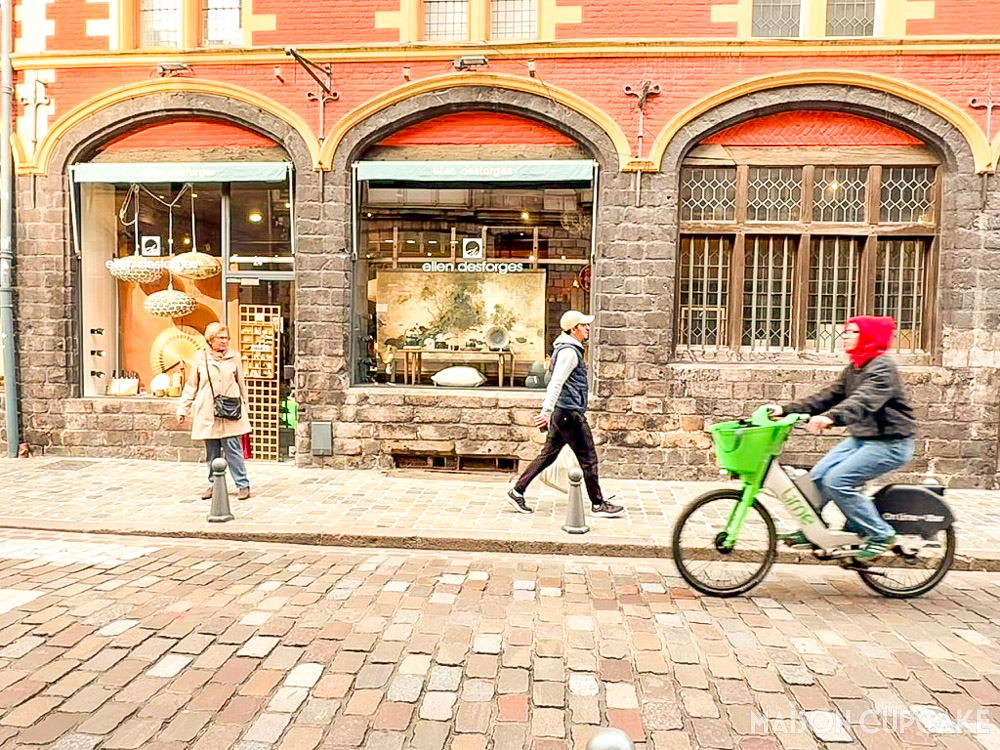
Lime bike seen in Lille old town, France

Lime e-bikes can be hired throughout Lille. There are dockless bikes but unlike some cities you can’t end your ride unless you’re inside a designated parking zone which keeps things tidier. I cannot comment how effective this is. You don’t need a separate French Lime account.

Tourist Transport Experiences in Lille

If you’d like to sightsee whilst someone else does the driving and navigating, Lille has several options available. All three of these tours leave from Palais Rihour.

Sightseeing City Tour By Bus

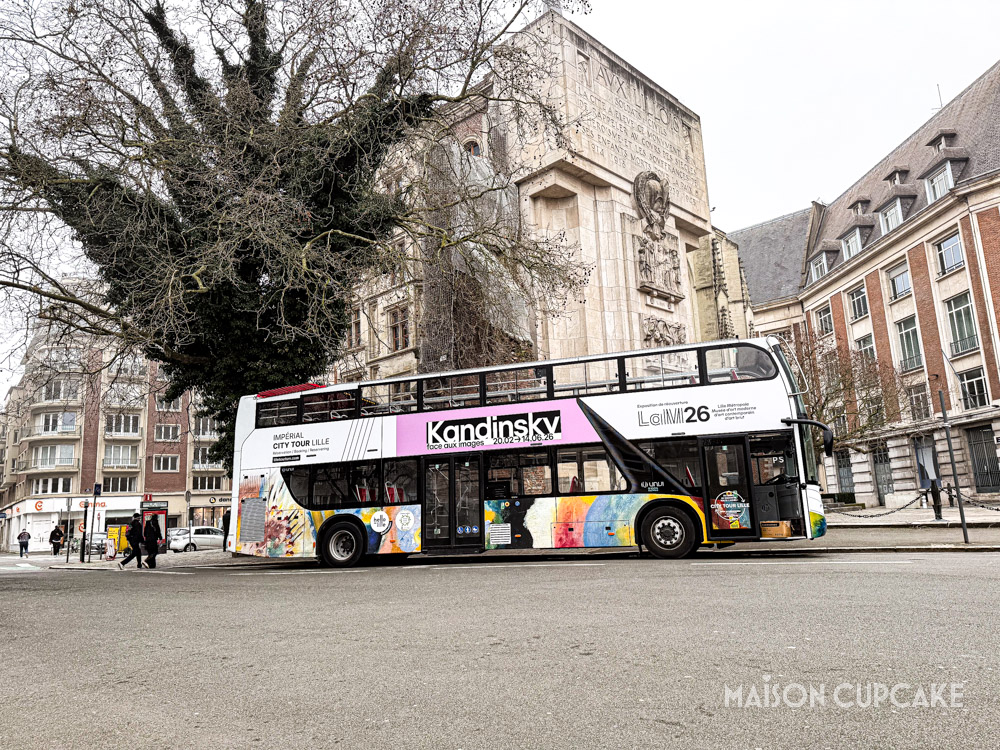
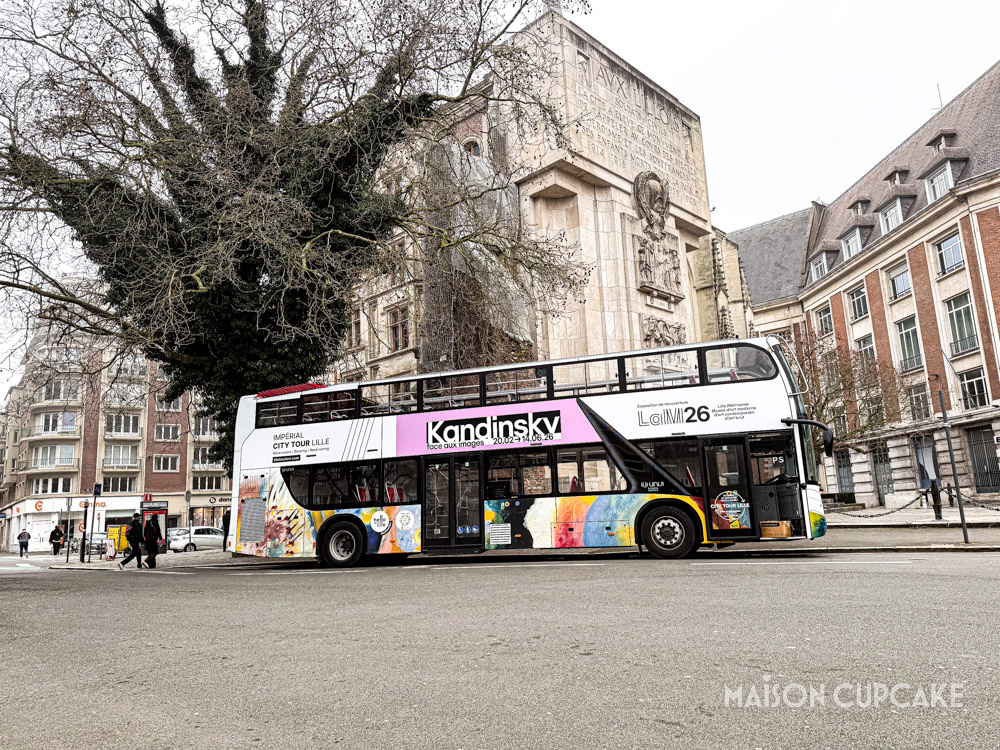
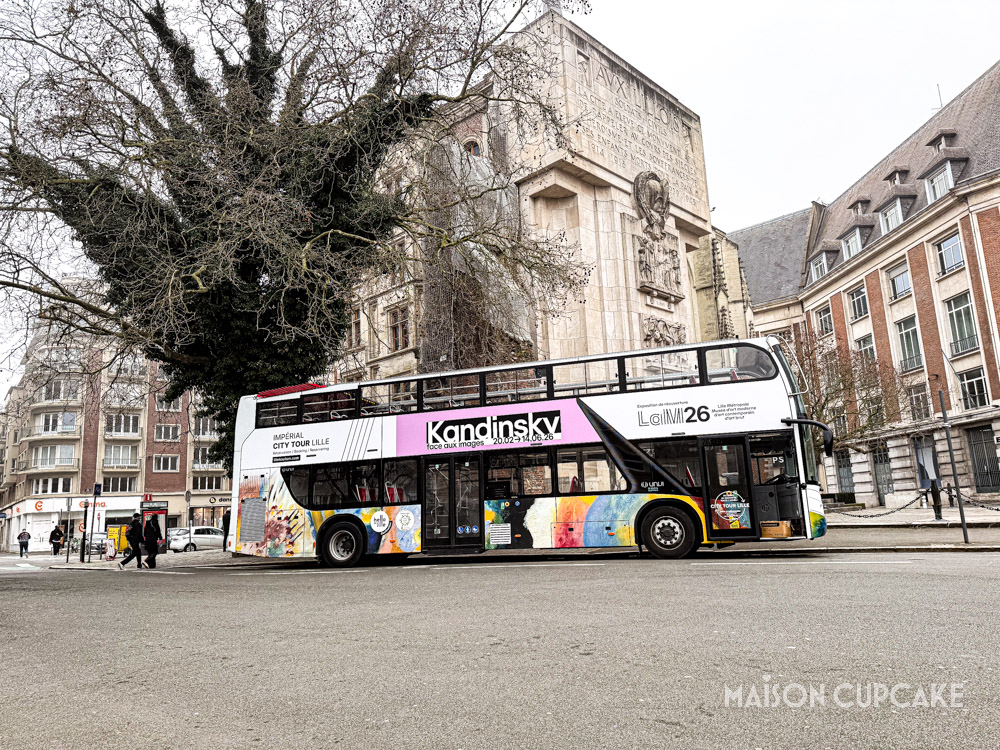
Guided Tour of Lille by Bus - open top double decker bus tour

The Impérial City Tour of Lille by bus lasts 75-90 minutes taking in key sights around the city centre with an audio tour. It runs twice daily and costs around 18 euros or comes included with the Lille City Pass.

Tradi’Balade Vintage Car Tours

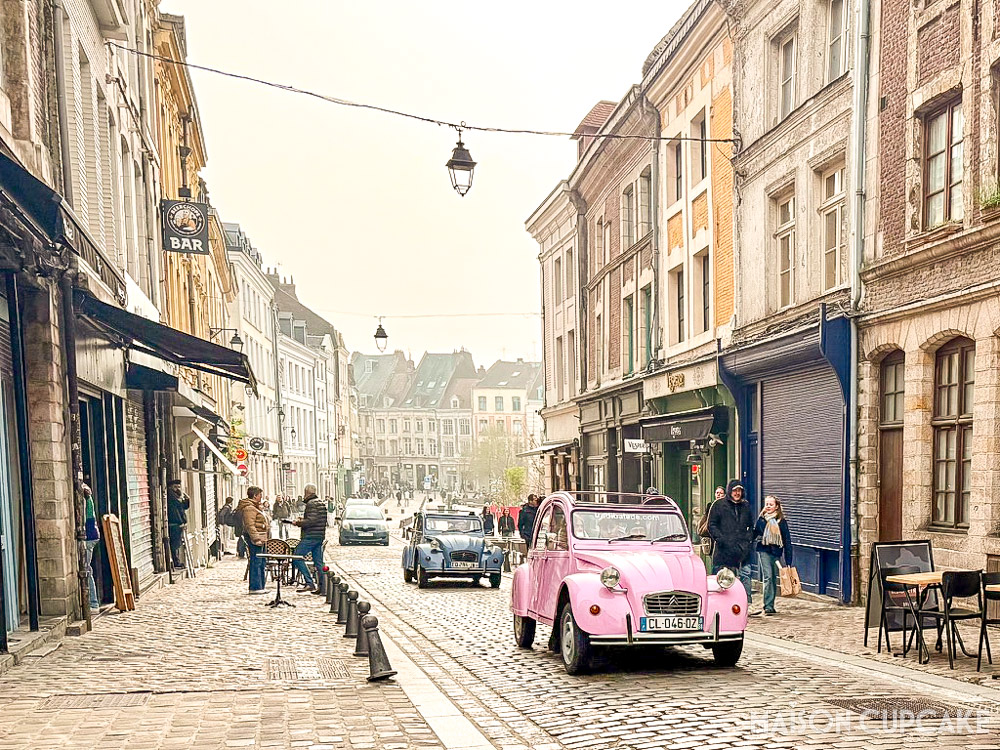
Citroën 2CVs Driving Tour around Vieux Lille France

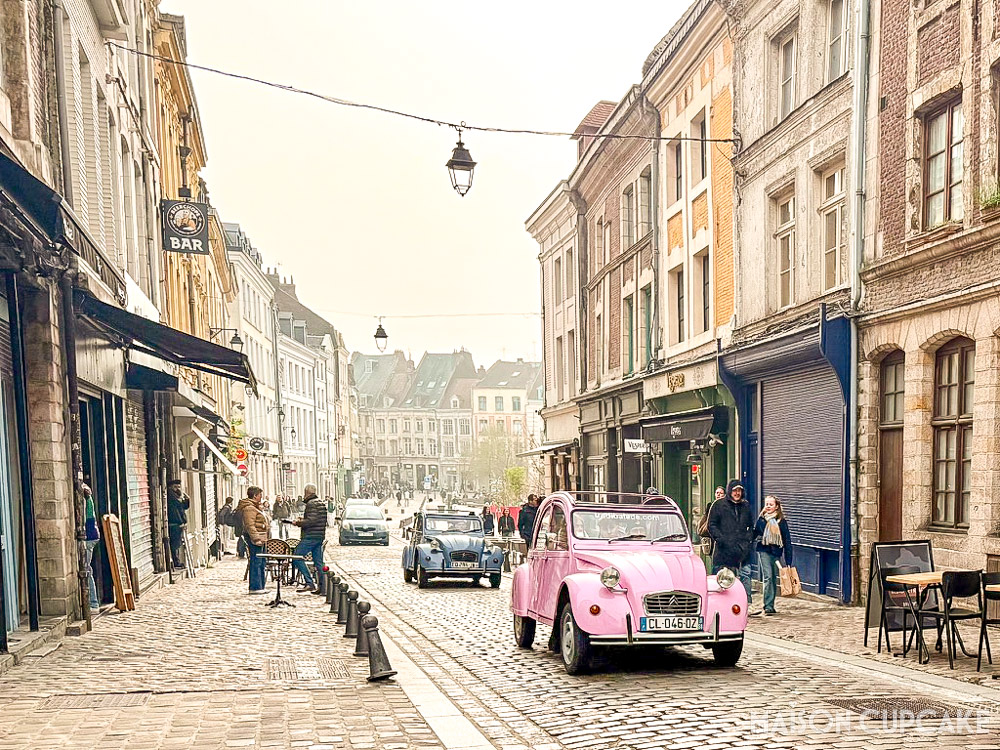
You can’t fail to notice the rallies of brightly coloured Citroën 2CVs zipping around the middle of Lille. Tradi’Balade offer a memorable way to see Lille in themed rides lasting 30-90 minutes. 

The price per person ranges from around 40-80 euros according to tour length and group size. You can combine the vintage car ride with activities such as food tastings or solving a mystery!

Happymoov Vélo-Taxi Rides

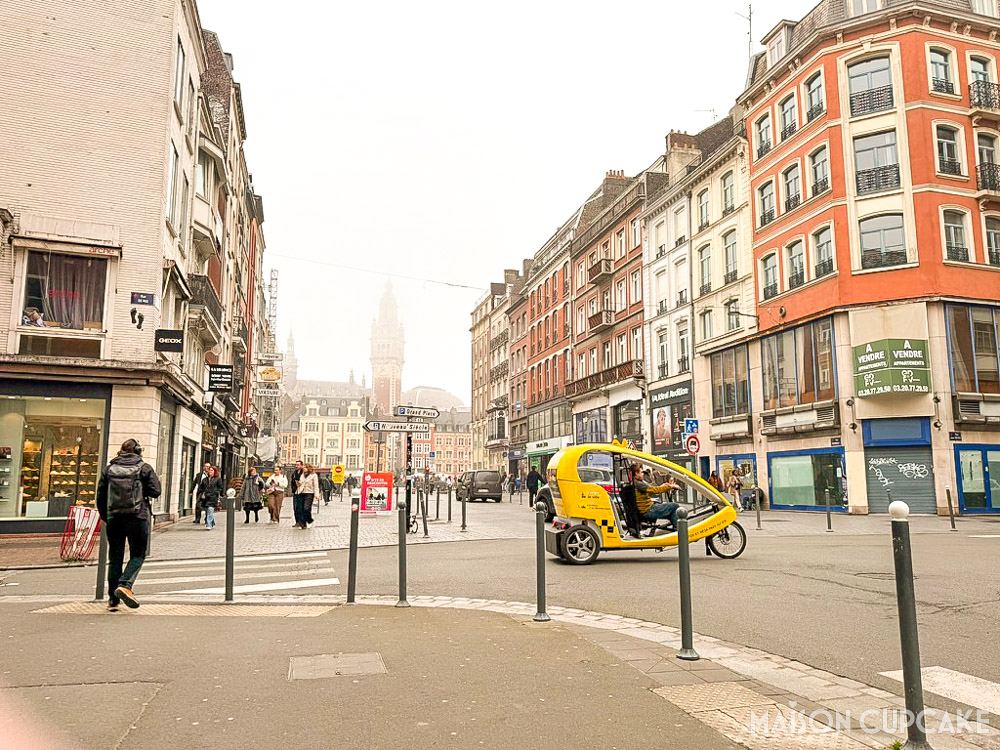
Yellow Lille tuk tuk vehicle, France

A novel form of Lille transport is a Happymoov Vélo-Taxi ride. Journeys around Lille are charged per vehicle not per person. Two people can enjoy the tours lasting one hour.  Pre-booking is recommended, cheaper online and essential on Sundays or public holidays. 

Don’t Forget Walking!

Shoppers walking in Vieux Lille cobbled street

Much of Lille’s historic centre is pedestrianised or low traffic areas, which often makes walking more practical than public transport. The narrow streets of Vieux Lille are filled with decorative buildings and perfect for taking your time to absorb details. Most attractions in central Lille are within 20 minutes’ walk of the Grand Place. 

If you spend your time around downtown Lille rather than visiting sites in Roubaix, Tourcoing or Villeneuve d’Ascq, you could see everything on foot if you don’t mind walking everywhere. Naturally there are plenty of French cafes to take a break.

Even a metro trip three stops away to Wazemmes would only take 30 minutes to walk back to the city centre. Long avenues in Lille are increasingly being landscaped with shrubs and cycle paths making them pleasant places to walk. 

  • If you are planning a visit to Lille you may save money on museums and Lille transport by using the Lille City Pass – read my honest review for real life costs and visitor tips.
  • Or see How To Spend Three Days In Lille by reading my detailed itinerary about our busy weekend including a day trip to Roubaix, various museums and Wazemmes Market. 
  • If you prefer a slower pace in a more natural setting, I have written about Things To Do In The Somme For A Relaxing Weekend. 

Have you visited Lille? How did you travel around on Lille transport? Let me know in the comments!

Originally published on Maison Cupcake
Is Lille City Pass Worth It? Honest Review With Savings Tips

The Lille City Pass can help you access the best galleries, museums and attractions. Lille and its surrounding towns are well connected and packed with things to do; culture, shopping, open spaces. It’s no surprise Lille is a hugely popular weekend break destination meriting repeat visits to enjoy its food, architecture and vibrant atmosphere.

This article will cover how the Lille City Pass works, who might get the most out of it, realistic itineraries and several examples of how you might save money.

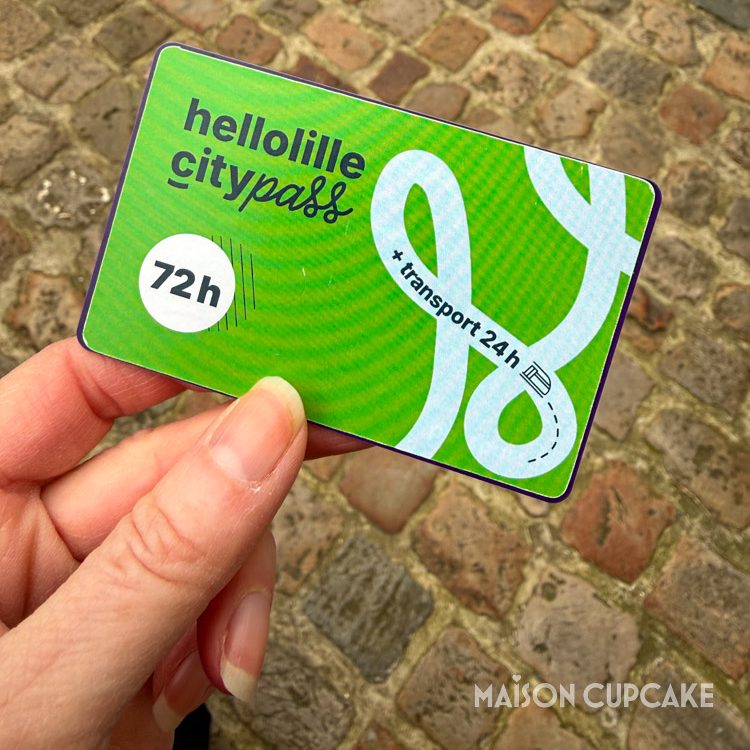
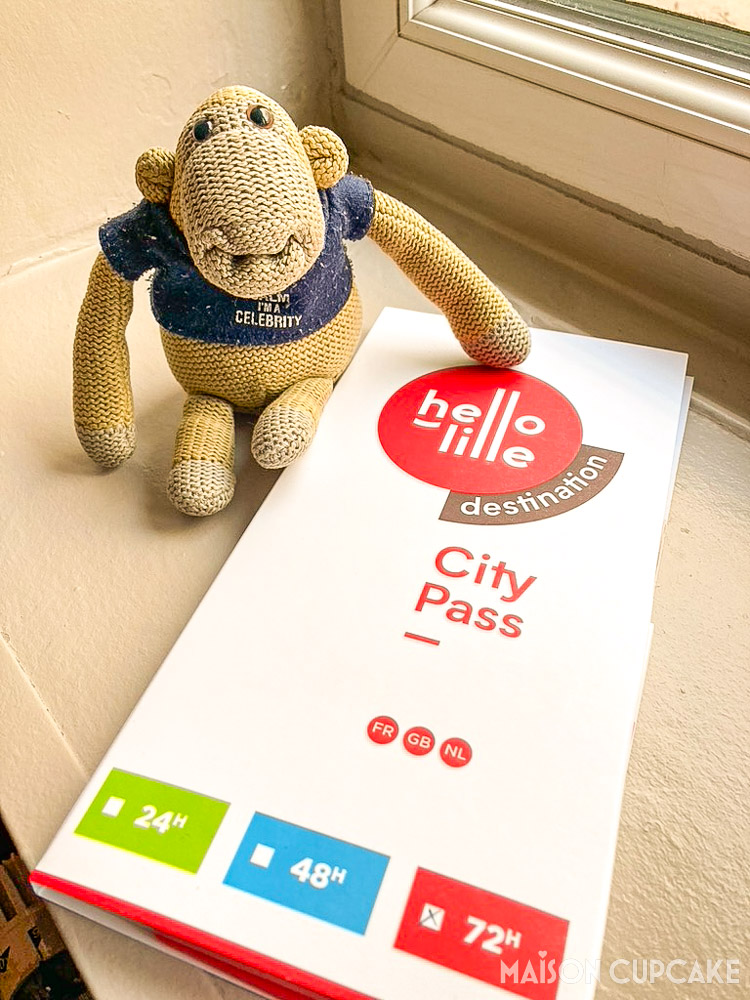
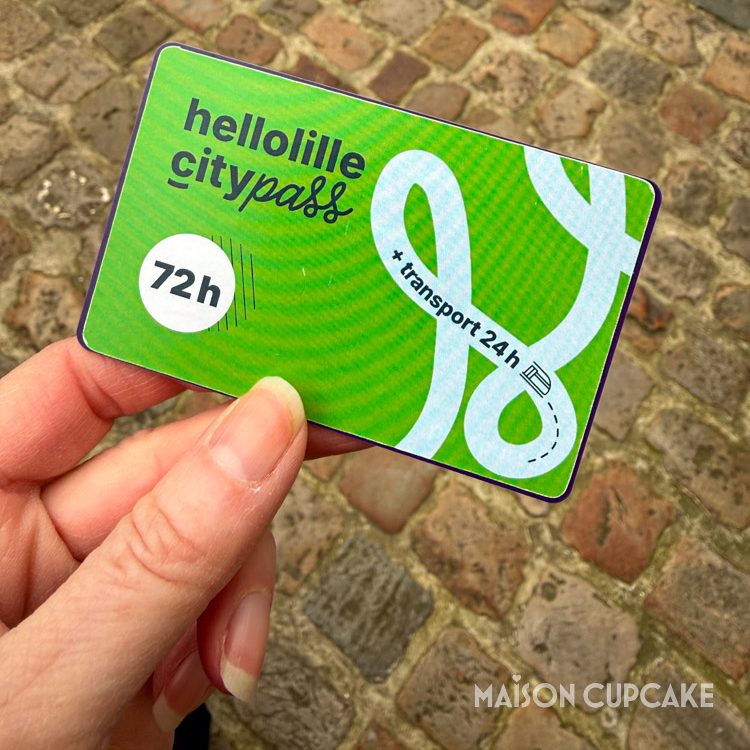
Hello Lille City Pass green plastic 72 hour card

Where to Buy Lille City Pass

Unlike similar city tourist passes i.e. Brussels, the Lille City Pass is a plastic card. The mobile app is only a directory, there isn’t a digital version of the pass as yet.

Ordering Online: You can order passes through the Hello Lille website, although 10 days’ processing time is cautioned to receive your pass by post. Once purchased, it’s valid for one year and your 24-72 hour window kicks in once you start using it.

Buying In Person: Face to face purchases of City Pass can be made at Lille’s tourist office in the Palais de Rihour and Rihour metro stop. Whilst the better option at the last minute, queuing and form filling (so French!) may eat into your morning. We had our passes within 15 minutes in early March but it may take longer in high season.

What Do You Get With Lille City Pass?

The Lille City Pass grants access to around twenty attractions and guided tours in the Lille Metropolitan area including Roubaix, Tourcoing and Villeneuve d’Ascq. Using the pass can save money compared to usual admission rates.

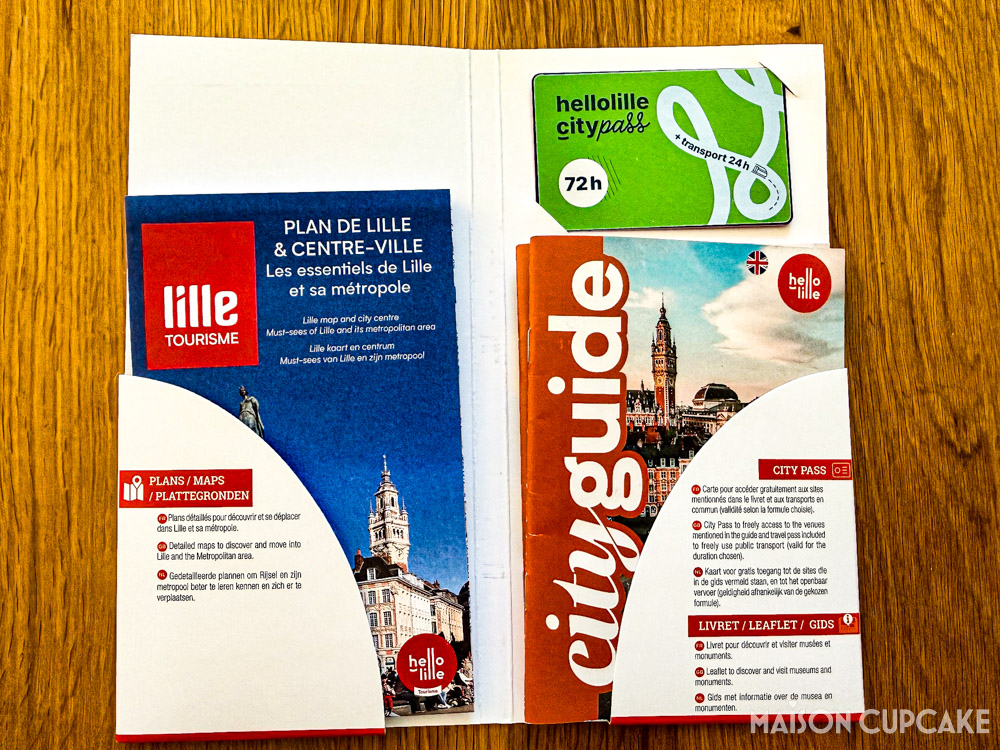
Lille City Pass Is Presented In A Slim Wallet With Map and City Guide

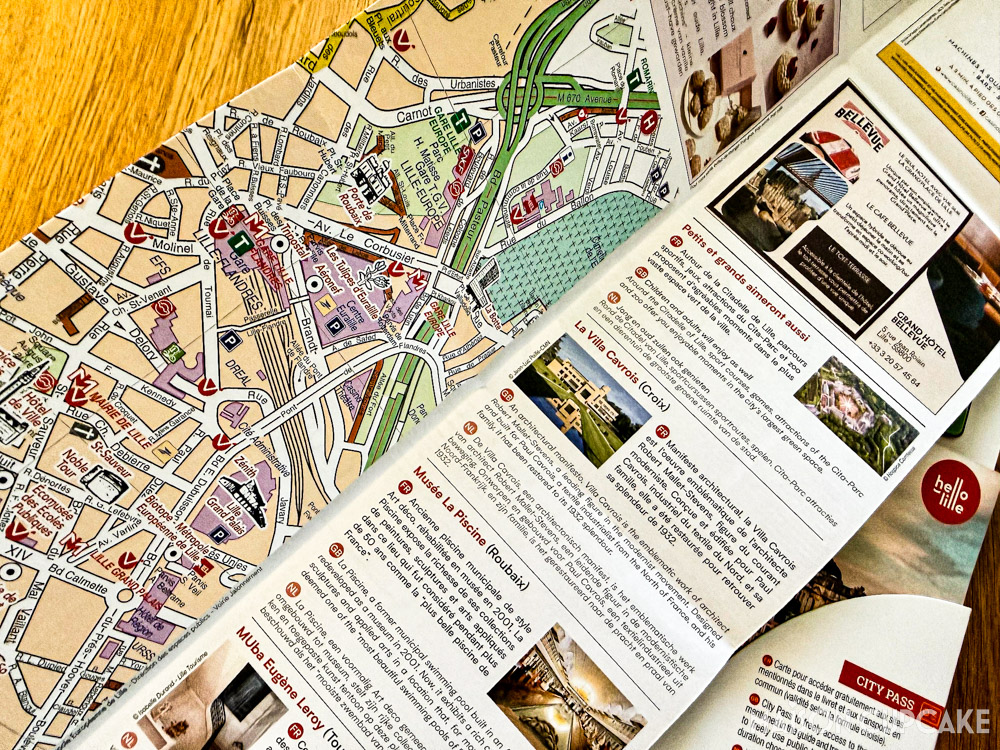
The pass itself is a credit card-sized ticket presented in a slim wallet with a city map and booklet summarising Lille’s heritage sites, parks, activities and shopping districts.

The City Guide booklet mixes attractions that are free with the pass, free to all anyway, or paid admission but aren’t covered by the pass – this can be a little confusing to unpick.

The packs are issued in English, Dutch or French as you wish.

What Does Lille City Pass Cost?

The rate per day gets cheaper depending whether you buy a 24, 48, or 72 hour pass. The 72 hour pass is most economical and you can easily fill an itinerary for Three Days In Lille.

In 2026, the cost was:

  • 24 hours – 25 euros
  • 48 hours – 35 euros
  • 72 hours – 45 euros

Is It Worth Adding Public Transport?

For 4 euros supplement, you can add 24 hours’ pass for Lille public transport – saving 1.50 euros on standard day pass rate. Single journeys would otherwise cost 1.80 euros. I have written about How To Get Around Lille in a detailed separate post covering public transport, bike hire and sightseeing tours.

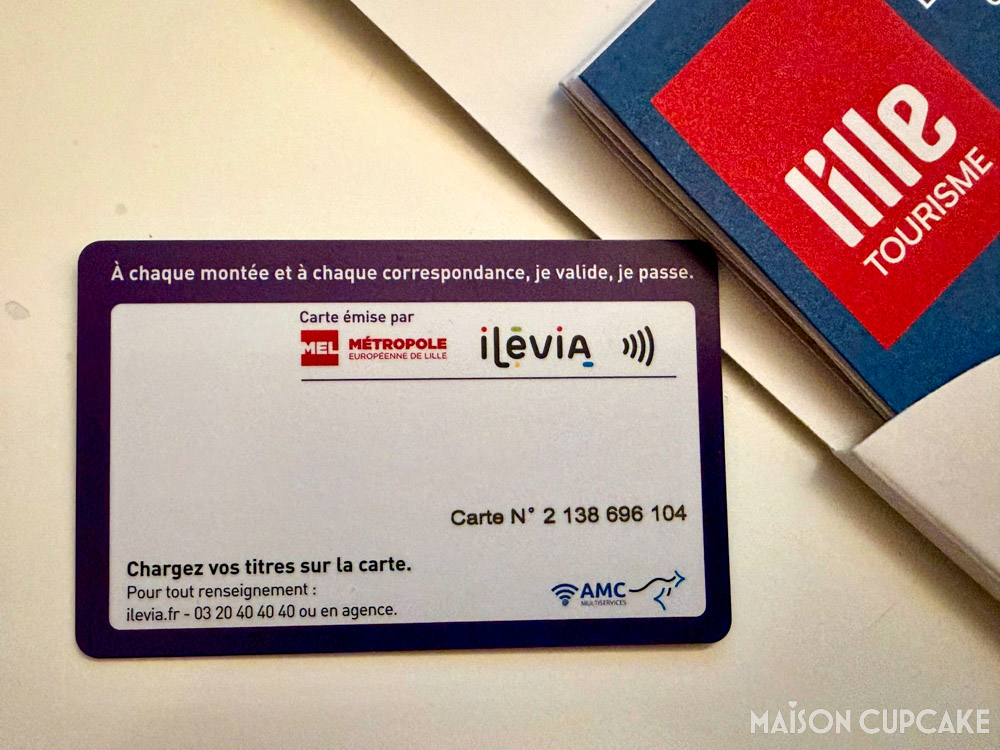
The rechargeable Ilévia network pass is physically glued to the back of your Lille City Pass. The 24 hours begins with your first journey so your transport pass may expire at a slightly different time to the City Pass itself.

Who Should Buy Lille City Pass?

The City Pass is Best For…

Museum Lovers: Culture Vultures will get plenty of value out of the Lille City Pass. There are around five large museums on the pass and a dozen smaller ones.

Guided Tour Fans: If you enjoy organised tours, the City Pass offers two types of bus tour and a walking tour of Vieux Lille.

If you are doing at least one organised tour plus at least one big museum, a City Pass makes sense.

The vast Musée des Beaux-Arts collection in Lille is often dubbed “The Little Louvre”

The City Pass Is Not As Good For…

Shoppers and Foodies: If you’ve come to Lille primarily to go shopping, eat lazy lunches or enjoy open spaces, you may not find time left to make the City Pass worthwhile.

Small Museums: Most smaller attractions cost under 8 euros. If you are visiting Lille for 1-2 days, and only visit a couple of cheaper attractions, you may not save money.

Which Attractions Are Included in Lille City Pass

Museums and Galleries – Large and Small

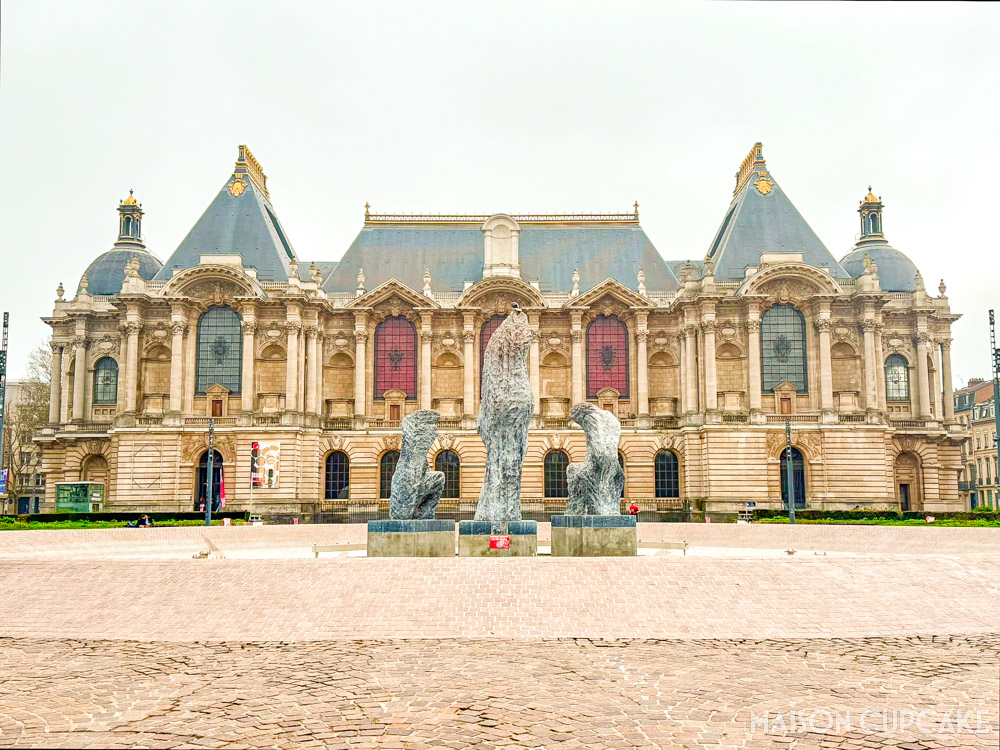
The City Pass gets you into over a dozen art galleries and museums although the biggest ones are quite far apart. The biggest (and highest cost) sites are:

  • Musée des Beaux-Arts in central Lille
  • La Piscine in Roubaix
  • Villa Cavrois on the way to Roubaix
  • LaM modern art museum in Villeneuve d’Ascq
  • Le MUba Eugène Leroy in Tourcoing
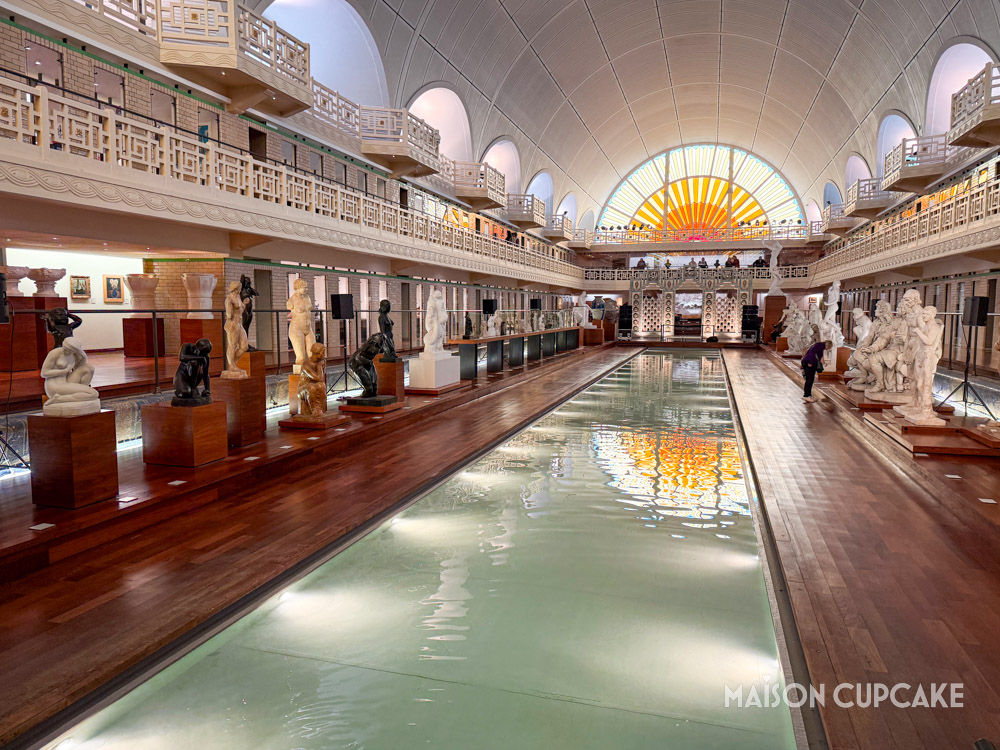
La Piscine art gallery at Roubaix
La Piscine gallery in Roubaix is one of several excellent museums you can visit with Lille city Pass

There are several smaller and cheaper sites, all walkable in central Lille:

  • Maison Natale Charles de Gaulle – outskirts of Vieux Lille
  • Musée de l’Hospice Comtesse – central Vieux Lille
  • L’Institut Pasteur – south east of central Lille
  • Le Beffroi – Belfry Tower, close to L’Institut Pasteur.

There are additional sites outside of central Lille. You’d never manage them all, even in 72 hours.

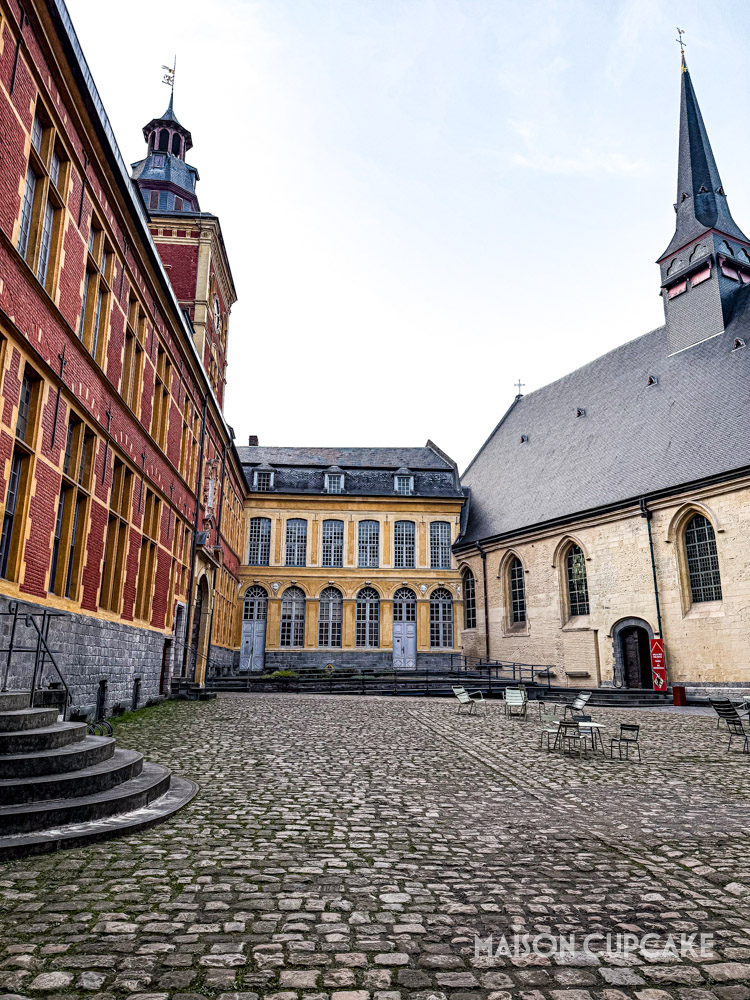
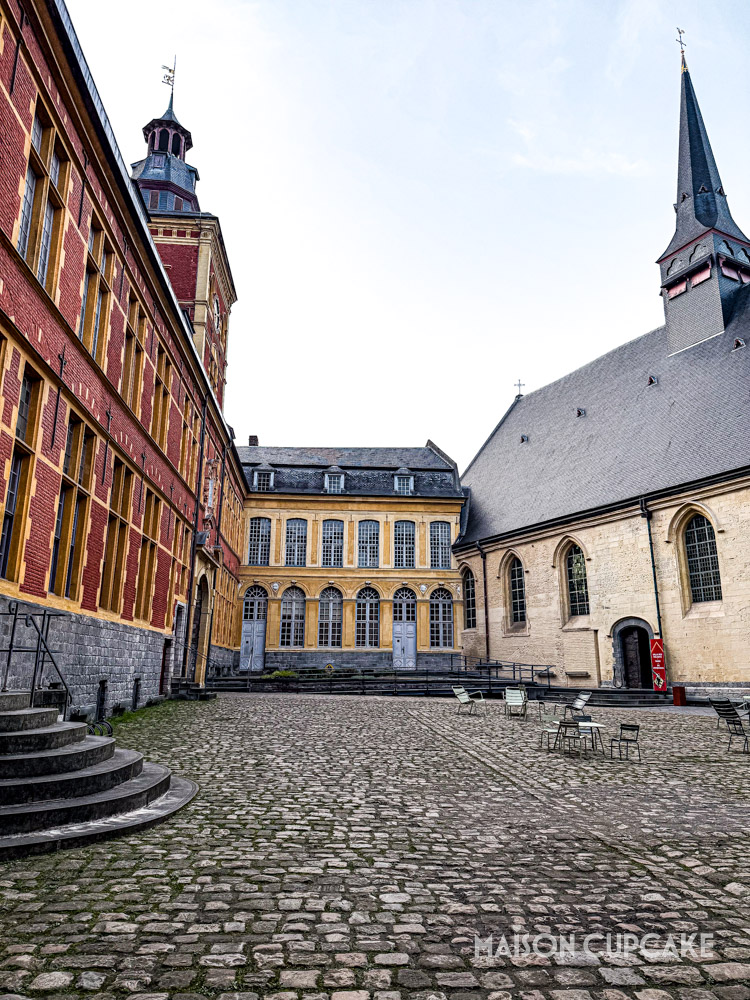
Lille Musée de l'Hospice Comtesse portrait shot of courtyard and decorative buildings
Musée de l’Hospice Comtesse, a former convent treating the sick now filled with Flemish artefacts.

Guided Tours of Lille

Lille Bus Tour: The bus tour circles the city centre for 75-90 minutes. Depending when you go, it runs 1-2 times daily and may be a single decker or open-top double decker. (There’s a cover if it rains).

The bus can be slow in traffic although it whizzes around bits of the ring road. It is good for new visitors getting their bearings or to reduce time walking. The audio guide is in several languages and informative if slightly corny.

Guided Tour of Lille by Bus - open top double decker bus tour
Lille’s City Bus Tour Has Audio Guides In Various Languages Including English

That said, the bus tour passed several places we’d missed on prior trips – such as Porte de Paris and the Quai du Wault. Being on the top deck offers a different vantage point.

Vieux Lille Walking Tours: There’s a 2 hour guided tour of Lille’s old town every afternoon. As my husband doesn’t speak French, we didn’t do this. A weekly English tour runs on Saturday mornings.

Public Transport in Lille

If your itinerary is due to include places such as Roubaix or Tourcoing, it is a no-brainer to add this to the pass. As you can read on my 3 days in Lille itinerary, we went to Villa Cavrois and La Piscine in Roubaix requiring public transport.

Which Attractions To Prioritise?

Best High Value Attractions

The most expensive items accessible with the City Pass are:

  • Bus tour (18 euros)
  • Walking tour (11-12 euros)
  • LaM modern art museum (9-11 euros)
  • Villa Cavrois (11 euros)
  • La Piscine (11 euros)

Most other things, even the rich fine art collection at Lille’s Musée des Beaux-Arts, cost around 6-8 euros.

Villa Cavrois modernist house now museum in Lille, France
Villa Cavrois -a Modernist marvel in Roubaix

Roubaix offers several attractions close together (Villa Cavrois, La Manufacture, La Piscine) however Villa Cavrois is nearly 30 minutes’ walk from a tram that only runs every 15 minutes. La Piscine and La Manufacture each involve 15 minute walks in opposite directions from the metro or tramline. You will clock up a high step count reaching all of these.

The Lille Bus Tour is easiest on the feet. That said, it only runs twice daily and there’s not a hop on/hop off option. A pity, as it reaches areas that merit exploring on foot.

A Few Lille Visitor’s Tips:

  • Account for Travel Time: Several attractions are 45 minutes on public transport from central Lille; some require bus connections or long walks beyond metro and tram stops. How much you can fit in depends on your start location and appetite for early starts/long days.
  • Sunday transport timetables: We noticed public transport connections were far less frequent on Sundays – for instance if travelling to LaM in Villeneuve d’Ascq. You don’t want to spent vital pass time waiting for buses do you?
  • Lunchtime Closures: The bigger sites tend to stay open all day; some smaller ones shut for lunch. Check opening hours carefully to maximise your time.
  • The Belfry: Lets you book slots for the first hour of the day only. After that you queue and have to wait for people to leave until you can go up.
Lille City Pass can include access to buses, trams and the metro.

Our Real Life Itinerary Using 72 Hour Lille City Pass

We paid 49 euros each for our 72 hour passes including 24 hours’ public transport. We thought we’d done well getting 65 euros’ worth of benefits thus saving 16 euros per person. Although I’ve since considered there were potential savings of up to 50 euros each if we’d really maxed our savings to the full.

This is what we spent during my Lille 3 Days Itinerary using City Pass:

Day 1 (with transport pass)
18 euros – Bus Tour
5.5 euros – 24 hours’ public transport
11 euros – Villa Cavrois, Roubaix
11 euros – La Piscine, Roubaix
Day 2
8 euros – Maison Natale Charles de Gaulle
7 euros – Musée de l’Hospice Comtesse
Day 3
7.5 euros – Lille Belfry Tower
7 euros – Musée des Beaux-Arts

Standard Costs Per Person: 65 euros
City Pass Cost with Transport: 49 euros

Amount Saved Per Person: 16 euros
Potential Savings Per Person: 50 euros – as explained below

How To Get Even More Value From City Pass

Had we organised our time slightly differently we might also have squeezed in an extra museum per day:

  • Day 1 : La Manufacture textile factory museum at Roubaix (6 euros) before La Piscine (which was open later that day);
  • Day 2: Vieux Lille walking tour (11 euros) if we’d taken a shorter lunch;
  • Day 3: Louis Pasteur Museum (6 euros) instead of visiting Wazemmes market.
  • Day 4: LaM or MUba Eugène Leroy before 72 hours ran out at 11am
  • These changes would have increased our savings to 50 euros per person.
Lille City Pass includes a map and guide to main attractions.

Also, we didn’t start using our 72 hour pass until 11am, and we could have still used it until 10.59am on the fourth day. For instance you might start with a bus tour at 11am on day one then finish with one of the bigger museums entering before 11am on the final day. This could stretch the time-value of your City Pass by several hours.

Nor did we maximise our 24 hours’ transport access – we effectively skipped half a day’s valid access until lunchtime as our last journey was taken the evening before.

More Suggested Itineraries For Lille City Pass

Best Lille Itinerary For Maximum Savings

72 hours with public transport option: Make sure you do at least one tour and tick off any three of the big museums and a couple of smaller ones. As explained above you can potentially save 15-50 euros. See the list above or my 3 Days in Lille post.

An Itinerary in Central Lille

24 hours but no public transport option: Do the bus tour in the morning, Maison Natale Charles de Gaulle over lunchtime, the walking tour at 3pm then Musée de l’Hospice Comtesse before it closes. You’ll pay 25 euros for 44 euros’ worth within easy walking distance plus any other gains made first thing next day – booking an early slot for the Belfry Tower is a good option or try the Pasteur Museum on opening.

Itineraries Using Lille Public Transport

24 hours with public transport option: Use the pass to visit multiple bigger ticket attractions such as Villa Cavrois / La Manufacture / La Piscine in Roubaix with public transport. You’ll save around 4 euros on day one but could still manage to enter one more big museum before the 24 hours expires – Musée des Beaux-Arts or LaM would bump the savings up to 15 euros and keep you busy until at least lunchtime.

Lille trams run regular services to Roubaix and Tourcoing.

Other Ways to Save Money Without Lille City Pass

The City Pass isn’t the only way to save money on Lille museum admissions. The rates mentioned are standard adult entry but it’s often cheaper for students or adults under 26 who qualify for lower rates or even free entry. Further ways to save money without buying the pass are:

  • Combined Ticket to Villa Cavrois / La Piscine (saves 2 euros)
  • La Piscine is free for late opening 6-8pm on Fridays
  • Pre-booking online can shave a couple of euros off some entry costs
  • LaM at Villeneuve d’Ascq grants 2 euros off to validated transport pass holders
  • Some museums are free on first Sunday of the month

What’s Not Included In Lille City Pass

  • Lille’s Cathedral Crypt
  • Tours of Lille Opera House
  • Le Musée d’Illusion (opposite Euralille)
  • Inside The Citadel (pre-booked with official guide only)
  • Science Museum and Planetarium (Villeneuve d’Ascq)
  • Lille Natural History Museum (currently closed for refurbishment – is normally big-ticket attraction included on the pass)
  • Lille Zoo
  • Maison Verte (art nouveau house in Roubaix)

Other Tours and Activities Not Included

Quirky driving tours of Lille in Citroën 2CVs Are Not Included With The City Pass.

The constantly visible Citroën 2CV tours zipping around the city in bright vintage cars are booked separately for around 70 euros. The Hello Lille Tourism website lets you book a number of organised activities such as guided visits to Fives écoquartier or Palais Rameau as well as a variety of food or drink related tastings geared around beer, chocolate and more.

Lille also hosts a multitude of festivals throughout the year which would add colour to your visit outside of the City Pass. These are mostly ticketed but some such as September’s Lille Braderie antiques fair or watching the Paris-Roubaix bike race are free.

My Honest Verdict on Lille City Pass

The City Pass really only works if you commit to multiple museums and activities. In theory our 16 euros saving was potentially only 7 euros – because our visit coincided with the free Friday late entry at La Piscine and a random free entry at Musée des Beaux-Arts.

Yet, as I outlined above, we could have saved up to 50 euros. Whilst theoretically possible, it’s hard even for enthusiastic museum-goers to keep up that kind of pace. Prioritising doing only activities on the pass distracts from simply soaking up Lille’s atmosphere.

Apart from pre-booked early belfry tower visits, nothing is open before 10am. Apart from Friday lates at La Piscine, last entries to museums are around 5pm. Given how far apart attractions can be, and opening windows, big savings are possible but hard work.

That said, the City Pass encouraged us to see places we may have passed over; we were nudged to visit a lot in 72 hours and it was memorable doing so. You should definitely do the Lille City Pass once and definitely visit Lille again regardless.

Our City Pass definitely saved us some money on day one and overall, but it was borderline whether we saved money on days two and three. In fact on day three and the final hours of the 72 hour pass, we didn’t save anything, although this wasn’t the fault of the pass, rather our choices.

And although I’ve been to Roubaix several times, I’ve not yet been to Villeneuve d’Ascq or Tourcoing, each of which have plenty to do. I guess I may end up buying another 72 hour pass after all!

What To Read Next

Have you visited any of these attractions in Lille? Did you use the City Pass? How do you think it compares with other tourist passes? Share your experiences in the comments below.

Originally published on Maison Cupcake
How to Spend 3 Days in Lille: Culture, Shopping & Food – An Honest Travel Report

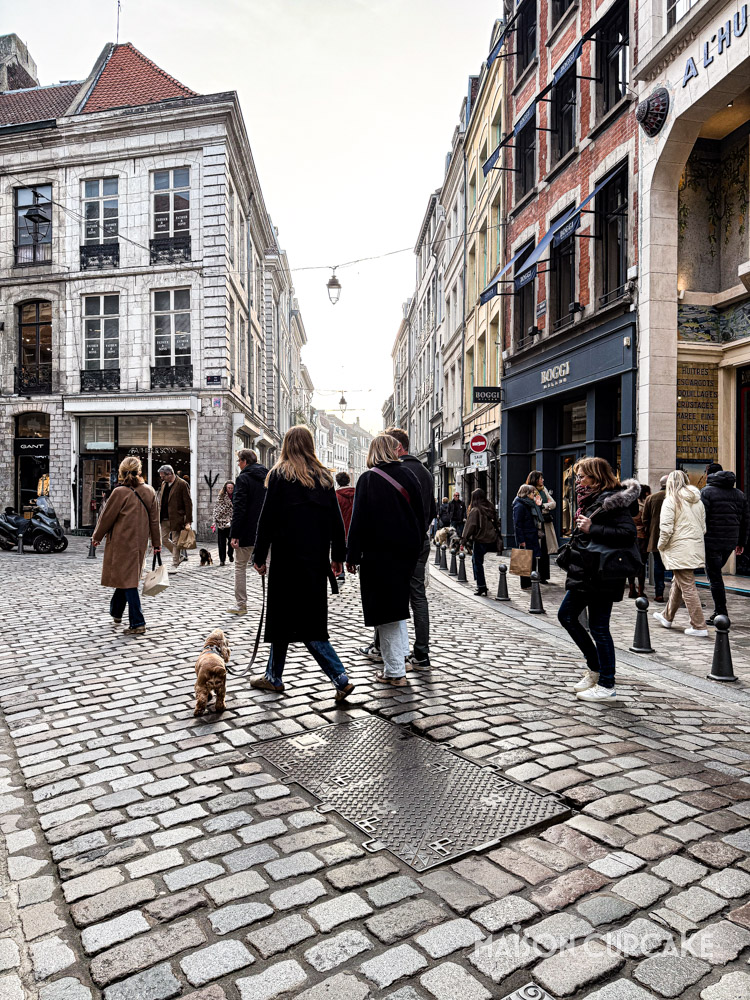
3 days in Lille: Women walking dogs along a sunlit cobbled street in Vieux Lille
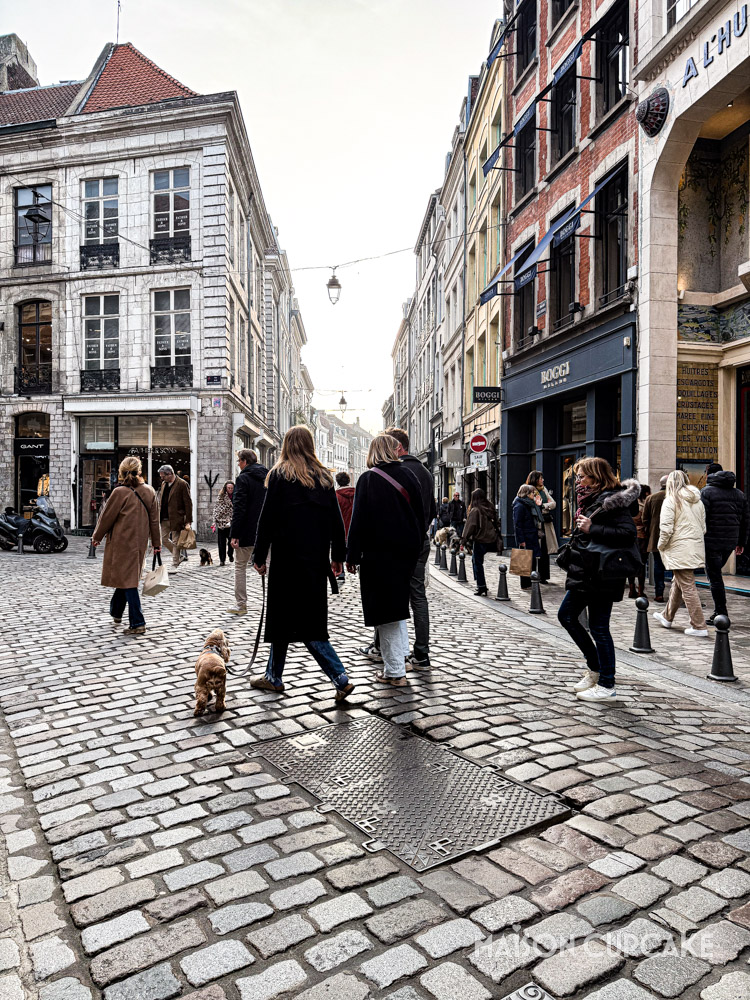
Saturday afternoon shoppers on a cobbled street in Vieux Lille

Planning 3 days in Lille or a long weekend in Lille? Here’s how we packed a long weekend exploring museums, food and charming cobbled streets. I return regularly for French pop concerts – the reason for this latest Eurostar trip from London – but Vieux Lille‘s lively atmosphere would entice me back anyway.

Our busy three-day itinerary featured a city bus tour, heritage sites and art in Roubaix, museums in Vieux Lille, the vibrant Wazemmes market and panoramic views from the Belfry tower.

This is an honest report on what is achievable during a three day Lille trip on a fixed budget, rather than listing expensive or impractical activities you won’t fit into a weekend break.

Our Budget for 3 Days in Lille (2 People)

Before diving into our 3-day Lille itinerary, here’s the budget for our trip for two people:

  • Travel: £69 return per person – Eurostar London to Lille during the Eurostar Flash Sale (£138 total)
  • Hotel: £90 per night including breakfast – double room at Ibis Styles Lille Grand Place (£270 total)
  • 72-hour Lille Citypass: £42.60 per person including 24-hour public transport (£85.40 total)
  • Restaurants and snacks: £240 for two people over three days
  • Total: £623.40 (excluding concert tickets)

For a long weekend in a walkable European city with great museums, interesting shops and food, we thought Lille was fantastic value in 2026.

Just 90 minutes’ journey on Eurostar makes Lille a perfect weekend getaway; after clocking off work we arrived at Lille Europe station by 10pm local time. Our hotel near the Opera House was close enough to walk to from the Eurostar.

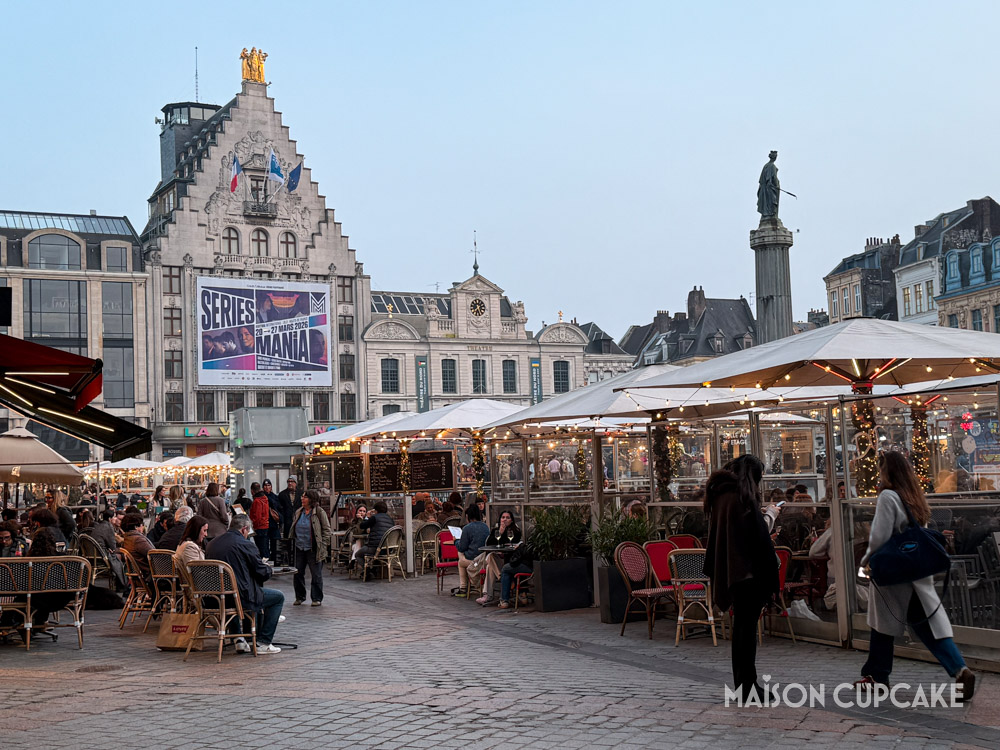
3 days in Lille: Cafes in the Grand Place, Lille at dusk.
Grand Place in Lille, with its cafes and historic monuments

As it was not too late, we immediately headed out for an evening stroll around Lille’s handsome Grand Place, more formally known as Place du Général-de-Gaulle, after France’s famous President.

Seeing the stepped gabled roofs and decorative Flemish facades, hearing cars slowly rumble across the cobbles (although much of the centre is pedestrianised) in front of lively cafes – and you know you’ve arrived in Lille.

Day 1: Lille Citypass, Roubaix and a concert

Lille City Pass card held over cobbled street in Lille

On Friday morning, the first of our 3 days in Lille, we bought the 72 hour Hello Lille Citypass which includes public transport for the first 24 hours. Lille has two underground metro lines and two tramlines reaching to the suburbs – although the city centre is easily walkable.

Lille tourist passes are available for 24, 48 or 72 hours in Lille; you can order them online but picking up in person was easy at Lille tourist office. I have written a fuller review our using Lille City Pass including savings made.

Lille City Bus Tour

Double decker sightseeing bus parked beside Palais Rihour in central Lille.
The Lille Imperial City Tour bus at Palais du Rihour.

Having bought our tourist passes, we boarded Lille’s city bus tour which departs daily (except Monday) from the tourist office and passes the main sights alongside audio commentary.

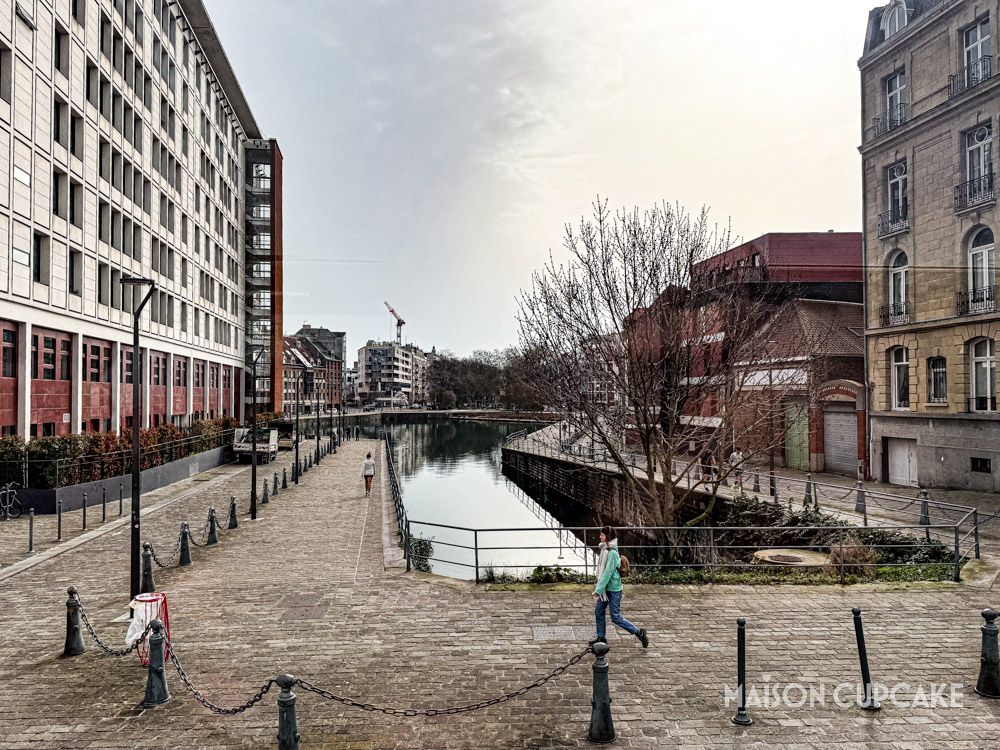
Quai du Wault waterway in Lille with historic buildings and cobbles.
The picturesque Quai de Wault as seen on the Lille city bus tour.

The 75 minute tour passed sights farther from the centre we’d not yet seen; Quai de Wault, the Porte de Paris monument and Gare Saint Saveur cultural centre.

We saw Lille from a different angle on the open top deck; audio commentary on local history and architecture enhanced our knowledge of the city.

Afterwards, for quick sandwiches we went to KAF, opposite main transport hub Lille Flandres station, before boarding a tram towards Roubaix – where our evening concert would be.

Villa Cavrois: Modernist Architectural Monument

Modernist exterior of Villa Cavrois designed by Robert Mallet-Stevens.
Villa Cavrois in Roubaix: one of the most striking examples of modernist architecture in northern France.

We got off halfway to Roubaix: Villa Cavrois is twenty minutes’ walk from the tramway and lies in a well-heeled suburb of large privet hedged houses. A 1930s architectural marvel, designed by Robert Mallet-Stevens, the yellow bricked mansion had fallen into disrepair before being saved by the French government as a national monument. Allow 2 hours to visit.

Visitors reflected in mirrored interior at Villa Cavrois
The sleek interiors of Villa Cavrois have undergone full refurbishment.

The villa’s custom-designed modernist furnishings were sold decades ago; gradually some pieces are being bought back when they’re up for auction. The estate was photographed by period design magazines, allowing painstaking accuracy in recreating fixtures, fittings and the garden.

In the bunker-like basement, materials salvaged from the dilapidated site are displayed; bakelite light switches, rusty metal bath feet, parquet flooring. A short film depicts the scale of the ongoing project. There’s a great gift shop selling design books but sadly no cafe.

La Piscine Museum at Roubaix

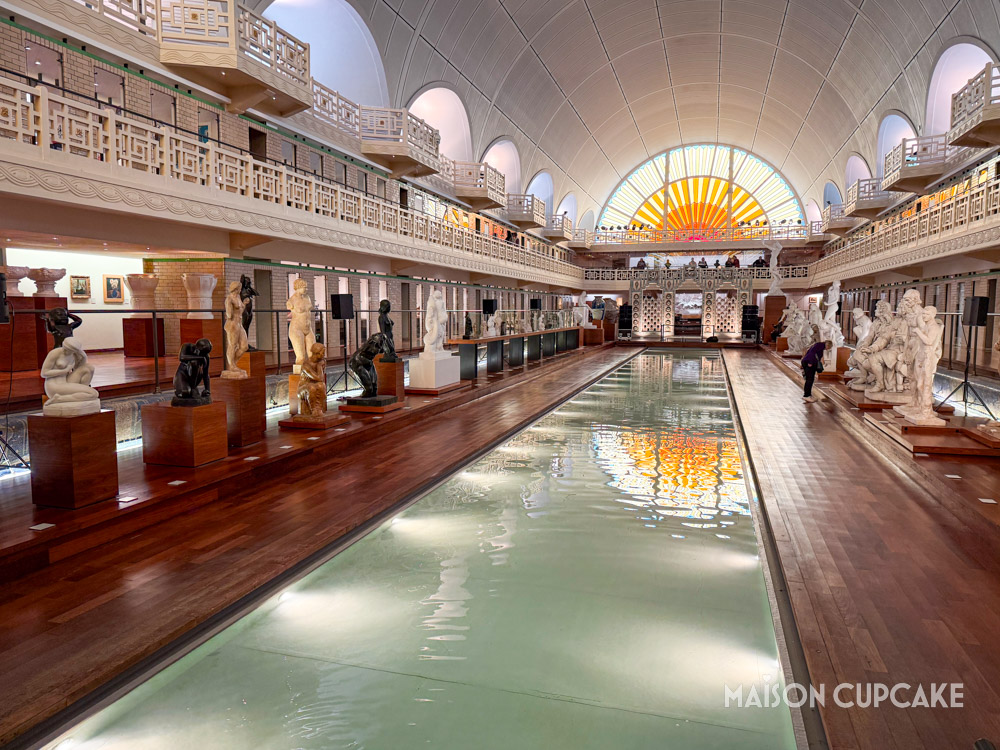
Artworks displayed inside Roubaix's former swimming pool, now La Piscine Museum.
La Piscine museum in Roubaix, a beautifully converted Art Deco swimming pool.

Flagging, we rejoined the tram to La Piscine Musée d’Art et Industrie in Roubaix. Annoyingly, a press reception that evening meant the museum cafe there had closed early.

Nevertheless, the stunning re-worked Art Deco swimming pool interior made us forget our caffeine deprivation (if not our aching feet). Shimmering water reflects light from the sunrise feature windows and tiled vintage cubicles, once changing rooms, are now display cases.

The impressive collection of sculptures, ceramics and paintings is almost upstaged; being late in the day, we were overwhelmed. La Piscine at Roubaix may be my favourite gallery space ever; a memorable visit well worth a day trip from Lille.

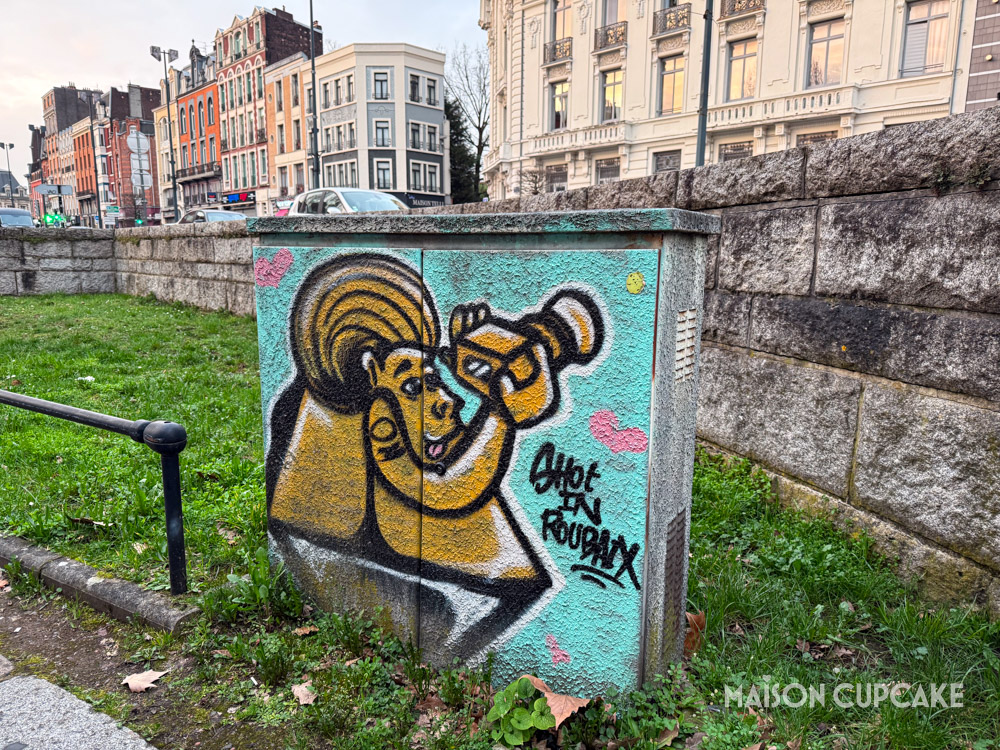
Street art in Roubaix: a cartoon character with camera is captioned "Shot in Roubaix"
Roubaix has a gritty industrial past but plenty of character.

A post-industrial suburb, Roubaix punches above its weight with things to do, including two further museums and two big outlet shopping malls. The gritty urban setting – Roubaix is twinned with Bradford – contrasts with Vieux Lille’s more obvious tourist appeal.

Pop Concert at Roubaix Collisée

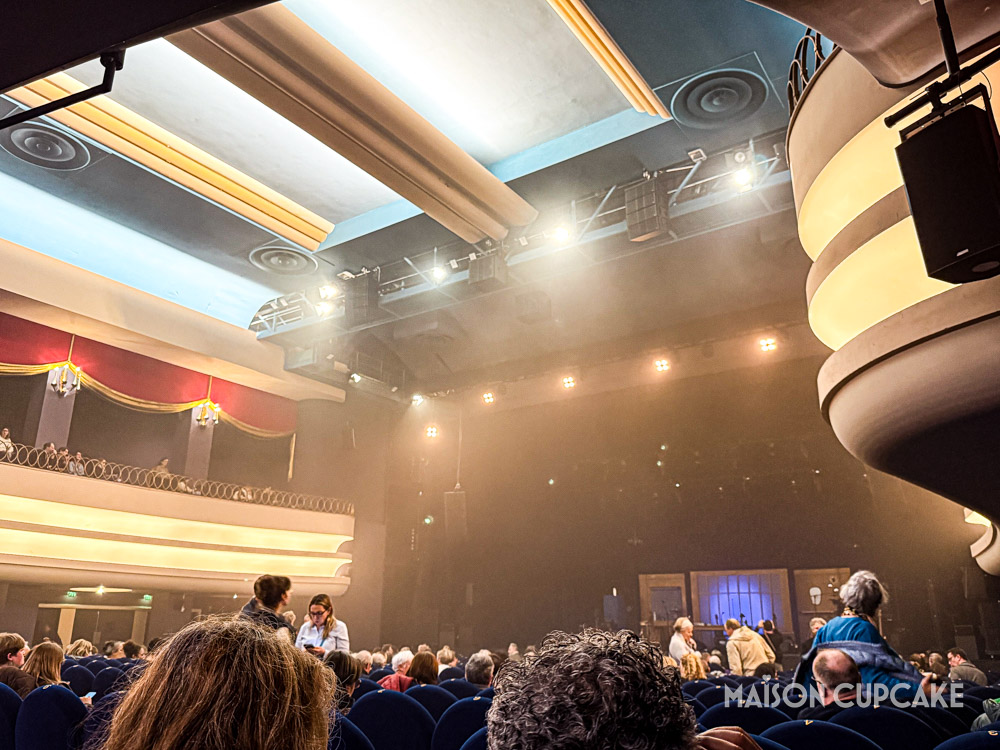
Art Deco auditorium interior of Colisée Roubaix
We ended our day with a concert at Roubaix Colisée, an Art Deco theatre

Evening approached and we sought food near Roubaix Collisée (another Art Deco gem). In a Muslim neighbourhood, the many food businesses were not yet serving as it was Ramadan. We found a friendly Japanese restaurant near the SNCF station called Happy Sushi; it was the first time we’d sat down since 1pm.

Our long day was catching up with us and once seated for our Benjamin Biolay concert, I could only muster energy for this single picture of the decorative ceiling. As a French music fan, I was thrilled to learn that the mighty Jacques Brel gave his two final farewell shows at Roubaix Collisée – most fitting, as he was Belgian-Flemish.

Ibis Styles Lille Grand Place

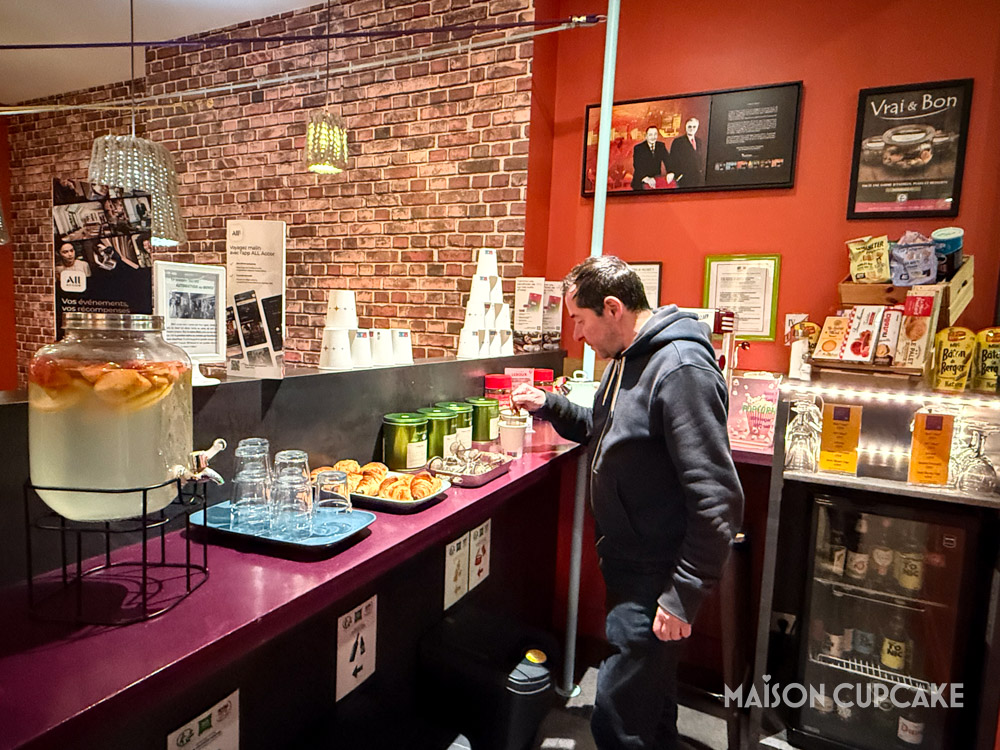
Hotel guest making himself herbal tea at self serve drinks counter in Ibis Styles Lille Grand Place hotel's colourful lobby.
Serving ourselves refreshments at Ibis Styles Lille Grand Place

It was my second stay at Ibis Styles Lille Grand Place. Although a chain, it feels independent with the original incarnation open since the 1920s. Rooms are simple but functional; a sound budget option in a central location.

There are personal touches such as a self-serve drinks area and board games in the bright lobby. At breakfast, staff offer freshly squeezed orange juice and homemade waffles.

My husband was delighted not to forgo his night-time herbal tea – he’s happily brewing it at the drinks station in the photo here.

Day 2: Exploring Vieux Lille, Museums and Local Food

On Saturday we had a more relaxed day exploring Vieux Lille on foot. The streets closest to the Grand Place and Opera House are densely packed with shops; but the old town is considerably larger spreading beyond this busy zone with quieter residential streets and old houses.

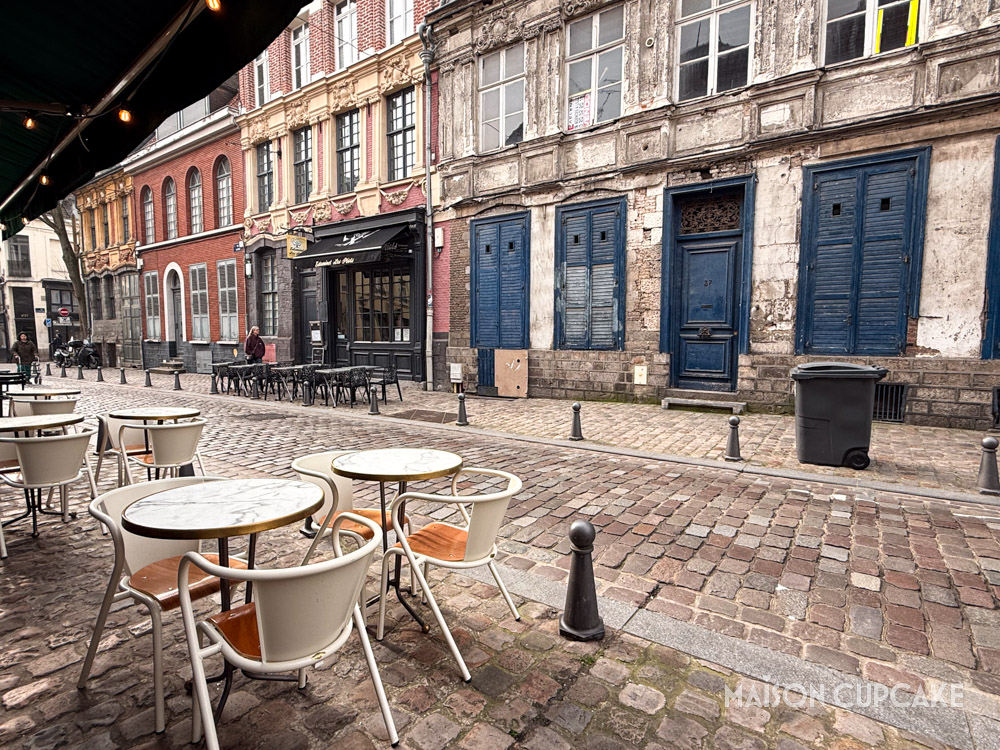
Vieux Lille’s narrow streets have lanterns strung across roads rather than conventional street lamps. Combined with cobbled streets and decorative stonework on many buildings, Lille is visually arresting without feeling like an over-touristed chocolate box.

Being close to the Belgian border, the architecture feels distinctively Flemish rather than typically French – a big contrast to Paris.

Quiet cobbled street in Vieux Lille with mix of peeling facades and bright brickwork.
Wandering the atmospheric cobbled streets of Vieux Lille.

Heading further out than our previous visits, we were charmed that Lille’s old town had retained its character. Although quiet, we didn’t get the impression it had morphed into an empty shell of AirBnB monoculture.

Lille still seems to strike a balance of supporting tourism and lively hospitality without turning itself into a circus or becoming a ghost town off-season.

Visiting the Charles de Gaulle Museum in Lille

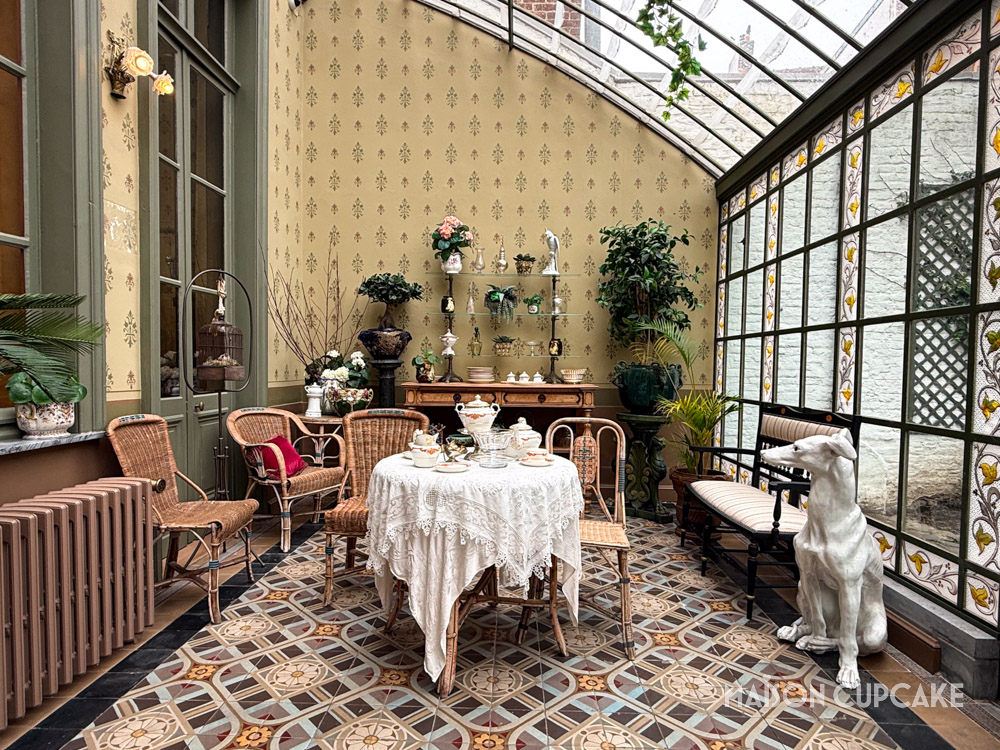
Glass conservatory inside Maison Natale Charles de Gaulle
The conservatory at Maison Natale Charles de Gaulle in Vieux Lille.

On the northern edge of the old town lies the childhood home of former French president Charles de Gaulle, now a museum. Rather than offering dry political history, it’s an endearing period restoration of the de Gaulle family home filled with lovely French antiques.

Visitor numbers are controlled so we had a short wait to get in. The family were clearly devout Catholics: each room entrance has holy water wells and crucifixes. There’s even a small praying room with a kneeler and devotional statues.

I especially loved the vintage kitchenalia and Farrow and Ball-like arsenic green painted scullery with hanging pheasants. Upstairs there’s a laundry room with faded old hat boxes.

Allow 45 minutes inside and stick to the tour route because the friendly, albeit with military efficiency, staff prevent roaming freely. A separate wing houses a display about de Gaulle’s political timeline.

Lunch at a Traditional Lille Estaminet

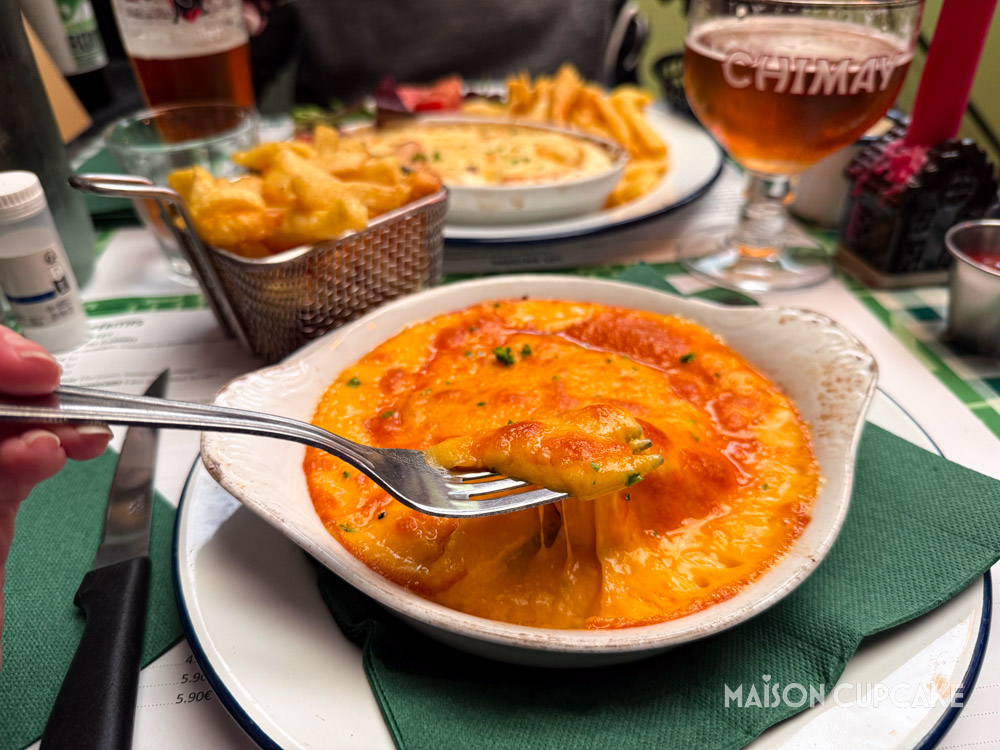
Traditional northern French dish, Le Classic Welsh: toasted bread and ham smothered in cheese, served with frites and beer.
Le Welsh: classic Northern French dish of melted cheese on bread and ham with frites.

After Friday’s unremarkable dining (for convenience), we sought authentic Lille cuisine. The Rue de Gand is home to a cluster of authentic northern French restaurants, known as estaminets, each serving hearty regional food.

Estaminets get busy, we were turned away from several – so booking is wise. We found a friendly welcome at Chez Ronny. Estaminets have a unique personality – dark cluttered interiors, the unmistakable fug of Marouilles cheese – and deserve a post of their own.

I ordered Le Welsh: orange molten cheese smothering bread and ham, croque-monsieur on steroids. Served with frites, it’s best washed down with cold beer. Surprisingly, it was less heavy than expected – although guilt prevents me ordering one again.

Shopping in Vieux Lille

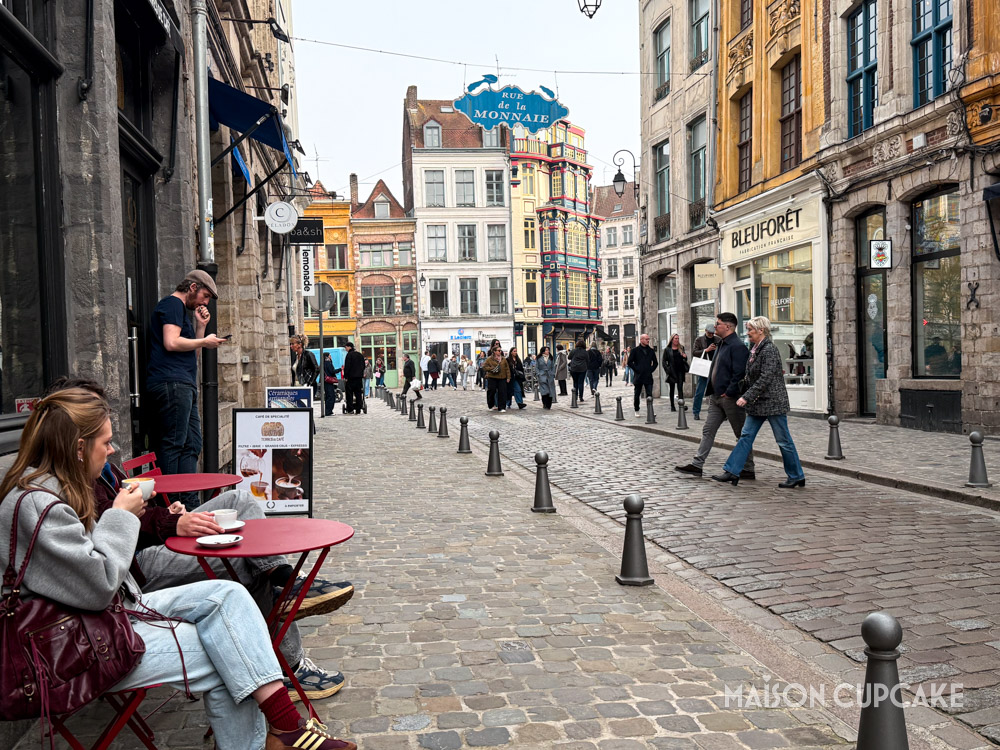
Café and shoppers in Rue de la Monnaie, Lille
Rue de la Monnaie, one of the main shopping streets in Vieux Lille.

To burn off our cheese feast we ambled around Rue de la Monnaie, one of old Lille’s most historic trading streets. Now it’s home to quirky shops although upmarket chains are creeping in.

I saw queues outside cool French fashion label Sézane and cult bakery Les Merveilleux de Fred. A beautiful mosaic-tiled storefront that was previously a fishmonger is now Louis Vuitton – but there are still grubby shuttered units and graffiti too. Aimlessly window shopping was a highlight of our 3 days in Lille.

Rue de la Clef was packed with more independent boutiques. Around Rue Esquermoise you’ll find several food shops including the ornate Meert tea room. We made sure to stop for a rest today at Le Post-Arrière, a coffee shop by day and stained glass-adorned cocktail bar by night. I can feature dedicated guides to Lille shopping, bars and restaurants soon – there is plenty to share.

Musée de L’Hospice Comtesse

Historic courtyard at Hospice Comtesse Museum, Lille
The charming cobbled courtyard of Musée de L’Hospice Comtesse.

Last Citypass stop of the day on our 3 days in Lille itinerary was the Musée de L’Hospice Comtesse, housed in a cluster of Flemish brick buildings around a Gothic courtyard. A former sick ward staffed by nuns may not sound enticing, but this surprising little museum was well worth seeing. Think Call The Midwife meets the V&A.

Beyond domestic quarters, you see the pharmacy where the nuns mixed remedies for patients, a chapel and main upstairs gallery. Displays include paintings by Brueghel, Faïence ceramics, silverware and scientific artefacts. We spent 45 minutes here, although we would have lingered longer if they weren’t closing at 6pm.

Nightlife in Lille

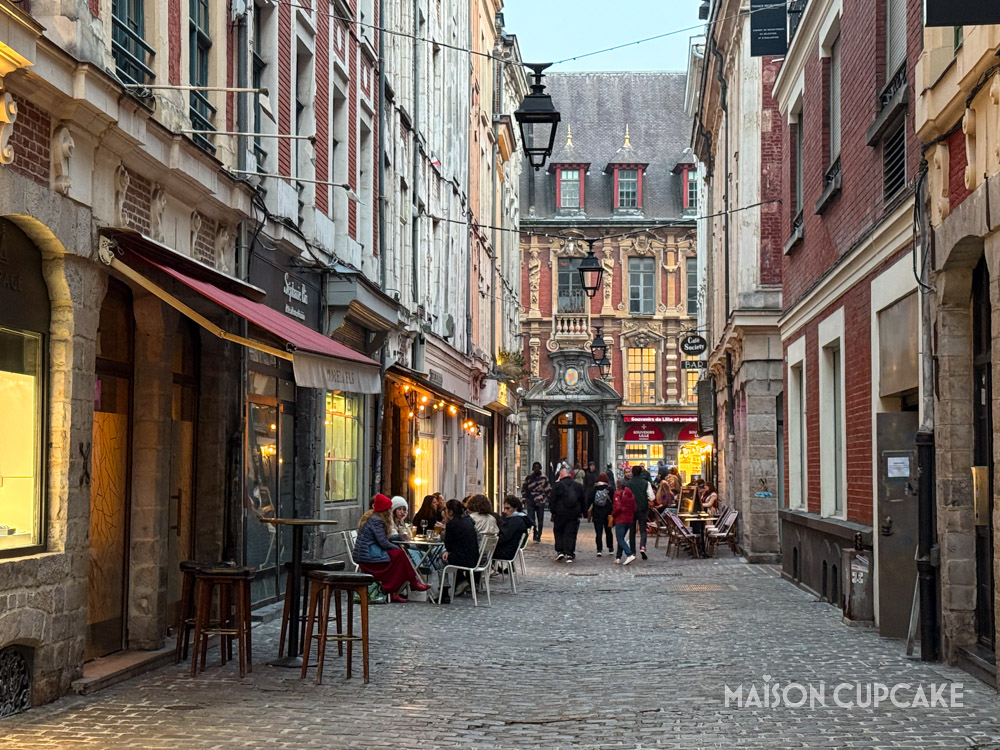
3 days in Lille: Cafes and warm lights in a narrow pedestrian street of Vieux Lille at dusk
Evening in Vieux Lille: street bars spring into life

That evening we explored pubs and bars around Vieux Lille. The areas around Place Louise de Bettignies and the bottom of Rue Royale had the most places to drink. A large student population and easy proximity for visitors from Belgium, Holland and the UK means Lille is always lively.

The old town is peppered with restaurants of all kinds; the estaminets mentioned, Michelin establishments and various world cuisine. Wanting a lighter meal, we opted for Thai food at La Table du Siam.

Around the Grand Place are plenty of larger French brasseries where you can usually walk in without reservation. Al Cid there, despite the name, is a French bouillon restaurant with low prices and queues to get in.

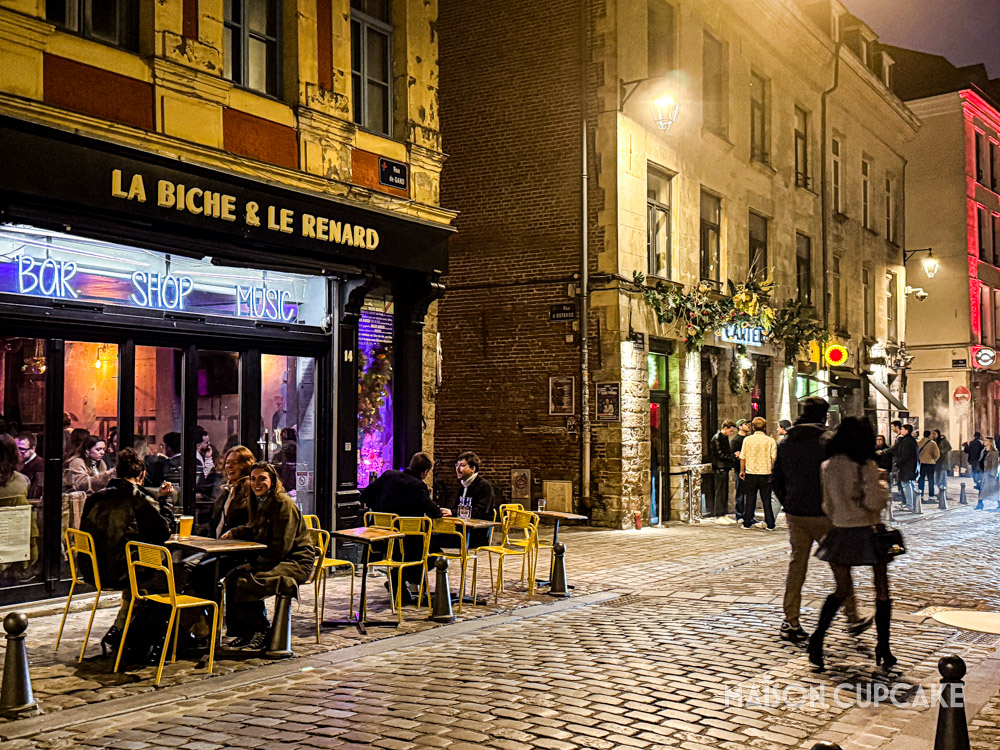
Night time bar scene with drinkers at outdoor tables in central Lille.
Lille nightlife around Rue de Gand.

Both the Grand Place and Opera House are dramatically lit at night, after a stroll around and some people watching, we needed a relatively early night.

Had we been up for a nightcap, Au Point Central on Rue de la Clef had guaranteed a great vibe every time we walked past, whilst Jacqueline on Rue de Gand was an intimate, casually stylish wine bar.

Day 3: Wazemmes Market, the Belfry tower and Lille Cathedral.

On Sundays, the majority of central Lille shops are closed, which feels strange if you’re used to Sunday opening in the UK. Westfield Euralille, the Vieux Lille boutiques will all be shut.

We still managed to pack a lot into the last of our 3 days in Lille by saving activities that were available on Sunday; the Belfry tower, Lille cathedral and the city museums are all open, although times may differ.

Shoppers browsing stalls at Wazemmes Sunday Market in Lille.
Busy Wazemmes Market on Sunday morning in Lille.

Wazemmes Sunday Market

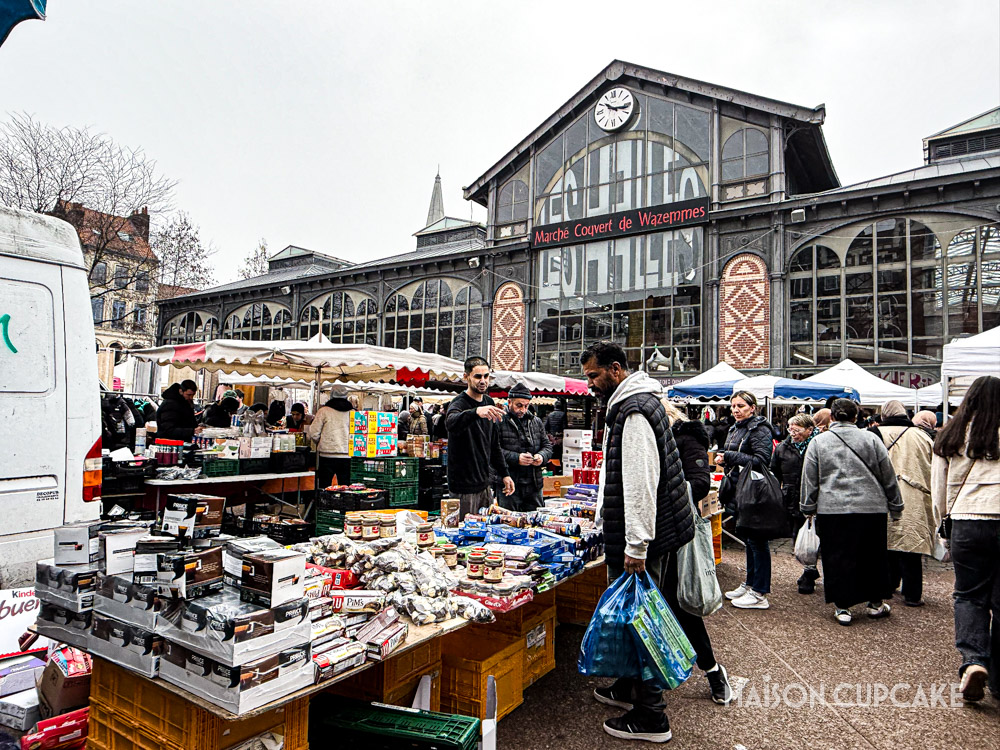
Sunday morning is when best to visit the unmissable and huge outdoor Wazemmes Market, selling household goods, clothing and fresh flowers at low prices. It’s unglamorous, with ethnic foods such as olives and dates nestling aside knock-down LU biscuits. I bought a lovely knitted beret and scarf for just three euros.

The indoor part, Marché Couvert de Wazemmes, has specialist fresh food counters and places to eat; it is open every day except Mondays.

Watching shoppers choose produce for that day’s dinner embodies the enduring French preference for quality, unprocessed food: live lobsters in bubbling tanks, piles of freshly baked organic breads, massive vegetables still tinged with soil – and barely a sheet of plastic wrap in sight.

3 days in Lille: Couple drinking coffees near Wazemmes Market in Lille.
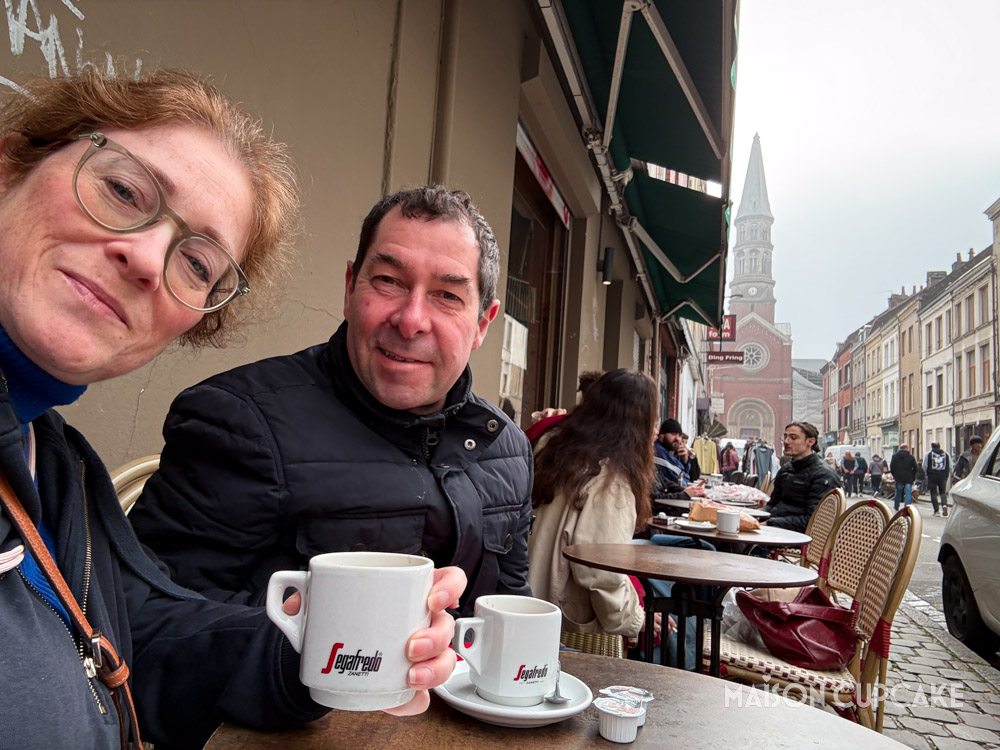
A quick coffee break after exploring Wazemmes Market

Rue Saint-Pierre Saint-Paul has boot-sale style secondhand stalls, although these are more flea market than brocante chic. Cafes at each end of the street overlook the church, Cafe Le Stout is on a busy corner to watch passers by.

Lille Town Hall Belfry Tower Views

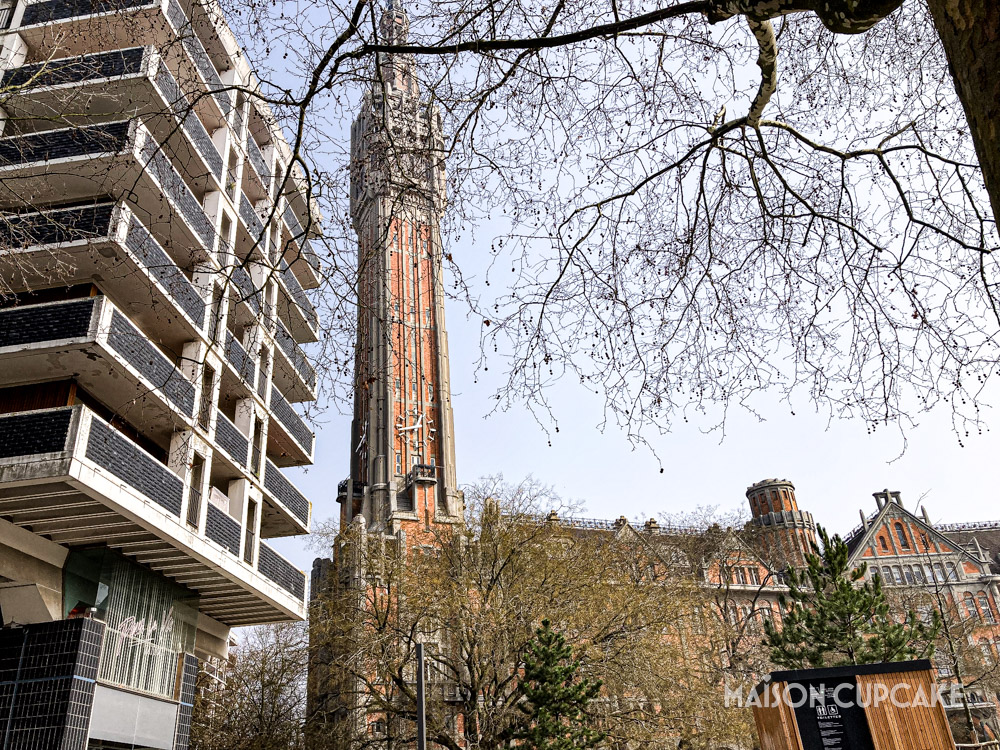
To sharpen his appetite for lunch, my husband wanted to climb Lille’s town hall belfry tower. I’d been put off by the 400 steps, but in fact two-thirds can be done by lift. Visits can be booked at fixed times before 11am, but after that you queue – only 18 people are allowed up at once.

Brutalist apartment building with Lille gothic red brick Belfry tower.
Lille’s gothic Belfry tower next to Brutalist housing.

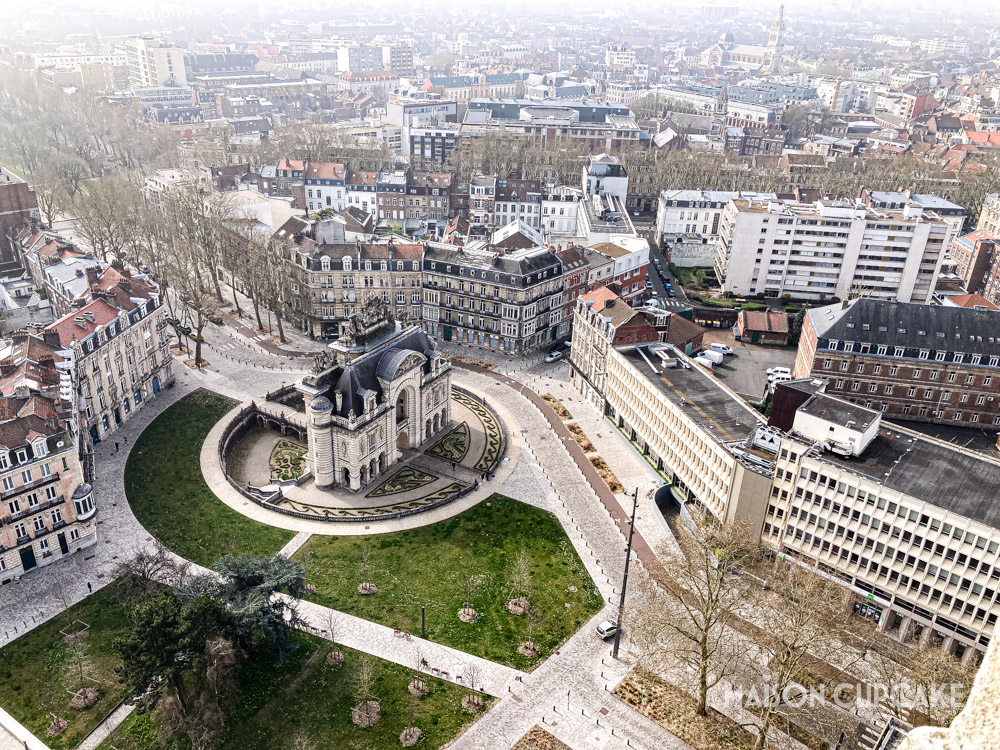
From the top of the Belfry, we spotted Porte de Paris below, the grand archway we’d passed on the bus tour. Knowing it was an original gate to the remparts – Porte de Gand, as seen close to Chez Ronny on day 2, was another – framed Lille as a historic walled city.

3 days in Lille: Aerial view of Porte de Paris city gate as seen from Lille Belfry tower.
Porte de Paris in Lille, seen from the Town Hall Belfry tower.

We’d learned on the bus tour that the name “Lille” derives from L’Île, reflecting its trading heritage as city surrounded by water in the Middle Ages – much like Bruges and Amsterdam.

Terrace Lunch: Carbonnade Flamande and Beer

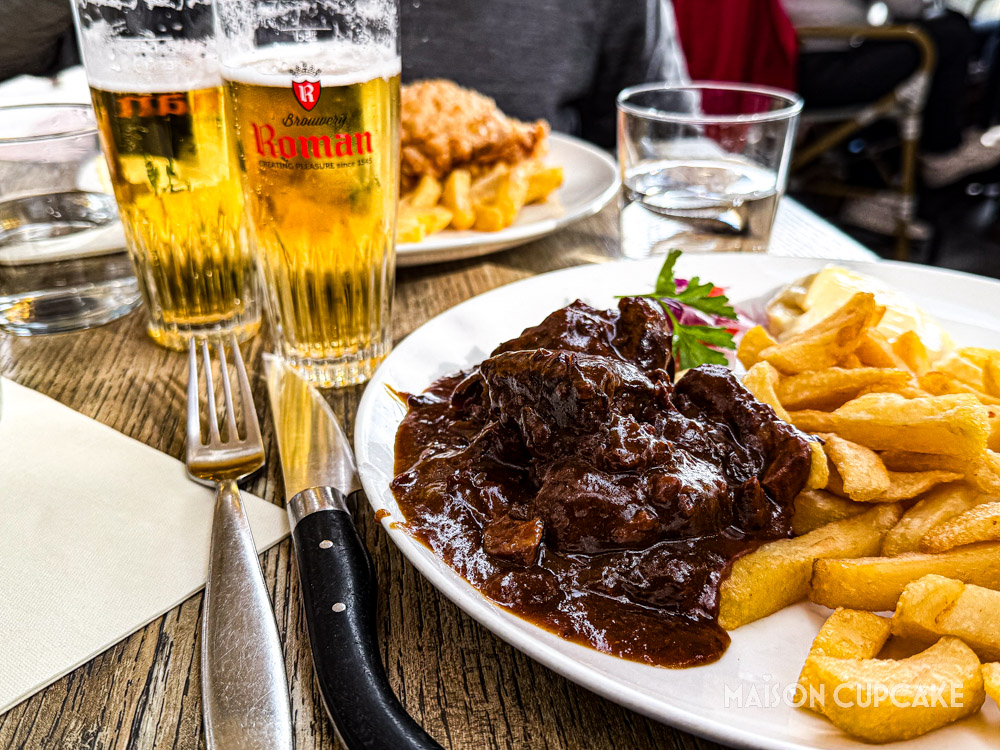
Traditional carbonnade flamande beef stew with frites and beer.
Carbonnade Flamande – a traditional beef and beer stew from northern France.

By now the sun had poked through and we installed ourselves for a lazy lunch on an outdoor terrace near the Grand Place. Carbonnade Flamande is a traditional beef and beer stew with thick gravy served across northern France and Belgium. I’m tempted to revise my own beef stew with beer to see I can create a similar dish at home.

It was International Women’s Day and a passing upbeat procession of people waving feminist and anti-war placards brought some typical French protest energy to our afternoon. We sat sipping cold beers (and had a sneaky ice cream) until it was time for some final sightseeing.

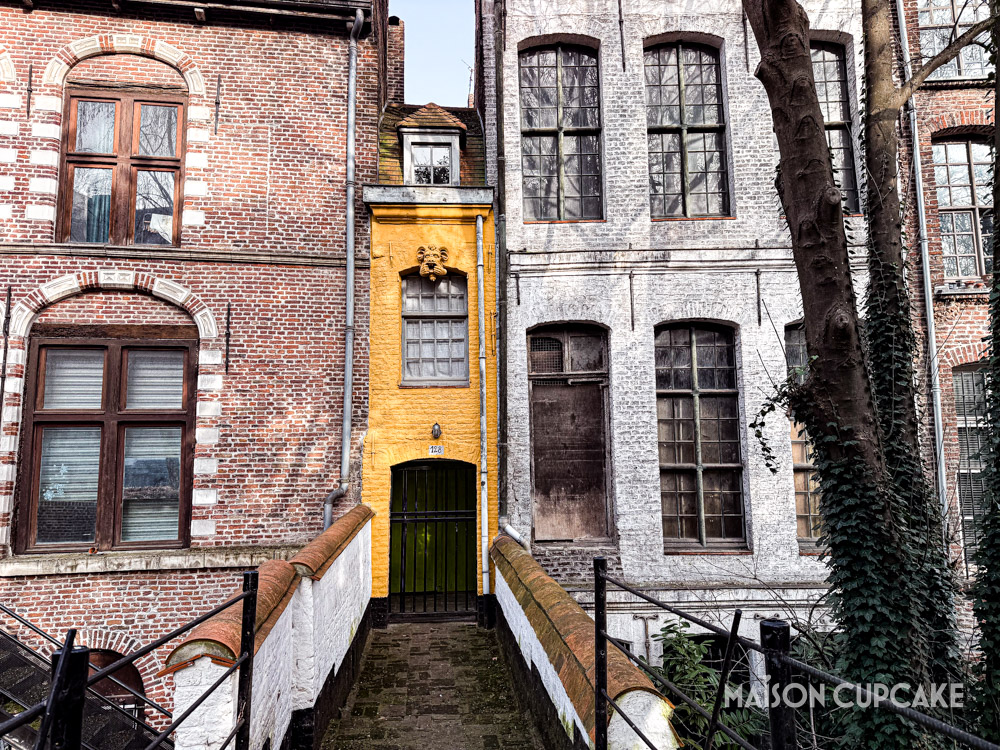
The Smallest House in Lille

Narrow yellow building known as the smallest house in Lille
The charming “Smallest House in Lille” tucked away between larger houses.

Although very central, you probably won’t stumble across La Plus Petite Maison de Lille by accident. The tiny yellow building, barely wider than its door, is hidden along a footpath behind the cathedral.

I think the walls leading to it are a bridge over a ditch that was once a waterway in Vieux Lille; today there are flats at basement level.

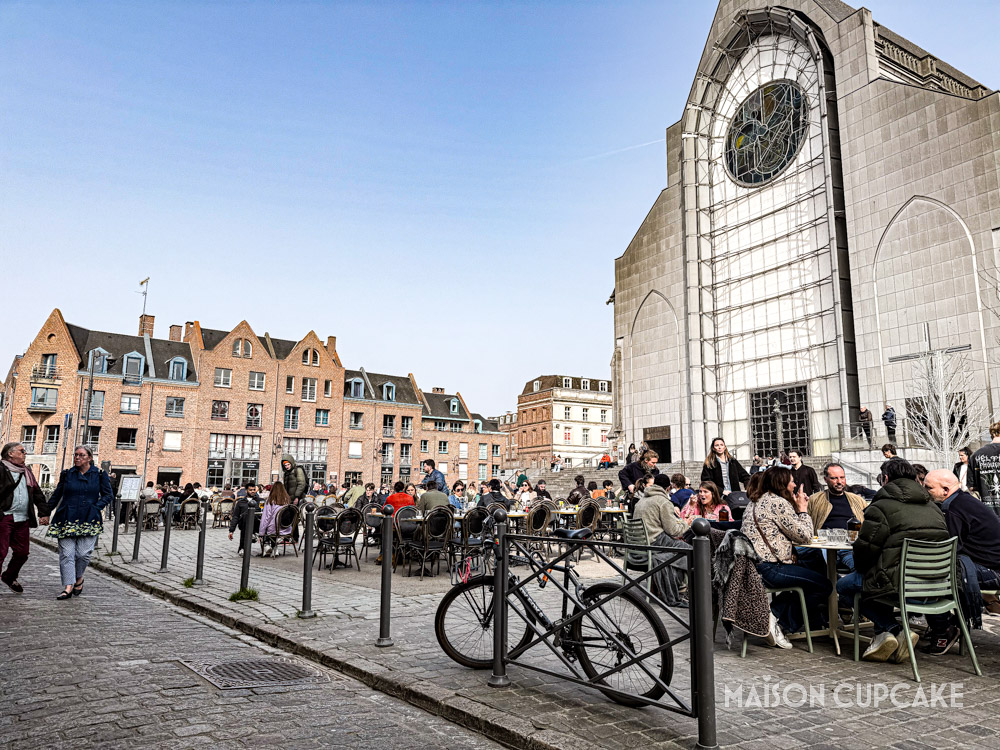
Lille Cathedral

Place Gilleson in Lille with outdoor cafes and Cathedral Notre-Dame-de-la-Treille.
The modern facade of Lille Cathedral overlooks outdoor cafe terraces on Place Gilleson.

As one of the earliest sunny weekends of the year, the square outside Lille’s cathedral, Notre-Dame-de-la-Treille, was buzzing with people at open air cafe tables. We’ve previously eaten waffles at Beer Square (the red brick building above) so much we made gluten free waffles at home.

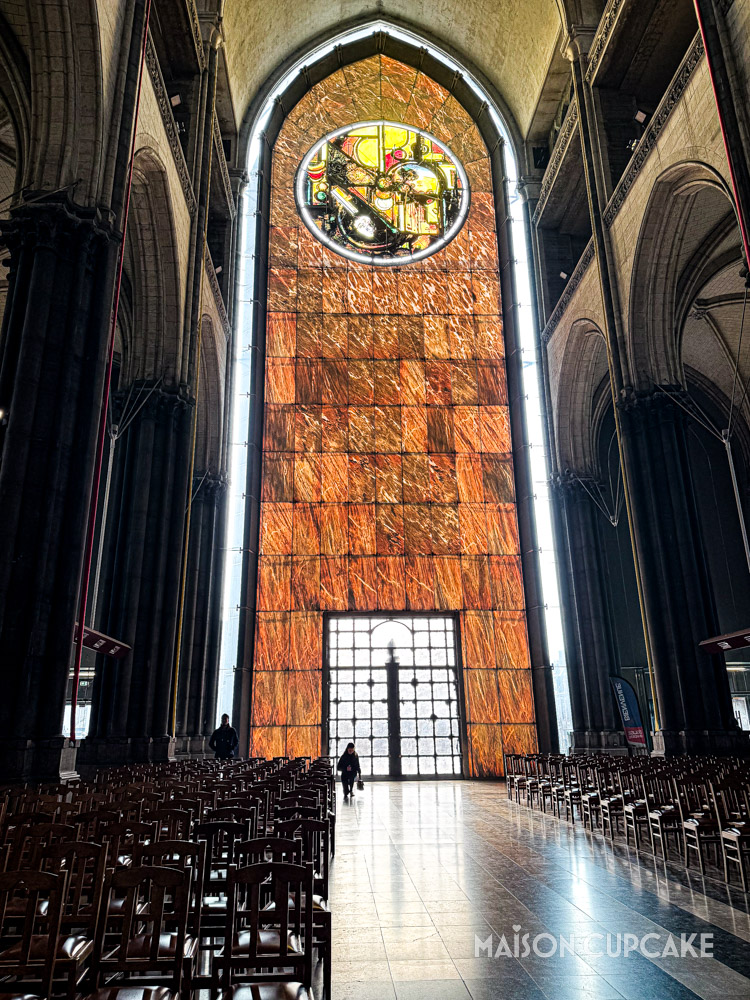
Sunlight shining through tall orange coloured modern stained glass window in Lille Cathedral.
Light streams through the modern stained glass window of Lille Cathedral.

Lille Cathedral, only completed in 1999, is a mix of Gothic revival and twentieth century modernist. The grey facade looks drab from outside but hides a distinctive amber-coloured stained glass window. It reminded me of the UK’s Coventry Cathedral.

The tall pew chairs have clean lines and the stations of the cross are abstract paintings. The crypt has a paid display of ecclesiastical “treasure” but it was sadly time to retrieve our luggage and head to Lille Europe’s Eurostar check in.

Going Home on Eurostar

Departure on Eurostar at Lille is even easier than London, we checked in 60 minutes before leaving. The Brussels train stops for 5 minutes whilst Lille’s passengers board. With security checks completed you can walk straight off in London. We were home by 7pm UK time.

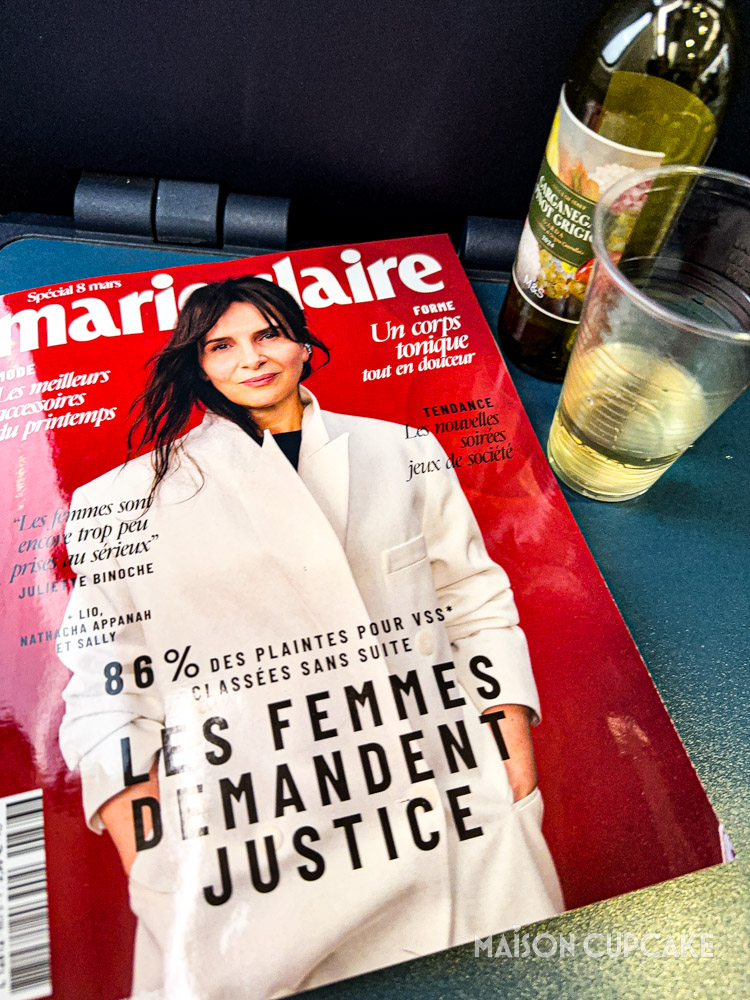
French copy of Marie Claire magazine with actress Juliette Binoche on cover with wine aboard Eurostar train.
Heading home on Eurostar from Lille to London after three busy days!

If you’re planning your own 3 days in Lille, I hope this guide inspires you to explore the city’s culture, food, and shopping. This three-day itinerary is just the beginning of a series I intend to feature – if you have any questions or things I might cover, leave a comment below.

For an alternative to Lille, Rouen has equally beautiful historic buildings and attractions – read about my recent Rouen city break here.

Is 3 Days in Lille Enough?

Walking around central Lille and Vieux Lille on foot, you could have a lovely visit on a day trip, but this would only be a snapshot of what Lille has to offer. If you want to spend time shopping or visit several museums, then you really need a weekend or more.

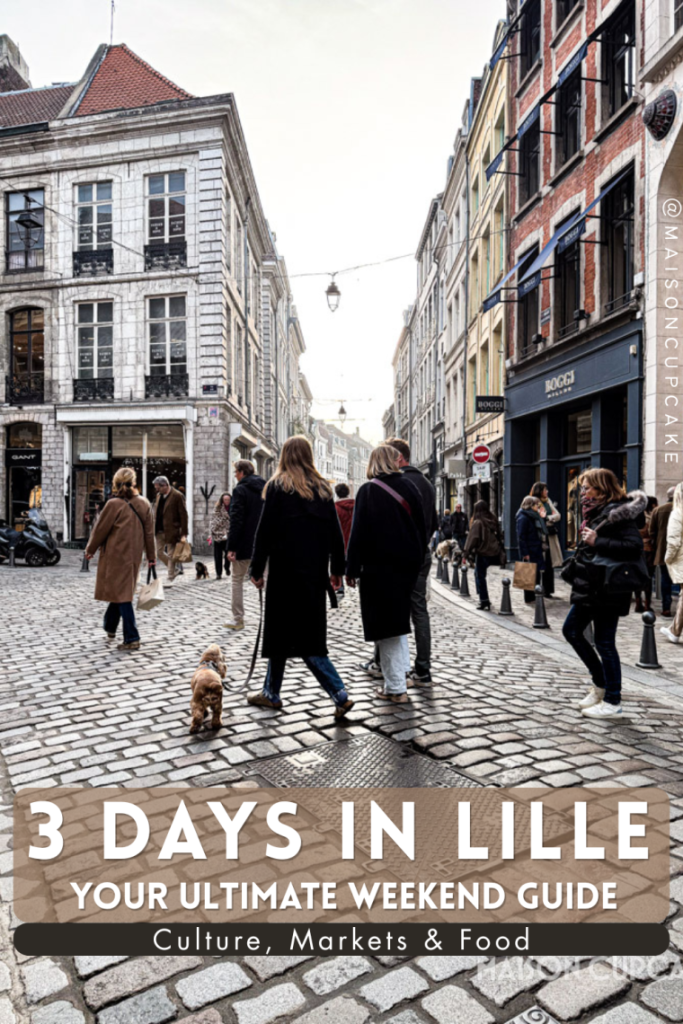
3 Day Lille itinerary: A cobblestone street and shoppers in northern France.
Your Ultimate 3-Day Lille Guide: cafes, culture and charming shops to explore over a long weekend.

By spending 3 days in Lille, you get the space to explore beyond Lille city centre, either to Roubaix as we did, or other towns on the Lille transport network such as Tourcoing and Villeneuve D’Ascq – both of which have attractions of their own.

My honest answer? No – three days isn’t enough. But the joy of Lille being so close is that you can make repeat visits and still find new things to do. You might also plan a trip around the Christmas Market, Beer Festival or the Braderie, Lille’s famous city-wide flea market.
If you would prefer a seaside weekend itinerary rather than a city break, take a look at my Things To Do in Baie de Somme, which is around two hours’ drive from Lille but only 90 minutes from Calais.
My next Lille trip will be in November – for a Vanessa Paradis concert – and I still have a long list of things to do!

What To Read Next

Have you been to Lille? Have I inspired you to go? Tell me about your Lille experiences in the comments below and bookmark this page to follow my 3 Days in Lille Itinerary!

Originally published on Maison Cupcake